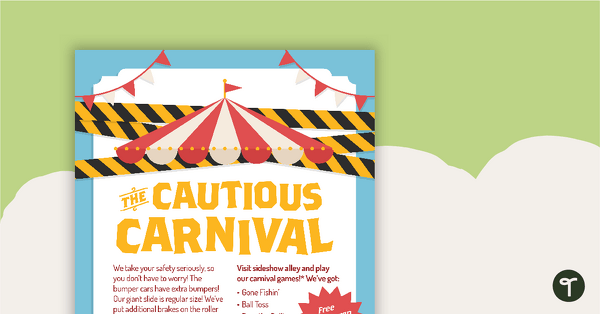
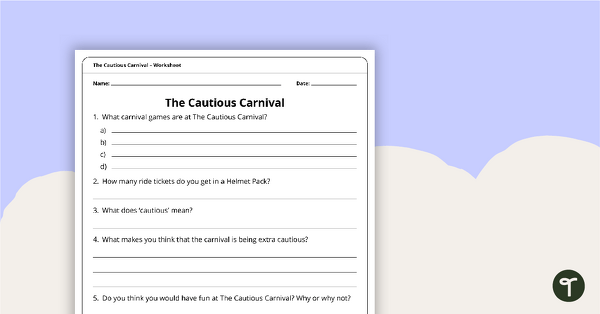
A comprehension worksheet for a fake advertisement from the Year 3 magazine (Issue 3).
This teaching resource is a comprehension worksheet for the magazine article, ‘The Cautious Carnival’ from the Year 3 magazine, ‘What’s Buzzing?’ (Issue 3).
Updated: 14 Jun 2023
A comprehension worksheet for a fake advertisement from the Year 3 magazine (Issue 3).
Non-Editable: PDF
Pages: 3 Pages
Years: 3 - 4
Identify the purpose and audience of different types of texts through the use of language features and/or images in the texts
Use comprehension strategies, such as visualising, predicting, connecting, summarising, monitoring and questioning, to analyse texts by drawing on a growing knowledge of context, text structures and language features to build literal and inferre...
Identify the characteristic features used in different types of texts to meet the purpose and audience of the text
Use comprehension strategies, such as visualising, predicting, connecting, summarising, monitoring and questioning, to expand topic knowledge and ideas, and begin to evaluate texts to build literal and inferred meanings
Builds knowledge and use of Tier 1, Tier 2 and Tier 3 vocabulary through interacting, wide reading and writing, and by defining and analysing words
Reads and comprehends texts for wide purposes using knowledge of text structures and language, and by monitoring comprehension
Identifies and describes how ideas are represented in literature and strategically uses similar representations when creating texts
Identify the audience and purpose of imaginative, informative and persuasive textsElaborationsidentifying the authorâs point of view on a topic and key words and images that seem intended to persuade listeners, viewers or readers to agree with t...
Use comprehension strategies to build literal and inferred meaning and begin to evaluate texts by drawing on a growing knowledge of context, text structures and language featuresElaborationsmaking connections between the text and students own experie...
Identify characteristic features used in imaginative, informative and persuasive texts to meet the purpose of the textElaborationsdescribing the language which authors use to create imaginary worlds; how textual features such as headings, subheadings...
Use comprehension strategies to build literal and inferred meaning to expand content knowledge, integrating and linking ideas and analysing and evaluating textsElaborationsmaking connections between the text and studentsâ own experience and oth...
Identify the audience and purpose of imaginative, informative and persuasive texts through their use of language features and/or images
Use comprehension strategies when listening and viewing to build literal and inferred meaning, and begin to evaluate texts by drawing on a growing knowledge of context, text structures and language features
Identify the characteristic features used in imaginative, informative and persuasive texts to meet the purpose of the text
Use comprehension strategies such as visualising, predicting, connecting, summarising, monitoring and questioning to build literal and inferred meaning, to expand topic knowledge and ideas, and evaluate texts
A comprehension worksheet for a fake advertisement from the Year 3 magazine (Issue 3).
This teaching resource is a comprehension worksheet for the magazine article, ‘The Cautious Carnival’ from the Year 3 magazine, ‘What’s Buzzing?’ (Issue 3).
Identify the purpose and audience of different types of texts through the use of language features and/or images in the texts
Use comprehension strategies, such as visualising, predicting, connecting, summarising, monitoring and questioning, to analyse texts by drawing on a growing knowledge of context, text structures and language features to build literal and inferre...
Identify the characteristic features used in different types of texts to meet the purpose and audience of the text
Use comprehension strategies, such as visualising, predicting, connecting, summarising, monitoring and questioning, to expand topic knowledge and ideas, and begin to evaluate texts to build literal and inferred meanings
Builds knowledge and use of Tier 1, Tier 2 and Tier 3 vocabulary through interacting, wide reading and writing, and by defining and analysing words
Reads and comprehends texts for wide purposes using knowledge of text structures and language, and by monitoring comprehension
Identifies and describes how ideas are represented in literature and strategically uses similar representations when creating texts
Identify the audience and purpose of imaginative, informative and persuasive textsElaborationsidentifying the authorâs point of view on a topic and key words and images that seem intended to persuade listeners, viewers or readers to agree with t...
Use comprehension strategies to build literal and inferred meaning and begin to evaluate texts by drawing on a growing knowledge of context, text structures and language featuresElaborationsmaking connections between the text and students own experie...
Identify characteristic features used in imaginative, informative and persuasive texts to meet the purpose of the textElaborationsdescribing the language which authors use to create imaginary worlds; how textual features such as headings, subheadings...
Use comprehension strategies to build literal and inferred meaning to expand content knowledge, integrating and linking ideas and analysing and evaluating textsElaborationsmaking connections between the text and studentsâ own experience and oth...
Identify the audience and purpose of imaginative, informative and persuasive texts through their use of language features and/or images
Use comprehension strategies when listening and viewing to build literal and inferred meaning, and begin to evaluate texts by drawing on a growing knowledge of context, text structures and language features
Identify the characteristic features used in imaginative, informative and persuasive texts to meet the purpose of the text
Use comprehension strategies such as visualising, predicting, connecting, summarising, monitoring and questioning to build literal and inferred meaning, to expand topic knowledge and ideas, and evaluate texts

We create premium quality, downloadable teaching resources for primary/elementary school teachers that make classrooms buzz!
Would you like something changed or customised on this resource? While our team makes every effort to complete change suggestions, we can't guarantee that every change will be completed.
Did you spot an error on this resource? Please let us know and we will fix it shortly.
Are you having trouble downloading or viewing this resource? Please try the following steps:
If you are still having difficulty, please visit the Teach Starter Help Desk or contact us .
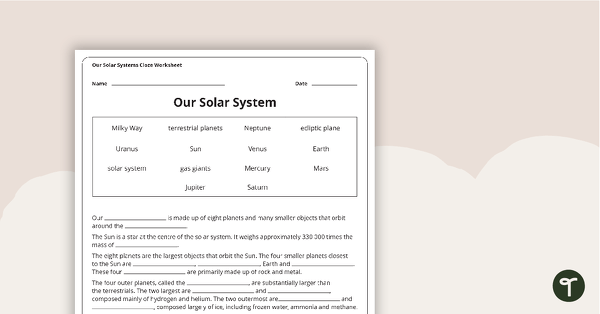
A set of 7 fiction and non-fiction cloze worksheets with answer sheets.
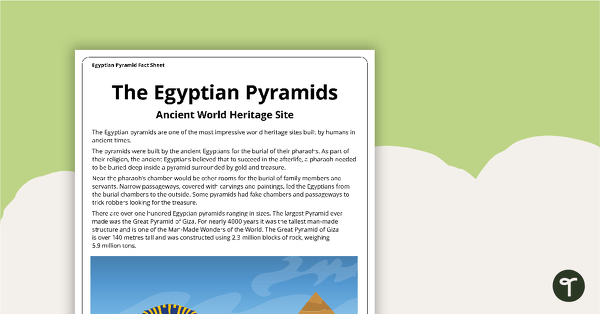
A 2 page comprehension task for students to use in the classroom when learning about the Egyptian pyramids.
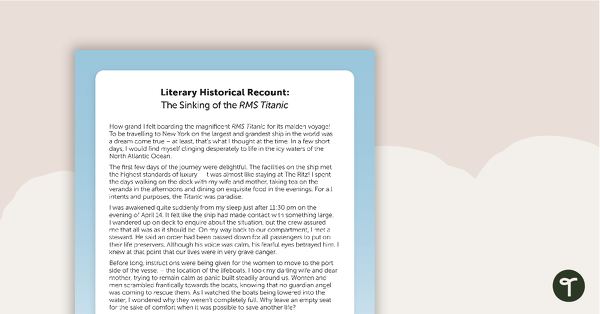
A comprehension task to enable students to compare literary historical recounts and factual historical recounts.
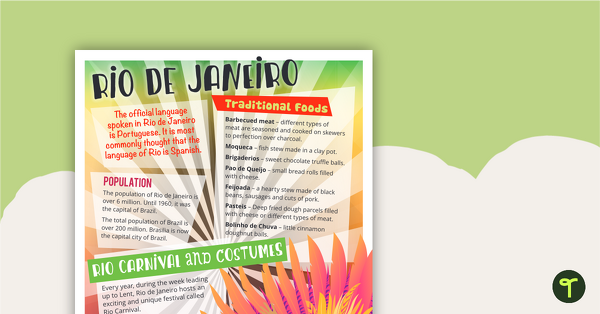
A comprehension task that encourages students to apply a range of comprehension skills when finding out interesting fun facts about Rio.
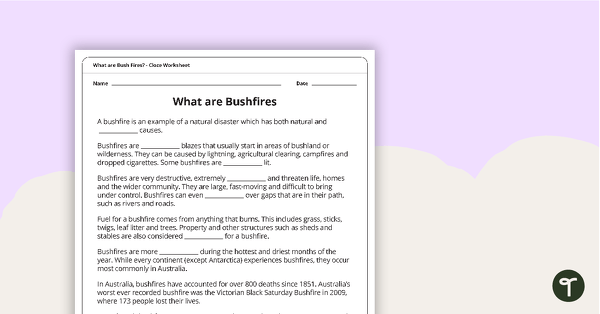
A cloze worksheet about bushfires.
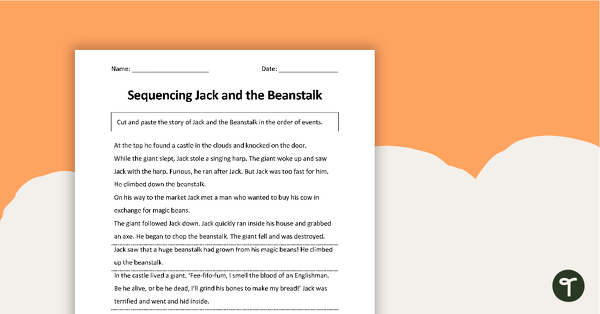
A worksheet to use when teaching students how to understand sequence when reading.
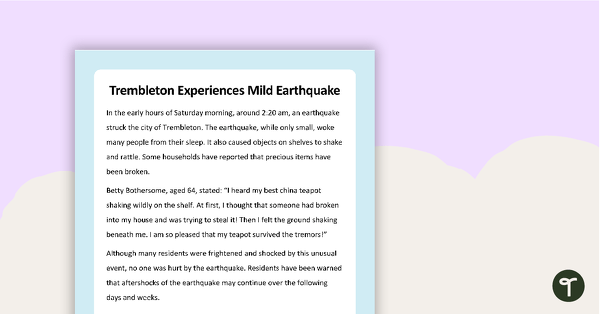
A task to use when teaching your students reading comprehension strategies.
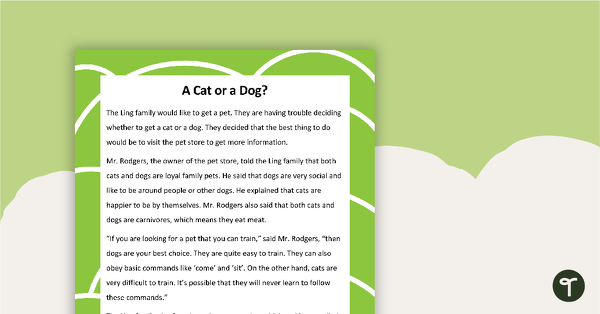
A task to use when teaching your students reading comprehension strategies.
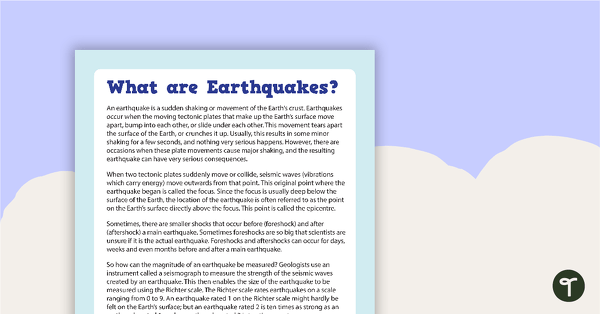
A comprehension activity about 'What are Earthquakes?'
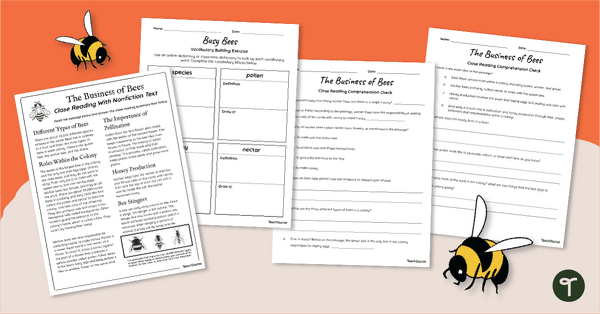
Read and learn about bees, pollination and honey production with a reading comprehension passage and worksheet pack.
0 Comments
Write a review to help other teachers and parents like yourself. If you'd like to request a change to this resource, or report an error, select the corresponding tab above.