ELAR 2.9
Multiple genres: listening, speaking, reading, writing, and thinking using multiple texts--genres. The student recognizes and analyzes genre-specific characteristics, structures, and purposes within and across increasingly complex traditional, contemporary, classical, and diverse texts. The student is expected to:
- (1) demonstrate knowledge of
distinguishing characteristics of well-known children's
literature such as folktales, fables, and fairy tales;
- (A) explain visual patterns and structures in a variety of poems;
- (B) discuss elements of drama such as characters, dialogue, and setting;
- (C) recognize characteristics and structures of informational text, including:
- (D) the central idea and supporting
evidence with adult assistance;
- (i) features and graphics to locate and gain information; and
- (ii) organizational patterns such as chronological order and cause and effect stated explicitly;
- (iii) recognize characteristics of persuasive text, including:
- (E) stating what the author is trying to persuade the reader
to think or do; and
- (i) distinguishing facts from opinion; and
- (ii) recognize characteristics of multimodal and digital texts.
- Plus Plan
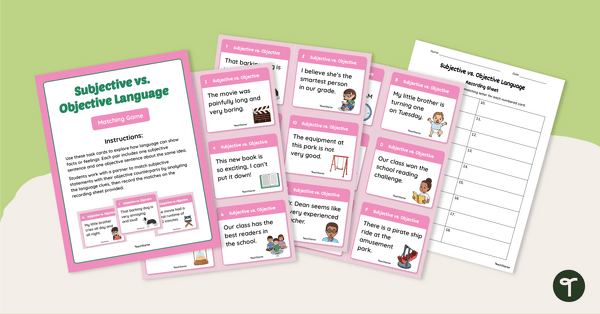
Subjective vs. Objective Language Matching Game
Teach subjective vs objective language with this hands-on matching game designed to help students identify facts and feelings in sentences.
- Plus Plan
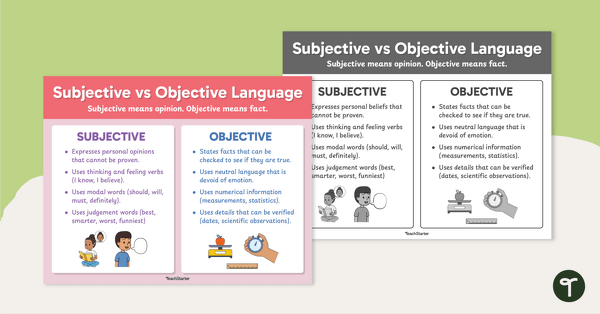
Subjective Language vs Objective Language Poster
Display this vibrant subjective language vs objective language poster in your classroom to illustrate the differences between personal opinions and factual statements.
- Plus Plan
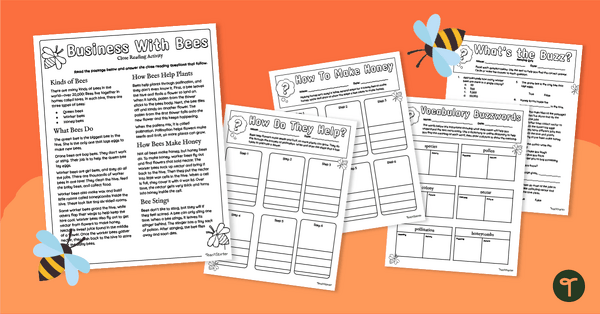
Printable Worksheets About Bees - 2nd Grade
Use our 2nd grade worksheets about bees to discover what there is to know about bees, how they help plants, and how they make honey.
- Plus Plan
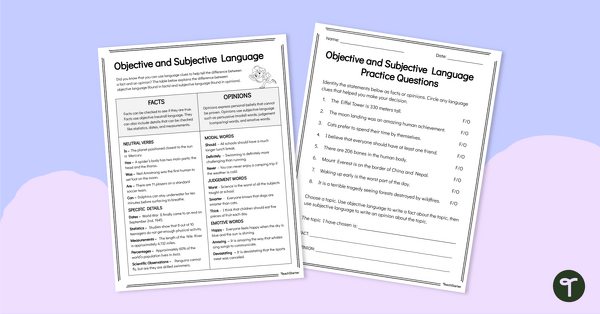
Objective and Subjective Language Worksheet
Use this objective and subjective language worksheet to help students distinguish between facts and opinions.
- Plus Plan
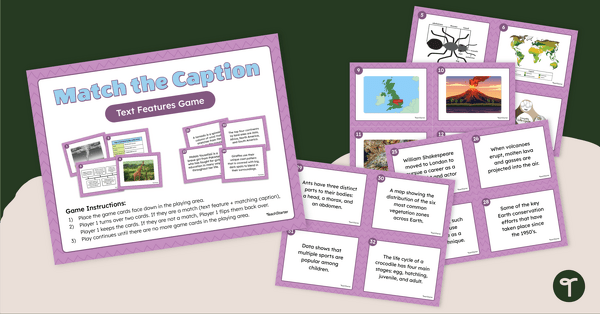
Caption Text Feature Matching Game
Teach your students about the caption text feature with this engaging and collaborative matching game.
- Plus Plan
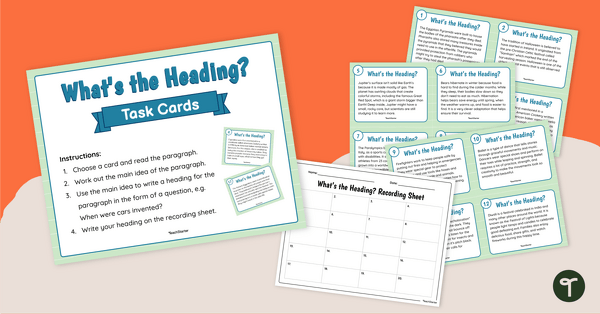
What’s the Heading? Task Cards
Explore the heading text feature with this set of task cards perfect for reading centers.
- Plus Plan
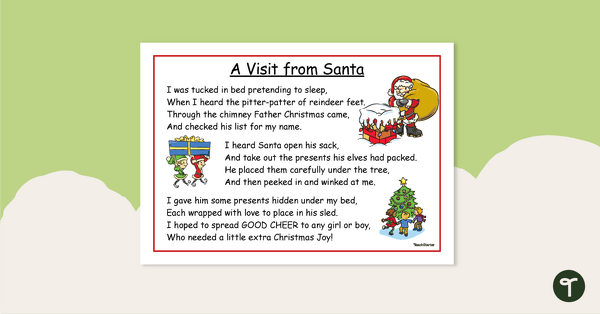
A Visit from Santa – Christmas Poem Poster
Use this “A Visit from Santa” Christmas poem for kids as a basis for some festive fun in your classroom!
- Plus Plan
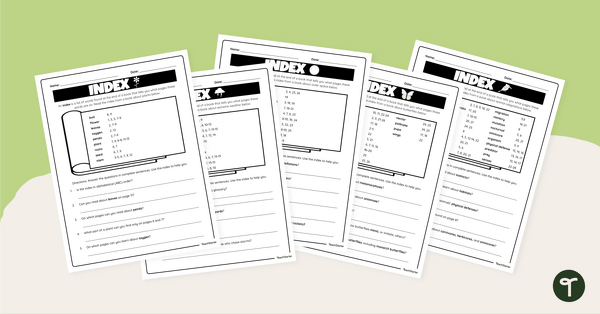
Using Indexes Worksheets
Teach students about the index text feature with this set of worksheets perfect for elementary students.
- Plus Plan
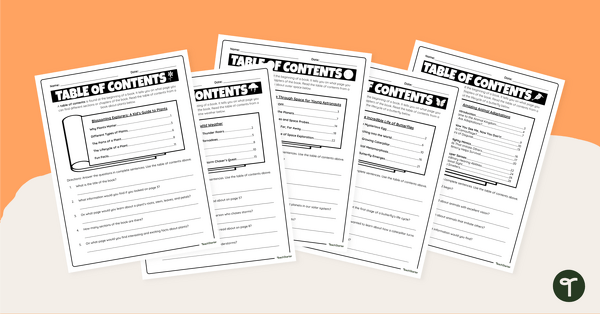
Using Tables of Contents Worksheets
Download these table of contents worksheets to provide your students with practice working with this valuable nonfiction text feature.
- Plus Plan
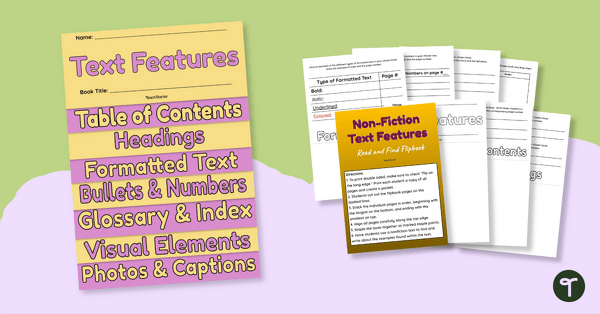
Nonfiction Text Features Flipbook – Read and Find
Get your students to find text features in nonfiction books with this student-centered flipbook activity perfect for reading centers.
- Free Plan
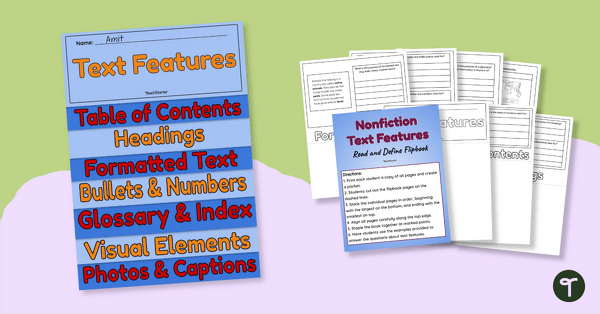
Nonfiction Text Features Flipbook – Read and Define
Use this text features flipbook as a reading center activity to teach your students about the purpose of text features in nonfiction books.
- Plus Plan
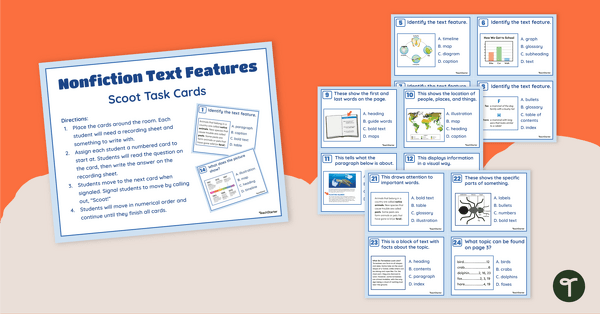
Nonfiction Text Features Task Cards
Get students exploring text feature examples with this set of tack cards perfect for reading centers.
- Plus Plan
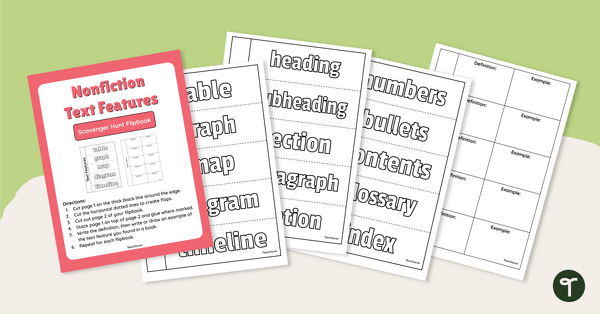
Nonfiction Text Features – Scavenger Hunt Flipbook
Get students exploring nonfiction text features with this set of scavenger hunt flipbooks perfect for elementary students.
- Plus Plan
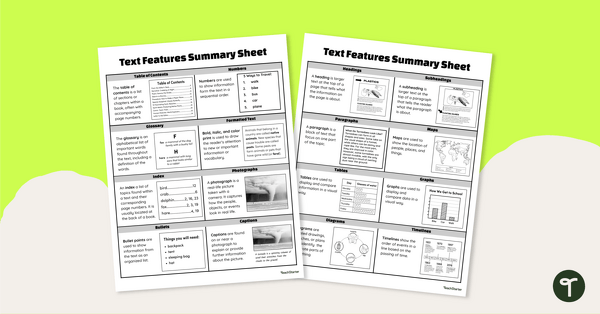
Nonfiction Text Features Study Guide
Download this list of text feature examples to teach your students about the purpose of these important textual elements.
- Plus Plan
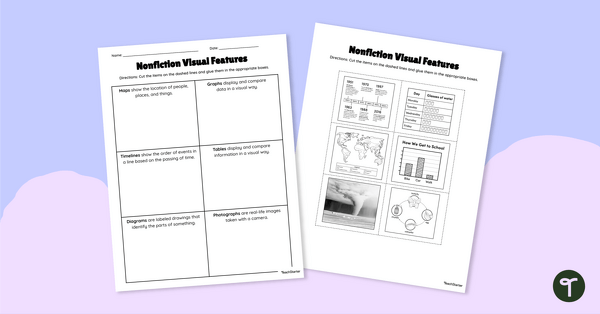
Nonfiction Visual Features Cut and Paste Worksheet
Use this visual text features worksheet when exploring text features such as photographs, maps, charts and diagrams with your students.
- Plus Plan
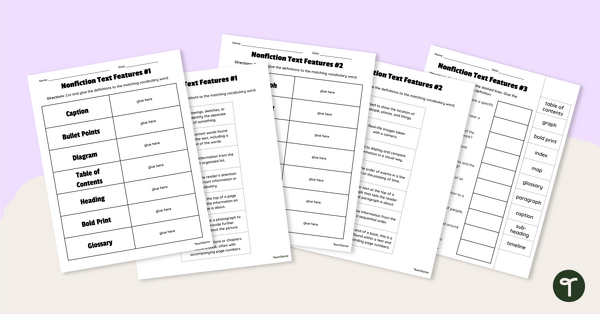
Nonfiction Text Features Cut and Paste Worksheets
Use this text features matching worksheet when exploring the features of nonfiction texts with your students.
- Plus Plan
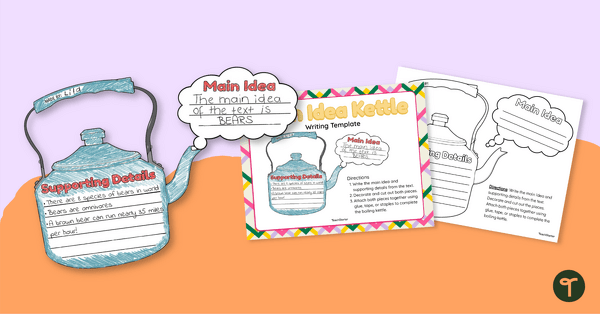
Main Idea Kettle Writing Template
Create a cute kettle template to help students understands the main idea and supporting detail while reading.
- Plus Plan
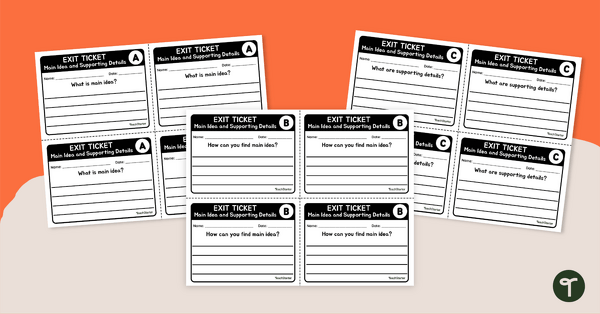
Main Idea Exit Tickets
Check for understanding of the main idea and supporting detail with these exit tickets.
- Plus Plan
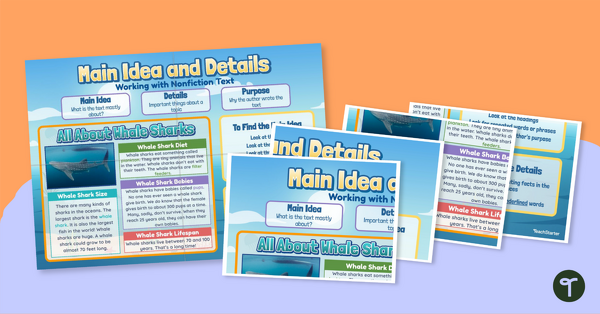
Main Idea and Details Anchor Chart
Print a main idea anchor chart for primary grades to build skills in identifying main idea and details in nonfiction texts.
- Plus Plan
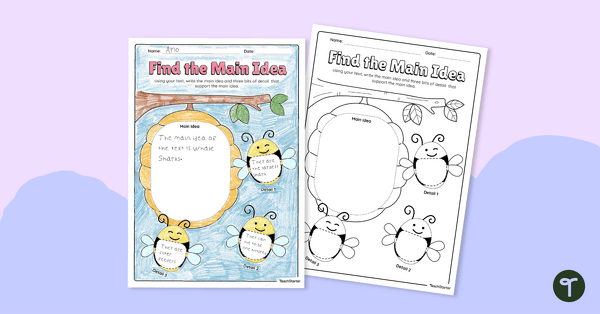
What's the Main Idea? Worksheet-Graphic Organizer
Help students work out the main idea and supporting detail of a text with a handy main idea worksheet.
- Plus Plan
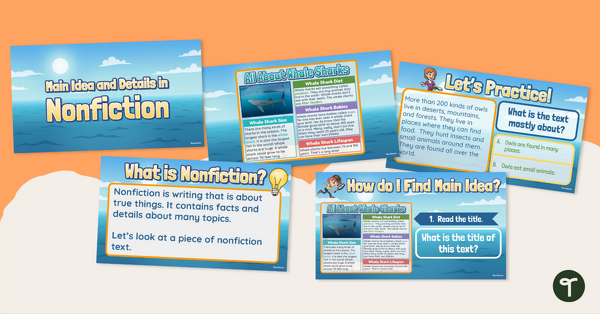
Main Idea and Details in Nonfiction Text — Instructional Slide Deck
Build skills in identifying main idea and details in nonfiction texts with an instructional slide deck for primary grades.
- Plus Plan
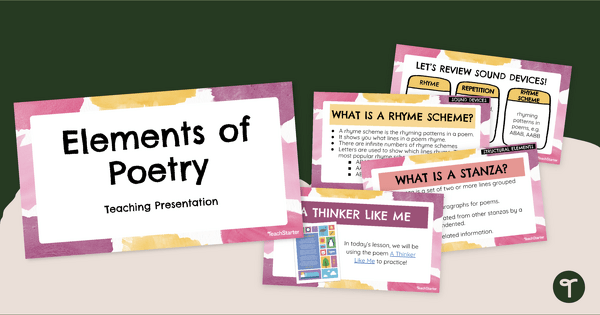
Elements of Poetry - Instructional Slide Deck
Investigate poetic elements with an interactive Elements of Poetry teaching slide deck.
- Plus Plan
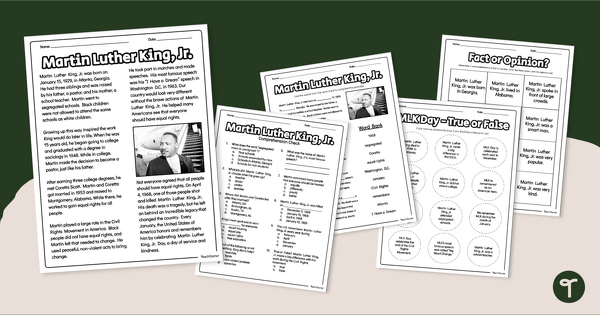
Martin Luther King, Jr. Reading Activity Pack
Apply a range of reading comprehension strategies to learn about Martin Luther King, Jr.
- Plus Plan
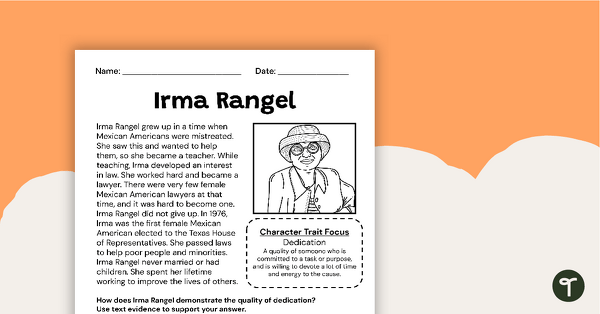
Irma Rangel Constructed Response Worksheet
Use this Irma Rangel worksheet and writing prompt to help students write a paragraph using text evidence.
- Plus Plan
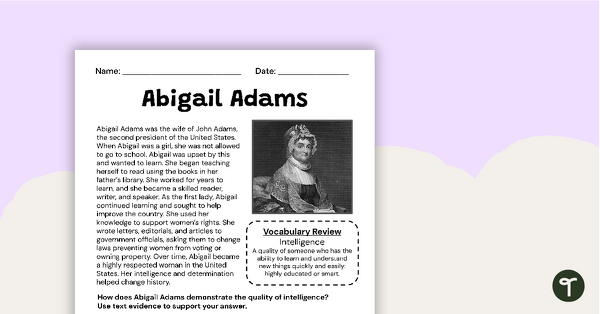
Abigail Adams Constructed Response Worksheet
Use this passage, writing prompt, and worksheet to help students write a constructed response paragraph about Abigail Adams.
- Plus Plan
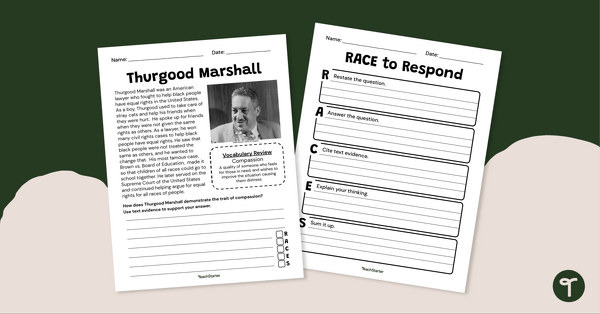
Thurgood Marshall Constructed Response Worksheet
Discover the influence and positive character traits of Thurgood Marshall with a reading passage and RACES writing prompt for fourth grade.
- Plus Plan
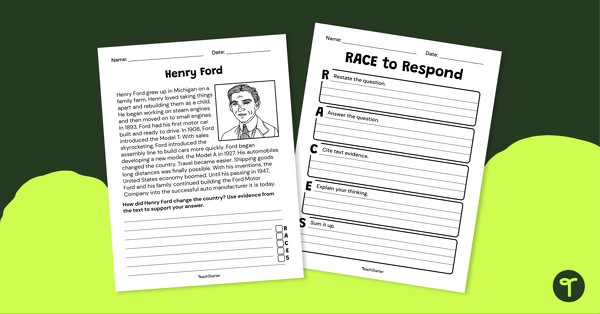
Henry Ford Worksheet- RACES Writing Strategy
Provide students with Social Studies and Writing instruction using the RACES strategy for constructed response paragraphs.
- Plus Plan
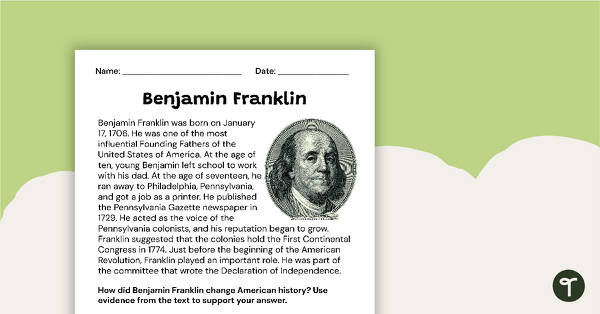
Benjamin Franklin - Constructed Response Worksheet
Learn facts about Benjamin Franklin with an informational reading and writing activity focusing on the constructed response format.
- Plus Plan
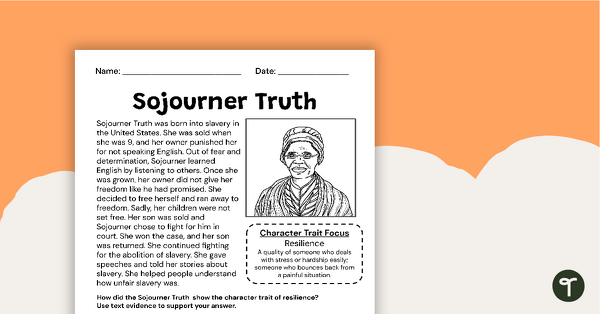
Sojourner Truth Constructed Response Worksheet
Learn facts about Sojourner Truth with an informational reading passage and writing activity for third grade and up.
- Plus Plan
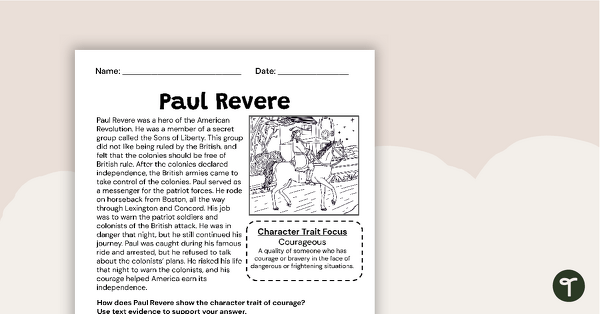
Paul Revere Worksheet - Constructed Response
Integrate reading, writing, and American history with a constructed response Paul Revere Worksheet highlighting the American Revolution.
- Plus Plan
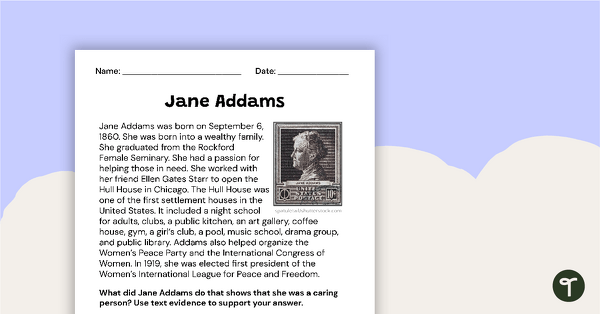
Jane Addams Biography - Worksheet
Use this biographical constructed response worksheet to teach your students about Jane Addams.
- Plus Plan
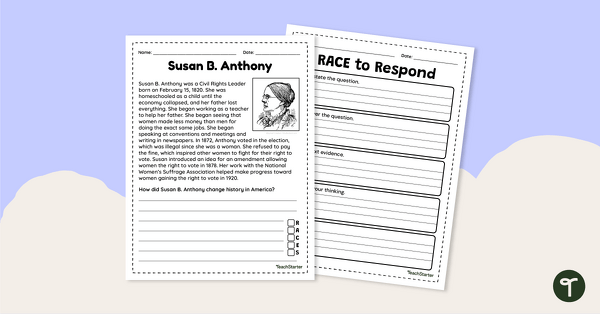
Susan B. Anthony Constructed Response Worksheet
Integrate reading, writing, and American history with a constructed response worksheet about Susan B. Anthony and the women’s rights movement.