ELAR 2.9
Multiple genres: listening, speaking, reading, writing, and thinking using multiple texts--genres. The student recognizes and analyzes genre-specific characteristics, structures, and purposes within and across increasingly complex traditional, contemporary, classical, and diverse texts. The student is expected to:
- (1) demonstrate knowledge of
distinguishing characteristics of well-known children's
literature such as folktales, fables, and fairy tales;
- (A) explain visual patterns and structures in a variety of poems;
- (B) discuss elements of drama such as characters, dialogue, and setting;
- (C) recognize characteristics and structures of informational text, including:
- (D) the central idea and supporting
evidence with adult assistance;
- (i) features and graphics to locate and gain information; and
- (ii) organizational patterns such as chronological order and cause and effect stated explicitly;
- (iii) recognize characteristics of persuasive text, including:
- (E) stating what the author is trying to persuade the reader
to think or do; and
- (i) distinguishing facts from opinion; and
- (ii) recognize characteristics of multimodal and digital texts.
- Plus Plan
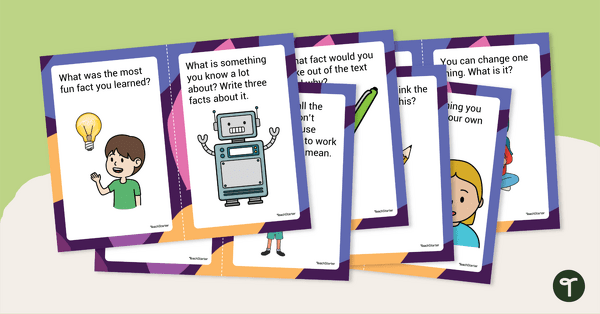
Fun With Nonfiction Task Cards
Solidify your nonfiction reading response lessons with this set of 12 comprehension task cards.
- Plus Plan
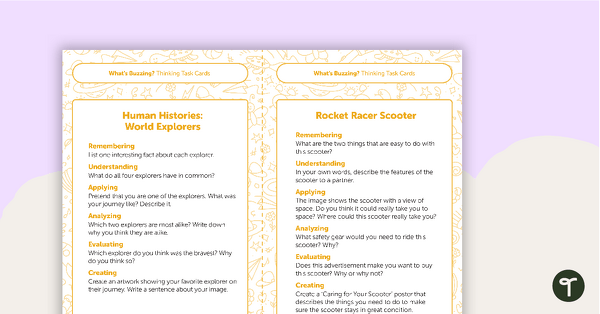
Grade 2 Magazine - "What's Buzzing?" (Issue 1) Task Cards
Five sets of literacy rotation task cards to be used in conjunction with issue 1 of Teach Starter's Grade 2 magazine.
- Plus Plan
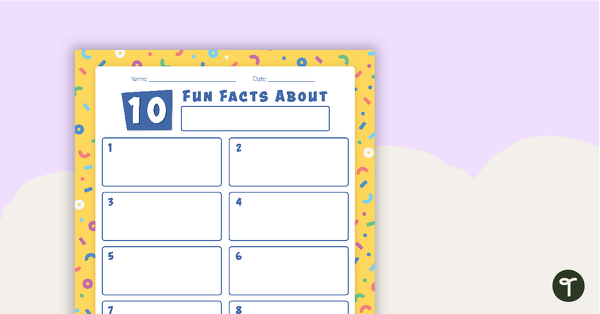
10 Fun Facts Writing Template
Use this template to distinguish between fact and opinion when studying informational or biographical texts.
- Plus Plan
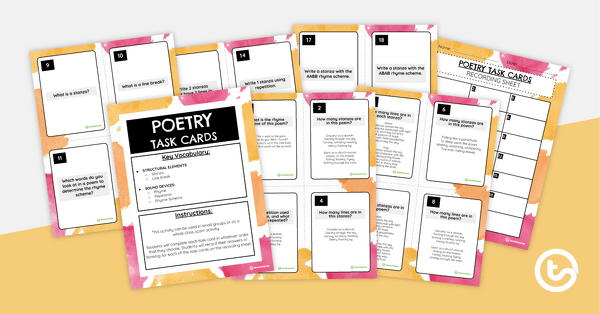
Poetry Task Cards
A set of 20 task cards to practice different elements of peotry.
- Plus Plan
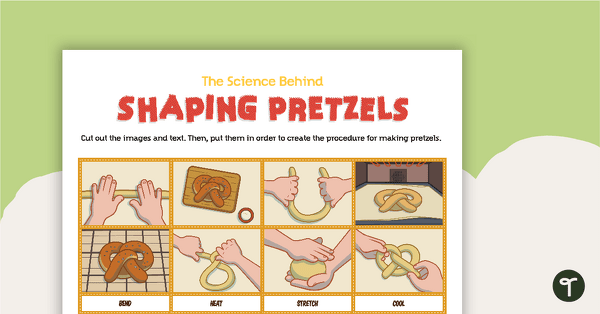
The Science Behind Shaping Pretzels – Worksheet
An activity for students to practice procedure and sequence.
- Plus Plan
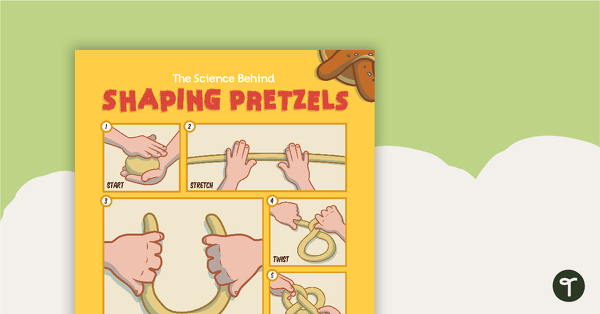
The Science Behind Shaping Pretzels – Poster
A poster illustrating the procedure about how to make a pretzel.
- Plus Plan
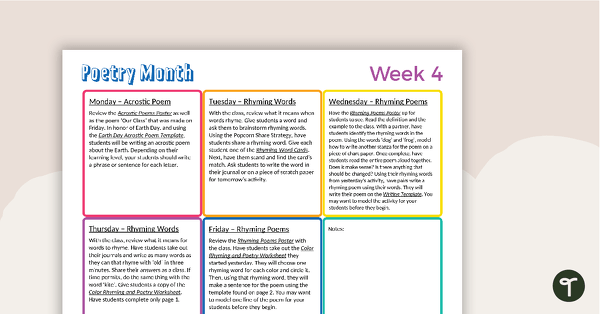
Primary Weekly Poetry Guide - Weeks 4 and 5
Use this weekly poetry guide to celebrate National Poetry Month in your primary classroom.
- Plus Plan
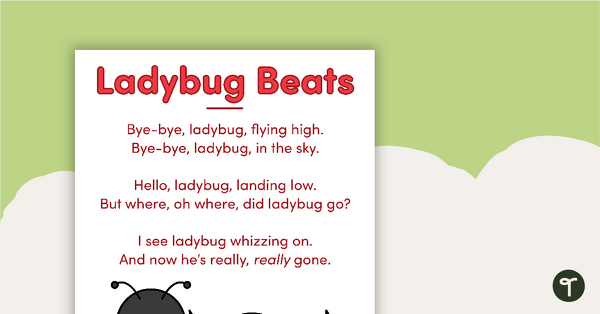
Ladybug Beats Poem - Simple Rhyming Poetry Poster
A simple rhyming poem to develop vocabulary, reading, speaking, and listening in the early years.
- Plus Plan
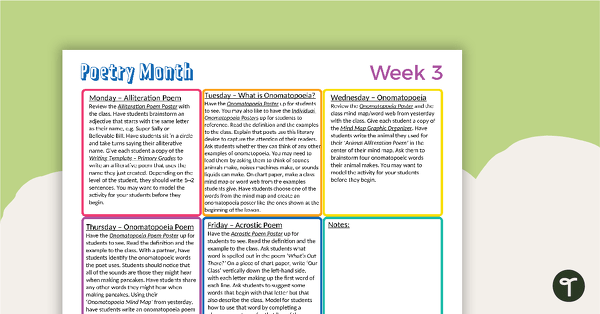
Primary Weekly Poetry Guide - Week 3
Use this weekly poetry guide to celebrate National Poetry Month in your primary classroom.
- Plus Plan
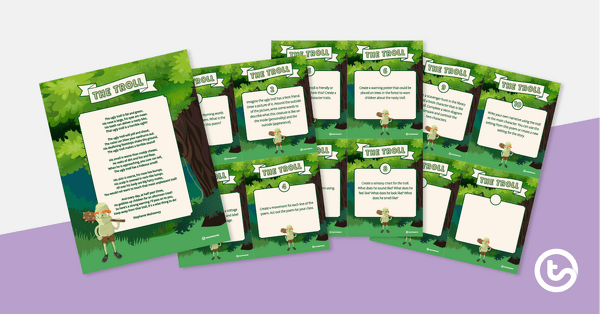
The Troll Poem and Task Cards
A poem and set of task cards about a Troll.
- Plus Plan
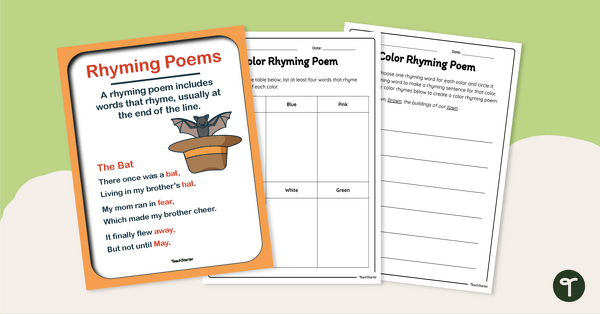
Rhyming Poems Poster and Template
Teach your students all about rhyming couplet poems with this classroom poster and accompanying student worksheets.
- Plus Plan
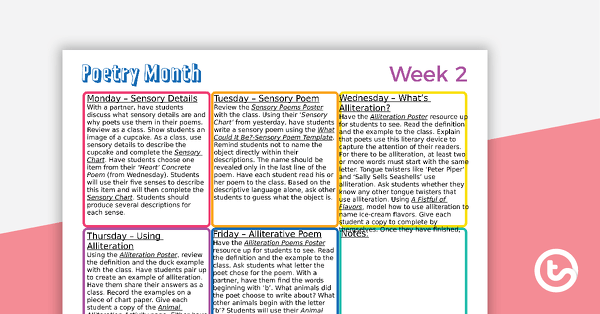
Primary Weekly Poetry Guide - Week 2
Use this weekly poetry guide to celebrate National Poetry Month in your primary classroom.
- Plus Plan
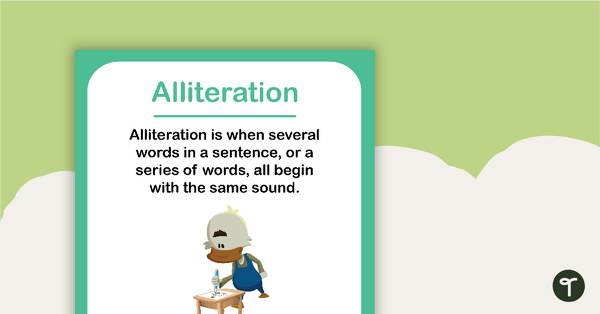
Alliteration Poster For Young Students
A poster to use with young students when teaching alliteration.
- Plus Plan
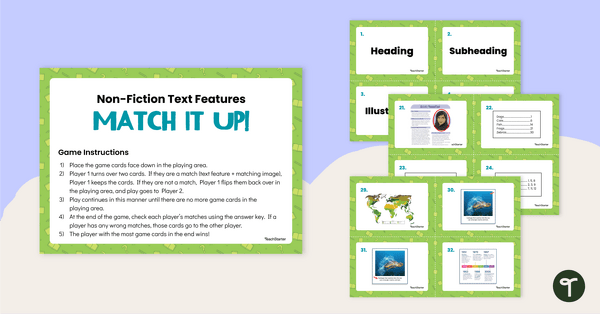
Nonfiction Text Features: Match It Up!
Download this nonfiction text features game to teach elementary school students about the common text features of informational texts.
- Plus Plan
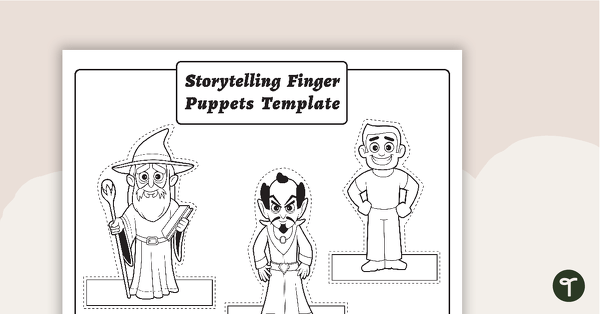
Storytelling Finger Puppets Template
A set of 15 finger puppets that can be used to spark the imagination for creative writing or to perform puppet shows.
- Plus Plan
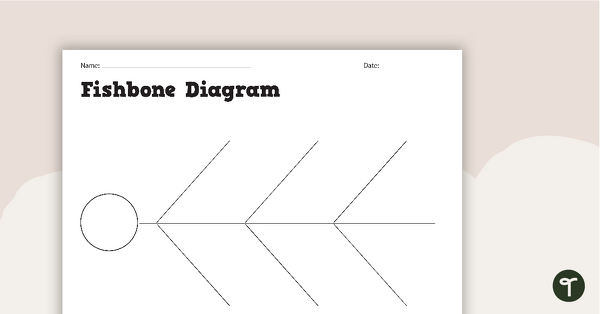
Fishbone/Herringbone Diagram Graphic Organizer
A blank fishbone and herringbone diagram to use in any subject area.
- Plus Plan
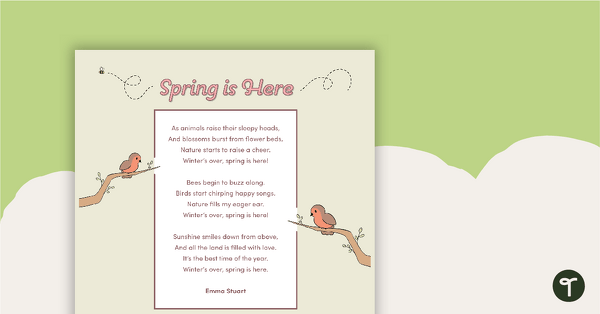
Spring Is Here Poem – Comprehension Worksheet
A comprehension worksheet paired with a poem about the season of spring.
- Plus Plan
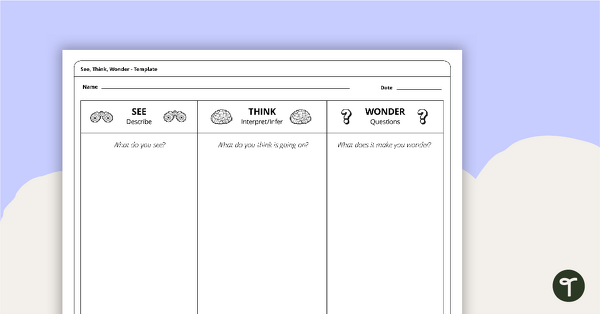
See, Think, Wonder - Template
A See, Think, Wonder Template is useful in encouraging students to make careful observations and interpretations.
- Plus Plan
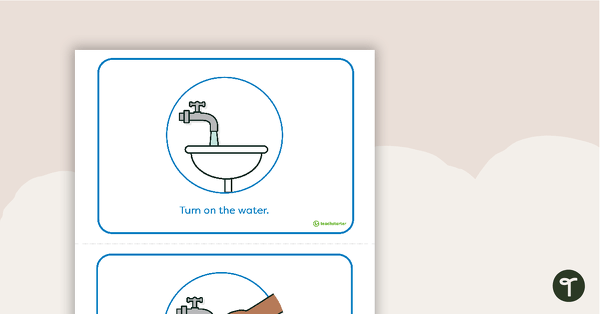
How to Wash Your Hands - Sequencing Cards
A set of 8 cards showing the steps for how to wash your hands properly
- Plus Plan
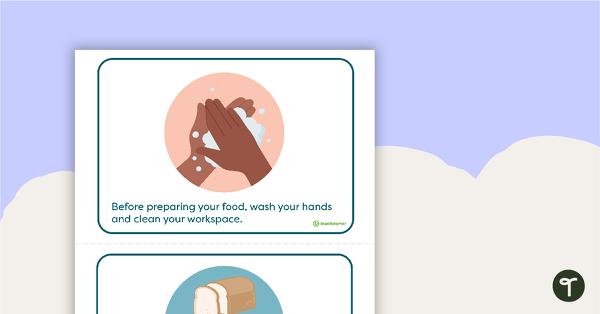
How to Make a PB and J Sandwich - Sequencing Cards
A set of 6 cards showing the steps to make a peanut butter and jelly sandwich.
- Plus Plan
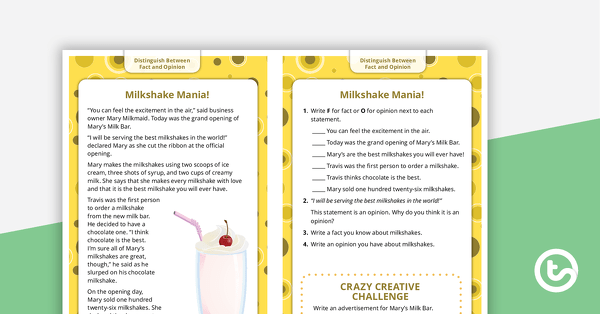
Comprehension Task Cards - Distinguishing Between Fact and Opinion
A set of comprehension task cards to help students distinguish between fact and opinion when reading.
- Plus Plan
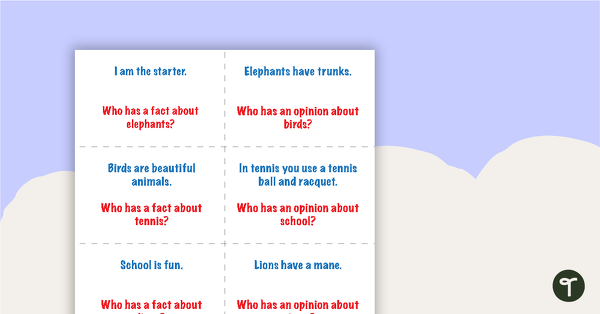
I Have, Who Has? Fact vs Opinion Game
Engage your students with this fact vs opinion game that makes learning collaborative and fun while reinforcing critical thinking skills.
- Plus Plan
Visual Literacy Graphic Organizer
A graphic organizer to use when responding to images during visual literacy activities.
- Plus Plan
Celebrating Poetry Month in the Primary Grades – Weeks 4 and 5
Celebrate National Poetry Month in the primary classroom with this planning guide and set of resources.
- Plus Plan
Celebrating Poetry Month in the Primary Grades - Week 3
Celebrate National Poetry Month in the primary classroom with this planning guide and set of resources.
- Plus Plan
Celebrating Poetry Month in the Primary Grades - Week 2
Celebrate National Poetry Month in the primary classroom with this planning guide and set of resources.
- Plus Plan
Publishing a Recipe Book
A 60 minute lesson in which students will publish a simple recipe for bush stew.
- Plus Plan
Spring Is Here – Animated Poem Video
Use this spring poem with your students to welcome in the season of springtime.
- Plus Plan
Exploring Opinion Pieces Unit Plan - Grade 1 and Grade 2
This English unit has been designed to introduce the persuasive genre to younger students; specifically, the purpose, structure and language features of opinion pieces.
- Plus Plan
Exploring Procedural Texts Unit Plan
This English Language Arts unit has been designed to introduce procedural texts to younger students. It addresses the purpose, structure and language features of instructions and recipes.
- Plus Plan
Independent Writing - How to Make Nature Stew
A 60 minute lesson in which students will independently write a recipe for nature stew.
- Plus Plan
Guided Writing - How To Make Fruit Salad
A 60 minute lesson in which students will jointly construct a simple recipe for fruit salad in small groups.