ELAR 3.2
Developing and sustaining foundational language skills: listening, speaking, reading, writing, and thinking--beginning reading and writing. The student develops word structure knowledge through phonological awareness, print concepts, phonics, and morphology to communicate, decode, and spell. The student is expected to:
- (1) demonstrate and apply phonetic knowledge by:
- (A) decoding multisyllabic words with multiple
sound-spelling patterns such as eigh, ough, and en;
- (i) decoding multisyllabic words with closed syllables; open syllables; VCe syllables; vowel teams, including digraphs and diphthongs; r-controlled syllables; and final stable syllables;
- (ii) decoding compound words, contractions, and abbreviations;
- (iii) decoding words using knowledge of syllable division patterns such as VCCV, VCV, and VCCCV with accent shifts;
- (iv) decoding words using knowledge of prefixes;
- (v) decoding words using knowledge of suffixes, including how they can change base words such as dropping e, changing y to i, and doubling final consonants; and
- (vi) identifying and reading high-frequency words from a research-based list;
- (vii) demonstrate and apply spelling knowledge by:
- (B) spelling multisyllabic words with closed syllables; open
syllables; VCe syllables; vowel teams, including digraphs and diphthongs;
r-controlled syllables; and final stable syllables;
- (i) spelling homophones;
- (ii) spelling compound words, contractions, and abbreviations;
- (iii) spelling multisyllabic words with multiple sound-spelling patterns;
- (iv) spelling words using knowledge of syllable division patterns such as VCCV, VCV, and VCCCV;
- (v) spelling words using knowledge of prefixes; and
- (vi) spelling words using knowledge of suffixes, including how they can change base words such as dropping e, changing y to i, and doubling final consonants;
- (vii) alphabetize a series of words to the third letter; and
- (C) write complete words, thoughts, and answers legibly in cursive leaving appropriate spaces between words.
- (A) decoding multisyllabic words with multiple
sound-spelling patterns such as eigh, ough, and en;
- Plus Plan
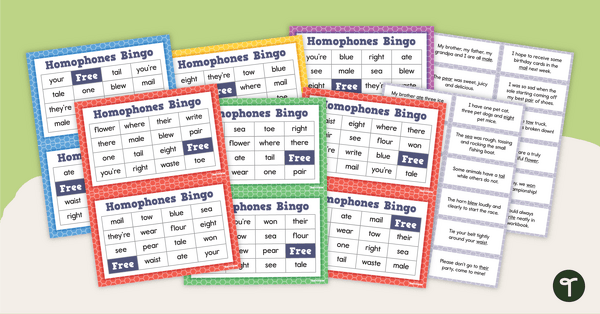
Homophones Bingo
Make learning about homophones and their definitions an engaging whole-class activity with this homophones bingo game.
- Plus Plan
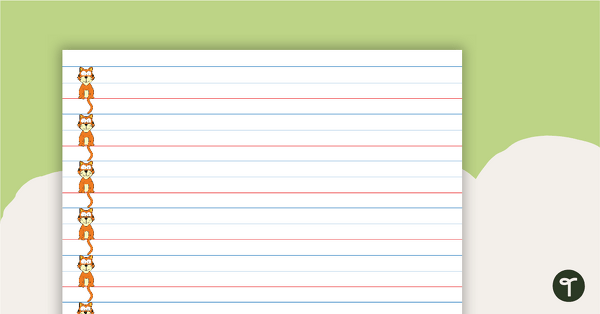
Cat Handwriting Lines - Solid Middle Line
A set of handwriting lines to use when teaching your students how to sit their letters properly on a line.
- Plus Plan
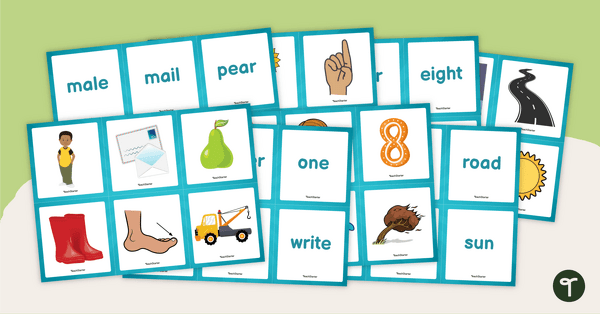
Homophone Match-Up Cards
Teach your students the meanings and spellings of some common homophones with this set of 32 match-up cards.
- Plus Plan
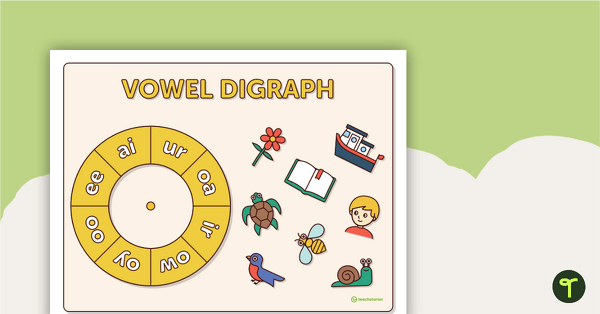
Vowel and Consonant Digraph Spin Game
Practice consonant and vowel digraphs in the classroom with a fun phonics game for students!
- Plus Plan

Digraph Road Trip Board Game
A transport themed phonics board game that explores common digraphs.
- Plus Plan
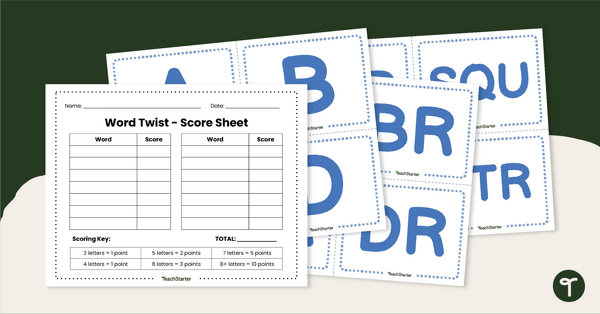
Word Twist - Word Building Game
Encourage word building in your classroom with this fun Boggle-style game!
- Plus Plan
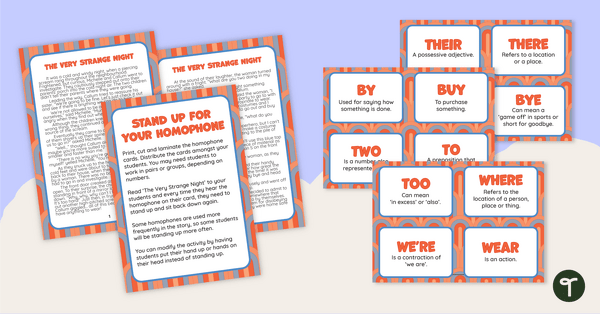
Stand Up For Homophones - Whole-Class Activity
Help your students learn the different homophones and their meanings with an interactive, whole-class game.
- Plus Plan
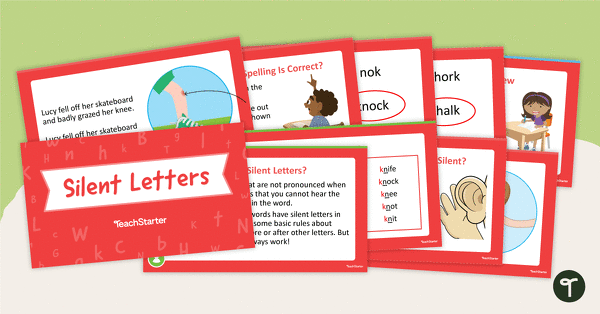
Silent Letters PowerPoint
A 24-slide editable PowerPoint presentation about silent letters.
- Plus Plan

September Homeschool Resource Pack - Grade 3
A collection of age-appropriate, Grade 3 teaching resources and activities for homeschool parents to use with their children during the month of September.
- Plus Plan
Celebrating Poetry Month in the Primary Grades - Week 3
Celebrate National Poetry Month in the primary classroom with this planning guide and set of resources.
- Plus Plan
Celebrating Poetry Month in the Primary Grades - Week 2
Celebrate National Poetry Month in the primary classroom with this planning guide and set of resources.