VC2E6LE04
explain the way authors use sound and imagery to create meaning and effect in prose and poetry
- explaining how imagery builds emotional connections and engagement with the story or theme
- identifying the imagery used in narratives or poetry about Aboriginal and Torres Strait Islander Peoples’ Country/Place
- describing the effects of assonance, alliteration and onomatopoeia in a poem
- explaining the effect of rhythm in ballads
- Plus Plan
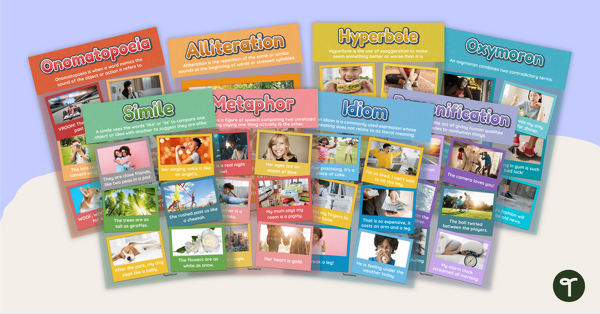
Figurative Language Poster Pack
Remind your students about the most common types of figurative language with this set of classroom display posters.
- Plus Plan

Elements of Poetry Teaching Slides
Explore the key elements of poetry with your students using this comprehensive and age-appropriate slide deck perfect for your poetry writing unit.
- Plus Plan
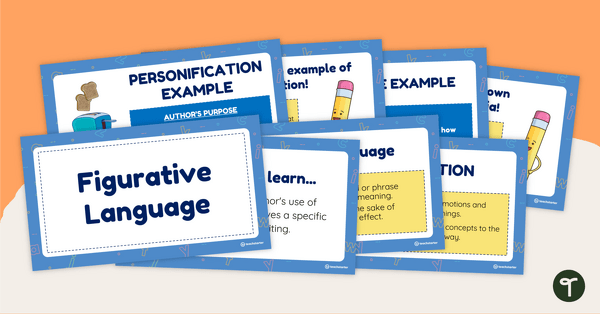
Figurative Language PowerPoint
Explore figurative language with your students using this comprehensive teaching presentation.
- Plus Plan
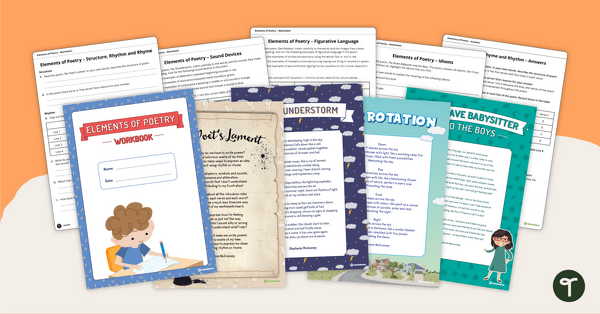
Elements of Poetry Workbook
Explore the wonders of poetry with this set of poems and accompanying worksheets designed specifically for children.
- Free Plan
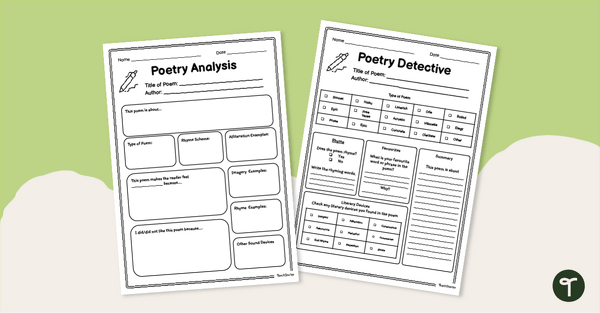
Poetry Analysis Worksheet Pack
Analyse and comprehend a variety of poetry types with a printable Poetry analysis worksheet pack.
- Plus Plan
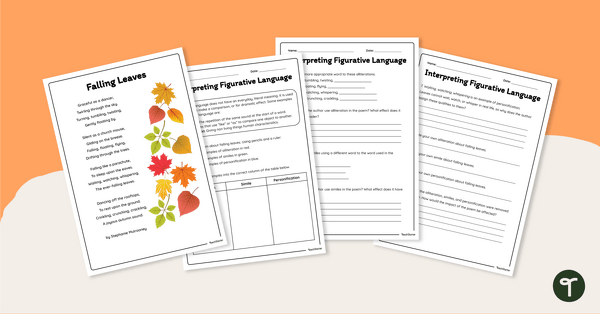
Interpreting Figurative Language - Worksheets
Explore figurative language in poetry with this age-appropriate poem and accompanying vocabulary questions.
- Plus Plan
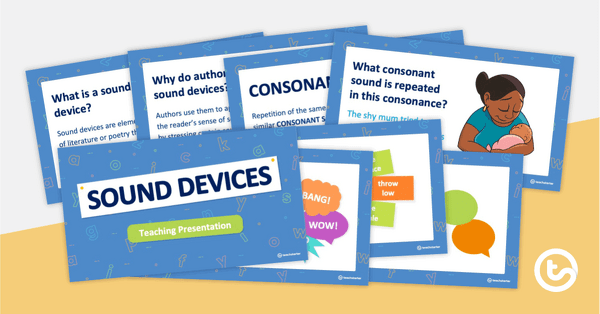
Sound Devices PowerPoint
An editable PowerPoint to use when teaching sound devices to your students.
- Plus Plan
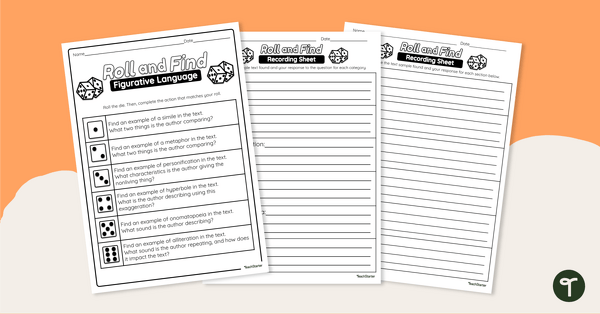
Roll and Find – Figurative Language Worksheet
Explore, identify and interpret figurative language with this engaging roll and find activity.