VC2M1SP02
give and follow directions to move people and objects to different locations within a space
- interpreting and following directions around familiar locations, and understanding the meaning and importance of the words when giving directions; for example, using words like ‘forwards’ and ‘backwards’, ‘straight ahead’, ‘left’ or ‘right’ to describe movement and giving instructions like ‘Keep going straight until you reach the end of this passage and then turn to your right’
- creating and following an algorithm consisting of a set of instructions to move an object to a different location; for example, role-playing being a robot and following step-by-step instructions given by another classmate to move from one place to another, only moving as instructed
- following directions to move people into different positions within a line using both ordinal and positional language to describe their position; for example, directly comparing heights and following directions using ordinal and positional language to line up in height order
- describing a familiar journey across Country/Place using directional language
- Plus Plan
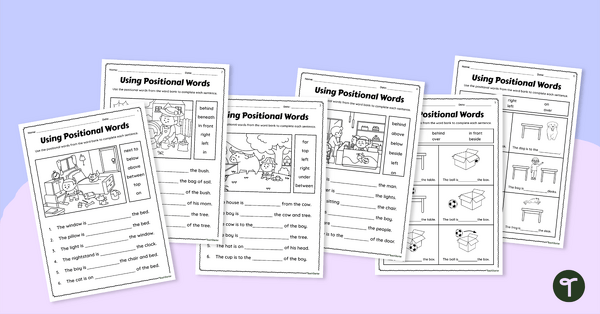
Position Worksheets
Use these position worksheets to make sure your students are ‘on top of’ their spatial awareness skills.
- Plus Plan
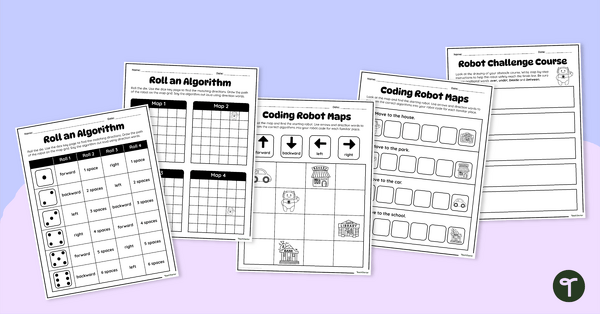
Giving Directions Worksheet Pack - Year 1 Location and Position
Deepen location and position understanding with this giving directions worksheet pack.
- Plus Plan
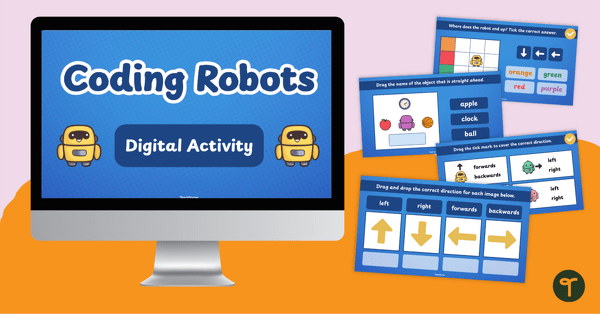
Following Directions Activity — Coding Robots Interactive
Use this engaging activity to introduce directional and positional language.
- Plus Plan
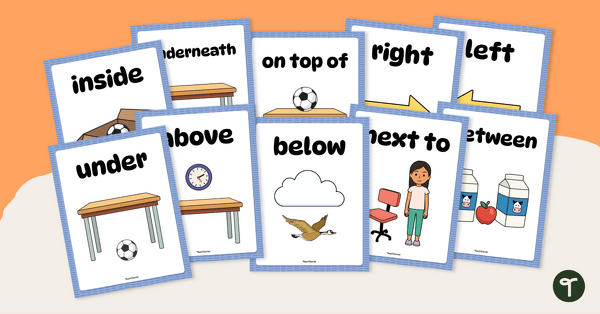
Positional Language Poster Pack
Support positional language development with this engaging poster pack.
- Plus Plan
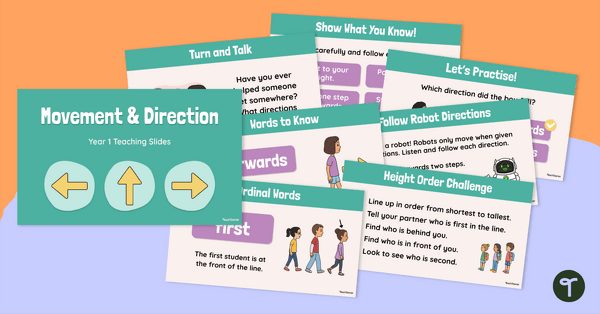
Year 1 Positional Language Teaching Slides
Support Year 1 positional language instruction with this engaging teaching slide deck.
- Plus Plan
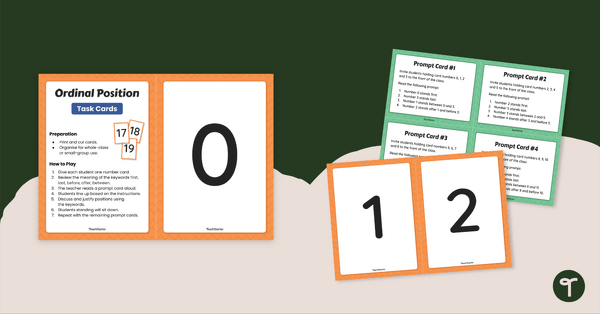
Ordinal Position Task Cards
Support early maths learning with this ordinal position activity designed to help Foundation students explore position and order through a fun, hands‑on number track task.
- Plus Plan
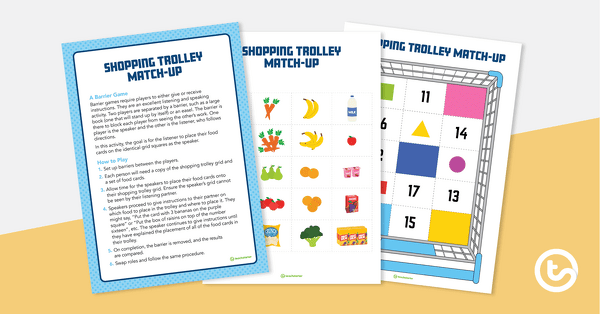
Shopping Trolley Match-Up Activity
A fun activity to be used to reinforce a variety of mathematical concepts.