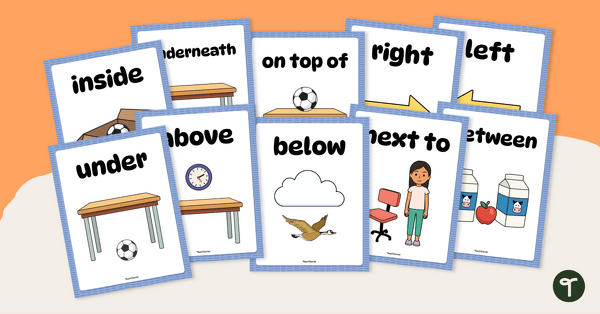
Support positional language development with this engaging poster pack.
Positional Language Posters That Build Spatial Awareness and Vocabulary
Teaching positional language is an essential part of early maths and oral language development. It allows students to describe where objects are and how things move in relation to one another—skills that are critical for giving directions, following instructions and building spatial reasoning.
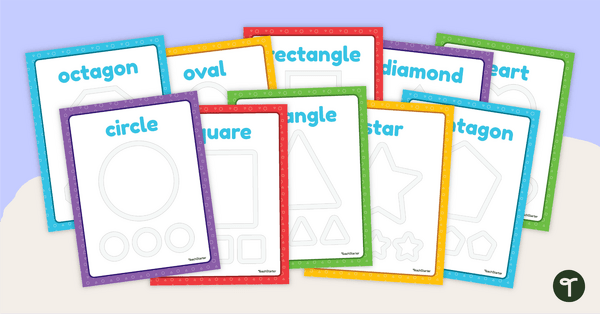
This positional language poster pack has been designed to explicitly teach key vocabulary through clear visuals and simple, student-friendly text. Each poster focuses on one positional term, such as under, above, next to or between, paired with a visual example to make the concept easy to understand.
The consistent layout and clear imagery make these posters perfect for display and ongoing reference.
Creative Classroom Ideas for Teaching Location and Position
This location and position poster pack can be used in a variety of creative and engaging ways beyond simply displaying it on your wall. It is ideal for incorporating movement, discussion and real-world application into your lessons.
Here are some ideas to get you started:
- Movement-based learning: Call out a positional word and have students physically demonstrate it using classroom objects or their own bodies. This helps anchor meaning through action.
- Classroom directions game: Use the posters as a reference while giving multi-step instructions (e.g. “Put your pencil under the chair, then stand next to your desk”).
- Scavenger hunts: Challenge students to find examples of each positional term around the classroom or school environment.
These varied approaches help students connect language with real experiences, deepening their understanding of location and position concepts.
Download This Position and Location Poster Pack Today
Getting started is simple. This position and location resource is ready to use with minimal preparation, making it a practical addition to your classroom toolkit.
You will receive:
- A ready-to-download PDF for quick and easy printing
- An editable Google Slides version so you can customise the posters to suit your classroom (please note you will be prompted to make your own copy before accessing)
With flexible formats and clear design, this resource makes it easy to embed positional vocabulary into your daily teaching.
This resource was created by Lindsey Phillips, a TeachStarter collaborator.
More Location and Position Activities
Check more of our location and position activities below!
teaching resource
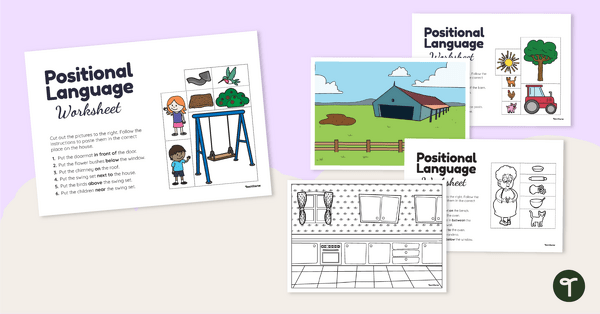
Positional Language Hands-On Activity Mats
Engage students with positional language using these fun hands-on activity mats, where they follow instructions to place pictures within five different scenes.
teaching resource
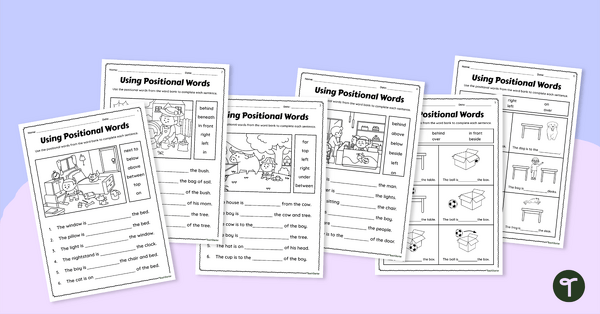
Position Worksheets
Use these position worksheets to make sure your students are ‘on top of’ their spatial awareness skills.
teaching resource
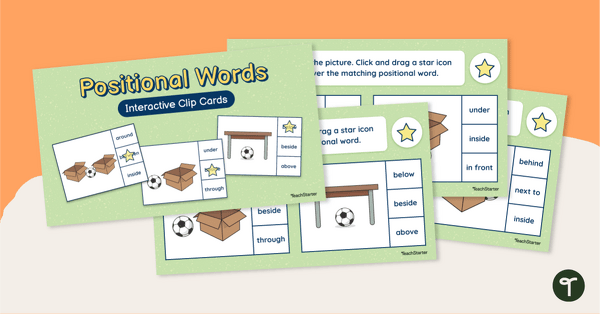
Position Words – Interactive Peg Cards
Teach position words with these interactive digital clip cards, designed to help young learners master prepositions.


0 Comments
Write a review to help other teachers and parents like yourself. If you'd like to request a change to this resource, or report an error, select the corresponding tab above.