VC2S4U09
heat energy can be generated from different sources; temperature changes may happen when heat is transferred from one object to another
- exploring how we sense heat, and identifying sources of heat such as the Sun, fire, electrical devices and geothermal springs
- recognising that temperature can be measured using a thermometer and, with assistance, measuring what happens when a cold object is placed in direct contact with a warm object, and proposing explanations
- modelling the movement of heat from one object to another using drawing or role-play
- investigating how well heat is transferred by different types of materials such as metals, plastics and ceramics, and identifying how materials are used to keep things hot or cold
- exploring how Aboriginal and/or Torres Strait Islander Peoples developed clothing from animal skins such as possum furs and kangaroo-skin cloaks, which trap heat close to the body and keep the wearer warm, and comparing the thermal properties of these materials with other natural fibres such as wool and cotton
- investigating traditional fire-starting methods used by Aboriginal and/or Torres Strait Islander Peoples and their understandings of the transformation of energy
- Plus Plan
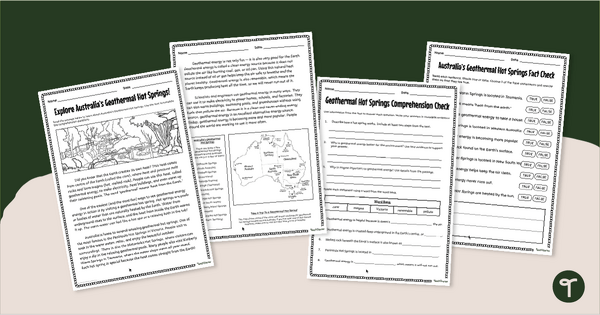
Exploring Australia’s Geothermal Hot Springs Worksheet Pack
Explore examples of geothermal energy in Australia with a Geothermal Hot Springs Worksheet Pack.
- Free Plan
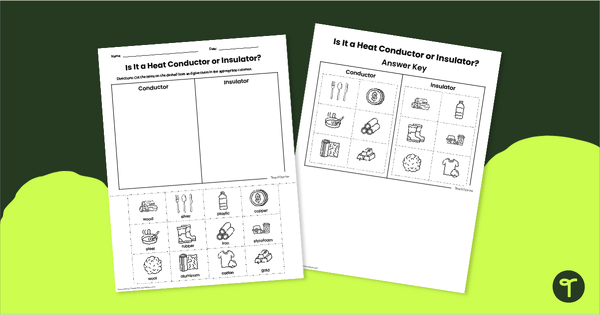
Thermal Conductor or Insulator? Worksheet
With this hands-on Thermal Conductor or Insulator Worksheet, students will cut and sort conductors and insulators.
- Plus Plan
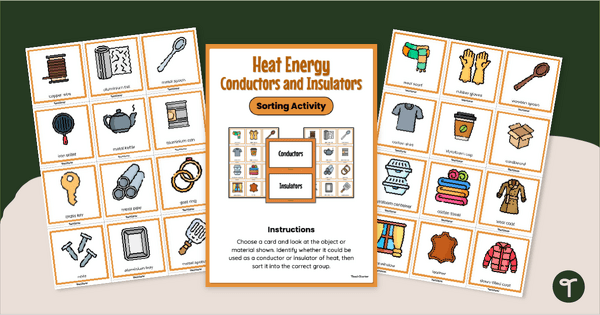
Sorting Heat Conductors and Insulators Activity
Explore and identify examples of thermal energy conductors and insulators with a printable Heat Conductors and Insulators Activity.
- Plus Plan
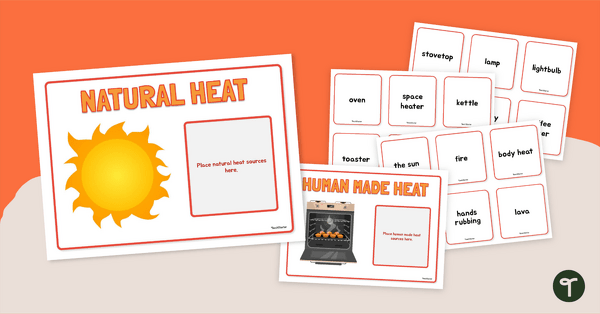
Natural and Human Made Heat Sources Sort
Explore the different man-made and natural heat sources with this sorting activity.
- Plus Plan
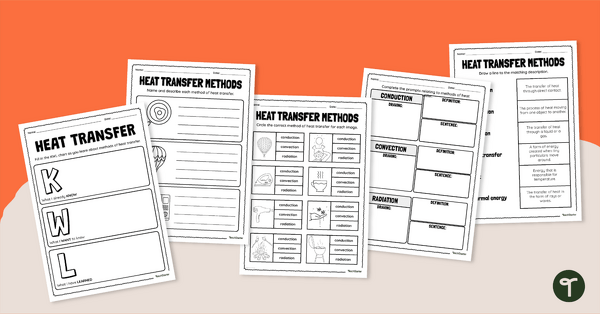
Heat Transfer Methods Worksheet Pack
Learn about the different ways heat can be transferred using this guided set of heat transfer worksheets.
- Free Plan
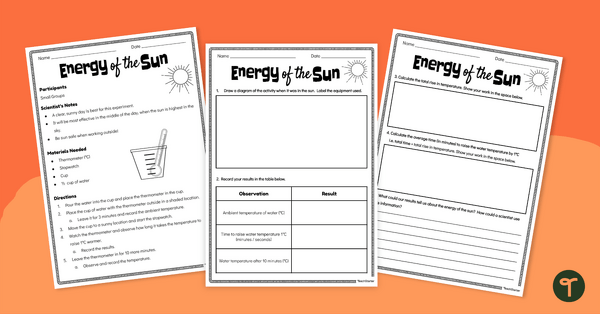
Energy of the Sun Worksheet
Investigate and record the amount of energy from the sun with this science experiment for kids.
- Plus Plan
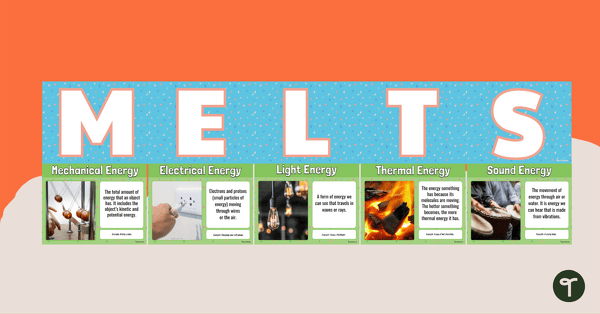
Forms of Energy Poster Pack
Display information about mechanical, electrical, light, thermal and sound energy with this poster pack.
- Plus Plan
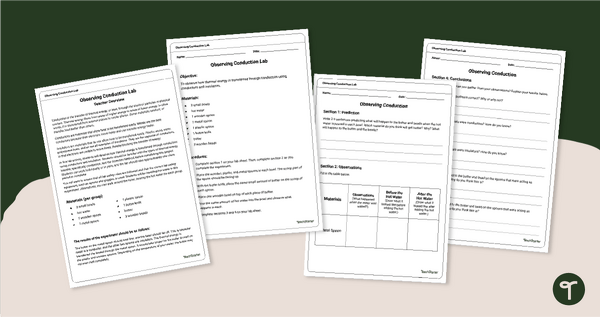
Observing Thermal Conduction Experiment
Teach students to make predictions about and observe thermal energy transfer through this conduction experiment.
- Plus Plan
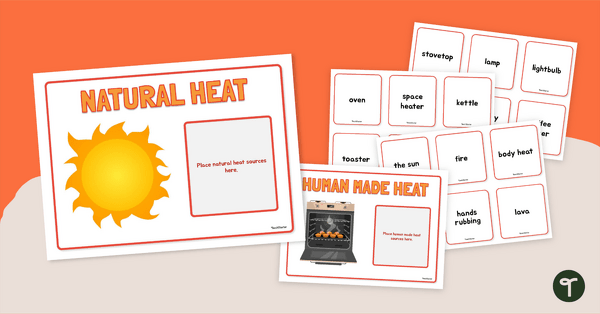
Natural and Human Made Heat Sources Sort
Explore the different man-made and natural heat sources with this sorting activity.
- Plus Plan
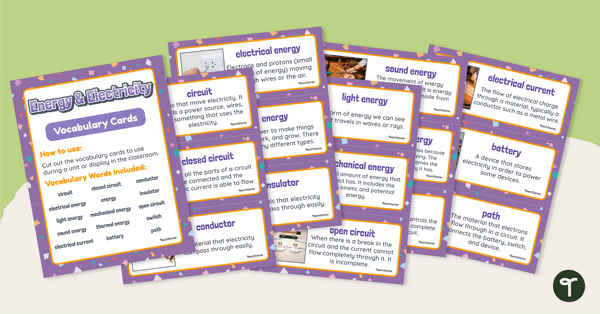
Energy and Electricity Vocabulary Cards
Reinforce science vocabulary in your classroom with this set of word wall cards that focus on forms of energy and electricity.