Victorian Curriculum
VC2S6I06
scientific ideas, findings, patterns, trends and relationships can be communicated for a specific purpose and audience, using various presentation formats, scientific vocabulary and digital tools as appropriate
- constructing a persuasive text for local council to argue for the use of an erosion mitigation strategy in a local area
- constructing a scientific report to share findings, such as how plants responded to changes in physical conditions such as temperature and salinity, and using appropriate vocabulary, data representations, units and sentence structures
- exploring whether there is a ‘correct’ way of representing particles, and creating an animation to teach other students about the motion and arrangement of particles in solids, liquids and gases
- acknowledging and exploring Aboriginal and/or Torres Strait Islander Peoples’ ways of representing and communicating understandings of the night sky, and its use in timekeeping, as evidenced in rock paintings, paintings and stone arrangements
- constructing a poster or slideshow comparing everyday examples of reversible and irreversible changes
Show more
4
teaching resources for those 'aha' moments
- Plus Plan
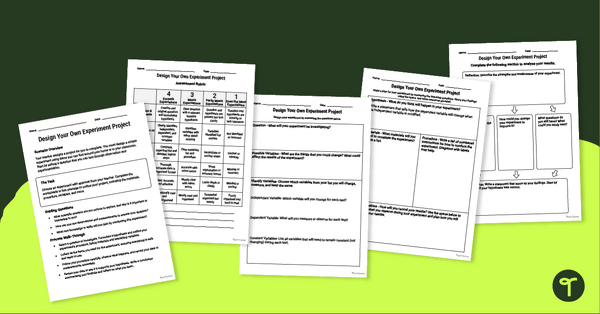
Design Your Own Science Experiment Project
Design your own science experiments and science fair projects with an experimental design project guide and planning templates.
- Plus Plan
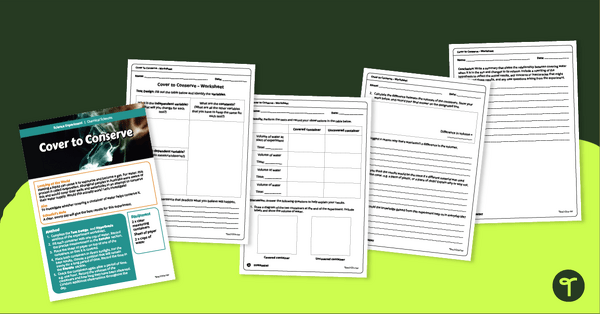
Evaporation Experiment - Cover to Conserve
Investigate if evaporation can be reduced by covering a body of water with a hands on Evaporation Experiment.
- Plus Plan
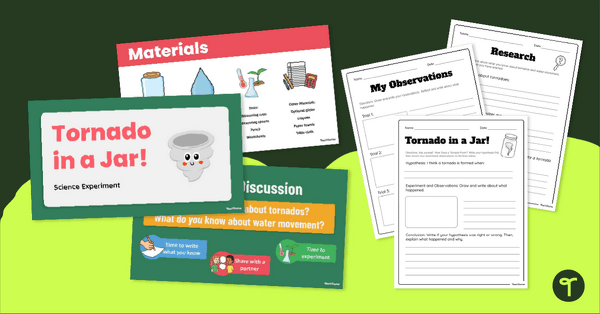
Tornado in a Jar Experiment
Create a Tornado in a Jar with an interactive science experiment slide deck and Tornado in a Jar Experiment Worksheet.
- Plus Plan
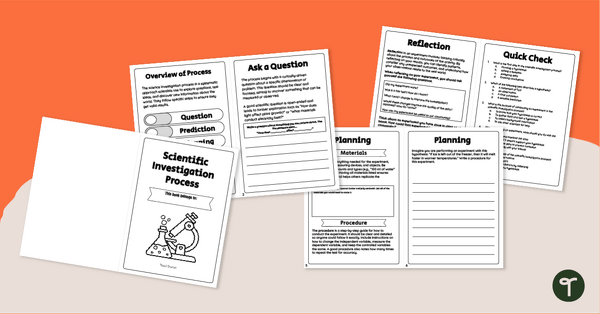
Scientific Investigation Process – Workbook
Print a Scientific Investigation Process Workbook to help your students learn and practice the steps in the scientific method.