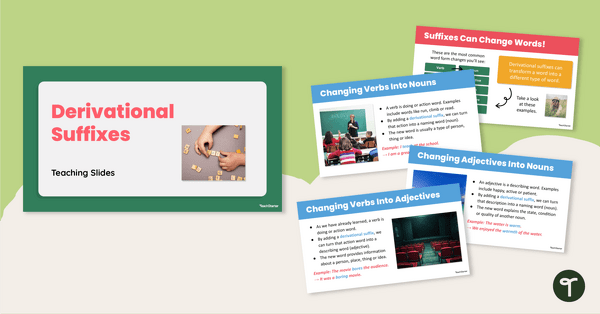
Teach how derivational suffixes can transform words and their meanings with this comprehensive teaching presentation for upper elementary students.
Teach Derivational Suffixes with Ease!
Most students are familiar with the concept that a suffix is a group of letters that can be added to the end of a word. But do they know what derivational suffixes are? This term is used much less frequently!
Derivational suffixes are powerful little word endings that can completely change the meaning and grammatical category of a base word. For example, adding -ness to the word “happy” turns an adjective into a noun (“happiness”). Another such example is adding -ful to the word “help,” which transforms a verb into an adjective (“helpful”). Understanding how derivational suffixes can be used to enact these changes is an important aspect of vocabulary development and morphology knowledge.
This comprehensive 24-slide teaching presentation introduces students to derivational suffixes in a structured and engaging way. It starts by explaining the difference between derivational suffixes and inflectional suffixes, then explains some of the most common examples of how derivational suffixes can change a word from one part of speech to another.
The grammatical changes that can be created by adding a derivational suffix included in this presentation are:
- Verbs to nouns
- Verbs to adjectives
- Adjectives to nouns
- Nouns to adjectives
- Nouns to verbs
- Adjectives to verbs
This slide deck downloads as a Microsoft PowerPoint or Google Slides presentation. Read on to learn more about the benefits of using this versatile teaching tool in your classroom!
Grammar Lessons Made Easy with This Derivational Endings Presentation
This derivational endings slide deck was designed by our team with busy teachers in mind! It saves preparation time, maintains student interest, and ensures concepts stick. Some of the standout benefits include:
- Clear, student-friendly design – Slides are visually appealing and uncluttered, making it easy to explain concepts step-by-step without cognitive overload.
- Age-appropriate examples – Words and examples are carefully chosen to match the vocabulary levels of elementary students, ensuring accessibility without oversimplification.
- Frequent review activities – Interactive slides and practice questions provide students with the opportunity to apply their knowledge immediately, reinforcing their understanding.
Download to Explore Derivational Suffix Examples
Use the dropdown menu on the Download button to access your preferred version of this derivational suffixes resource. (Note: You will be prompted to make a copy of the Google Slides presentation before accessing it.)
Just save it to your device, open it on your interactive whiteboard or projector, and you’re ready to teach. You’ll have everything you need for a comprehensive lesson on derivational suffix examples right at your fingertips!
This resource was created by Kaylyn Chupp, a teacher in Florida and a Teach Starter collaborator.
Complement This Derivational Suffix Resource
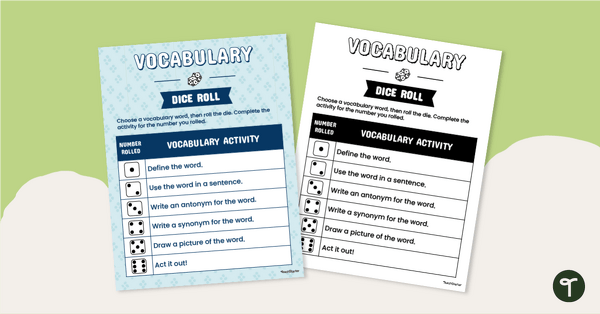
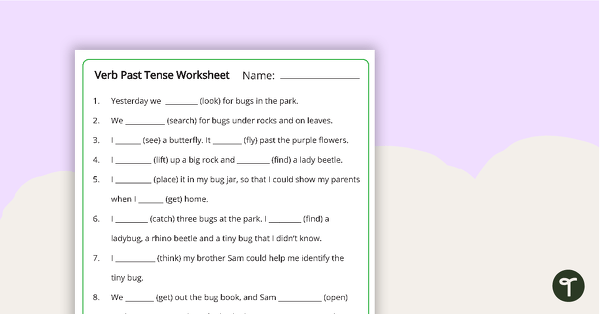
As for any grammar concept, regular practice is the key! Click below to access more teacher-created, curriculum-aligned resources to use when teaching derivational suffixes to your students.
[resource:4949839] [resource:4964563] [resource:4955735]

0 Comments
Write a review to help other teachers and parents like yourself. If you'd like to request a change to this resource, or report an error, select the corresponding tab above.