
Teach five senses imagery with an engaging slide deck that helps students understand how authors use descriptive language to create vivid mental pictures and richer reading experiences.
What Is Sensory Imagery in Literature?
Helping students progress from literal descriptions to using imagery in their writing can be a real challenge for teachers. To make this learning leap, students must understand how authors make careful, deliberate choices about the best words to help readers see, hear, taste, smell and feel the text in their minds. This skill truly brings the settings, characters and events of a text to life.
This 25-slide teaching presentation introduces students to the concept of five senses imagery. It teaches students how authors bring ideas to life by appealing to the five senses through purposeful vocabulary choices.
Some of the topics addressed in this presentation include:
- What imagery is and how it is used in texts
- Why authors use imagery to engage readers
- The difference between literal language and imagery
- The five types of sensory imagery: sight, sound, taste, smell and touch
- How word choice creates strong imagery
- Examples and explanations that help students identify imagery in context
Designed with classroom engagement in mind, this presentation includes built-in check-for-understanding activities throughout. These interactive opportunities help teachers quickly assess student understanding, identify misconceptions and provide additional support where needed.
Five Senses Imagery Activities to Deepen Student Understanding
This five senses imagery slideshow is an excellent resource for introducing your class to descriptive language and the role it plays in bringing literature to life. If you’re looking to follow up with more whole-class, small-group or independent activities, then take a look at these suggestions from our experienced team:
- Sensory Imagery Detective – Provide students with short excerpts from poems or picture books and ask them to highlight examples of sight, sound, taste, smell and touch imagery. Students can explain which sense each example appeals to and why.
- Mystery Object Descriptions – Place an object inside a bag and have students feel it without looking. Students write descriptions using touch imagery before revealing the object and discussing effective word choices.
- Five Senses Writing Walk – Take students outside the classroom to observe their surroundings. Encourage them to record what they can see, hear, smell and touch. They can then use their observations to create a descriptive paragraph.
These activities help students build confidence applying imagery independently while creating authentic opportunities to discuss language choices and their impact on readers.
Download These 5 Senses Imagery Teaching Slides
This sensory imagery slide deck is available to download as a Microsoft PowerPoint or Google Slides file. Use the dropdown menu on the Download button to access your preferred version. (Note: You will be prompted to make a copy of the Google Slides presentation before accessing it.)
Project the resource onto your screen and work through the slides as a class for a paperless ELA lesson. We encourage you to work through the slides at your own pace, pausing to discuss examples, complete the check-for-understanding activities and address any individual student needs.
This resource was created by Dani Ironmonger, a teacher in Wisconsin and a Teach Starter collaborator.
More Resources for Exploring the Five Senses in Writing
When it comes to teaching concepts like sensory language, repeated exposure is key! Click below to explore more teacher-created, curriculum-aligned resources to use when exploring this important topic with your students.
teaching resource
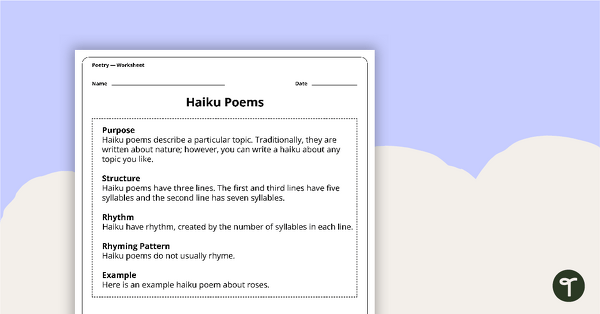
Write a Haiku Poem Worksheet
Set your students up for success when writing a haiku poem with this set of scaffolded, easy-to-follow worksheets.
teaching resource
Poetic Devices Teaching Slides
Explore examples of poetic devices using this comprehensive and age-appropriate slide deck perfect for your poetry writing unit.
teaching resource
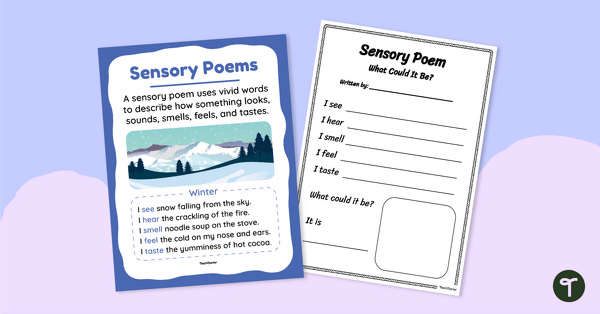
Five Senses Poem Poster and Template
Use this five senses poem example and accompanying template to teach your students how to write a sensory poem.

0 Comments
Write a review to help other teachers and parents like yourself. If you'd like to request a change to this resource, or report an error, select the corresponding tab above.