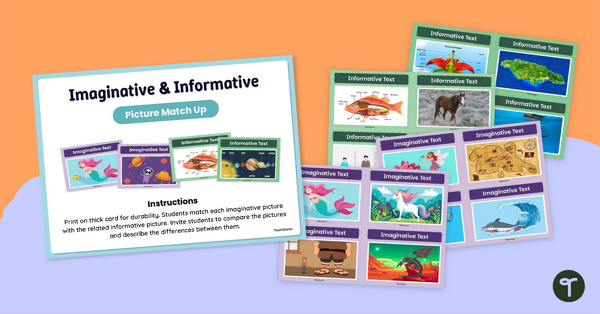
This engaging visual literacy activity invites students to explore how images communicate meaning by matching imaginative and informative pictures.
Comparing Images in Imaginative Texts with Images in Informative Texts
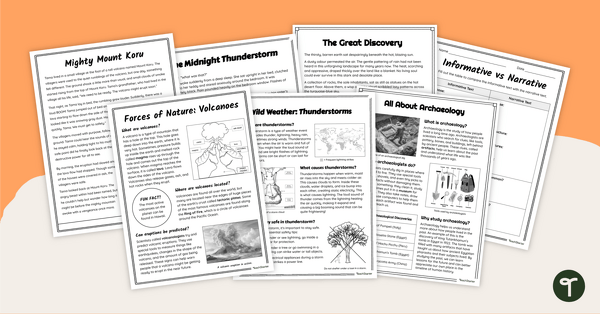
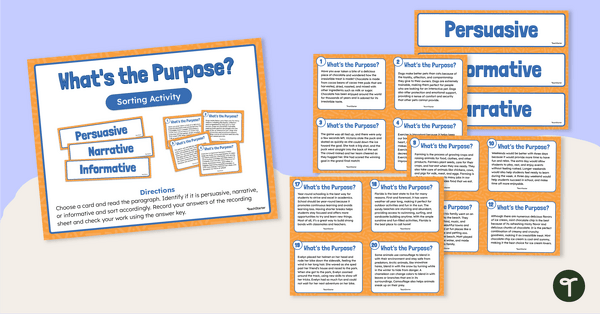
Students explore how texts can look and feel different depending on their purpose by matching imaginative and informative pictures, then comparing and contrasting the features they notice. This activity helps learners recognize how images communicate meaning, identify key differences in style and intention, and build early analytical language skills.
Through guided matching tasks, students practice describing what they see, noticing details, and explaining how imaginative images (like stories or cartoons) differ from informative ones (like diagrams or real‑world photos). The resource supports foundational visual literacy and encourages confident discussion about how images can entertain, inform, or teach.
Image Comprehension in the Early Years
In the early years, developing image comprehension is key to helping students understand how visuals communicate meaning. This activity invites learners to match imaginative and informative pictures, then compare and contrast the features they notice, building awareness of how texts look and feel different depending on their purpose.
As students describe details, identify stylistic differences, and discuss the intention behind each image, they begin to recognize how imaginative visuals entertain or express ideas while informative images clarify, explain, or teach. Through guided matching and simple analytical prompts, young learners strengthen foundational visual literacy skills and grow confident in talking about how images shape understanding.
Download and Explore Comparing Images Today
Use the dropdown menu to choose between the easy to print PDF version of this resource or the editable Google Slides version of this resource.
This resource was created by Lindsey Phillips, a teacher in Michigan and a Teach Starter collaborator.
More Imaginative and Informative Comparison Resources
Are you looking for more imaginative and informative comparison resources to use in the classroom? We have you covered…
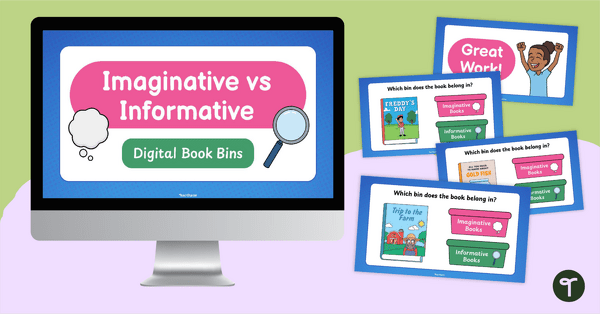
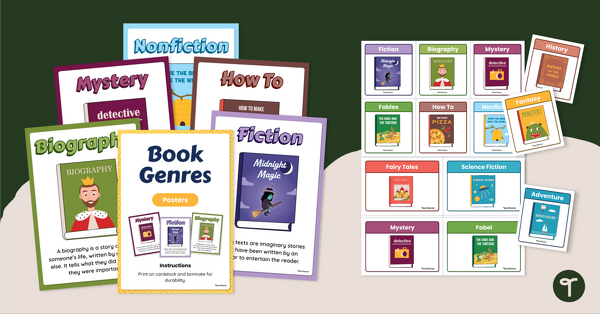
Build strong comprehension skills with this engaging Imaginative vs Informative Texts PowerPoint. Use this imaginative vs informative book bins digital activity to help students explore the difference between these types of texts. Brighten up your classroom or library while helping students identify the genre of book for kids with this eye-catching Book Genre Posters and Labels pack!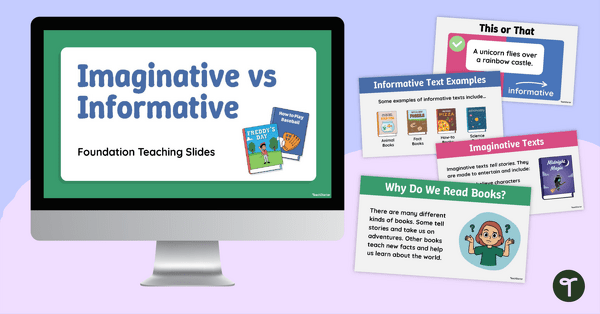
teaching resource
Imaginative vs Informative PowerPoint
teaching resource
Imaginative vs Informative Book Bins Digital Activity
teaching resource
Book Genre Posters and Labels

0 Comments
Write a review to help other teachers and parents like yourself. If you'd like to request a change to this resource, or report an error, select the corresponding tab above.