Author's Purpose Teaching Resources
Help students understand the concept of author's purpose with printable worksheets, comprehension activities, and more teaching resources created by our teacher team just for elementary teachers.
This teaching resource collection includes curriculum-aligned activities and worksheets designed to help students when learning to identify if the author is trying to persuade, inform or entertain the reader. Editable resources are available so you can easily differentiate instruction for individual learners and your state standards.
Has it been a while since you taught ELA, or at least this particular part of the curriculum? We know a quarter of American teachers switch grades every year, and sometimes you could use a quick refresher.
What Is an Author's Purpose? A Kid-Friendly Definition
The author's purpose definition our ELA teachers use with students is simple: This is the writer's reason for writing the text. Understanding that reasoning will help students develop their reading comprehension skills and later help them better shape their own writing.
Here are five of the common author's purposes that we teach elementary students:
- To inform
- To persuade
- To explain
- To describe
- To entertain
How Do You Teach Author's Purpose?
Teaching author's purpose can involve a host of different strategies and activities, depending on your students' grade level and abilities. But here are a few tips from our tacher team to get you started!
- Modeling — Show students how to identify the author's purpose by analyzing a text together. Display a text and ask students to identify the author's purpose.
- Graphic Organizers — Use graphic organizers to help students identify and organize information about the author's purpose. For example, students can use a T-chart to list the main points of the text and then identify whether the purpose is to inform, persuade, or entertain.
- Class Discussion — Something as simple as leading a class discussion about different texts and their author's purpose can be an effective way to teach this core reading concept. Ask kids to share their opinions and understanding about the text.
- Writing Activities — Author's purpose may be core to reading instruction, but there's no reason you can't bring writing into the equation as a teacher! Prompt your class to write a text with a specific author's purpose in mind. For example, students can write an informative article with the purpose of informing!
- Role-Playing — Have students act out a scene or a skit where they take on the role of the author and present their text to the class. This will help them to understand better the purpose of their writing.
Helpful Examples of Author's Purpose to Share With Your Students
Looking for some good examples of author's purpose to present to your students? Try these!
One example of an author's purpose could be a news article that is written to inform the readers about a current event or a scientific study that is written to educate the readers about a specific topic. The author's purpose, in this case, is to inform.
Another example would be a novel written to entertain readers with a story or a poem written to express the author's feelings or personal experiences. In that case, the author's purpose would be to entertain or express themselves.
Another example would be a political speech that is given to persuade the audience to vote for a certain candidate. The author's purpose in this case is to persuade.
- Free Plan
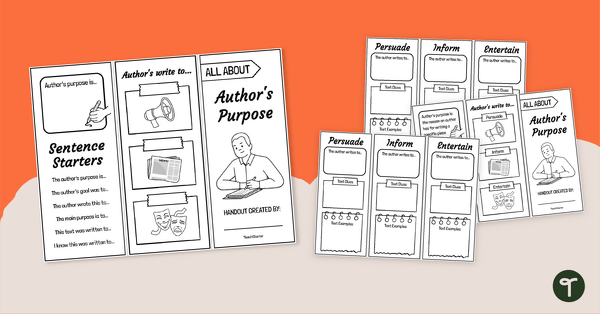
Free Author’s Purpose Handout
Use this Author’s Purpose Handout in the form of a brochure to explore the different reasons authors write.
- Plus Plan
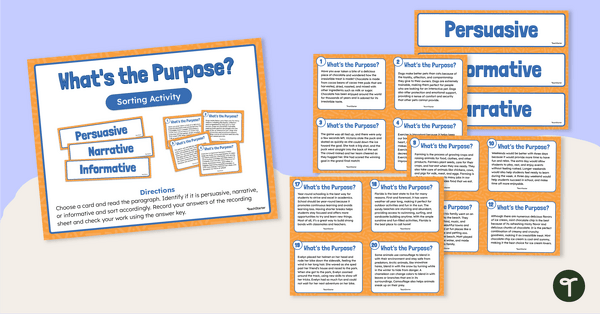
Author’s Purpose Sorting Activity
Use this author’s purpose sorting activity to teach your students the difference between persuasive, informative and narrative writing.
- Plus Plan
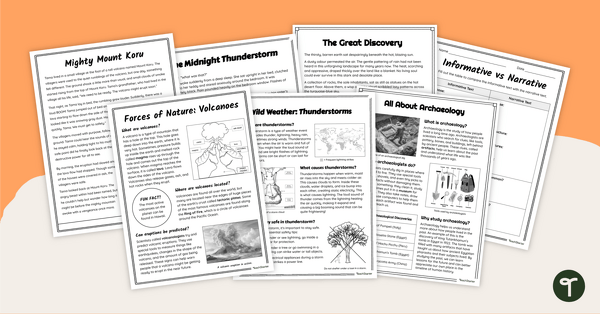
Comparing Narrative and Informational Text Worksheets
Use this set of comparing narrative and informational text worksheets to examine the purpose and features of these two common genres.
- Plus Plan
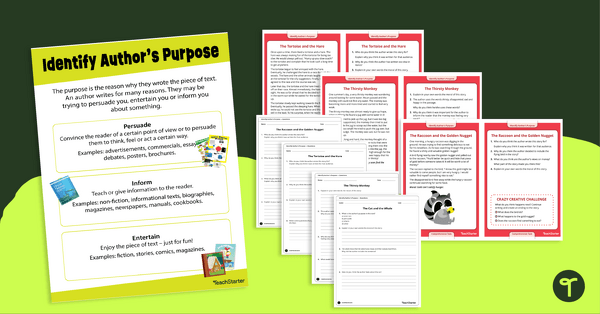
Author’s Purpose Task Cards and Worksheets
Download these author’s purpose task cards to help students identify and understand why authors write various types of texts.
- Plus Plan
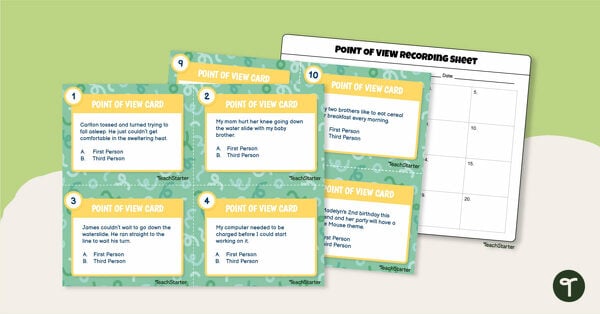
Point of View Task Cards - Beginner Set
Use these colorful, fun task cards to help your beginning reader identify first, and third-person point of view (POV)
- Plus Plan
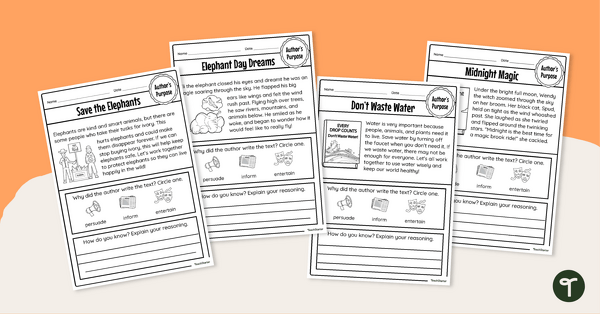
Author’s Purpose Reading Passages Worksheet Set
Explore the Author's Purpose in these reading passages with this set of Author's Purpose worksheets.
- Free Plan
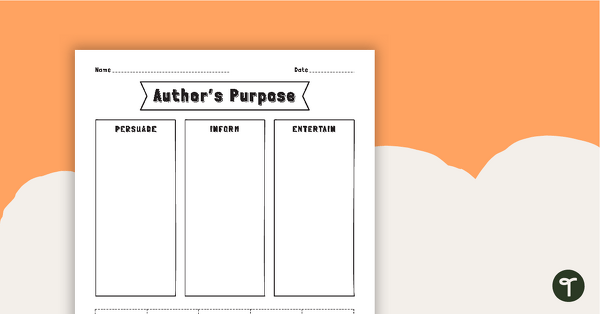
Author's Purpose - Sorting Worksheet
A teaching resource to help teach your students about author's purpose.
- Plus Plan
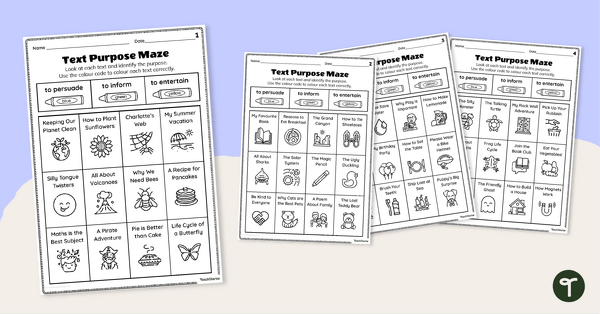
Text Purpose Maze Worksheet Set
Use these Text Purpose Mazes to guide students through fun, color‑coded pathways where they read short text titles and decide whether each one aims to inform, to entertain, or to persuade.
- Plus Plan
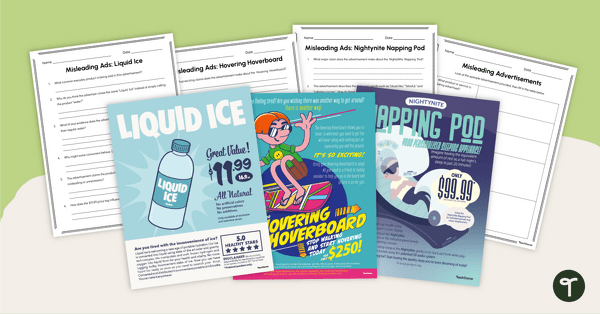
Deceptive Advertising Examples and Analysis Worksheets
Download these deceptive advertising examples and accompanying worksheets to help your students identify deceptive techniques, analyze persuasive language, and become more informed consumers.
- Plus Plan
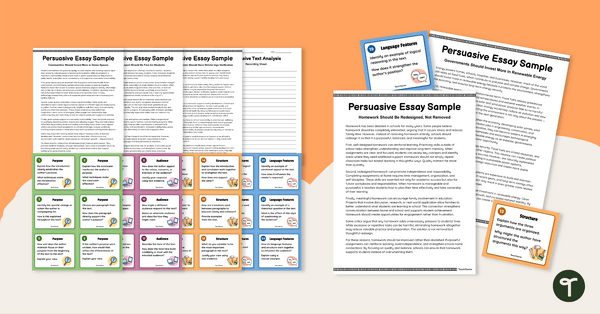
Persuasive Essay Examples with Analysis Task Cards
Use these persuasive essay examples with accompanying task cards to teach your students how purpose, structure and language features work together in strong persuasive texts.
- Plus Plan
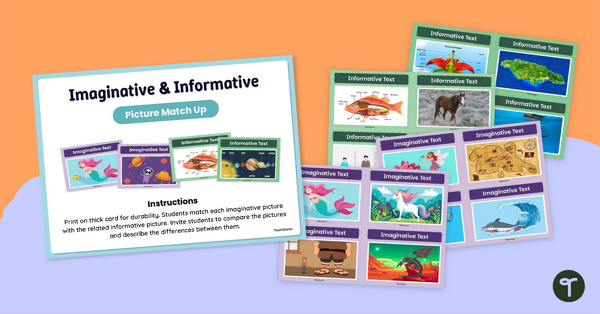
Imaginative and Informative Picture Match Activity
This engaging visual literacy activity invites students to explore how images communicate meaning by matching imaginative and informative pictures.
- Plus Plan
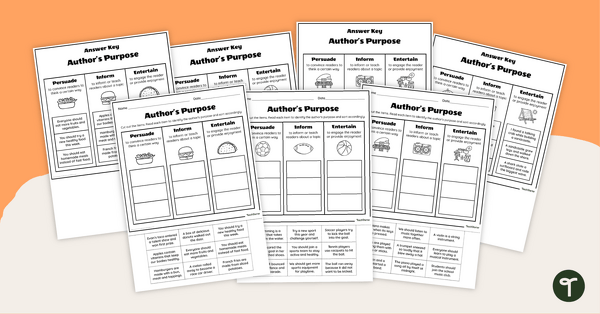
Author’s Purpose Cut and Paste Worksheet Set
Use this Author’s Purpose cut and paste worksheet set with your students to engage them in understanding the purpose behind different texts.
- Plus Plan
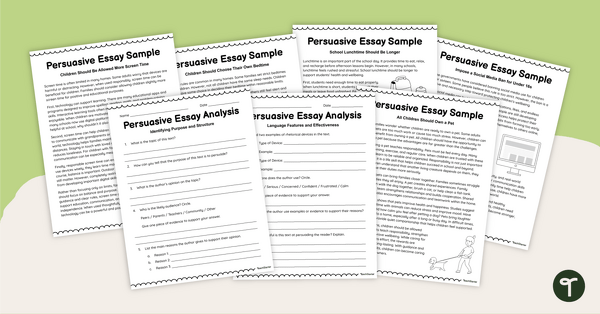
Opinion Writing Examples and Analysis Worksheet
Use these opinion writing examples to teach your students how purpose, structure and language features work together in strong persuasive texts.
- Plus Plan
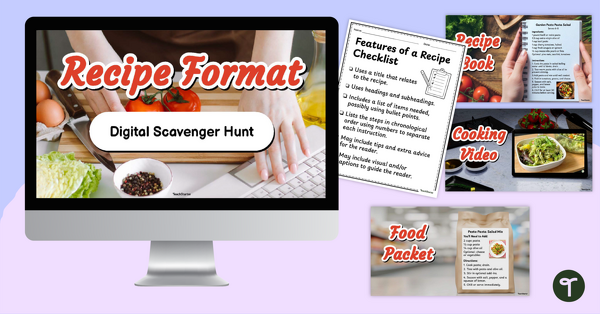
Recipe Text Features Scavenger Hunt
Explore recipe text features on a food packet, recipe book, short video clip and digital form and teach their shared purpose with this scavenger hunt.
- Plus Plan
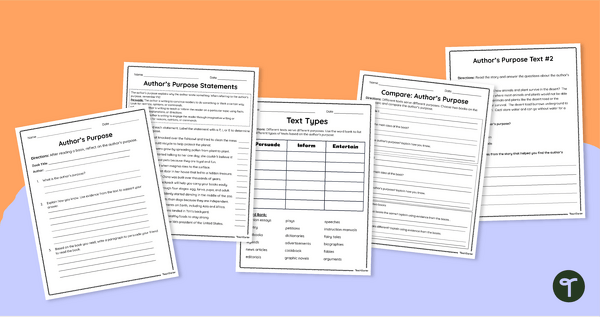
Author's Purpose Worksheet Set
Assess reading comprehension by using this comprehensive Author's Purpose Worksheet Set.
- Plus Plan
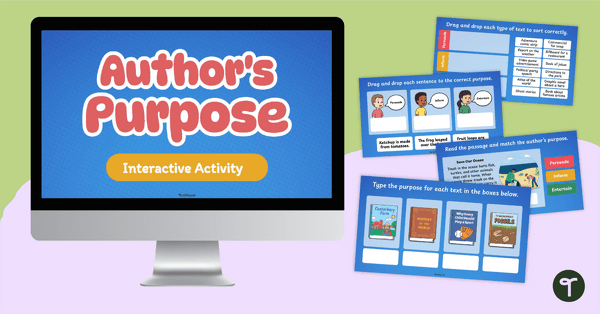
Author’s Purpose Activity - Digital Task Cards
Explore Author’s Purpose with this set of engaging and interactive Author’s Purpose Activity digital task cards.
- Plus Plan
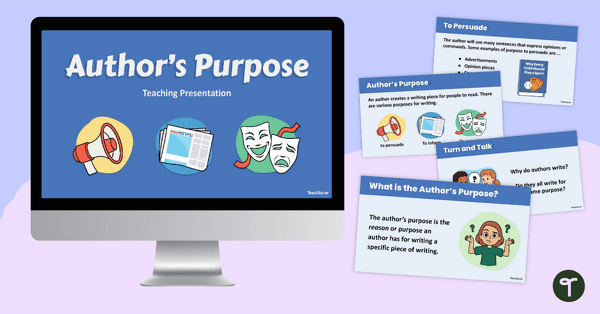
Author's Purpose PowerPoint
Use this Author's Purpose PowerPoint to teach your students how to identify the author’s purpose in a text.
- Plus Plan
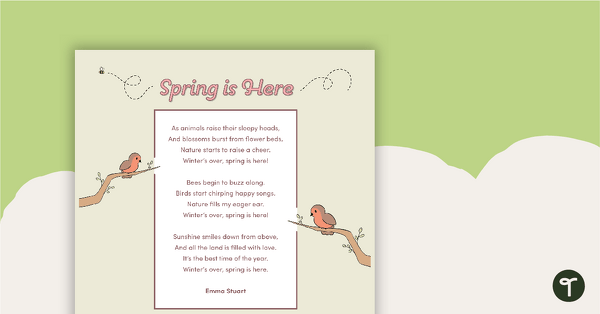
Responding to Poetry Worksheets – 3rd Grade
Teach poetry analysis skills with this set of engaging children’s poems and poetry worksheets exploring purpose, audience, structure, sound and imagery.
- Plus Plan
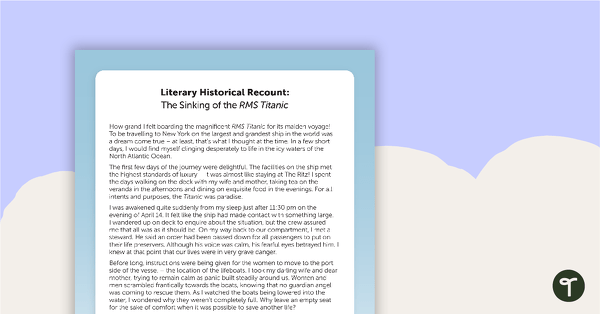
Historical Nonfiction Examples – Comparison Task
Explore historical nonfiction examples through a detailed comparison of two accounts of the RMS Titanic disaster, helping students analyze how historical events can be represented in different ways in texts.
- Plus Plan
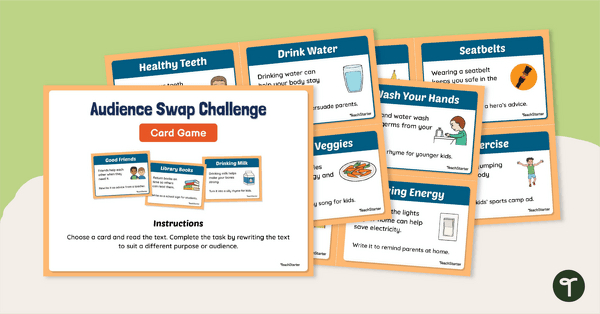
Audience Swap Challenge Game
Help students understand why authors write and who they write for with this fun, interactive Audience Swap Challenge Game.
- Plus Plan
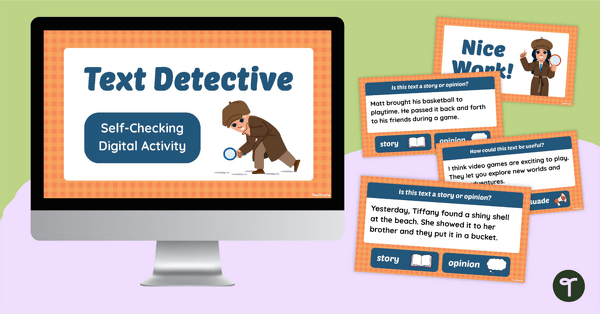
Story vs Opinion Digital Detective Activity
Use this Story vs Opinion Digital Detective Activity to help students build essential comprehension skills as they learn to identify whether a text is telling a story or sharing an opinion.
- Plus Plan
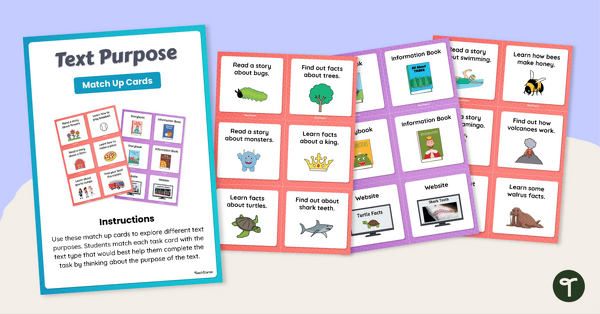
Text Purpose Matching Activity
Use this Text Purpose Matching Up Activity to help students explore how different text types serve different purposes.
- Plus Plan
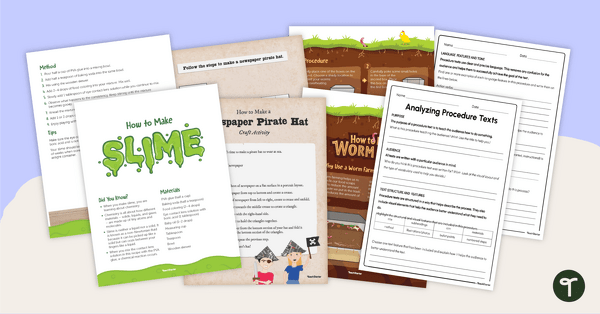
Procedural Text Examples and Analysis Worksheet
Use these procedural text examples with accompanying analysis worksheets to teach your students about the purpose, structure and language features of procedural writing.
- Plus Plan
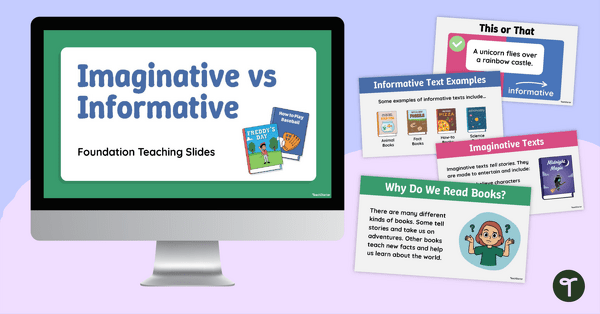
Imaginative vs Informative PowerPoint
Build strong comprehension skills with this engaging Imaginative vs Informative Texts PowerPoint.
- Plus Plan
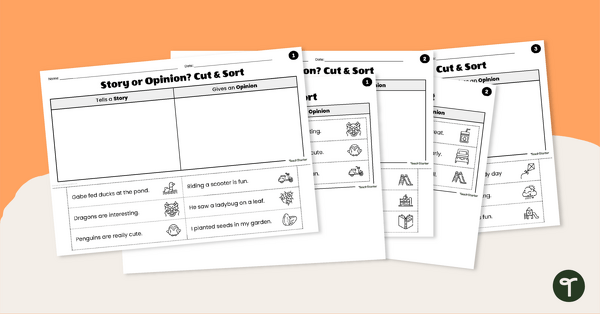
Story vs Opinion Cut and Sort Pack
Help students understand the difference between a story sentence and an opinion sentence with this cut and paste worksheet set.
- Plus Plan
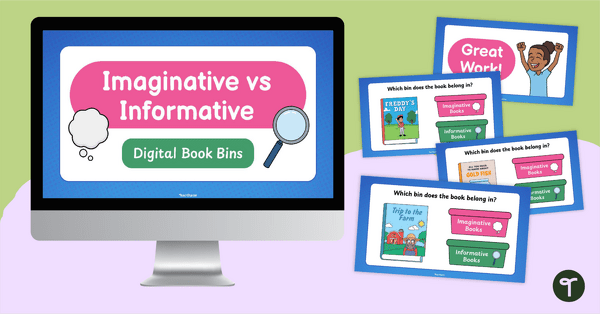
Imaginative vs Informative Book Bins Digital Activity
Use this imaginative vs informative book bins digital activity to help students explore the difference between these types of texts.
- Plus Plan
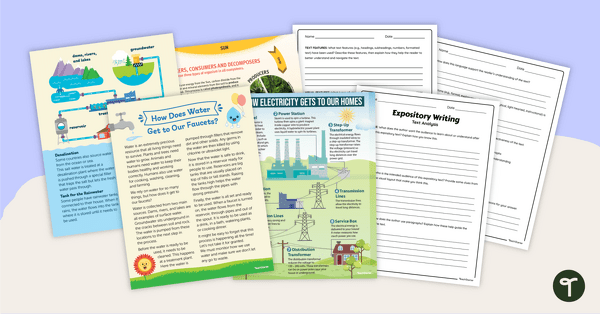
Expository Text Examples and Analysis Worksheets
Use these expository text examples with accompanying analysis worksheets to teach your students about the purpose, structure and language features of expository writing.
- Plus Plan
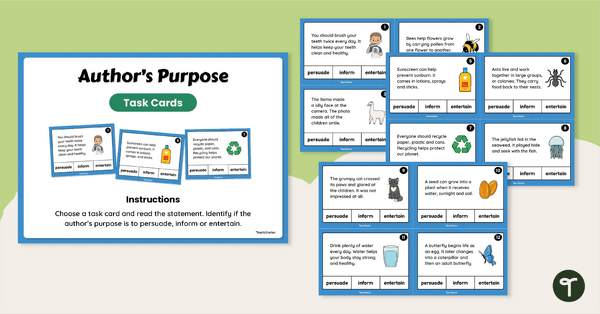
Author's Purpose Task Cards
Practice identifying the author’s purpose with your Year 2 students with this set of Author’s Purpose task cards.
- Plus Plan
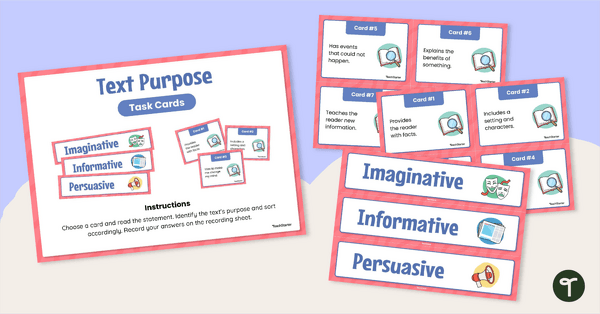
Author’s Purpose Sorting Activity
Use this Text Type Sort activity to engage students in understanding the different features and purpose of imaginative, informative and persuasive texts.
- Plus Plan
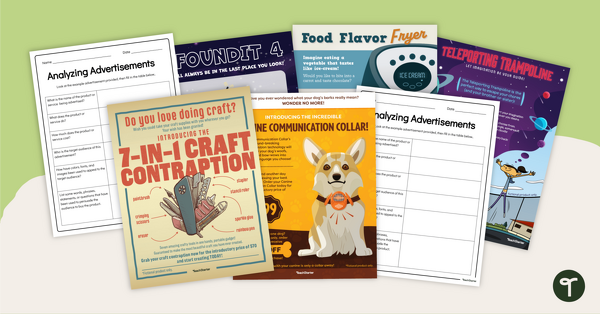
Advertisement Examples and Analysis Worksheets
Use these advertisement examples with accompanying analysis worksheets to teach your students about the purpose, structure and language features of product advertisements.
- Plus Plan

Style of an Author Inquiry Project
Explore the style of an author with this engaging classroom project that helps students analyse, understand and present what makes an author’s writing unique.
- Plus Plan
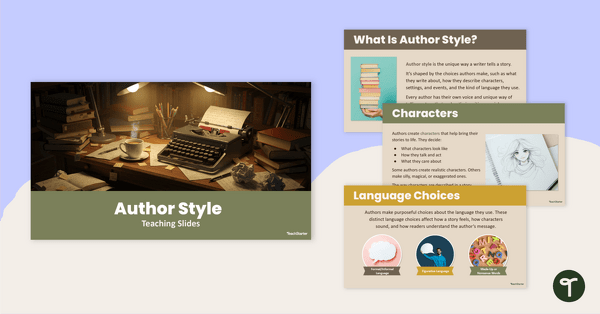
Author's Writing Style Teaching Slides
Teach your students about an author’s writing style with this engaging slide deck that helps students understand the elements that make up an author’s unique voice.