ELAR 3.3
Developing and sustaining foundational language skills: listening, speaking, reading, writing, and thinking--vocabulary. The student uses newly acquired vocabulary expressively. The student is expected to:
- (1) use print or digital resources to determine
meaning, syllabication, and pronunciation;
- (A) use context within and beyond a sentence to determine the meaning of unfamiliar words and multiple-meaning words;
- (B) identify the meaning of and use words with affixes such as im- (into), non-, dis-, in- (not, non), pre-, -ness, -y, and -ful; and
- (C) identify, use, and explain the meaning of antonyms, synonyms, idioms, homophones, and homographs in a text.
- Plus Plan
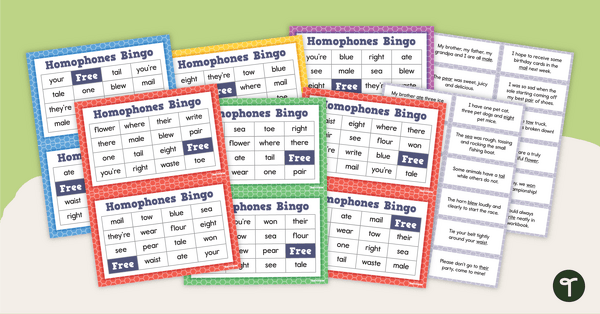
Homophones Bingo
Make learning about homophones and their definitions an engaging whole-class activity with this homophones bingo game.
- Plus Plan
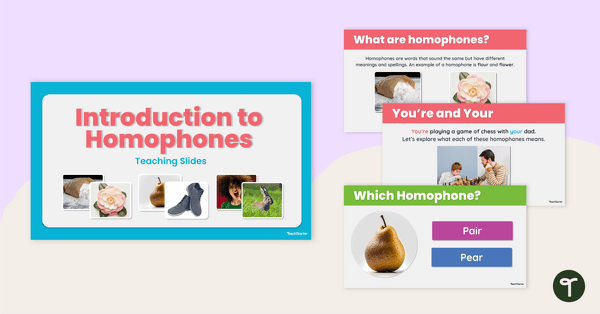
Introduction to Homophones Teaching Slides
Teach your students how to use homophones correctly in their writing with this comprehensive set of teaching slides.
- Plus Plan
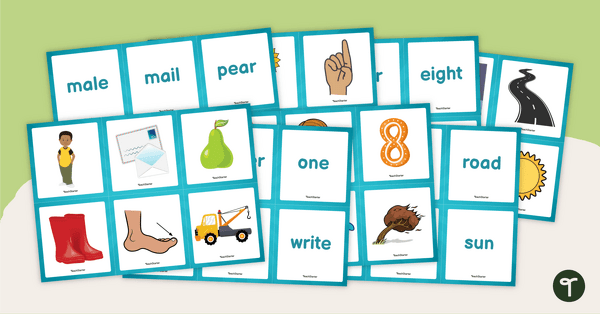
Homophone Match-Up Cards
Teach your students the meanings and spellings of some common homophones with this set of 32 match-up cards.
- Plus Plan
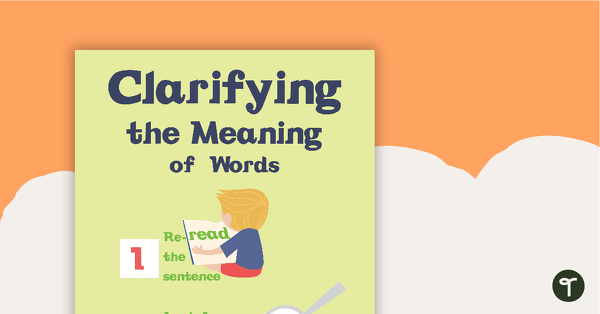
Clarifying the Meaning of Words Poster
A poster with 3 steps to clarify the meaning of words.
- Plus Plan
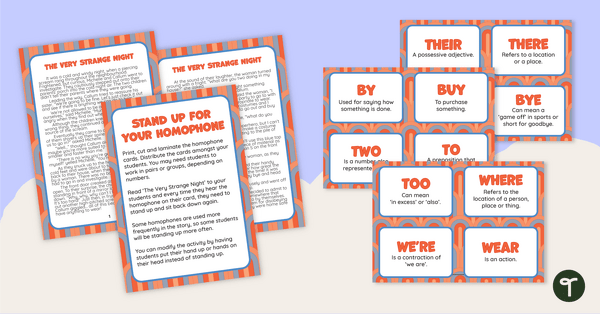
Stand Up For Homophones - Whole-Class Activity
Help your students learn the different homophones and their meanings with an interactive, whole-class game.
- Plus Plan
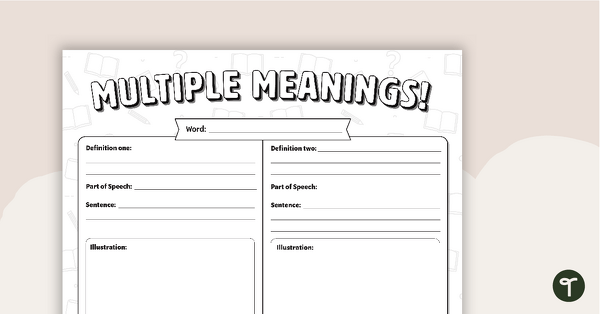
Multiple Meanings Vocabulary Worksheet
A worksheet to use in the classroom when identifying multiple-meaning words.
- Plus Plan

September Homeschool Resource Pack - Grade 3
A collection of age-appropriate, Grade 3 teaching resources and activities for homeschool parents to use with their children during the month of September.