Year 6
The English curriculum is built around the three interrelated strands of language, literature and literacy. Teaching and learning programs should balance and integrate all three strands. Together, the strands focus on developing students' knowledge, understanding and skills in listening, reading, viewing, speaking, writing and creating. Learning in English builds on concepts, skills and processes developed in earlier years, and teachers will revisit and strengthen these as needed.
In Years 5 and 6, students communicate with peers and teachers from other classes and schools, community members, and individuals and groups, in a range of face-to-face and online/virtual environments.
Students engage with a variety of texts for enjoyment. They listen to, read, view, interpret and evaluate spoken, written and multimodal texts in which the primary purpose is aesthetic, as well as texts designed to inform and persuade. These include various types of media texts including newspapers, film and digital texts, junior and early adolescent novels, poetry, non-fiction and dramatic performances. Students develop their understanding of how texts, including media texts, are influenced by context, purpose and audience.
The range of literary texts for Foundation to Year 10 comprises Australian literature, including the oral narrative traditions of Aboriginal and Torres Strait Islander Peoples, as well as the contemporary literature of these two cultural groups, and classic and contemporary world literature, including texts from and about Asia.
Literary texts that support and extend students in Years 5 and 6 as independent readers describe complex sequences, a range of non-stereotypical characters and elaborated events including flashbacks and shifts in time. These texts explore themes of interpersonal relationships and ethical dilemmas within real-world and fantasy settings. Informative texts supply technical and content information about a wide range of topics of interest as well as topics being studied in other areas of the curriculum. Text structures include chapters, headings and subheadings, tables of contents, indexes and glossaries. Language features include complex sentences, unfamiliar technical vocabulary, figurative language, and information presented in various types of graphics.
Students create a range of imaginative, informative and persuasive types of texts such as narratives, procedures, performances, reports, reviews, explanations and discussions.
(source: www.australiancurriculum.edu.au)
Achievement Standard
Receptive modes (listening, reading and viewing)
By the end of Year 6, students understand how the use of text structures can achieve particular effects. They analyse and explain how language features, images and vocabulary are used by different authors to represent ideas, characters and events.
Students compare and analyse information in different and complex texts, explaining literal and implied meaning. They select and use evidence from a text to explain their response to it. They listen to discussions, clarifying content and challenging others' ideas.
Productive modes (speaking, writing and creating)
Students understand how language features and language patterns can be used for emphasis. They show how specific details can be used to support a point of view. They explain how their choices of language features and images are used.
Students create detailed texts elaborating on key ideas for a range of purposes and audiences. They make presentations and contribute actively to class and group discussions, using a variety of strategies for effect. They demonstrate an understanding of grammar, and make considered vocabulary choices to enhance cohesion and structure in their writing. They use accurate spelling and punctuation for clarity and make and explain editorial choices based on criteria.
(source: www.australiancurriculum.edu.au)
- Plus Plan
Introduction to Historical Recounts Unit Plan
This English unit has been designed to introduce the historical recount text type to older students; specifically, the purpose, structure and language features of factual historical recounts.
- Plus Plan
Writing Biographical Texts Unit Plan
This English unit addresses the purpose, structure and language features of the biography text type.
- Plus Plan
Writing a Narrative - Independent Writing
A 60 minute lesson in which students will independently write a narrative, using appropriate text structure, language and features.
- Plus Plan
Assessment - Experimenting with Poetry
An assessment task in which students will demonstrate an understanding of the elements of poetry by writing an ode and a ballad.
- Plus Plan
Narrative Poetry - Simple Ballads
A 60 minute lesson in which students will plan and write a simple ballad.
- Plus Plan
Descriptive Poetry - Odes
A 60 minute lesson in which students will plan and write an ode.
- Plus Plan
Concrete Poetry - Shape Poems
A 60 minute lesson in which students will plan and write a shape poem.
- Plus Plan
Forms of Poetry
A 60 minute lesson in which students will explore some well-known and commonly used forms of fixed verse.
- Plus Plan
Idioms
A 60 minute lesson in which students will explore some commonly used idioms.
- Plus Plan
Sound Devices
A 60 minute lesson in which students will identify and investigate sound devices in poetry.
- Plus Plan
Elements of Poetry
A 60 minute lesson in which students will explore the common elements found in poetry.
- Plus Plan
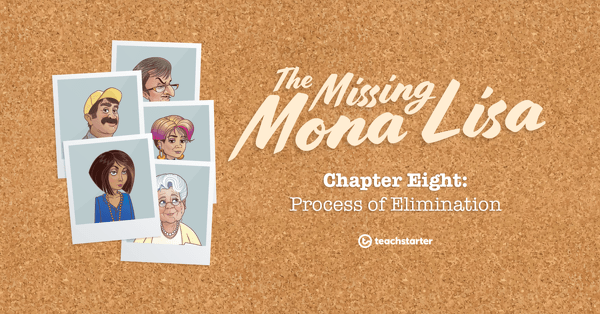
The Missing Mona Lisa – Chapter 8: Process of Elimination
It's getting closer now - the Adventure Agents are closing in of the thief. They now need to write a persuasive piece in order to get a warrant. Time is of the essence!
- Plus Plan
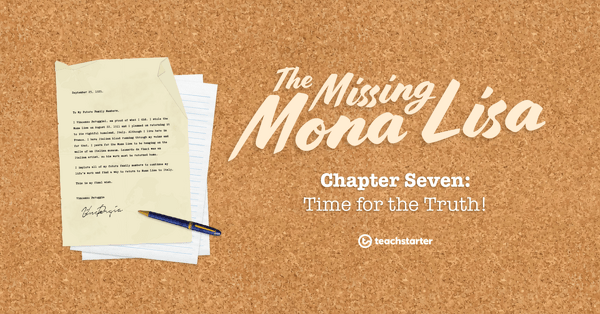
The Missing Mona Lisa – Chapter 7: Time for the Truth!
The truth comes out in this chapter and the Adventure Agents are able to start using all the information they have collected over the previous chapters to start eliminating some suspects.
- Plus Plan
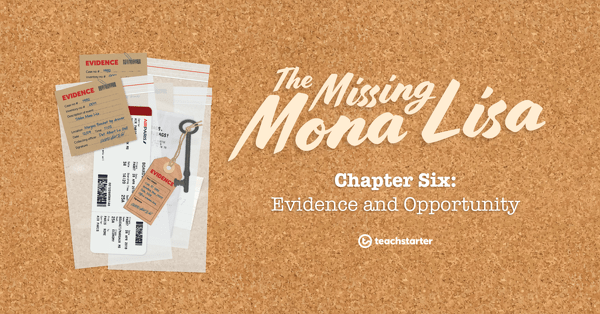
The Missing Mona Lisa – Chapter 6: Evidence and Opportunity
The Adventure Agents will begin bringing all the information from the witnesses and evidence together to start forming a picture of what happened on the night the Mona Lisa was stolen.
- Plus Plan
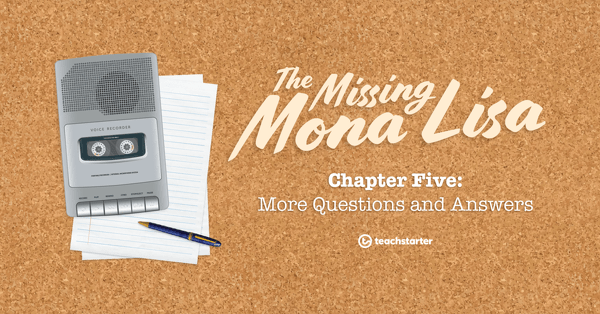
The Missing Mona Lisa – Chapter 5: More Questions and Answers
This chapter provides the Adventure Agents with the two remaining police interview transcripts and an extra very important piece of evidence has just been discovered!
- Plus Plan
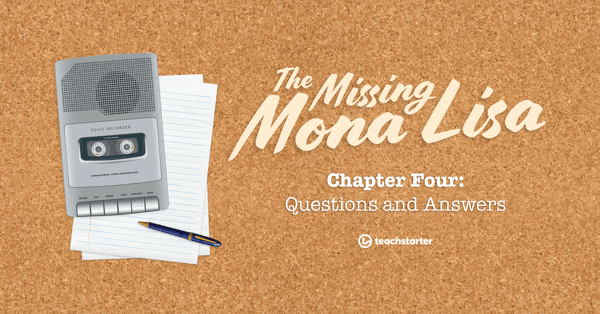
The Missing Mona Lisa – Chapter 4: Questions and Answers
This chapter of the exciting Missing Mona Lisa Adventure provides the Adventure Agents with three police interviews from the five main suspects. What extra clues will they provide to help find the thief?
- Plus Plan
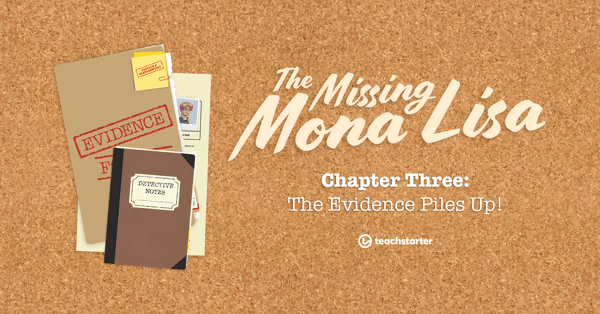
The Missing Mona Lisa – Chapter 3: The Evidence Piles Up!
Chapter 3 introduces the Adventure Agents to the evidence collected so far and requires them to write a newspaper report informing the public that the 'Mona Lisa' has been stolen.
- Plus Plan
Applying Proofreading and Editing Skills
A 60 minute lesson in which students will learn and apply proofreading and editing skills.
- Plus Plan
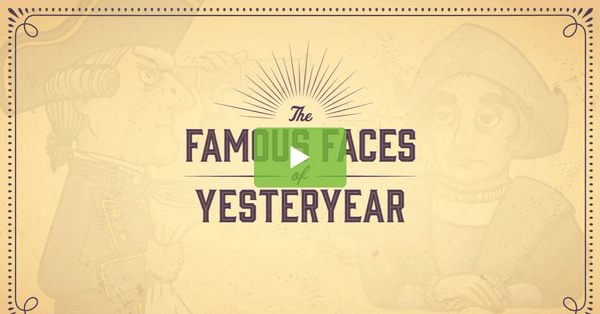
The Famous Faces of Yesteryear – Interviewer Skills Video
Teach your students how to interview someone with this engaging video exploring the life of Sir Edmund Hillary.
- Plus Plan
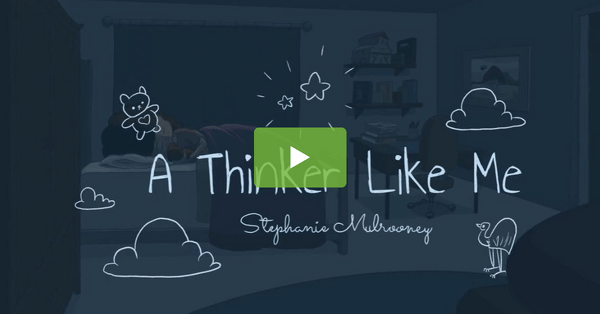
A Thinker Like Me – Animated Poem Video
Use this short animated poem video with your students to explore and appreciate the poem, 'A Thinker Like Me' by Stephanie Mulrooney.