Year 4
The science inquiry skills and science as a human endeavour strands are described across a two-year band. In their planning, schools and teachers refer to the expectations outlined in the achievement standard and also to the content of the science understanding strand for the relevant year level to ensure that these two strands are addressed over the two-year period. The three strands of the curriculum are interrelated and their content is taught in an integrated way. The order and detail in which the content descriptions are organised into teaching and learning programs are decisions to be made by the teacher.
Incorporating the key ideas of science
Over Years 3 to 6, students develop their understanding of a range of systems operating at different time and geographic scales.
In Year 4, students broaden their understanding of classification and form and function through an exploration of the properties of natural and processed materials. They learn that forces include non-contact forces and begin to appreciate that some interactions result from phenomena that can't be seen with the naked eye. They begin to appreciate that current systems, such as Earth's surface, have characteristics that have resulted from past changes and that living things form part of systems. They understand that some systems change in predictable ways, such as through cycles. They apply their knowledge to make predictions based on interactions within systems, including those involving the actions of humans.
(source: www.australiancurriculum.edu.au)
Achievement Standard
By the end of Year 4, students apply the observable properties of materials to explain how objects and materials can be used. They describe how contact and non-contact forces affect interactions between objects. They discuss how natural processes and human activity cause changes to Earth’s surface. They describe relationships that assist the survival of living things and sequence key stages in the life cycle of a plant or animal. They identify when science is used to understand the effect of their actions.
Students follow instructions to identify investigable questions about familiar contexts and make predictions based on prior knowledge. They describe ways to conduct investigations and safely use equipment to make and record observations with accuracy. They use provided tables and column graphs to organise data and identify patterns. Students suggest explanations for observations and compare their findings with their predictions. They suggest reasons why a test was fair or not. They use formal and informal ways to communicate their observations and findings.
(source: www.australiancurriculum.edu.au)
- Plus Plan
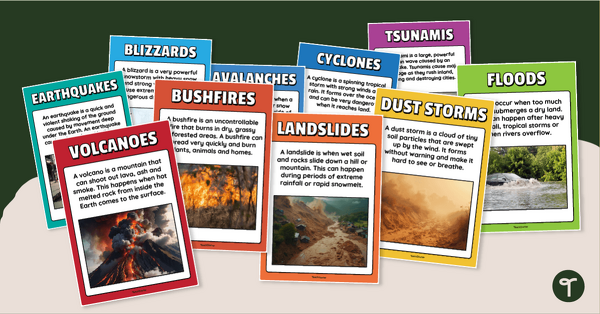
Natural Disaster Posters for Kids
Introduce and explain different types of natural disasters with printable natural disaster posters.
- Plus Plan
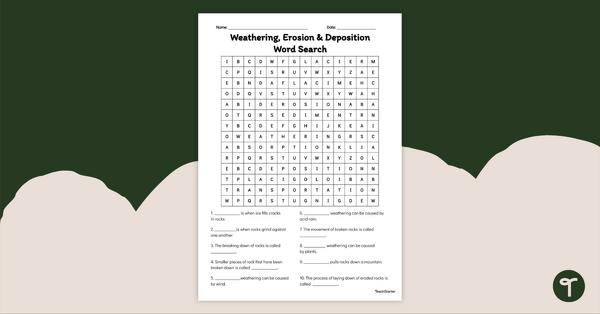
Weathering, Erosion and Deposition – Word Search
Strengthen your students' understanding of weathering, erosion and deposition terms with a vocabulary word search.
- Plus Plan
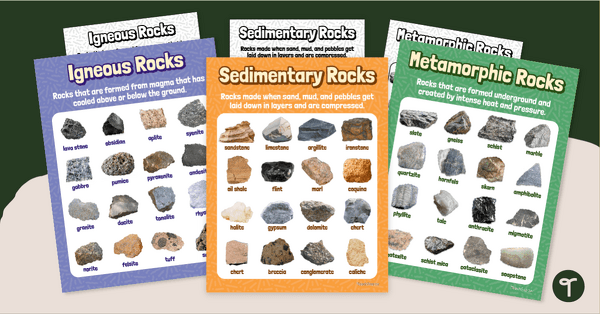
Rock Identification Chart Pack
Download a Rock Identification Chart to help your students identify examples of sedimentary, igneous, and metamorphic rock.
- Plus Plan
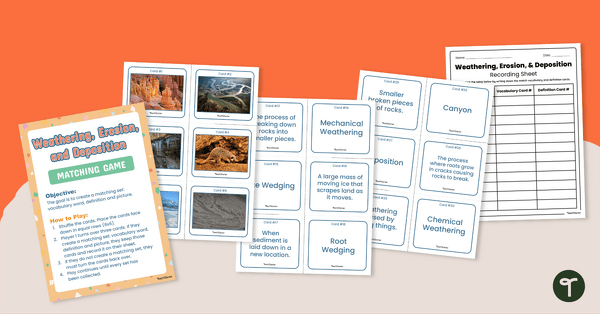
Weathering, Erosion and Deposition Matching Game
Challenge your students to identify different slow changes to Earth’s surface with this matching game designed for year 4 and 5 students.
- Plus Plan
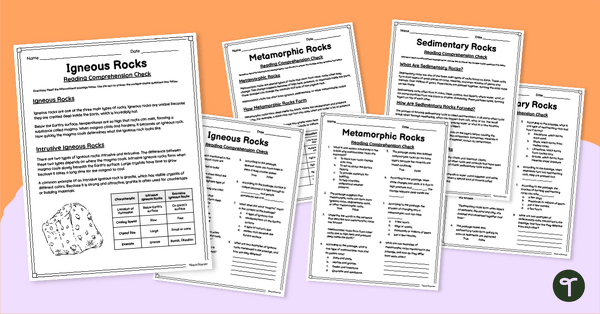
Types of Rocks Reading Comprehension Worksheets
Read and learn about sedimentary, metamorphic, and igneous rocks with our printable Types of Rocks Worksheet Pack.
- Free Plan
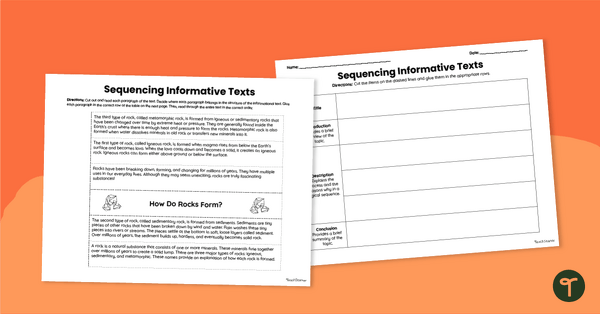
How Do Rocks Form? – Informative Text Sequencing Task
Help students learn about informative text structure and how rocks are formed with an engaging cut-and-paste sorting activity.
- Plus Plan
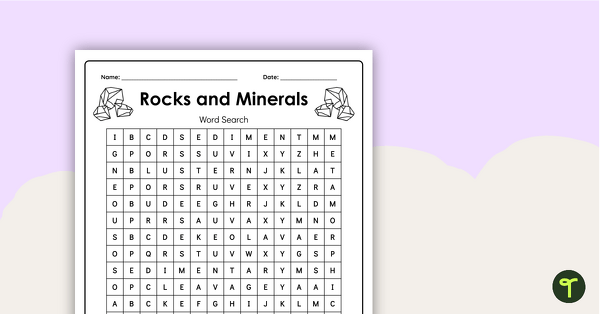
Rocks and Minerals Word Search
Introduce or review academic vocabulary with a printable Rocks and Minerals Word Search.
- Plus Plan
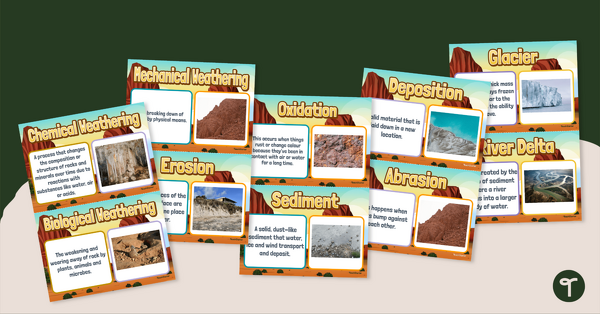
Weathering, Erosion and Deposition Vocabulary Posters
Display this set of science vocabulary posters in your classroom when teaching about weathering, erosion and deposition.
- Plus Plan
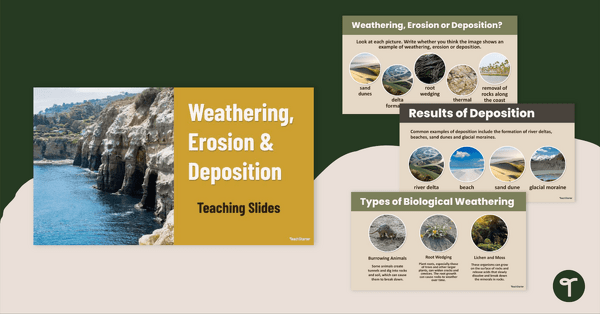
Weathering, Erosion and Deposition – Teaching Slides
Learn about the different types of weathering, effects of erosion, results of deposition and more with this set of teaching slides.
- Plus Plan
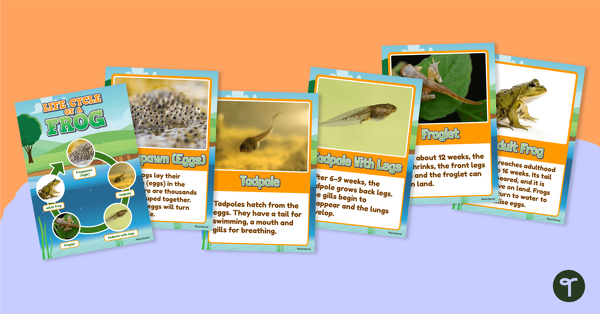
Life Cycle of a Frog – Poster Pack
Display information about the life cycle of a frog with this set of six posters.
- Plus Plan
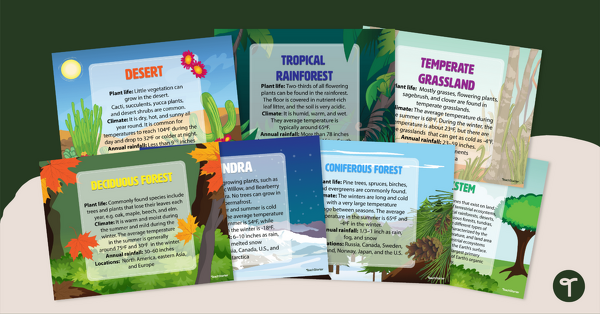
Ecosystem Poster Pack
Introduce your students to the different types of ecosystems with a set of printable Ecosystem posters.
- Plus Plan
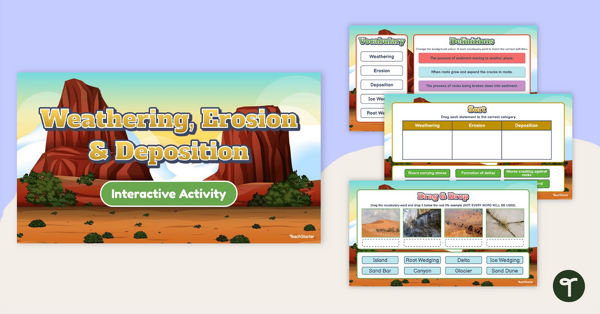
Weathering, Erosion & Deposition Interactive Activity
Use this set of interactive activities to strengthen student understanding of weathering, erosion and deposition concepts.
- Plus Plan
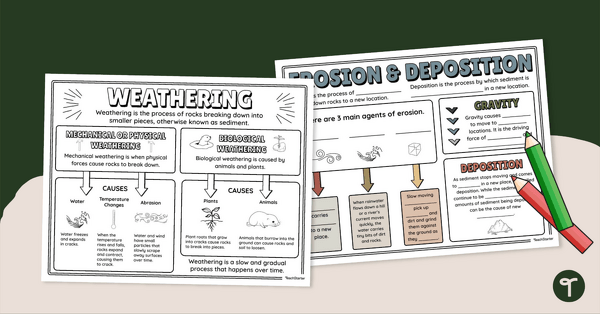
Weathering, Erosion and Deposition Doodle Notes
Engage your students with a set of science doodle notes when learning about erosion, weathering and deposition.
- Plus Plan
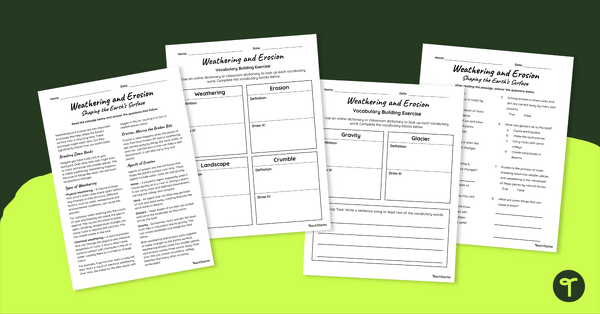
Weathering vs. Erosion Worksheet Pack
Support student understanding of weathering and erosion with this reading comprehension passage, worksheet and accompanying vocabulary activities.
- Plus Plan
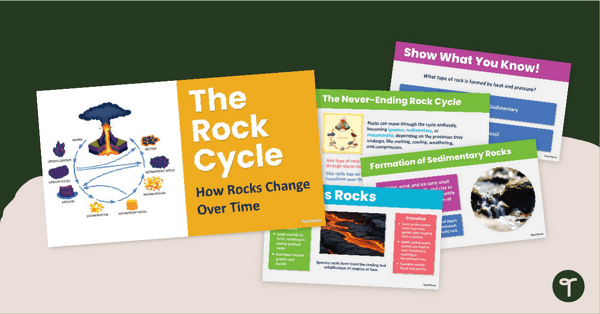
The Rock Cycle - PowerPoint Presentation
Introduce your students to the types of rocks and how they are formed with an engaging Interactive Rock Cycle PowerPoint.
- Plus Plan
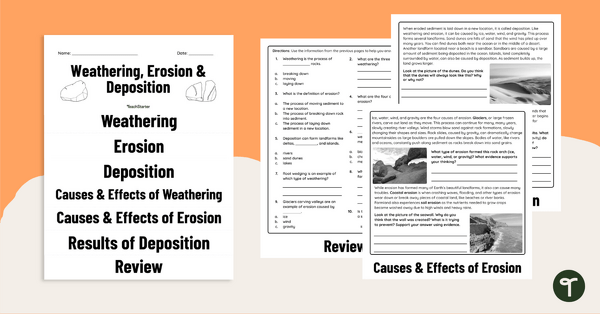
Weathering, Erosion and Deposition Flipbook
Learn about the causes and effects of weathering, erosion and deposition with a printable flipbook.
- Plus Plan
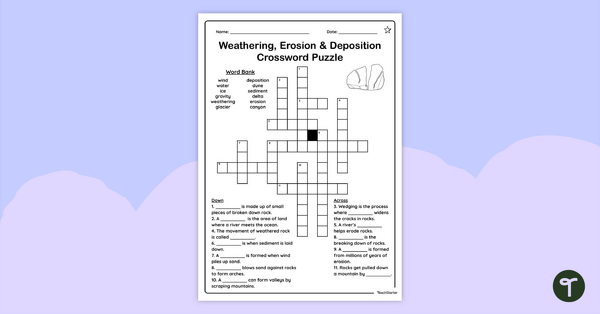
Weathering, Erosion and Deposition – Crossword Puzzle
Review science vocabulary terms associated with weathering, erosion and deposition with a crossword puzzle.
- Plus Plan
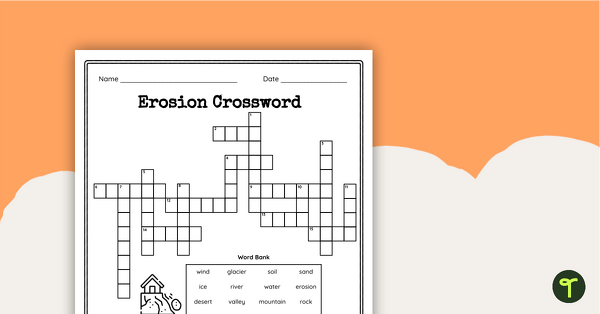
Erosion Crossword Puzzle
Review vocabulary related to erosion with a printable Erosion Crossword Puzzle and answer key.
- Plus Plan
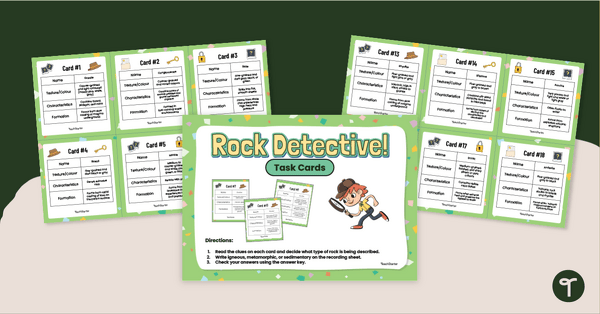
Rock Detective Task Cards - Classifying Types of Rocks
Practise classifying rocks based on their properties with a set of printable Rock Detective Task Cards.
- Plus Plan
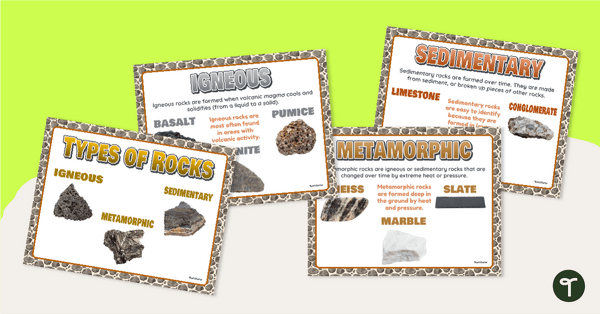
Types of Rocks Posters
Teach your students information about the three basic types of rock with a set of printable Types of Rocks Anchor Charts.
- Plus Plan
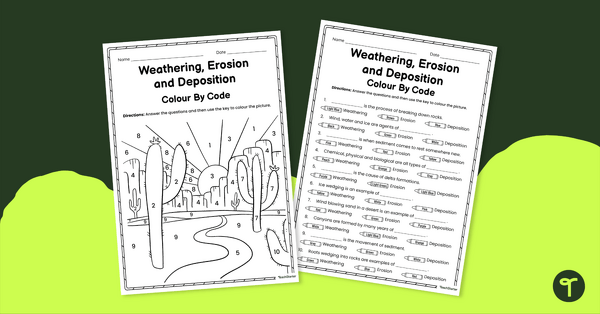
Weathering, Erosion and Deposition Colour By Code Worksheet
Guide your students to differentiate between examples of weathering, erosion and deposition with this colour-by-code science worksheet.
- Plus Plan
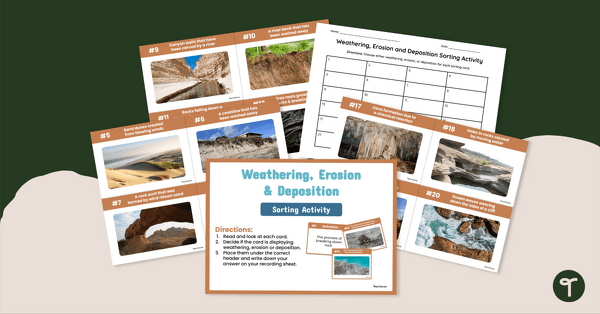
Weathering, Erosion and Deposition – Sorting Activity
Categorise examples of deposition, weathering and erosion with this 24-card sorting activity.
- Plus Plan
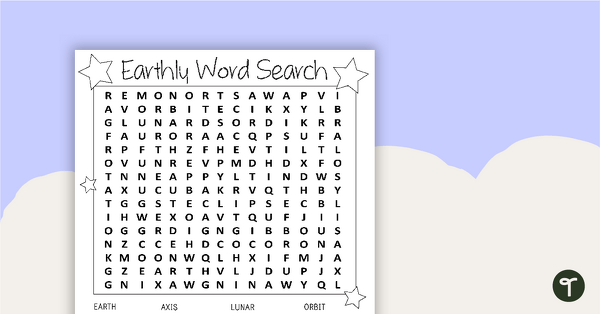
Earthly Word Search with Answers
The Earthly Word Search uses scientific vocabulary in a fun way!
- Plus Plan
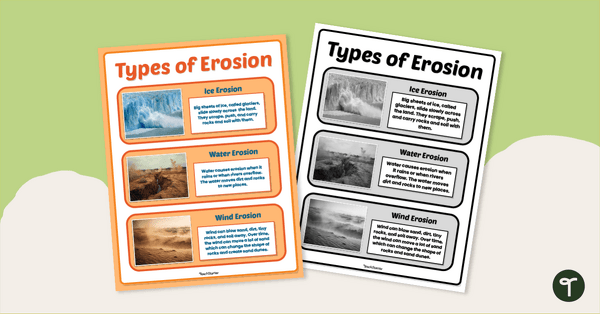
Soil Erosion Poster
Discover how wind, water, and ice change the Earth’s surface with a printable Soil Erosion Poster.
- Plus Plan
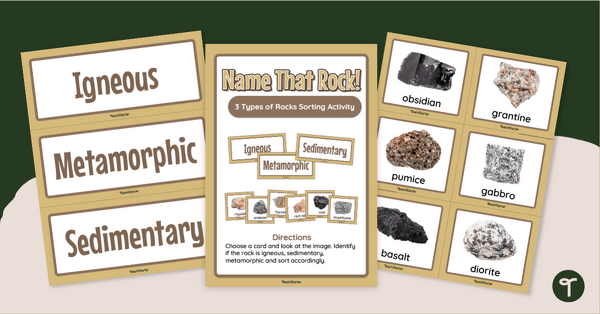
'Name That Rock' - Rock Classification Activity
Use our 'Name That Rock' Science Sorting activity to classify metamorphic, sedimentary and igneous rocks.
- Plus Plan
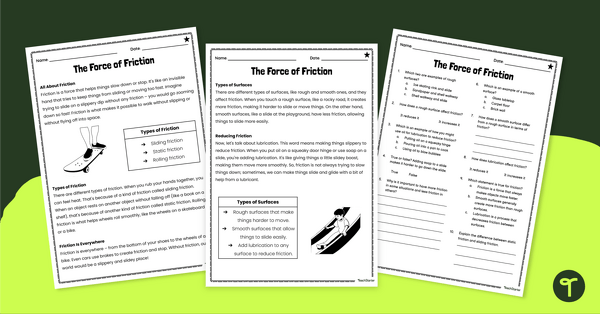
The Force of Friction Comprehension Worksheets
Download this friction worksheet to teach your Year 4 students about the force of friction and its impact on our daily lives.
- Plus Plan
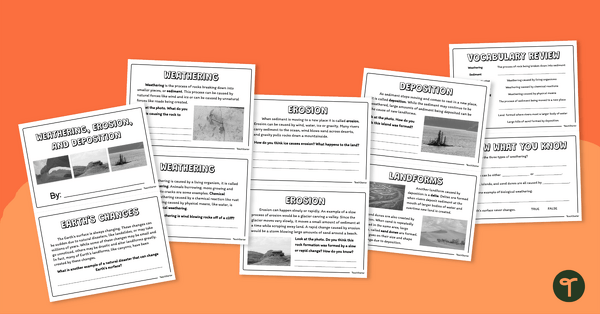
Weathering, Erosion and Deposition Mini-Book
Introduce your students to the different slow changes to Earth’s surface with a printable mini-book designed for year 4 and 5 students.
- Free Plan
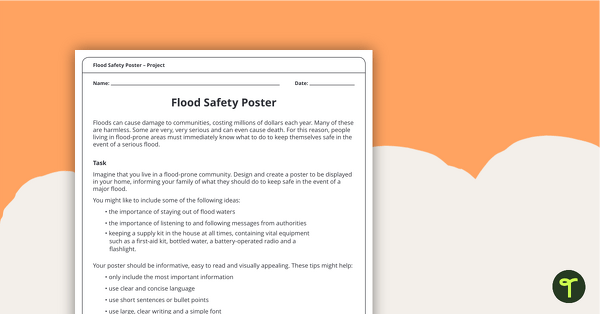
Flood Safety Poster - Design and Create Task
A design and create task for students to demonstrate their understanding of the impact of floods.
- Plus Plan
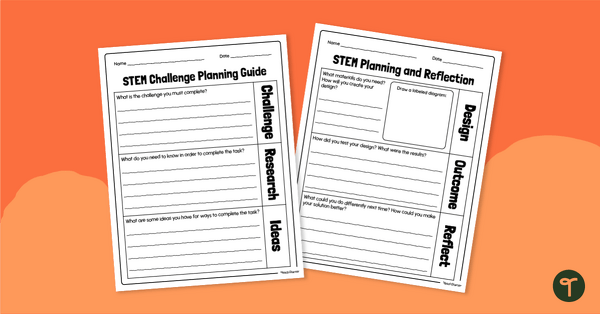
STEM Challenge Planning Guide-Upper Years
Use this STEM Challenge Planning sheet with to keep your students on task and organised when completing STEM challenges.
- Free Plan
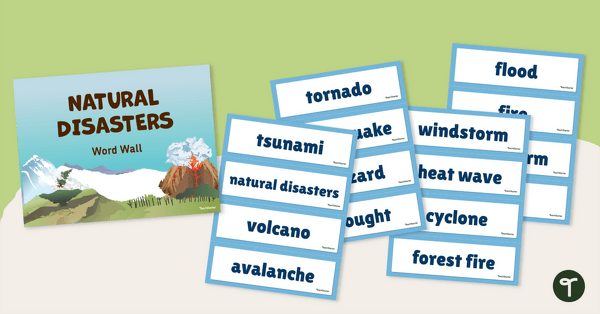
Natural Disaster Word Wall Vocabulary
Use this teacher-created resource to explore natural disaster vocabulary with your primary school students.
- Free Plan
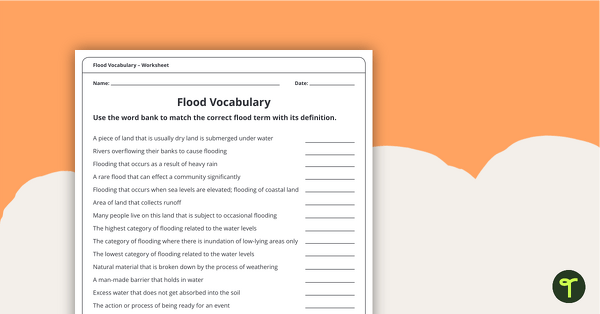
Flood Vocabulary Task
A vocabulary task for students to use when demonstrating their understanding of the impact of floods in Australia.
- Plus Plan
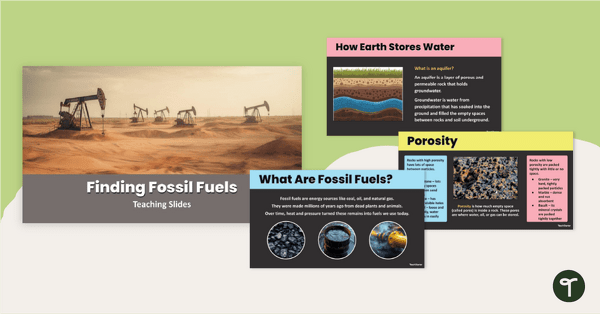
Finding Fossil Fuels PowerPoint
Use an interactive ‘Finding Fossil Fuels’ Natural Resources PowerPoint to teach your students about how and where the Earth stores natural resources such as fossil fuels.