Year 5
The science inquiry skills and science as a human endeavour strands are described across a two-year band. In their planning, schools and teachers refer to the expectations outlined in the achievement standard and also to the content of the science understanding strand for the relevant year level to ensure that these two strands are addressed over the two-year period. The three strands of the curriculum are interrelated and their content is taught in an integrated way. The order and detail in which the content descriptions are organised into teaching and learning programs are decisions to be made by the teacher.
Incorporating the key ideas of science
Over Years 3 to 6, students develop their understanding of a range of systems operating at different time and geographic scales.
In Year 5, students are introduced to cause and effect relationships through an exploration of adaptations of living things and how this links to form and function. They explore observable phenomena associated with light and begin to appreciate that phenomena have sets of characteristic behaviours. They broaden their classification of matter to include gases and begin to see how matter structures the world around them. Students consider Earth as a component within a solar system and use models for investigating systems at astronomical scales. Students begin to identify stable and dynamic aspects of systems, and learn how to look for patterns and relationships between components of systems. They develop explanations for the patterns they observe.
(source: www.australiancurriculum.edu.au)
Achievement Standard
By the end of Year 5, students classify substances according to their observable properties and behaviours. They explain everyday phenomena associated with the transfer of light. They describe the key features of our solar system. They analyse how the form of living things enables them to function in their environments. Students discuss how scientific developments have affected people’s lives, help us solve problems and how science knowledge develops from many people’s contributions.
Students follow instructions to pose questions for investigation and predict the effect of changing variables when planning an investigation. They use equipment in ways that are safe and improve the accuracy of their observations. Students construct tables and graphs to organise data and identify patterns in the data. They compare patterns in their data with predictions when suggesting explanations. They describe ways to improve the fairness of their investigations, and communicate their ideas and findings using multimodal texts.
(source: www.australiancurriculum.edu.au)
- Plus Plan
Interpreting the Night Sky
- Plus Plan
Earth - Third Rock From Sun
- Plus Plan
The Sun - Solar System Central
- Plus Plan
Light and Shadow - Design an Experiment
An assessment task in which students will demonstrate an understanding of light and fair testing.
- Plus Plan
Reflecting Light
A 60 minute lesson in which students will use mirrors to investigate some of the properties of reflected light.
- Plus Plan
In the Shadows
A 60 minute lesson in which students will compare shadows from point and extended light sources.
- Plus Plan
See Light Through Me
A 60 minute lesson in which students will classify objects based on how much light is transmitted through them.
- Plus Plan
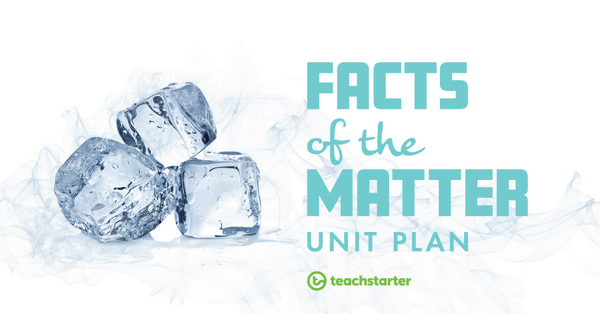
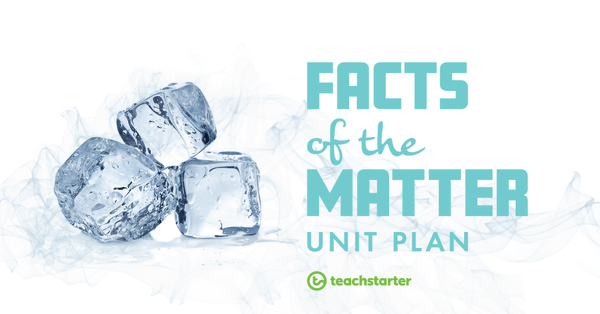
Facts of the Matter
This Chemical Sciences unit explores the concept that solids, liquids and gases have different observable properties and behave in different ways.
- Plus Plan
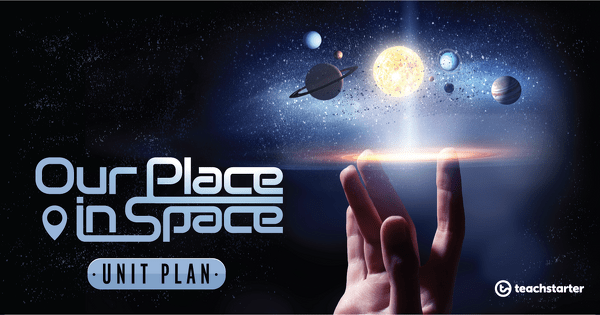
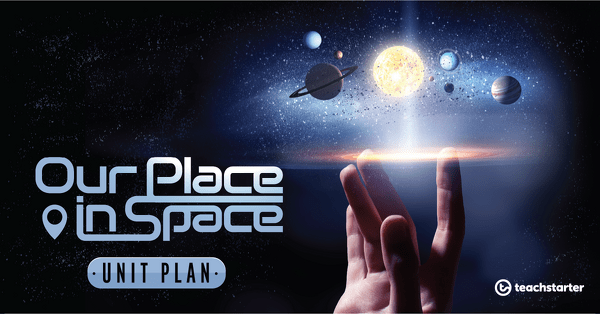
Our Place in Space - Unit Plan
This Earth and Space Sciences unit explores the concept that Earth is part of a system of planets orbiting around a star (the sun).
- Plus Plan
Light Fantastic Unit Plan
This Physical Sciences unit addresses the properties of light. It explores the phenomena of reflection, refraction, shadow and more.
- Plus Plan
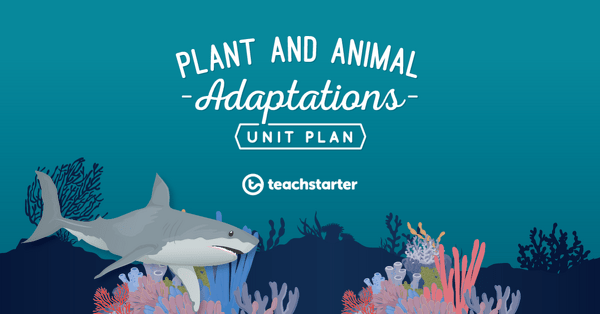
Plant and Animal Adaptations Unit Plan
This Science unit addresses the concept of plant and animal adaptations.
- Plus Plan

Understanding States of Matter
An assessment task designed to assess students' knowledge and understanding of solids, liquids and gases, their properties and their behaviour.
- Plus Plan
Slime - Solid, Liquid or Gas?
A 60 minute lesson in which students will recognise that not all substances can be easily classified on the basis of their observable properties.
- Plus Plan
Knowing Matters!
A 60 minute lesson in which students will explore how knowledge of states of matter and their changes can help inform practices and decision making.
- Plus Plan
Going, Going, Gone!
A 60 minute lesson in which students will recognise that substances exist in different states depending on the temperature.
- Plus Plan
Changing States of Matter
A 60 minute lesson in which students will explore the way solids, liquids and gases change in different situations.
- Plus Plan
Gases
A 60 minute lesson in which students will observe that gases have mass and take up space.
- Plus Plan
Liquids
A 60 minute lesson in which students will identify the observable characteristics of liquids and how they behave in different ways.
- Plus Plan
Solids
A 60 minute lesson in which students will identify the observable characteristics of solids and how they behave in different ways.
- Plus Plan
Matter Matters!
- Plus Plan
What's the Matter?
- Plus Plan
Diagram of the Solar System
- Plus Plan
A Star, Some Planets and More!
- Plus Plan
The Scale of the Solar System
- Plus Plan
Sisters of the Solar System - The Jovian Planets
- Plus Plan
Sisters of the Solar System - The Terrestrial Planets
- Plus Plan
Animal Adaptations Inquiry Task - Presenting
- Plus Plan
Animal Adaptations Inquiry Task - Researching
- Plus Plan
Animal Adaptations Inquiry Task - Introduction
- Plus Plan
Blubber Me Experiment
A 60 minute lesson in which students will investigate how blubber works as an insulator.
- Plus Plan
True Colours
A 60 minute lesson in which students will investigate how the colour of an object depends on the properties of the object and the colour of the light source.
- Plus Plan
Physiological Adaptations
A 60 minute lesson in which students will explore the physiological adaptations of plants and animals.