Prefixes and Suffixes Teaching Resources
Are you teaching prefixes and suffixes this school year? Printable worksheets, digital activities, and more options for English teachers have been created just for you by the Teach Starter teacher team!
Explore our curriculum-aligned collection of options for your writing or reading centers with editable options to help differentiate instruction and ensure your students have everything they need to meet standards.
Has it been a while since you were teaching this part of the curriculum? Our teacher team knows what it’s like to teach a new grade level after some time away, so we’ve put together a quick refresher on the basics of prefixes and suffixes! Take a look at our quick guide on the definitions of prefixes and suffixes, how to use them and some common examples.
What Is a Prefix?
The obvious place to start teaching this topic is with a definition, right? Your students will need to know the meaning of a prefix and how it differs from a suffix.
Simply put, a prefix is a sequence of sounds that carry meaning (otherwise known as a morpheme) that is added to the beginning of a word to change its meaning. For a set of letters to act as a prefix, there also must be a base word or a root word.
Prefix Examples
There are a wide variety of prefixes that students will come across during their years in primaryschool. Prefixes that are generally introduced first include un- and re-.
- The prefix 'un-' translates to 'not.' Examples with this prefix include unable, unusual and unkind.
- 'Re-' when used as a prefix means 'again.' Words with this prefix may be those such as redo, rewrite and reuse.
It is important to remind your students that sometimes there are words that have these same letters and appear to be a prefix, but there are times when they are just part of the word.
So, for example, you can present students with the word 'real.' While the letters 're' appear at the beginning of the word, 'al' is not a base word with meaning. In this case, the 're' is not acting like a prefix.
Common Prefixes Taught in Primary School
If you are looking for a list of prefixes to teach in your class, check out our list below!
- un- (not or opposite of)
- re- (again)
- dis- (not or opposite of)
- in- (not)
- under- (below or too little)
- over- (above or too much)
- non- (not)
- pre- (before)
- bi- (two)
- tri- (three)
- quad- (four)
- oct- (oct)
What Is a Suffix?
Much like a prefix, a suffix acts in the same what that it is a group of letters that carry meaning to change a base or root word. The only difference is that these letters appear at the end of the word.
Suffix Examples
As early as year 1, students begin to recognize that word meaning changes when you add letters to the end of a word. The most basic example of this is changing a singular noun to a plural noun by adding -s or -es to the end of a word.
Other common suffixes that are taught early on include -ed and -ing.
Common Suffixes Taught in Primary School
Looking for a list of suffixes that need to be covered in the primary years? Read on for a list of word endings that your students should learn!
- -s (plural, more than one)
- -es (plural, more than one)
- -ing (action)
- -ed (past tense)
- -er (comparative)
- -est (superlative)
- -ful (full of)
- -less (without)
- -y (characterized by)
- -ly (characteristic of)
- -ness (condition or state of)
Decoding with Prefixes and Suffixes
Prefixes and suffixes come in handy when it comes to decoding words because they provide important clues about meaning.
Let's say a student encounters an unfamiliar word. They can use their knowledge of common prefixes and suffixes to decipher the word's meaning based on its parts.
For example, if students encounter the word 'dislike,' they may not know its exact meaning. However, if they are familiar with the prefix 'dis-,' which means not or opposite, and the suffix '-like,' which means having the same characteristics or qualities as, they can use this knowledge to determine that 'dislike' means not having the same characteristics or qualities as something else.
- Plus Plan
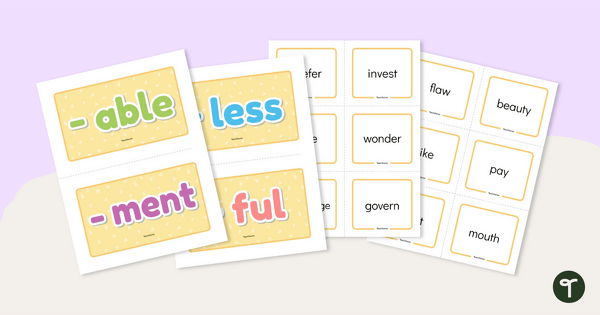
Building Words with Suffixes Sorting Activity
Build words by matching the root word to suffixes and recording the new words on the answer sheet.
- Plus Plan
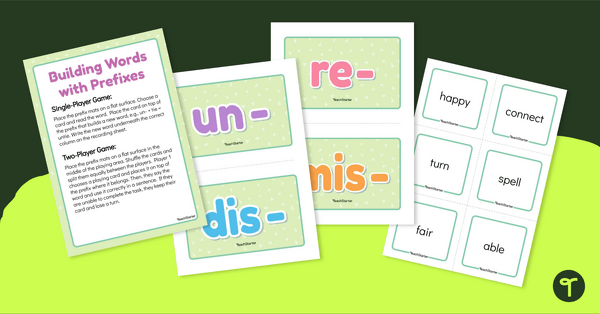
Building Words with Prefixes Sorting Activity
Build words by matching the root word to prefixes and recording the new terms on the answer sheet.
- Plus Plan
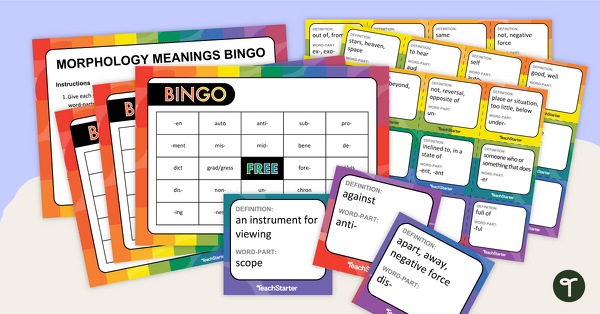
Morphology Bingo
Examine word parts and identify their morphological meanings in this engaging bingo game.
- Plus Plan
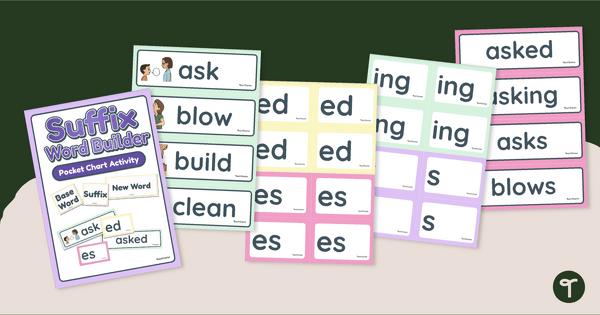
Suffix Word Building Activity
Build words using the suffixes -ed, -es, -s, and -ing with a printable word-building pocket chart card pack.
- Plus Plan
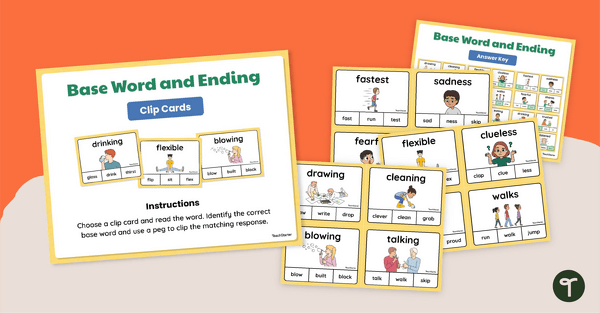
Base Word and Ending Clip Cards
Support your students' understanding of word structure with this Base Word and Ending Clip Cards activity.
- Plus Plan
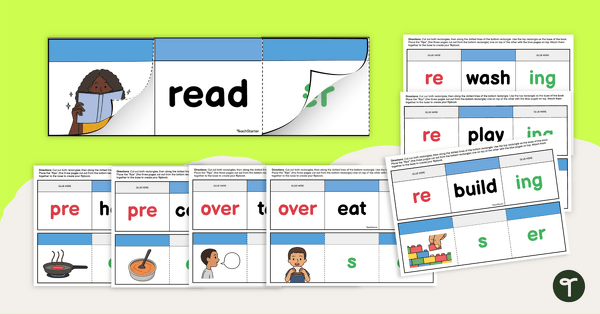
Morpheme Cards Flip Books
Support your students’ understanding of word structure with this engaging morpheme cards flipbook resource.
- Plus Plan
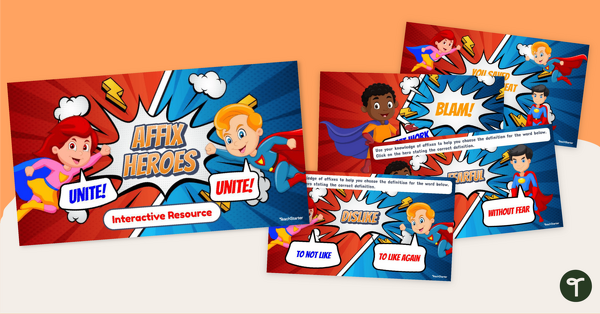
Affix Heroes Interactive Activity
Help the Affix Heroes define words with prefixes and suffixes with a self-checking interactive game!
- Plus Plan
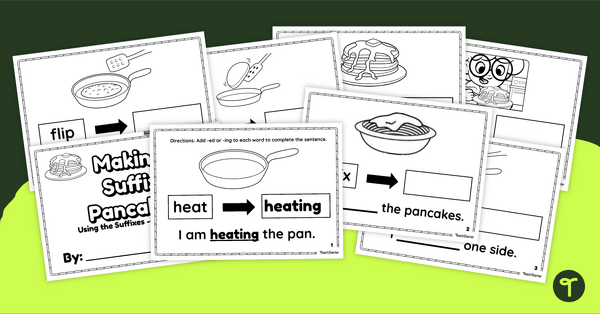
Suffixes Mini Book
Learn to make pancakes and use the suffixes -ed and -ing with a printable mini-book.
- Plus Plan
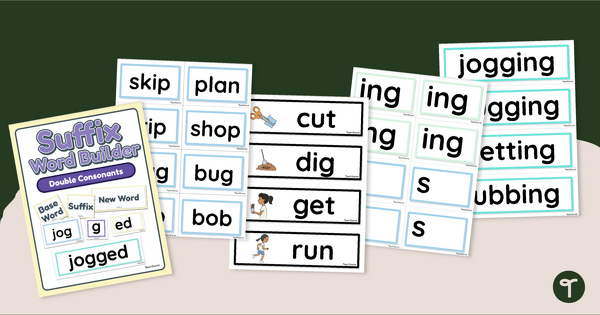
Double Consonant Word Building Cards
Practise spelling and building words that need double consonants when adding suffixes with a word-building activity.
- Plus Plan
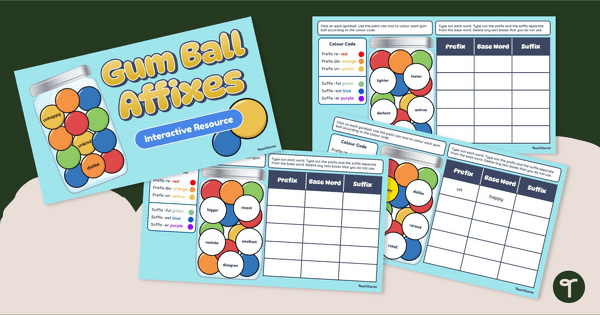
Gum Ball Affixes Interactive Resource
Learn new words and their prefixes, suffixes, and base words with an engaging Google Slides digital learning activity.
- Plus Plan
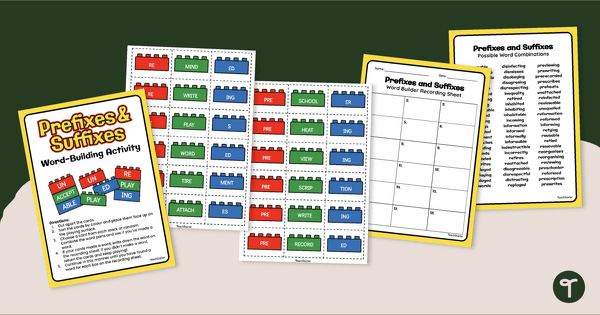
Word Building Bricks - Prefixes, Suffixes and Roots
Build, read and write multi-syllable words using prefixes, suffixes and base words with a fun word-building literacy activity.
- Plus Plan
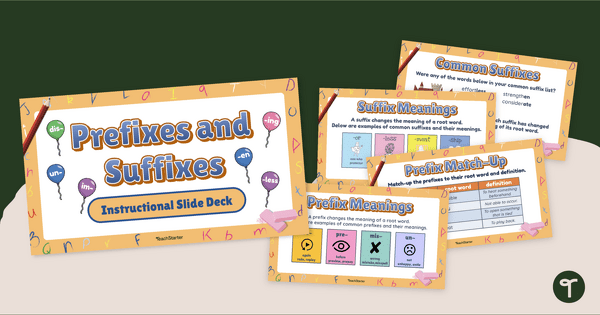
Morphemic Word Families PowerPoint
Teach students about base words, prefixes and suffixes and how these are used to create morphemic families in a clear and simple way.
- Free Plan
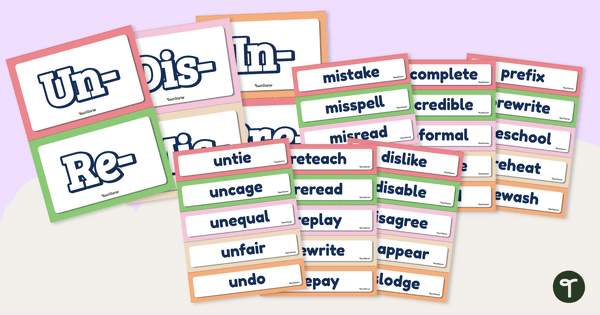
Prefix Words Classroom Display
Build a classroom word wall and boost vocabulary skills with a printable prefix classroom display.
- Plus Plan
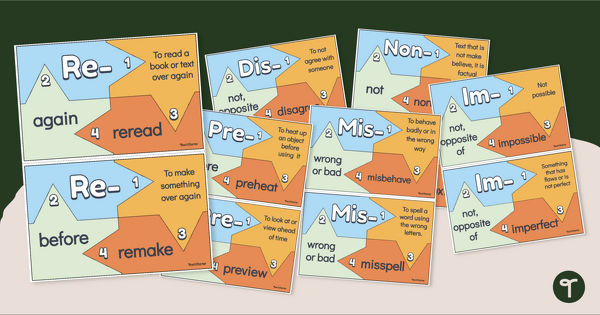
Prefix Puzzles Literacy Centre
Grow your students’ vocabularies with prefix puzzles in your literacy centres.
- Plus Plan
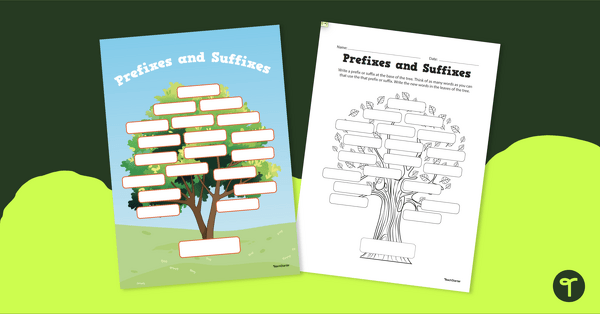
Affix Word Tree Poster and Worksheet
Encourage vocabulary development with printable affix word tree anchor chart and worksheet
- Plus Plan
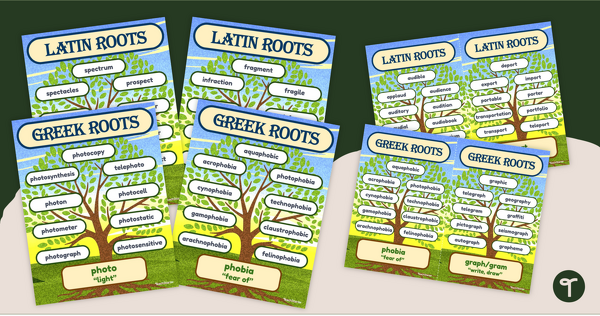
Greek and Latin Roots – Word Tree Anchor Charts
Encourage vocabulary development with 24 Greek and Latin root anchor charts.
- Plus Plan
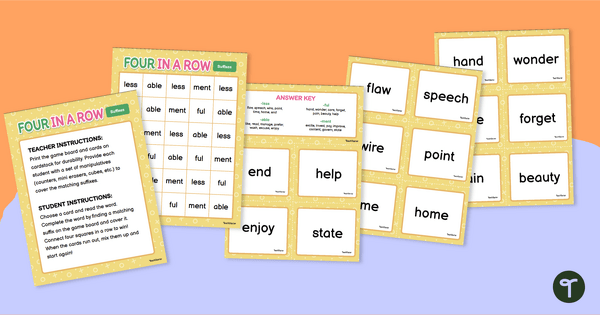
Four in a Row Vocabulary Game - Suffixes
Practise matching words to their common suffixes and build vocabulary with a suffix vocabulary game.
- Plus Plan
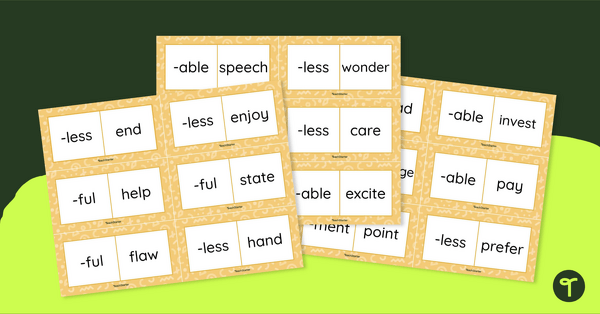
Suffixes Dominoes Game
Identify new words that include common suffixes with a fun suffixes vocabulary game.
- Plus Plan
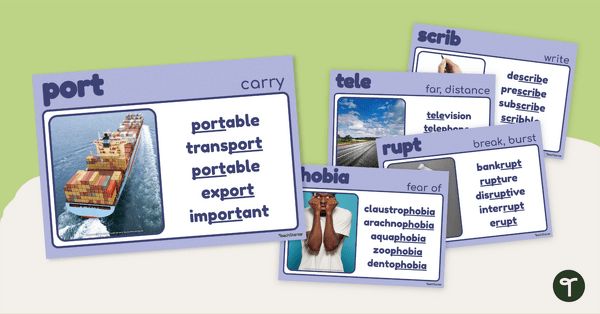
Greek and Latin Roots Poster Pack
Encourage vocabulary development with a set of 24 Greek and Latin Roots posters.
- Plus Plan
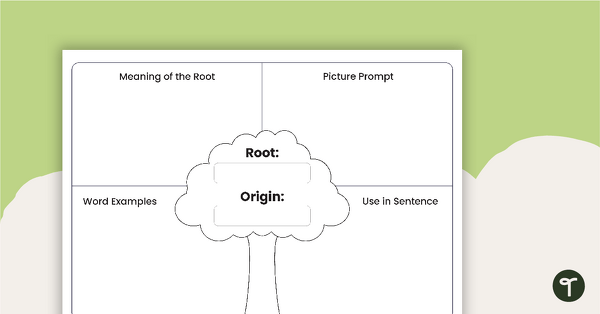
Roots Graphic Organiser Template
Use this graphic organiser to explore roots and their origins.
- Plus Plan
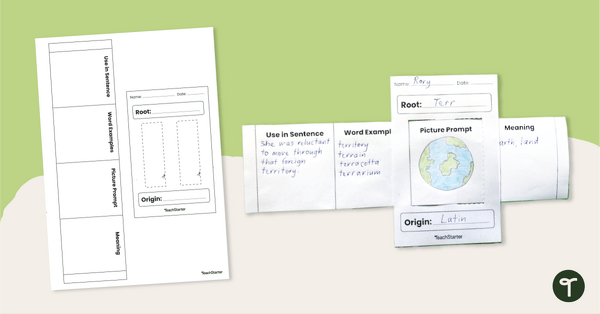
Roots Window Graphic Organiser
Organise ideas about roots and their origins with this graphic organiser.
- Plus Plan
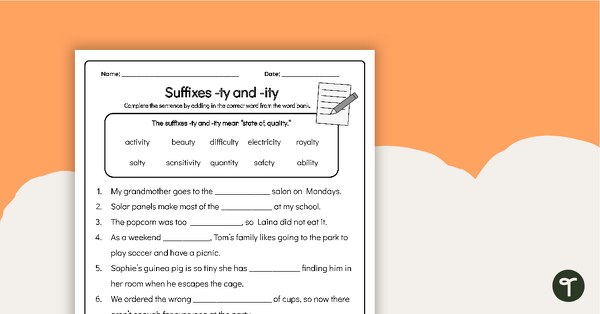
-Ty and -Ity Suffixes Worksheet
Practise using the suffixes -ty and -ity with a printable suffix worksheet.
- Plus Plan
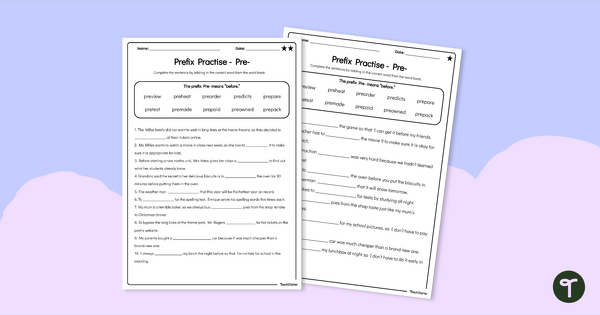
Pre- Prefixes Worksheet
Boost students' understanding of the prefix pre- with a printable prefix worksheet.