Habitats and Ecosystems Teaching Resources
Explore habitat activities, ecosystem worksheets and more, all created by teachers for your lesson planning needs and aligned with the Australian science curriculum.
This extensive collection of teacher resources includes everything you need to teach your students about the places that animals call home around the globe, including rainforests, bushland, deserts, marine ecosystems and more.
Best of all, each printable and digital resource has been carefully reviewed by a member of our teacher team to ensure it's ready to be used in your classroom!
New to teaching about habitats and ecosystems in the primary classroom, or just looking for some fresh ways to engage your students on the topics? Read on for a primer from our teacher team, including a handy definitions for kids on each topic, plus a breakdown of the difference between these two important science terms.
What Is a Habitat? A Definition for Kids
Do you need a quick and easy way to explain the meaning of habitat to your students? Our teacher team has created a definition you can use in the classroom to do just that!
A habitat is a place where plants and animals live. It provides all of the things that they need to survive, like food, water and shelter.
5 Habitat Examples for Kids to Share in Your Classroom
This definition is a good starting point, but perhaps you're looking for a handy list of habitat examples you can share? We've got you covered with that too!
Please note that this list includes five of the planet's major habitats. Some scientists list as many as 16, however this list includes those our students are most likely to need to know about in primary school.
- Desert — The desert habitat is known for its dry and hot conditions, where animals such as the camel and plants such as cacti thrive. Some examples include the Gobi Desert in China and the Sahara Desert in Africa.
- Marine — Also known as the aquatic habitat, marine is larger of all habitats on the planet. Rivers, lakes, streams and, of course, the five oceans on planet Earth provide homes for a variety of marine animals live — from fish to whales to coral and much more.
- Polar — This habitat is found on the two ends of the earth, called the North and South Poles. Plants and animals that live in the polar habitat have adapted to its extreme cold temperatures.
- Forest – The forest habitat makes up nearly a third of the world's landmass. This habitat can be broken down into different types of forests, including the coniferous forests, coastal forests and tropical rainforests. The latter are known for being warm and very moist — just as the name implies, this habitat gets a lot of rain! The most famous of the world's rainforests is the Amazon which covers 6.7 million square kilometres.
- Bushland — One of the largest habitats in the world, bushland typically has moderate to warm weather and plenty of grass for animals to graze on.
What Is an Ecosystem? A Kid-Friendly Definition
We've covered the meaning of habitat, but what about ecosystem? Here's a definition from our teacher team to use in the classroom:
An ecosystem is a community made up of living organisms and nonliving things in a particular area. For example, an ecosystem can include plants, animals and microorganisms that are all living, as well as soil, water and sunlight, which are not.
The living and nonliving things in an ecosystem interact with each other and are interdependent.

Ecosystem vs. Habitat — What's the Difference?
These two science concepts are clearly interrelated, which can be confusing for students. So let's outline the differences.
Habitats
Kids can think of a habitat as a specific place where certain plants and animals live. A habitat is a home, and it's where those plants and animals have everything they need to survive — sort of like the things that students might find in the place where they live. There is shelter, food and water.
Ecosystems
On the other hand, it can be helpful for students to remember that an ecosystem is like a big, interconnected community of habitats.
An ecosystem also goes beyond just plant and animal life.
This larger system includes both living (plants and animals) and non-living (air, water) things. It also includes all the interactions and relationships between the living and non-living things within it.
- Free Plan
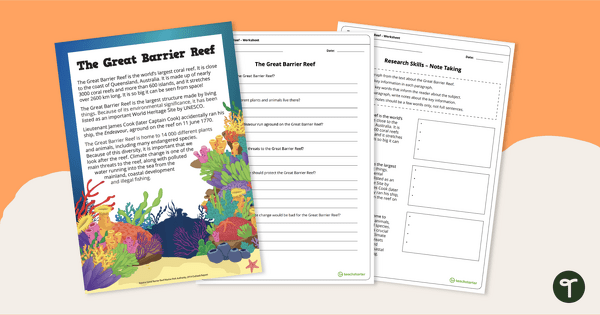
Great Barrier Reef Comprehension and Note Taking Worksheet
Learn about The Great Barrier Reef with a reading comprehension and note-taking activity.
- Plus Plan
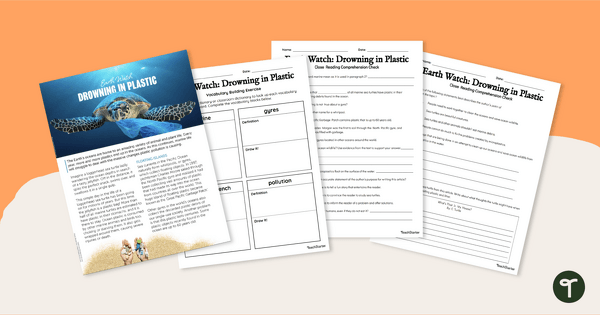
Drowning in Plastic – Reading Comprehension Worksheet
Teach your students facts about ocean pollution with this comprehensive article with accompanying comprehension activities.
- Plus Plan
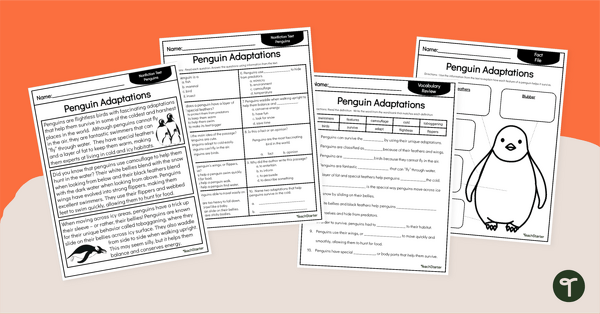
Penguin Adaptations - Year 3 Reading Comprehension
Explore the fascinating world of penguins and their adaptations with our set of printable Year 3 Reading Comprehension worksheets.
- Plus Plan
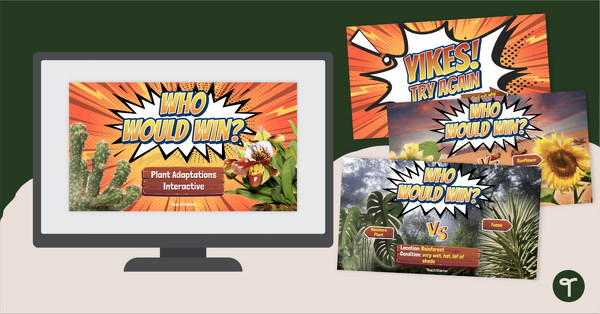
Who Would Win? - Plant Adaptations Interactive Game
Identify plants and plant adaptations that allow for survival in different environments with an exciting “Who Would Win?” showdown game!
- Free Plan
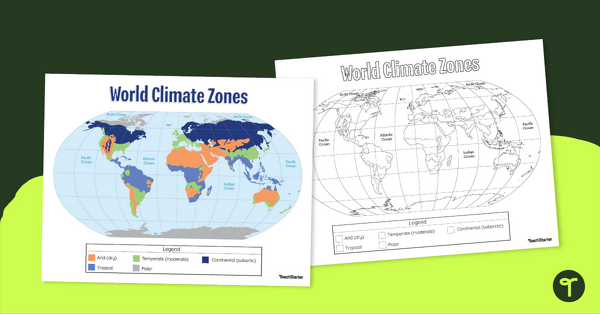
Map of the World's Climate Zones
Display this climate zone map in your classroom while teaching about the 6 climate types.
- Plus Plan
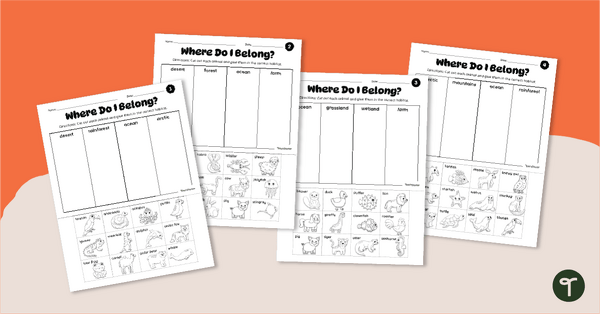
Animals and Their Habitats - Cut and Paste Worksheets
Match the animals and their habitats with a pack of printable cut-and-paste worksheets.
- Plus Plan
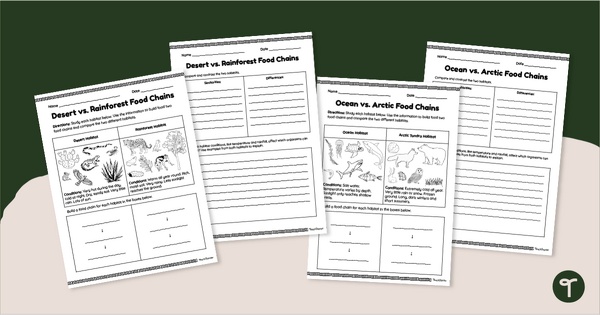
Comparing Food Chains & Habitats Worksheet Pack
Compare and contrast different habitats and how energy flows through them with our Comparing Food Chains and Habitats Worksheet Pack.
- Plus Plan
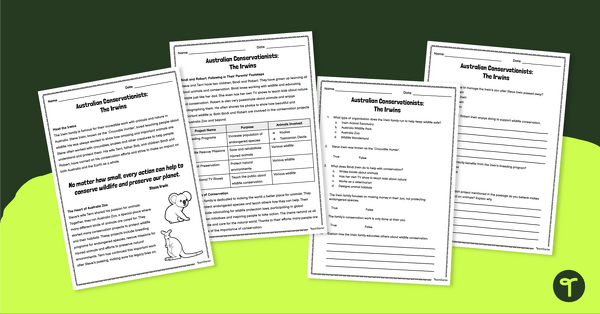
Australian Conservationists: The Irwins – Comprehension Worksheet
Learn about the Irwin family and their conservation work with this 2-page reading passage and accompanying comprehension questions.
- Plus Plan
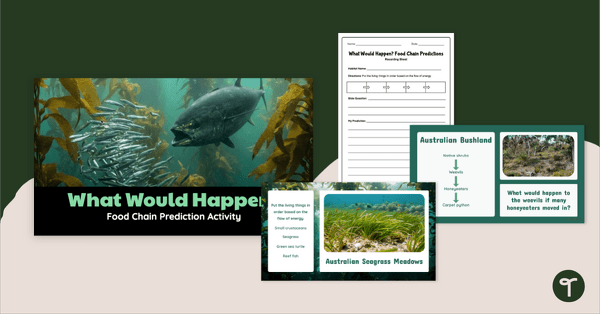
What Would Happen? Food Chain Prediction Activity
Explore how changes in the environment can affect food chains with an interactive Food Chain Prediction Activity.
- Plus Plan
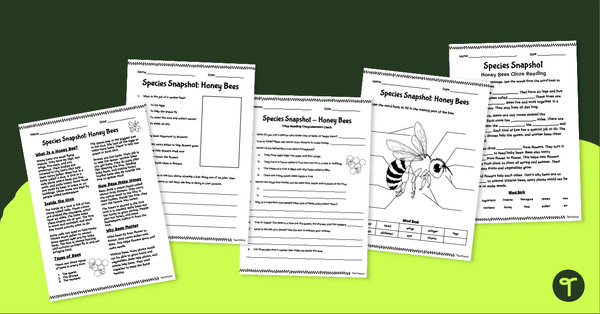
Helpful Honey Bees Worksheet Pack - Year 2 Comprehension
Read and learn about honey bees with a Printable Honey Bees Worksheet Pack for year 2.
- Plus Plan
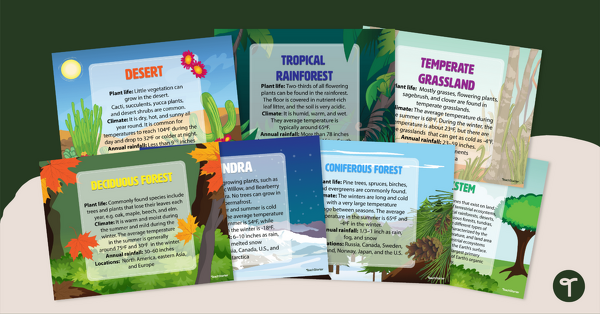
Ecosystem Poster Pack
Introduce your students to the different types of ecosystems with a set of printable Ecosystem posters.
- Plus Plan
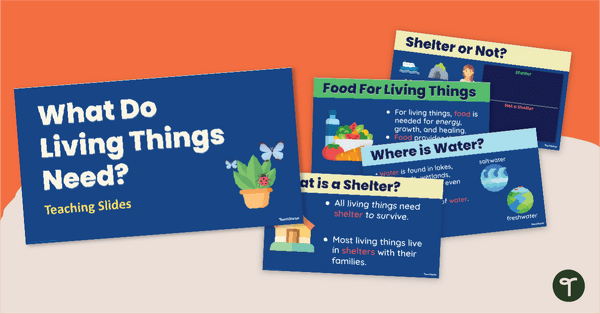
What Do Living Things Need to Survive? PowerPoint
Teach your students what living things need to survive with an engaging, interactive teaching slide deck.
- Plus Plan
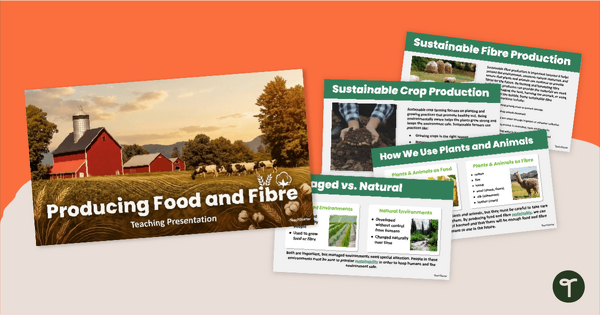
Producing Food and Fibre PowerPoint Presentation
Explore how farmers use sustainable practices to produce resources that humans use with our ‘Producing Food and Fibre’ PowerPoint Presentation.
- Plus Plan
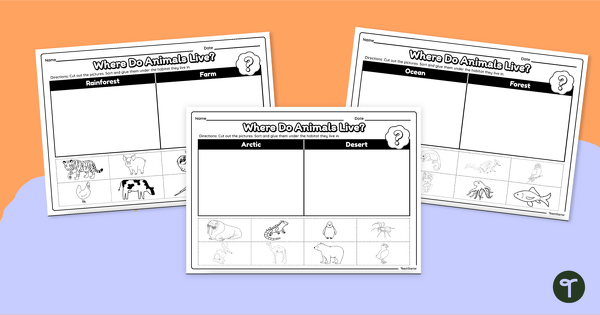
Animals and Their Habitats - Cut and Match Worksheets
Match animals with their habitats with a set of cut and paste worksheets.
- Plus Plan
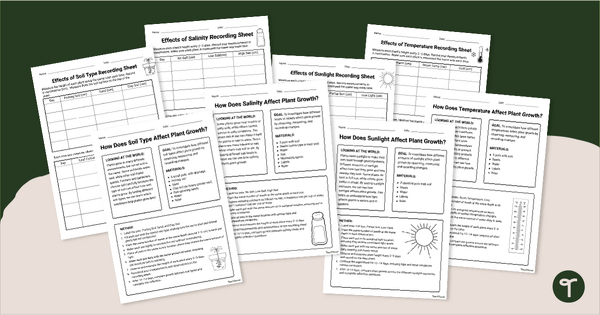
Environmental Impact Experiment Pack
Observe the effects of soil, salinity, sunlight, and temperature on the growth of plants with an engaging Environmental Impact Experiment.
- Plus Plan
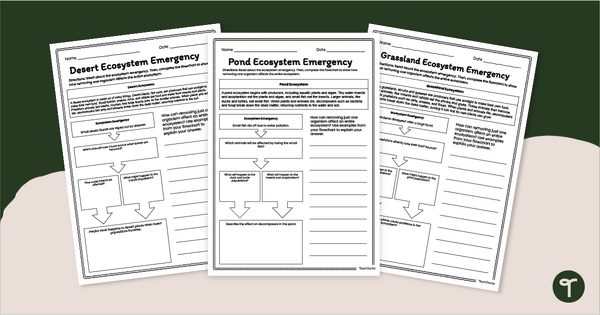
Investigating Food Chain Disruptions Worksheet Pack
Explore what happens when a food source is removed from an ecosystem with our Investigating Food Chain Disruptions Worksheet Pack.
- Plus Plan
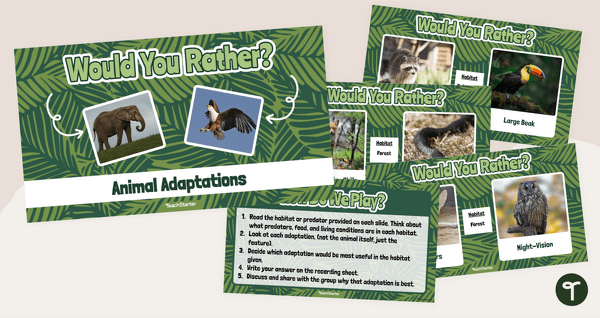
Would You Rather? Animal Adaptations Game
Discuss and debate the best animal adaptations with the Would You Rather? Animal Adaptation game.
- Plus Plan
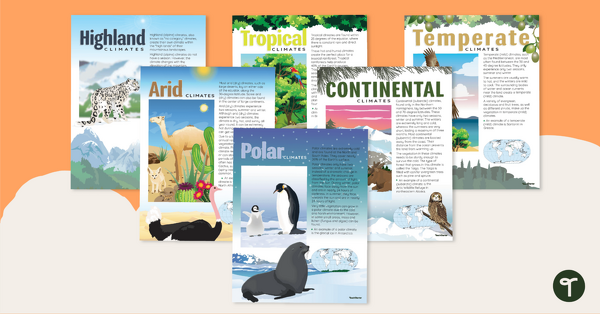
Climate Zones of the World – Poster Pack
Learn about different climate types with this set of 6 printable posters.
- Plus Plan
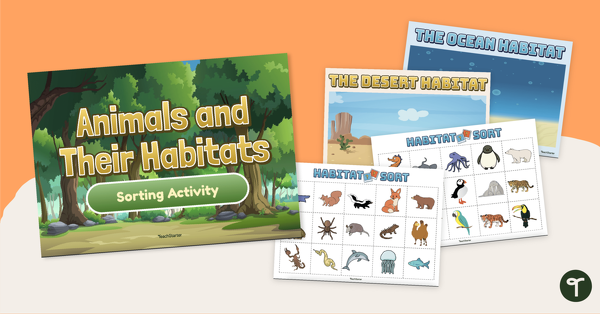
Animals and Their Habitats - Sorting Activity
Discover the habitats that are home to Earth’s wildlife with a printable animal habitat sorting activity.
- Plus Plan
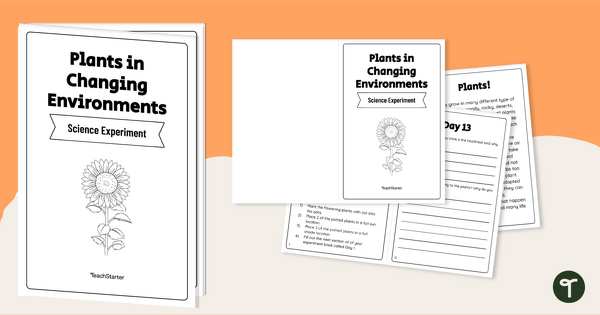
How Does the Environment Affect Plants? Science Experiment
Investigate the effects of the environment on plant life with a no-cut printable science experiment mini-book.
- Plus Plan
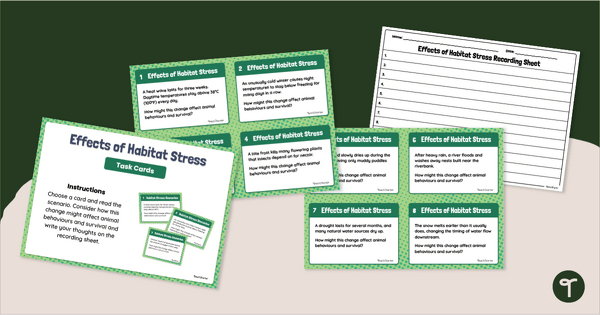
Effects of Habitat Stress Activity Cards
Explore how environmental stress affects plants and animals with our Effects of Habitat Stress Activity Cards.
- Free Plan

Develop a Habitat - Garden Project
A project-based assessment task for students to demonstrate their understanding of how habitats can be preserved and protected in and around where people live.
- Plus Plan
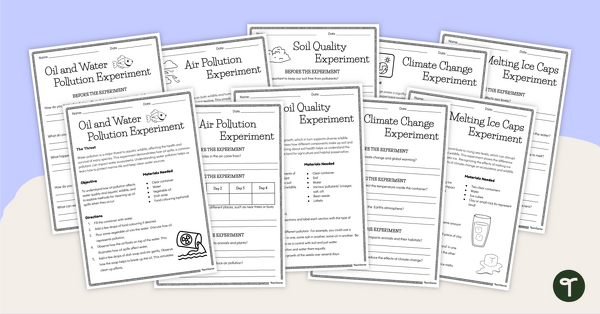
Environmental Impact Science Experiments
Use these simple science experiments to teach your students about environmental issues such as oil and water pollution, soil quality and climate change.
- Plus Plan
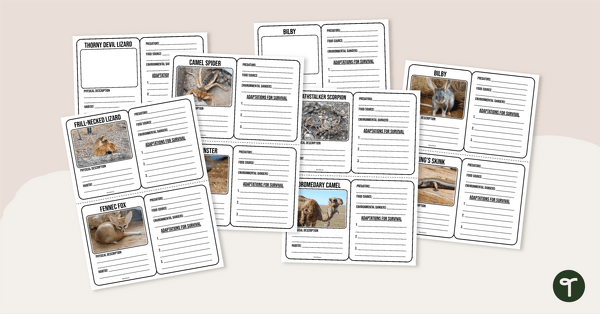
Desert Animal Adaptations - Trading Card Templates
Discover amazing desert animals’ adaptations and display your learning with printable animal trading card templates.
- Plus Plan
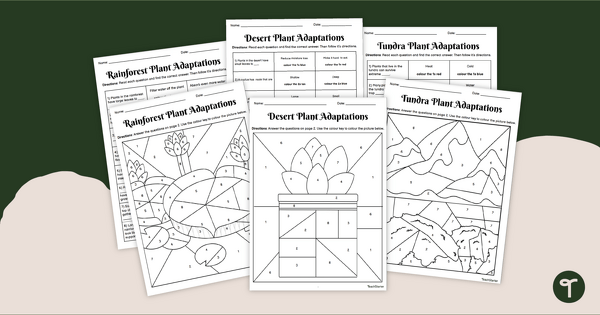
Plant Adaptations - Colour by Number Worksheets
Learn about the adaptations of plants in the rainforest, tundra, and desert with colour-by-number worksheets.
- Plus Plan
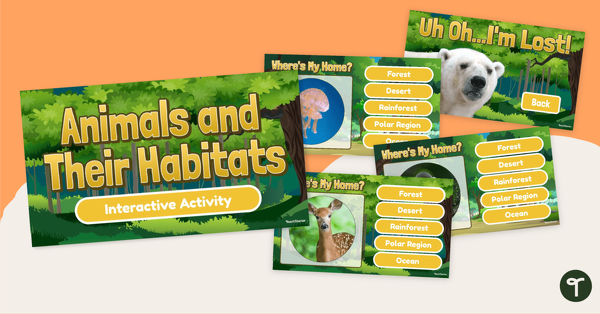
Animals and Their Habitats- Interactive Animal Habitat Game
Help a lost polar bear (and his friends) return to the correct habitat with an interactive animal habitat game.
- Plus Plan
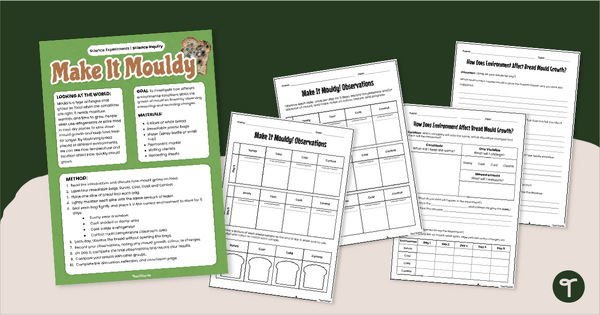
Bread Mould Experiment (4-6)
Observe how the environment causes changes in mould growth with an engaging Bread Mould Experiment.
- Free Plan
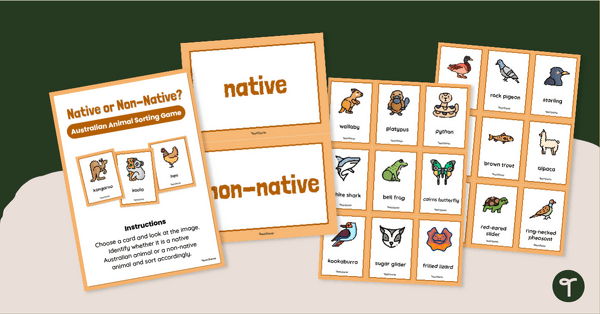
Native or Non-Native Species? Australian Animal Sorting Game
Identify native and introduced species in Australia with a printable Native or Non-Native Animals Sorting Game.
- Plus Plan
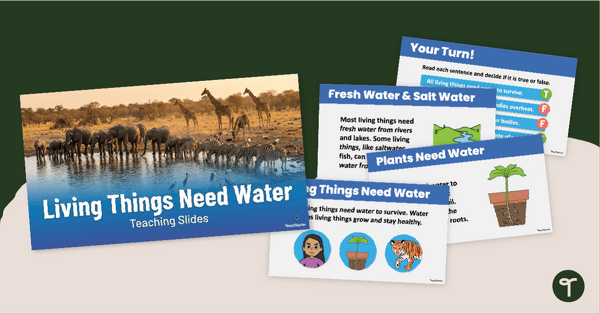
Living Things Need Water PowerPoint
Teach your students the importance of water to living things with an engaging Living Things Need Water PowerPoint Presentation.
- Plus Plan
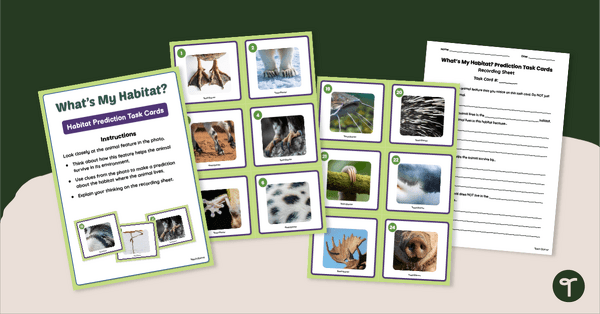
What’s My Habitat? Prediction Task Cards
Explore animal features and improve science inquiry skills with printable Habitat Prediction Task Cards.
- Plus Plan
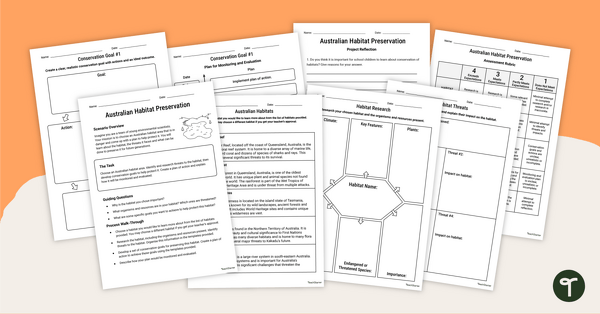
Australian Habitat Preservation Project
Use this habitat preservation project to teach your students about how to help conserve a threatened Australian environment for future generations.
- Plus Plan
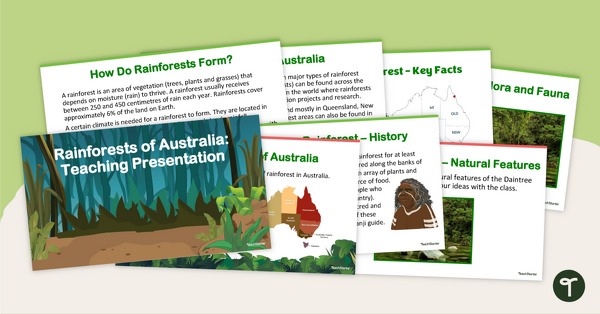
Rainforests of Australia - Teaching Presentation
Explore Australia's rainforests with this 14-slide editable teaching presentation.
- Habitats and Ecosystems Worksheets
- Habitats and Ecosystems Projects
- Habitats and Ecosystems for Foundation Year
- Habitats and Ecosystems for Year 1
- Habitats and Ecosystems for Year 2
- Habitats and Ecosystems for Year 3
- Habitats and Ecosystems for Year 4
- Habitats and Ecosystems for Year 5
- Habitats and Ecosystems for Year 6