A comprehension worksheet for a poem from the Year 2 magazine (Issue 2).
This teaching resource is a comprehension worksheet for the magazine article ‘The Waterfall’ from the Year 2 magazine, ‘What’s Buzzing?’ (Issue 2).
Updated: 25 Aug 2020
A comprehension worksheet for a poem from the Year 2 magazine (Issue 2).
Non-Editable: PDF
Pages: 2 Pages
Years: 1 - 2
Listen to, recite and discuss poems, chants, rhymes and songs, and imitate and invent sound patterns including alliteration and rhyme
Use comprehension strategies, such as visualising, predicting, connecting, summarising and questioning, and draw on learnt vocabulary and growing knowledge of context and text structures to build literal and inferred meanings
Identify, reproduce and experiment with rhythmic sound and word patterns in poems, chants, rhymes and songs
Use comprehension strategies, such as visualising, predicting, connecting, summarising, monitoring and questioning, and begin to analyse texts by drawing on a growing knowledge of context and text structures to build literal and inferred meaning...
Communicates effectively by using interpersonal conventions and language to extend and elaborate ideas for social and learning interactions
Comprehends independently read texts that require sustained reading by activating background and word knowledge, connecting and understanding sentences and whole text, and monitoring for meaning
Understands and responds to literature by creating texts using similar structures, intentional language choices and features appropriate to audience and purpose
Listen to, recite and perform poems, chants, rhymes and songs, imitating and inventing sound patterns including alliteration and rhymeElaborationsexploring performance poetry, chants and songs from Aboriginal and Torres Strait Islander peoples and As...
Use comprehension strategies to build literal and inferred meaning about key events, ideas and information in texts that they listen to, view and read by drawing on growing knowledge of context, text structures and language featuresElaborationsusing ...
Identify, reproduce and experiment with rhythmic, sound and word patterns in poems, chants, rhymes and songsElaborationsexploring poems, chants, rhymes or songs from different cultures which class members may bring from home (Skills: Literacy, Numera...
Use comprehension strategies to build literal and inferred meaning and begin to analyse texts by drawing on growing knowledge of context, language and visual features and print and multimodal text structuresElaborationsmaking connections between the ...
Listen to and discuss poems, chants, rhymes and songs, and imitate and invent sound patterns including alliteration and rhyme
Use comprehension strategies such as visualising, predicting, connecting, summarising and questioning when listening, viewing and reading to build literal and inferred meaning by drawing on vocabulary and growing knowledge of context and text structures
Identify, reproduce and experiment with rhythmic sound and word patterns in poems, chants, rhymes or songs
Use comprehension strategies such as visualising, predicting, connecting, summarising, monitoring and questioning to build literal and inferred meaning
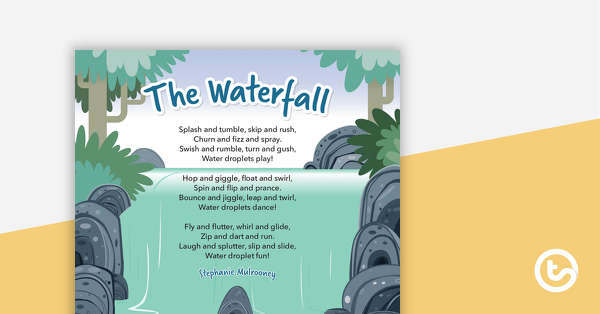
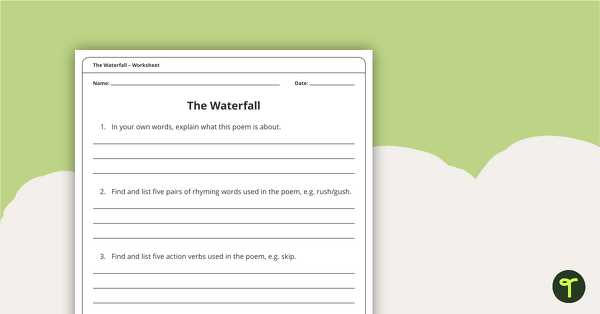
A comprehension worksheet for a poem from the Year 2 magazine (Issue 2).
This teaching resource is a comprehension worksheet for the magazine article ‘The Waterfall’ from the Year 2 magazine, ‘What’s Buzzing?’ (Issue 2).
Listen to, recite and discuss poems, chants, rhymes and songs, and imitate and invent sound patterns including alliteration and rhyme
Use comprehension strategies, such as visualising, predicting, connecting, summarising and questioning, and draw on learnt vocabulary and growing knowledge of context and text structures to build literal and inferred meanings
Identify, reproduce and experiment with rhythmic sound and word patterns in poems, chants, rhymes and songs
Use comprehension strategies, such as visualising, predicting, connecting, summarising, monitoring and questioning, and begin to analyse texts by drawing on a growing knowledge of context and text structures to build literal and inferred meaning...
Communicates effectively by using interpersonal conventions and language to extend and elaborate ideas for social and learning interactions
Comprehends independently read texts that require sustained reading by activating background and word knowledge, connecting and understanding sentences and whole text, and monitoring for meaning
Understands and responds to literature by creating texts using similar structures, intentional language choices and features appropriate to audience and purpose
Listen to, recite and perform poems, chants, rhymes and songs, imitating and inventing sound patterns including alliteration and rhymeElaborationsexploring performance poetry, chants and songs from Aboriginal and Torres Strait Islander peoples and As...
Use comprehension strategies to build literal and inferred meaning about key events, ideas and information in texts that they listen to, view and read by drawing on growing knowledge of context, text structures and language featuresElaborationsusing ...
Identify, reproduce and experiment with rhythmic, sound and word patterns in poems, chants, rhymes and songsElaborationsexploring poems, chants, rhymes or songs from different cultures which class members may bring from home (Skills: Literacy, Numera...
Use comprehension strategies to build literal and inferred meaning and begin to analyse texts by drawing on growing knowledge of context, language and visual features and print and multimodal text structuresElaborationsmaking connections between the ...
Listen to and discuss poems, chants, rhymes and songs, and imitate and invent sound patterns including alliteration and rhyme
Use comprehension strategies such as visualising, predicting, connecting, summarising and questioning when listening, viewing and reading to build literal and inferred meaning by drawing on vocabulary and growing knowledge of context and text structures
Identify, reproduce and experiment with rhythmic sound and word patterns in poems, chants, rhymes or songs
Use comprehension strategies such as visualising, predicting, connecting, summarising, monitoring and questioning to build literal and inferred meaning

We create premium quality, downloadable teaching resources for primary/elementary school teachers that make classrooms buzz!
Would you like something changed or customised on this resource? While our team makes every effort to complete change suggestions, we can't guarantee that every change will be completed.
Did you spot an error on this resource? Please let us know and we will fix it shortly.
Are you having trouble downloading or viewing this resource? Please try the following steps:
If you are still having difficulty, please visit the Teach Starter Help Desk or contact us .
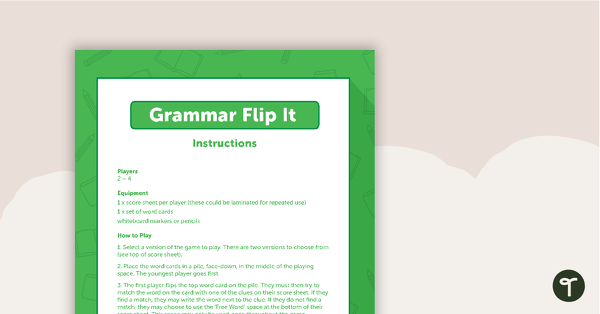
A fun game for students to play in small groups to consolidate their understanding of adjectives.

A fun game for students to play in small groups to consolidate their understanding of verbs.
Use this set of Year 1 editing passages to help your students demonstrate their spelling, punctuation and grammar knowledge.
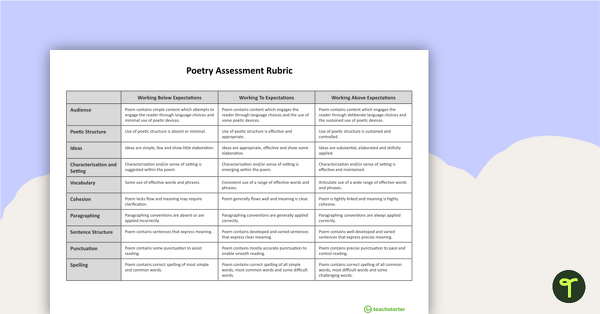
A NAPLAN-style rubric designed to help teachers to assess student's poetry.
Use this set of Year 4 editing passages to help your students demonstrate their spelling, punctuation and grammar knowledge.
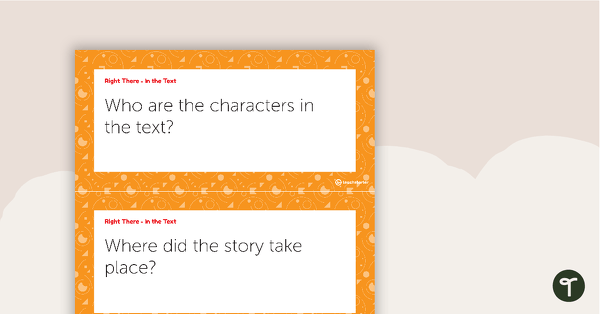
A set of 28 generic QAR question cards for students to use as a comprehension task after reading.
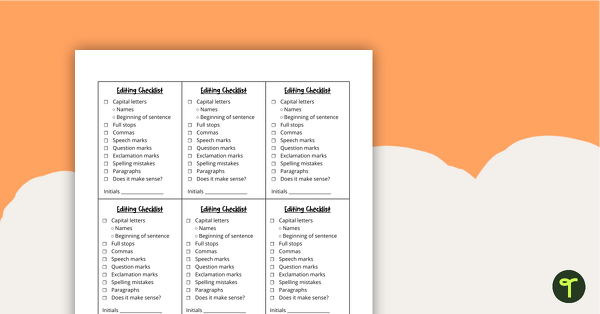
Get your students using this editing checklist so that no mistake gets left behind!
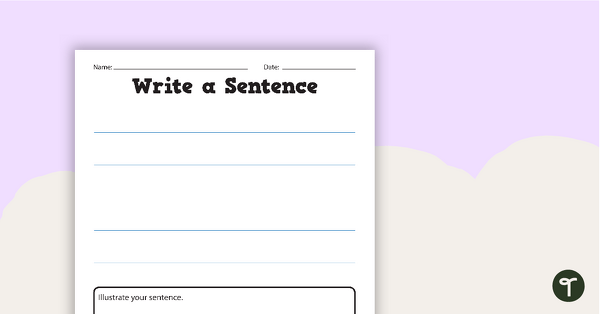
A worksheet for beginner writers to practice their handwriting.
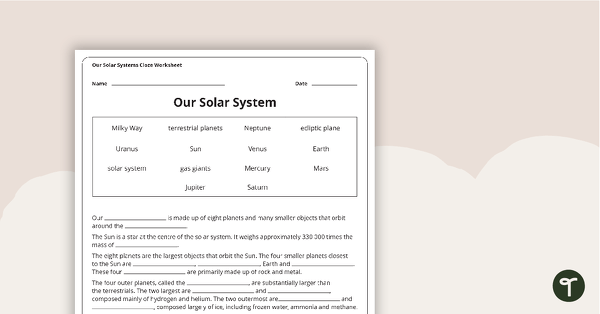
A set of 7 fiction and non-fiction cloze worksheets with answer sheets.
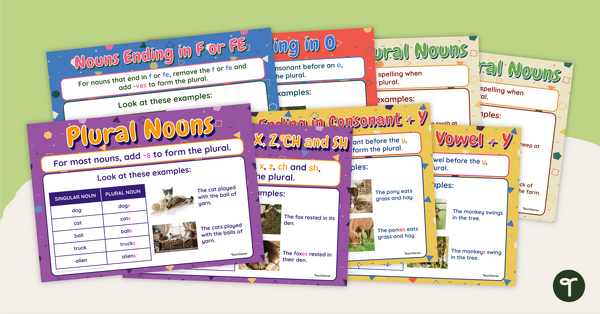
Make plural rules a breeze to understand with plural noun posters.
0 Comments
Write a review to help other teachers and parents like yourself. If you'd like to request a change to this resource, or report an error, select the corresponding tab above.