Language for Expressing and Developing Ideas
- Plus Plan
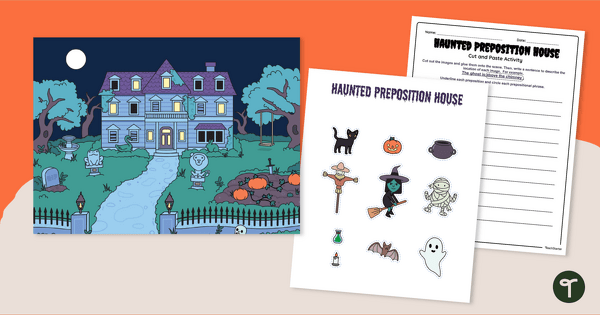
Haunted Preposition House - Halloween Worksheet
Practise using prepositions and prepositional phrases with a a fun and spooky Halloween worksheet!
- Plus Plan
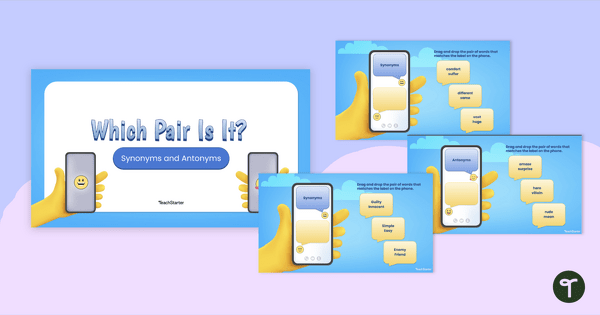
Fix the Text! – Digital Activity for Synonyms and Antonyms
Engage your students with this digital activity for synonyms and antonyms that helps them practise vocabulary in a fun and engaging way.
- Plus Plan
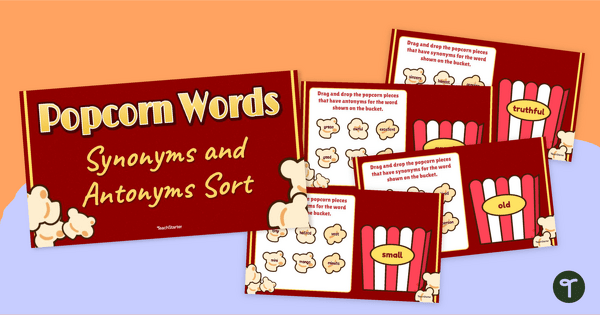
Synonyms and Antonyms – Digital Sorting Activity
Make your students’ vocabulary skills ’POP’ with an interactive, drag-and-drop synonym and antonym activity.
- Plus Plan
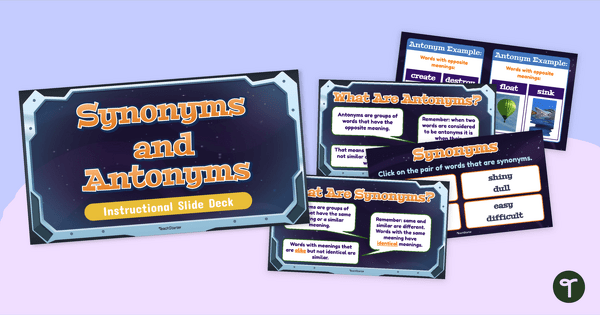
Synonyms and Antonyms PowerPoint
Use this synonyms and antonyms PowerPoint to expand your students’ vocabularies and teach them about the nuances between words.
- Plus Plan
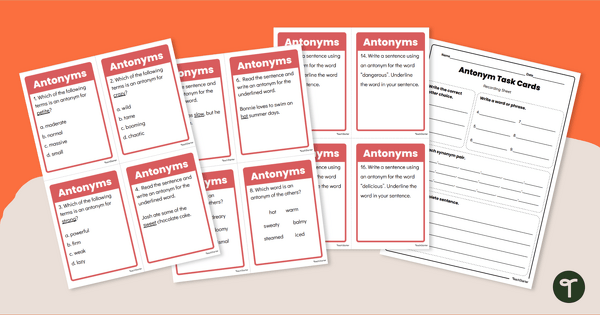
Antonyms Task Cards
Build vocabulary and recognition of antonyms with a set of 24 task cards.
- Plus Plan
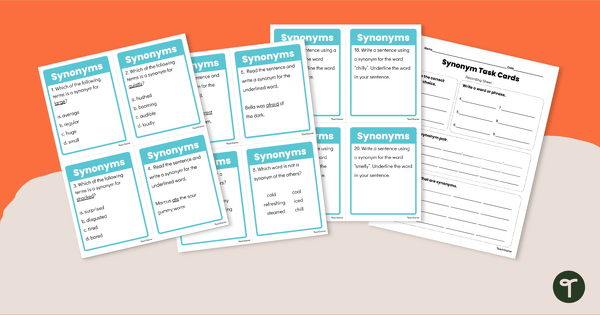
Synonym Task Cards
Build vocabulary and recognition of synonyms with a set of synonym task cards.
- Plus Plan
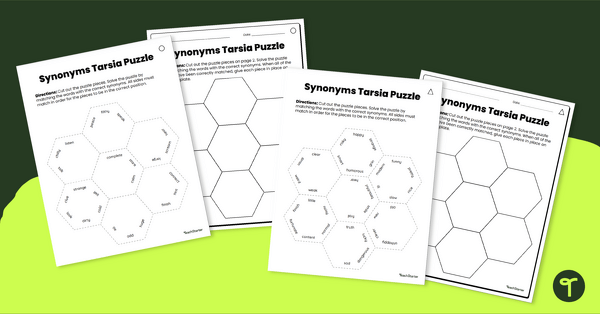
Synonyms Tarsia Puzzle
Have fun building vocabulary skills with a printable synonyms tarsia puzzle activity.
- Plus Plan
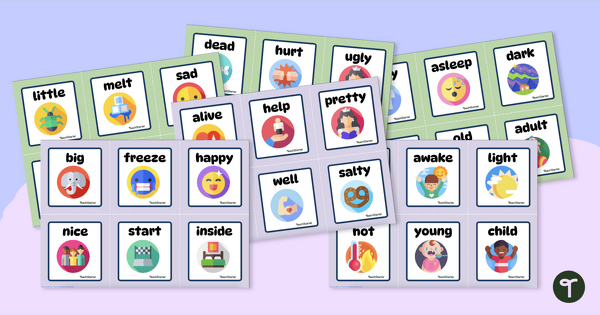
Antonym Flashcards
Boost your students vocabulary skills with a set of illustrated antonym flash cards.
- Plus Plan
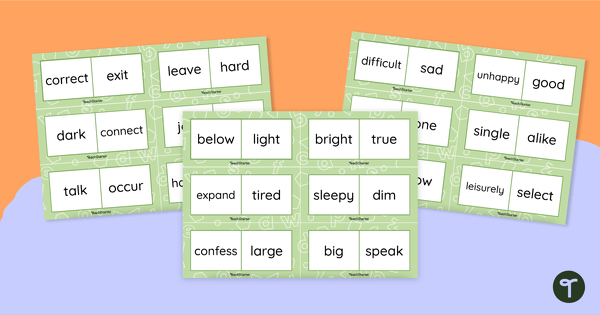
Synonym Dominoes
Match up similar words with this set of 28 synonym dominoes.
- Plus Plan
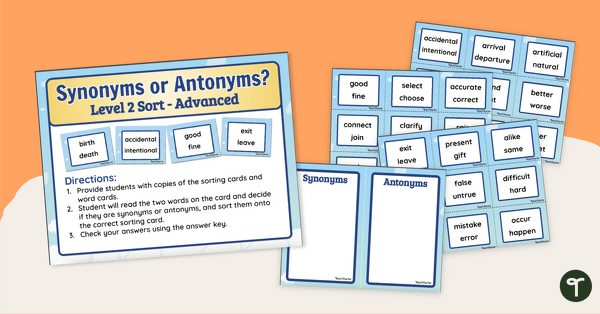
Antonyms and Synonyms Sorting Activity
Teach antonyms and synonyms with this hands‑on sorting activity that helps students confidently identify word relationships through meaningful, active learning.
- Plus Plan
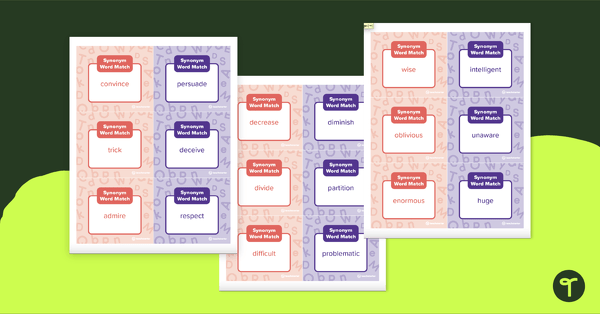
Synonym Cards Match-Up Game
Download these synonym cards to help your students recognise words with similar meanings by playing an engaging, hands-on matching game.
- Plus Plan
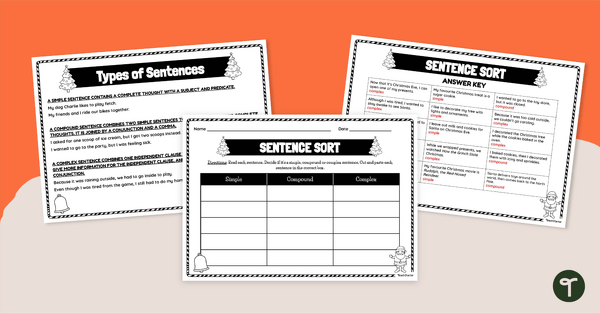
Christmas - Simple, Complex, and Compound Sentence Sort
Read, identify and write simple, compound and complex sentences with a dash of Christmas.
- Plus Plan
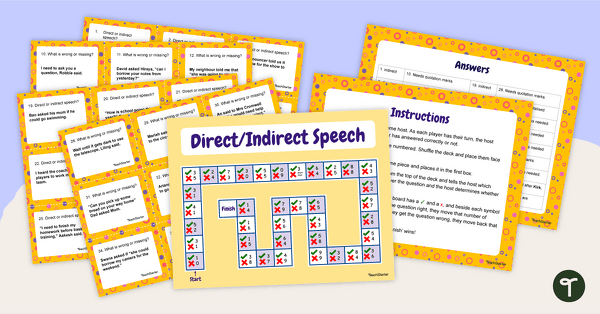
Direct and Indirect Speech Board Game
Explore direct and indirect speech with this board game.
- Plus Plan
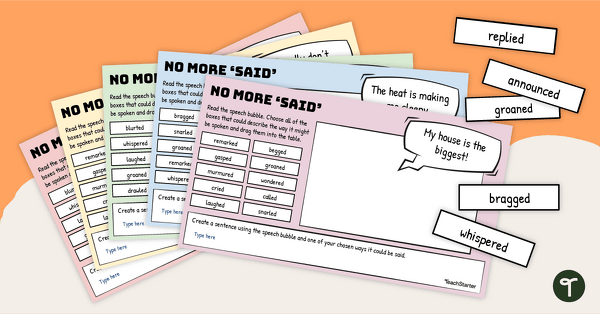
No More 'Said' – Google Interactive Activity
Interpret dialogue by determining which style of speaking best describes the written phrase.
- Plus Plan
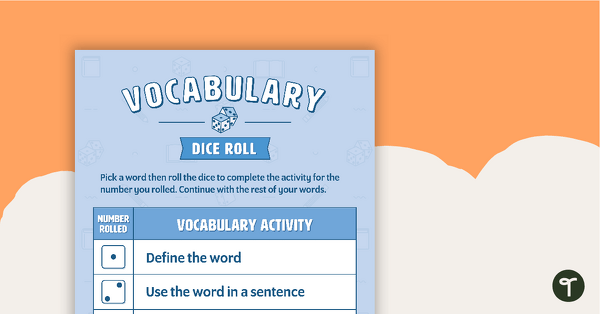
Dice Roll Vocabulary Game
Use our Roll-the-Dice Vocabulary Game as an opportunity to help your students grow their vocabulary skills in the classroom.
- Plus Plan
Developing Narrative Writing Skills Unit Plan - Year 3 and Year 4
This English unit addresses the narrative text type, specifically how to plan and write an engaging story.
- Plus Plan
Exploring Poetry - Year 3 and Year 4 Unit Plan
This English unit addresses common poetic devices such as sound play, word play and imagery and explores how these may be applied to narrative poetry.
- Plus Plan
Developing Procedural Writing Skills Unit Plan - Year 3 and Year 4
This English unit addresses the purpose, structure and language features of the procedure text type.
- Plus Plan
Imagery in Poetry
A 60 minute lesson in which students will identify and explore imagery in poetry.
- Plus Plan
Modelled Writing - Improving Procedure Texts
A 60 minute lesson in which students will improve a procedure text by applying knowledge of procedure text structure and language features.
- Plus Plan
Procedure Texts - Language Features
A 60 minute lesson in which students will identify and explore the language features of procedure texts.
- Plus Plan
Quotation Marks in Narrative Writing
A 60 minute lesson in which students will explore the correct use of quotation marks in narrative writing.