VC2E3LA07
understand how verbs represent different processes for doing, feeling, thinking, saying and relating
- exploring ‘doing’ and ‘saying’ verbs in narrative texts to understand how they give information about what characters do and say
- exploring the use of ‘sensing’ verbs and how they allow readers to understand what characters think and feel, for example ‘He remembered his first day at school.’
- exploring the use of ‘relating’ verbs in constructing definitions and descriptions; for example, identifying the relating verb ‘is’ or ‘are’, ‘has’ or ‘have’ in descriptions of animals
- identifying different types of verbs and the way that they control meaning in a clause
- Plus Plan
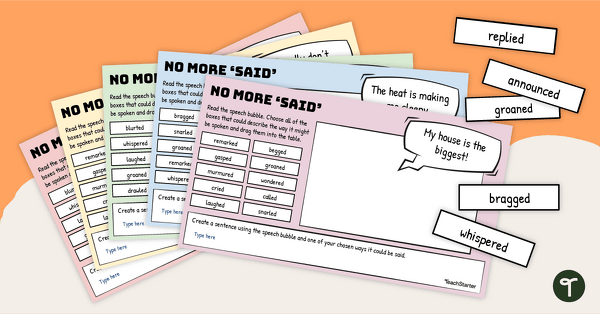
No More 'Said' – Google Interactive Activity
Interpret dialogue by determining which style of speaking best describes the written phrase.
- Plus Plan
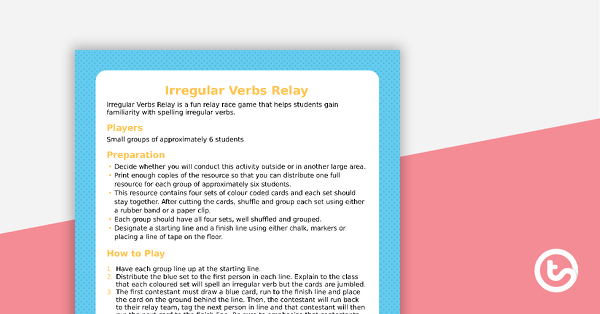
Irregular Verbs Relay
An active relay race game in which students spell out irregular verbs.
- Plus Plan
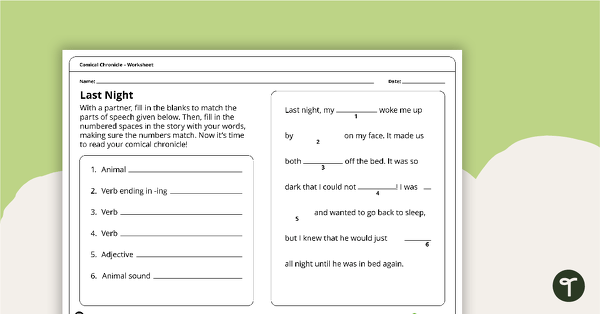
Comical Chronicle Worksheets - Year 3
A set of 10 ad-lib style stories for students to complete.
- Plus Plan
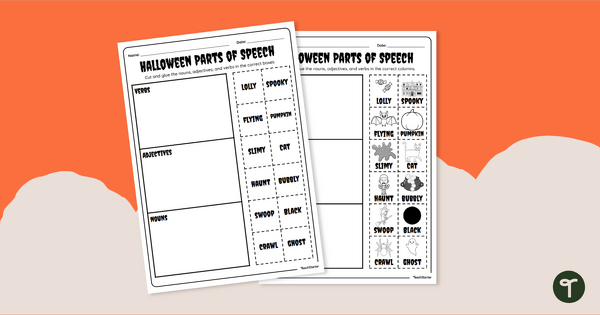
Halloween Parts of Speech - Cut and Paste Worksheet
Have a bit of spooky fun sorting Halloween nouns, verbs, and adjectives with a cut and paste worksheet.
- Plus Plan
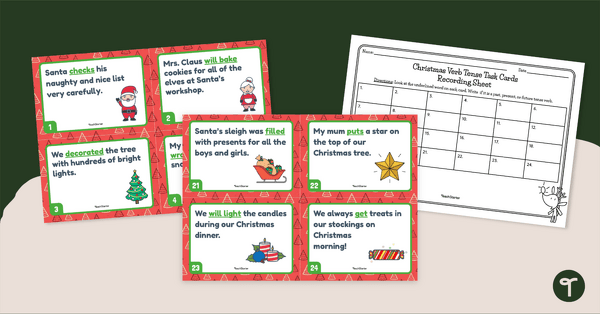
Christmas Task Cards - Past, Present and Future Tense Practise
Practise identifying past, present, and future tense verbs with a set of Christmas Verb Tense Task Cards!
- Plus Plan
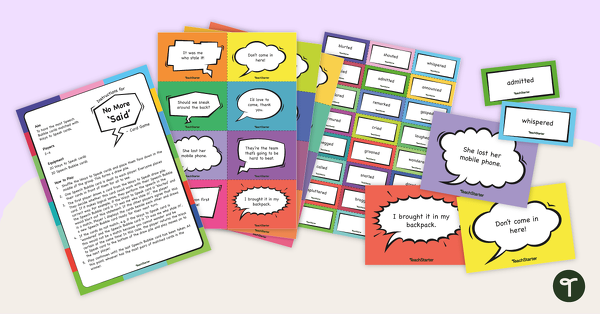
No More 'Said' – Card Game
Develop skilled writers with expansive vocabularies by experimenting with descriptive dialogue words.
- Plus Plan
Modelled Writing - Improving Procedure Texts
A 60 minute lesson in which students will improve a procedure text by applying knowledge of procedure text structure and language features.