VC2E6LA08
examine how authors use vivid vocabulary and figurative language, such as metaphors, similes, personification, idioms, imagery and hyperbole
- exploring how figurative language (for example, metaphors, personification and idioms) can be used to create vivid and less predictable shades of meaning
- identifying authors’ use of vivid and emotive vocabulary in persuasive texts, for example the vocabulary used in reviews
- discussing texts, using vocabulary to name text structure, literary devices and language features; for example, using words that name the literary device used in a poem
- Plus Plan
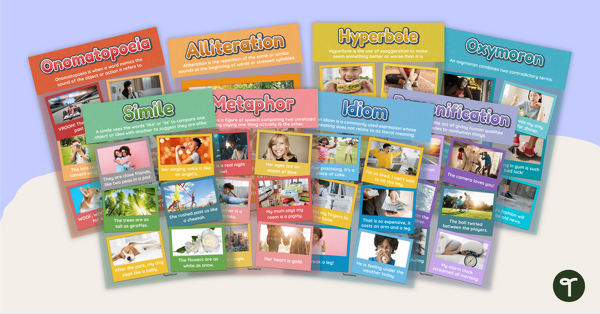
Figurative Language Poster Pack
Remind your students about the most common types of figurative language with this set of classroom display posters.
- Free Plan
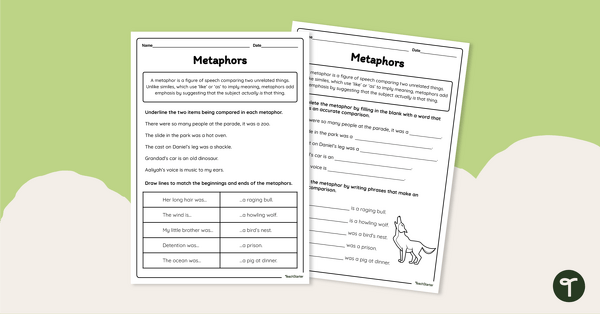
Metaphors Worksheet
Practise identifying and using metaphors with this differentiated metaphors worksheet.
- Plus Plan
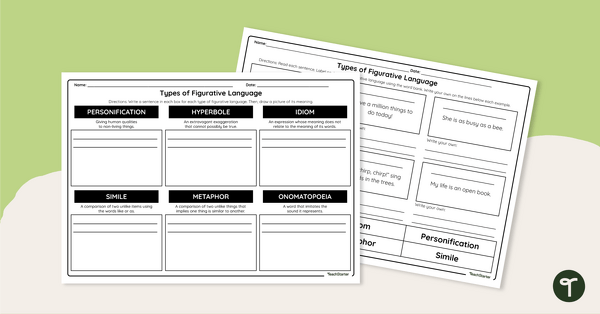
Types of Figurative Language - Worksheet
Practise identifying and creating examples of figurative language with this printable worksheet.
- Free Plan
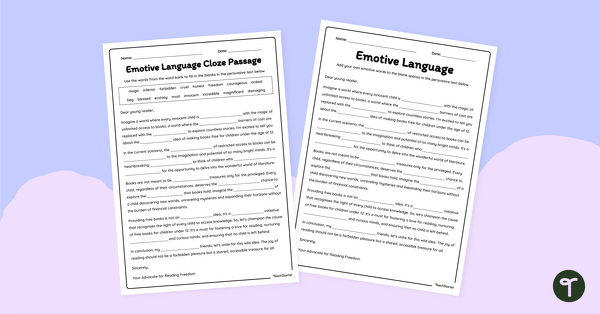
Emotive Language Cloze Passage Worksheet
Get students using emotive language examples in their persuasive writing with this differentiated cloze passage worksheet.
- Plus Plan
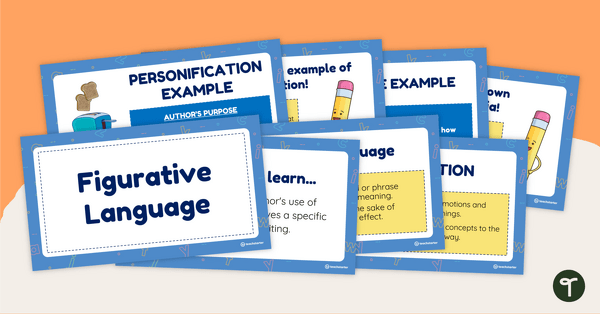
Figurative Language PowerPoint
Explore figurative language with your students using this comprehensive teaching presentation.
- Plus Plan
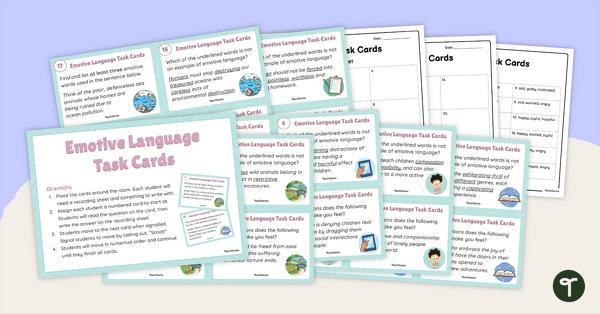
Emotive Language Task Cards
Get students exploring emotive language examples with this set of task cards perfect for your persuasive writing unit.
- Plus Plan
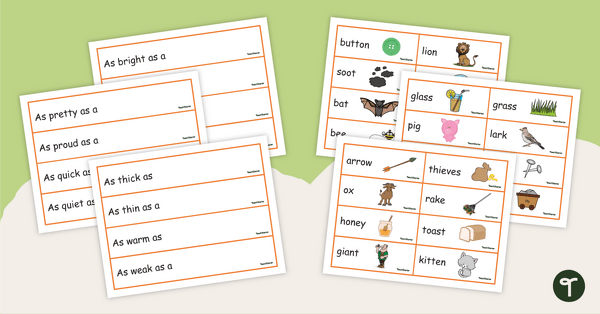
Similes Matching Game
Use this similes game to introduce your students to some of the most common similes used in the English language.
- Free Plan
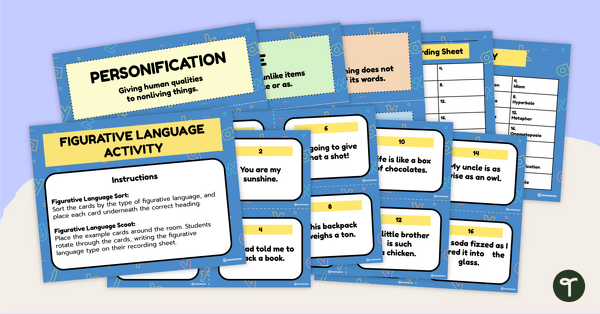
Figurative Language Sorting Activity
Explore figurative language in context with this set of 28 sorting cards.
- Plus Plan
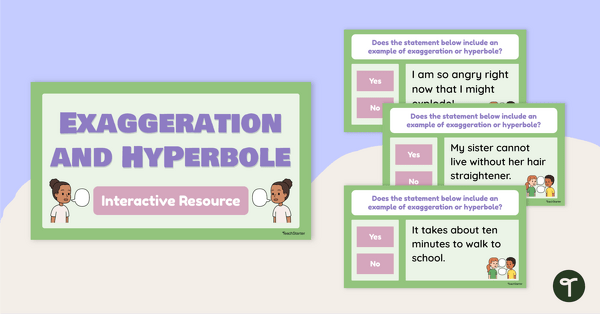
Exaggeration and Hyperbole Interactive Activity
Explore hyperbole examples with your students using this digital game perfect for lesson warm-ups or lesson wrap-ups.
- Plus Plan
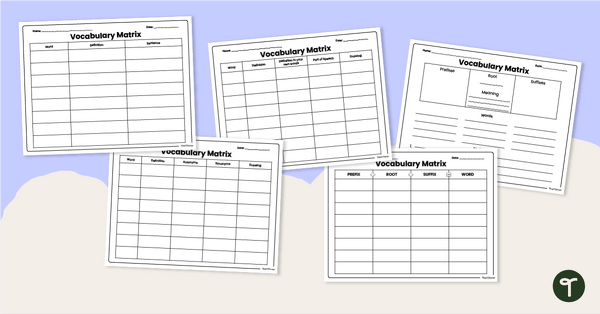
Printable Vocabulary Word Matrix Templates
Use a printable vocabulary word matrix template to help your students organise and remember important vocabulary words.
- Plus Plan
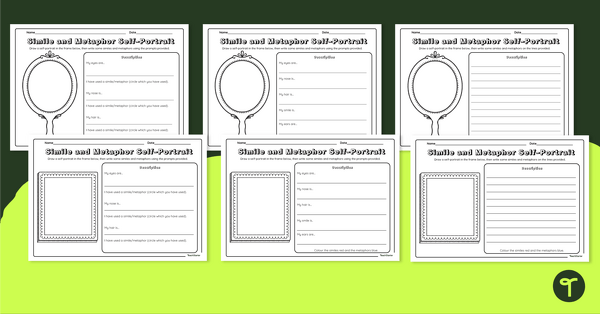
Simile and Metaphor Self-Portrait Worksheet
Teach students about similes and metaphors by asking them to describe... themselves!
- Plus Plan
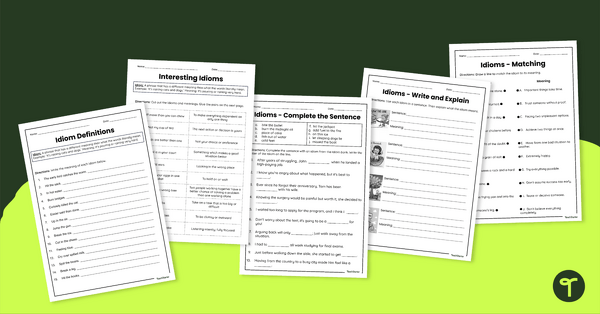
Interesting Idioms Worksheets
Teach figurative language with these idioms worksheets that will introduce your students to many of the most commonly used idioms.
- Plus Plan
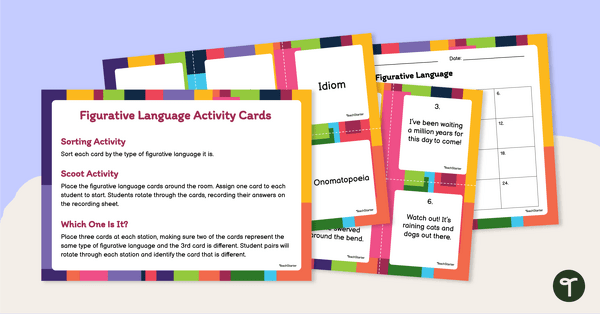
Figurative Language - SCOOT! Task Cards
Explore figurative language in multiple ways with the set of 24 task cards.
- Plus Plan
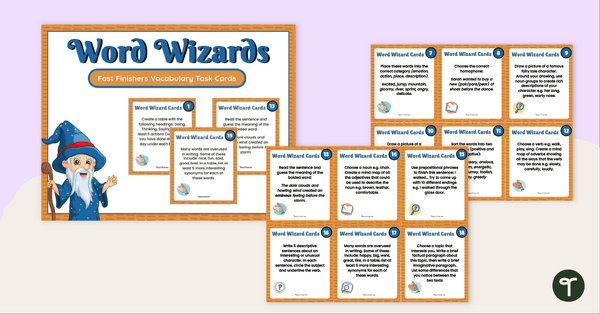
Fast Finisher Vocabulary Task Cards - Upper Years
Boost student vocabulary skills with rigorous, engaging Vocabulary Task Cards for Fast Finishers.
- Plus Plan
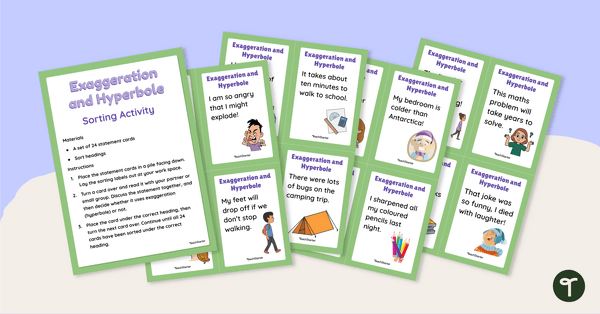
Exaggeration and Hyperbole Sorting Activity
Explore examples of hyperbole with your students using this set of 24 sorting cards perfect for your collaborative group work.
- Plus Plan
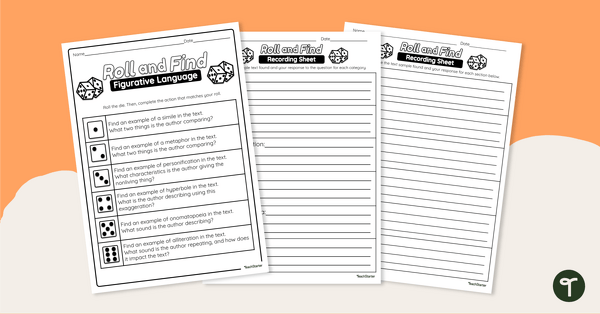
Roll and Find – Figurative Language Worksheet
Explore, identify and interpret figurative language with this engaging roll and find activity.
- Plus Plan
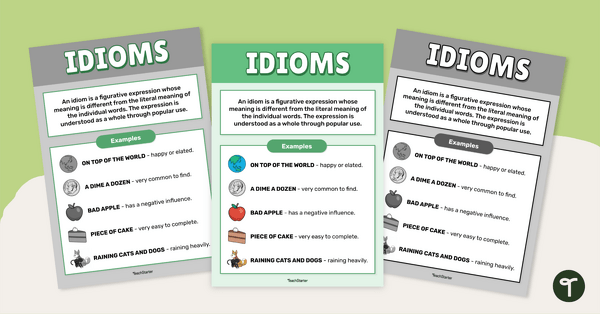
Idioms Poster
Hang this idioms poster in your classroom to give your students a reference for this important piece of figurative language.