VC2M3SP01
make, compare and classify objects, identifying key features and explaining why these features make them suited to their uses
- classifying a collection of geometric objects, including cylinders, spheres, prisms and pyramids, according to key features such as the shape and number of faces and/or surfaces, edges and vertices
- making and comparing objects built out of cubic blocks and discussing key features; for example, comparing the amount of space that objects occupy by counting how many blocks it takes to build different rectangular prisms that have the same height but different bases
- making geometric objects in solid form out of connecting cubes and in skeleton form with straws, and constructing objects using dynamic geometry software, recognising, comparing and discussing the features of the objects using the different representations
- using familiar shapes and objects to build or construct models and compare the suitability of different shapes and objects for aspects of the model; for example, building rectangular towers out of connecting cubes and recognising that the taller the tower, the less stable it becomes unless the base is increased; or building bridges out of straws bent into different shapes and comparing the strength of different designs
- identifying, classifying and comparing common objects found on Country/Place as cubes, rectangular prisms, cylinders, cones and spheres
- investigating and explaining how Aboriginal and/or Torres Strait Islander Peoples’ dwellings are oriented in the environment to accommodate climatic conditions
- Plus Plan
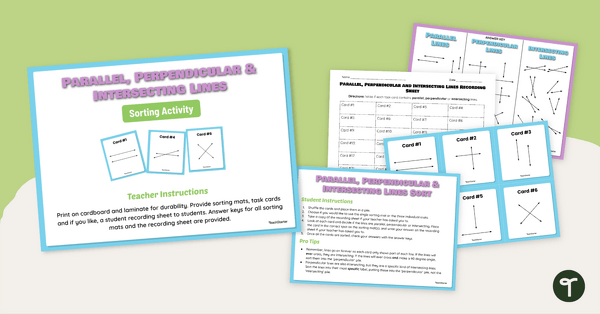
Parallel and Perpendicular Lines Games — Sorting Activity
Play parallel and perpendicular lines games in your classroom to give students practice sorting lines into intersecting, parallel, or perpendicular line categories.
- Free Plan
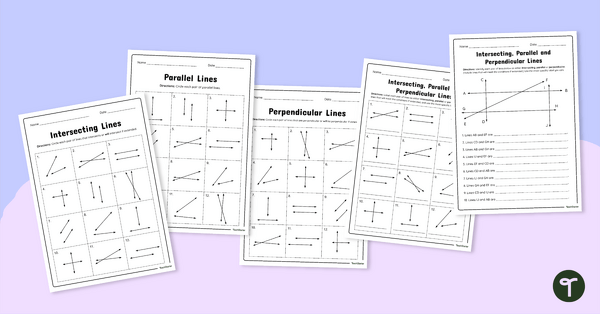
Intersecting, Parallel and Perpendicular Lines Worksheet Set
Use this intersecting, parallel and perpendicular lines worksheet set to introduce your students to basic line concepts.
- Free Plan
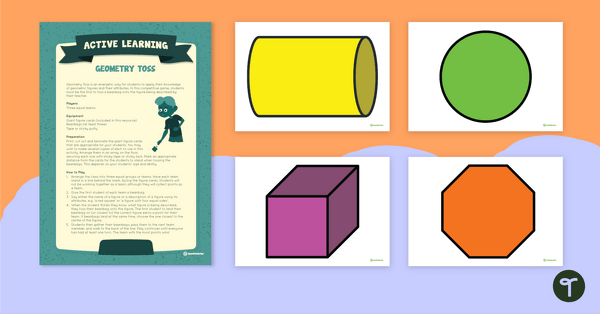
Geometry Toss - Active Learning Game
Explore the differences between 2D shapes and 3D objects with an active game!
- Plus Plan
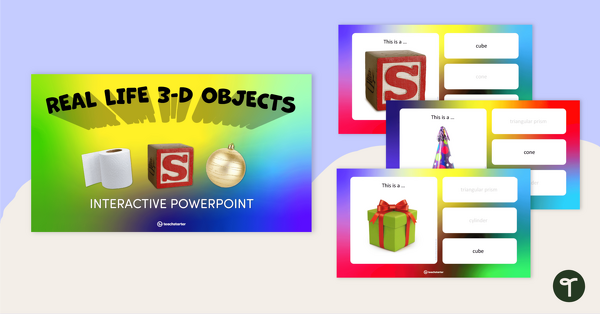
Real Life 3D Objects – Interactive PowerPoint
Explore three-dimensional objects in the real world with this engaging interactive activity.
- Plus Plan
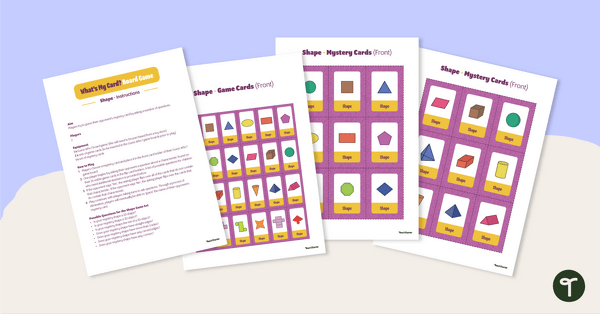
What's My Card? Shape Board Game
Consolidate knowledge of 2d shapes and 3D objects with a game of shape Guess Who!
- Plus Plan
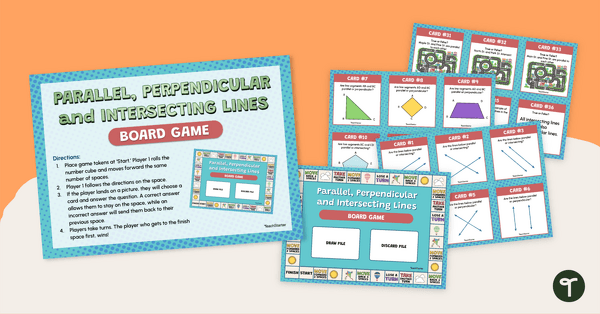
Parallel Perpendicular Lines Activity — Board Game
Play this parallel perpendicular lines activity with your students to give them practice identifying line types in a variety of settings.
- Plus Plan
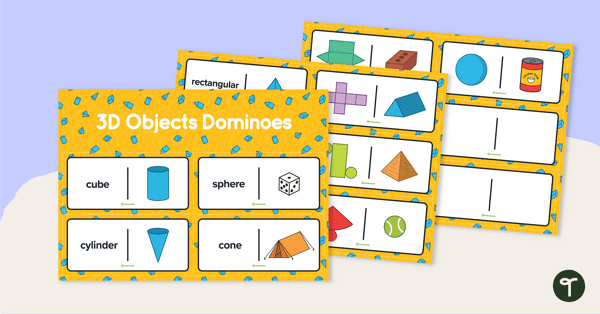
3D Objects Dominoes
Help your students learn the names of the most common three-dimensional objects with this set of dominoes.