Year 4
The English curriculum is built around the three interrelated strands of language, literature and literacy. Teaching and learning programs should balance and integrate all three strands. Together, the strands focus on developing students' knowledge, understanding and skills in listening, reading, viewing, speaking, writing and creating. Learning in English builds on concepts, skills and processes developed in earlier years, and teachers will revisit and strengthen these as needed.
In Years 3 and 4, students experience learning in familiar contexts and a range of contexts that relate to study in other areas of the curriculum. They interact with peers and teachers from other classes and schools in a range of face-to-face and online/virtual environments.
Students engage with a variety of texts for enjoyment. They listen to, read, view and interpret spoken, written and multimodal texts in which the primary purpose is aesthetic, as well as texts designed to inform and persuade. These encompass traditional oral texts including Aboriginal stories, picture books, various types of print and digital texts, simple chapter books, rhyming verse, poetry, non-fiction, film, multimodal texts, dramatic performances and texts used by students as models for constructing their own work.
The range of literary texts for Foundation to Year 10 comprises Australian literature, including the oral narrative traditions of Aboriginal and Torres Strait Islander Peoples, as well as the contemporary literature of these two cultural groups, and classic and contemporary world literature, including texts from and about Asia.
Literary texts that support and extend students in Years 3 and 4 as independent readers describe complex sequences of events that extend over several pages and involve unusual happenings within a framework of familiar experiences. Informative texts include content of increasing complexity and technicality about topics of interest and topics being studied in other areas of the curriculum. These texts use complex language features, including varied sentence structures, some unfamiliar vocabulary, a significant number of high-frequency sight words and words that need to be decoded phonically, and a variety of punctuation conventions, as well as illustrations and diagrams that support and extend the printed text.
Students create a range of imaginative, informative and persuasive types of texts including narratives, procedures, performances, reports, reviews, poetry and expositions.
(source: www.australiancurriculum.edu.au)
Achievement Standard
Receptive modes (listening, reading and viewing)
By the end of Year 4, students understand that texts have different text structures depending on purpose and context. They explain how language features, images and vocabulary are used to engage the interest of audiences. They describe literal and implied meaning connecting ideas in different textsÂ
They fluently read texts that include varied sentence structures, unfamiliar vocabulary including multisyllabic words. They express preferences for particular types of texts, and respond to others' viewpoints. They listen for and share key points in discussions.
Productive modes (speaking, writing and creating)
Students use language features to create coherence and add detail to their texts. They understand how to express an opinion based on information in a text. They create texts that show understanding of how images and detail can be used to extend key ideas.
Students create structured texts to explain ideas for different audiences. They make presentations and contribute actively to class and group discussions, varying language according to context. They demonstrate understanding of grammar, select vocabulary from a range of resources and use accurate spelling and punctuation, re-reading and editing their work to improve meaning.
(source: www.australiancurriculum.edu.au)
- Plus Plan
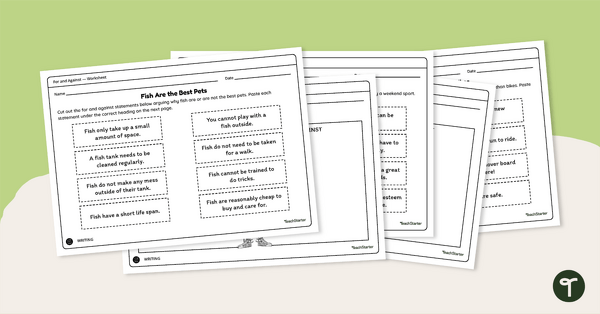
For and Against Worksheets
Explore 'for' and 'against' arguments for five different topics with this set of 'for' and 'against' sorting activities.
- Free Plan
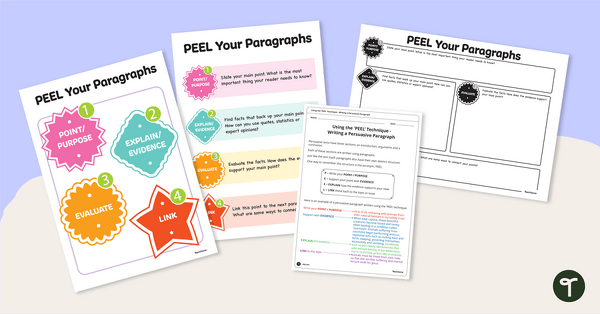
PEEL Paragraph Structure Poster and Worksheets
Explore the acronym PEEL to help with paragraph technique during persuasive writing lessons.
- Plus Plan
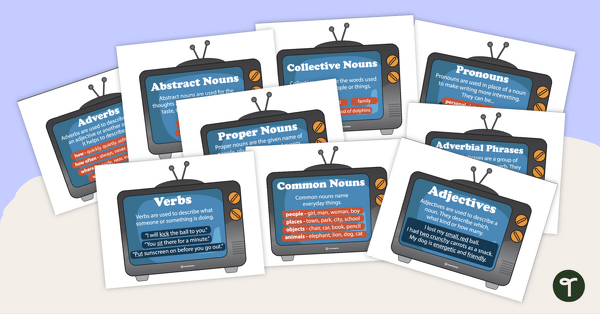
Grammar TVs
Grammar presented on TVs.
- Plus Plan
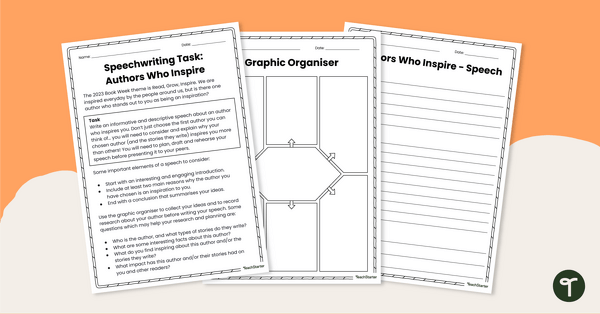
Inspirational Authors – Speechwriting Project
Get you students to research and celebrate an inspirational author with this speechwriting activity.
- Plus Plan
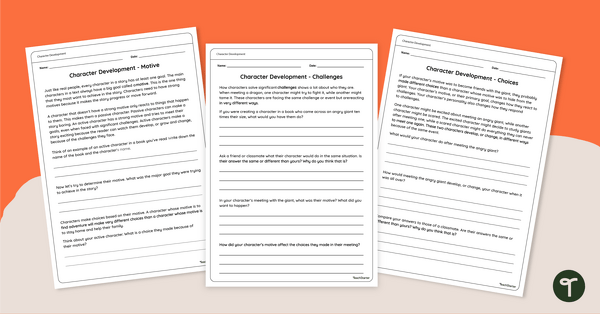
Character Development – Text Analysis Worksheets
Explore character development in narrative writing with this set of three engaging worksheets that help students understand how motivations, challenges and choices shape a character’s growth.
- Plus Plan
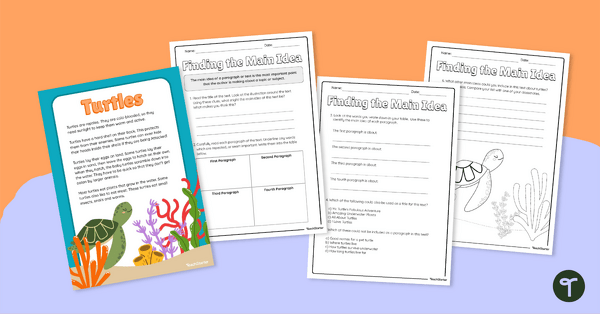
Finding The Main Idea - Comprehension Task (Turtles)
Explore the wonderful world of turtles with this comprehension task focusing on the main idea.
- Plus Plan
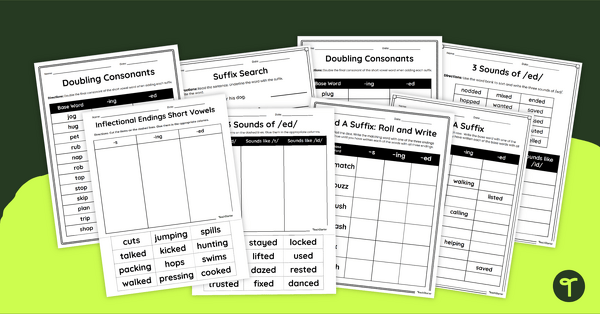
Inflectional Endings - Spelling with Suffixes Worksheets
Spell words with the inflectional endings -ed, -ing, -s, -es and -ies with a pack of printable practise worksheets covering inflected endings.
- Plus Plan
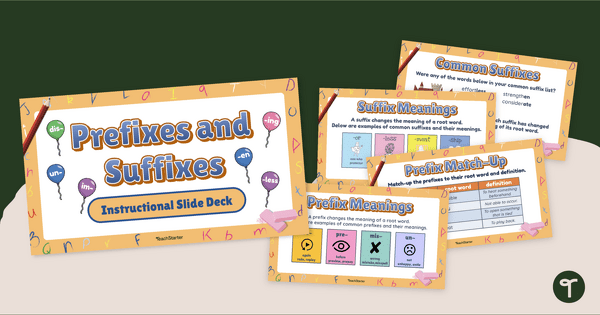
Prefixes and Suffixes PowerPoint
Learn prefix and suffix concepts with an interactive teaching presentation.
- Plus Plan
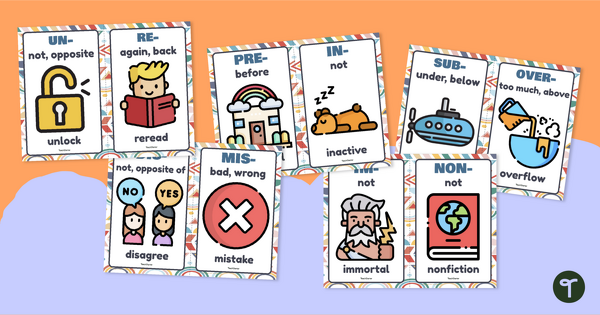
Prefixes Mini Anchor Charts
Give your students a visual reminder of the meanings of 36 different prefixes with a printable set of miniature prefix anchor charts.
- Free Plan
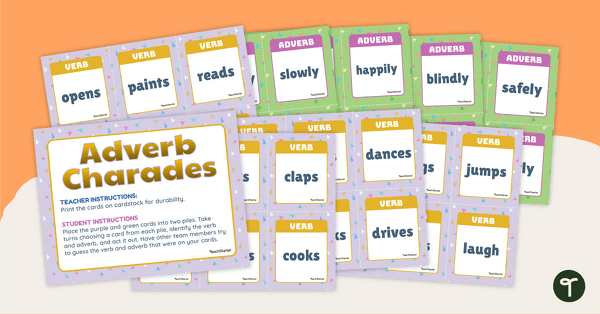
Adverbs Activity : Grammar Charades
Have some fun and build grammar skills with an adverb charades activity.
- Plus Plan
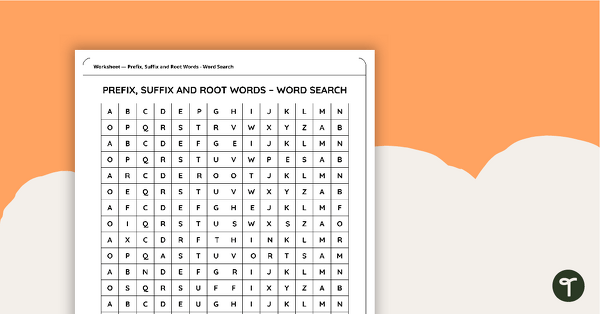
Prefix, Suffix and Root Words Word Search
Identify terminology related to prefixes, suffixes and root words in this word search.
- Plus Plan
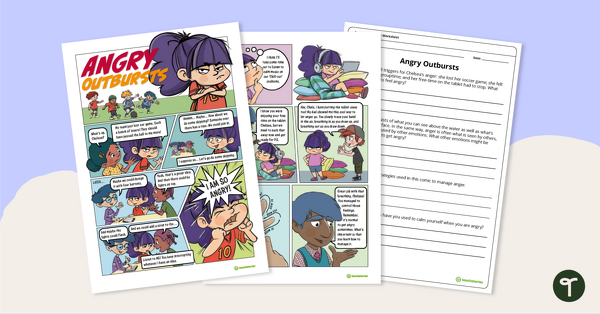
Angry Outbursts – Comprehension Worksheet
Explore emotional awareness and healthy calming strategies with this comic-style comprehension passage and accompanying questions.
- Plus Plan
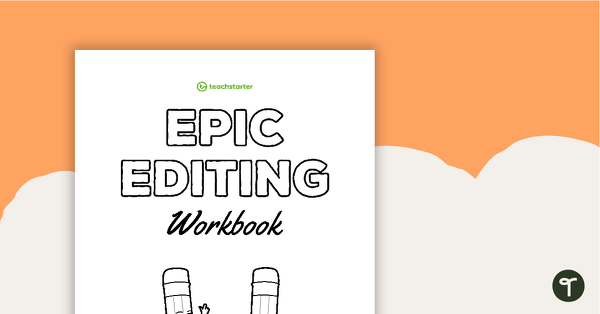
Epic Editing Workbook – Year 3 and Year 4
Use these paragraph editing worksheets to get your students practising and refining their proofreading skills.
- Plus Plan
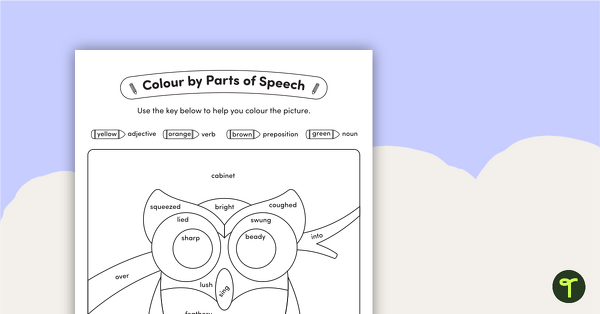
Colour by Parts of Speech - Nouns, Verbs, Adjectives and Prepositions - Owl
Consolidate parts of speech by colouring nouns, verbs, adjectives and prepositions on the owl.
- Plus Plan
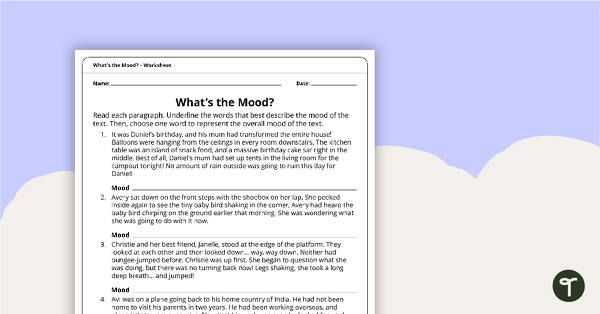
Mood in Narrative Writing – Text Analysis Worksheets
Teach mood in narrative writing with this set of four worksheets designed to help students explore narrative atmosphere in the context of real texts.
- Plus Plan
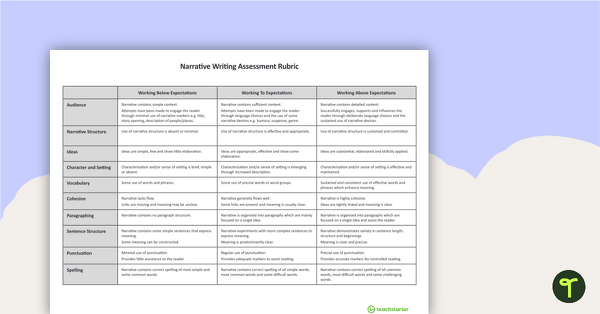
NAPLAN-Style Assessment Rubric - Narrative Writing
A NAPLAN-style rubric designed to help teachers to assess students' narrative writing.
- Plus Plan
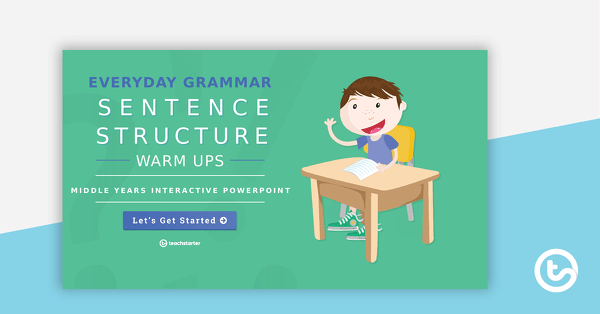
Everyday Grammar Sentence Structure Warm Ups - Middle Years Interactive PowerPoint
An engaging 44 slide interactive PowerPoint to use in the middle years classroom when learning about grammar and sentence structure.
- Plus Plan
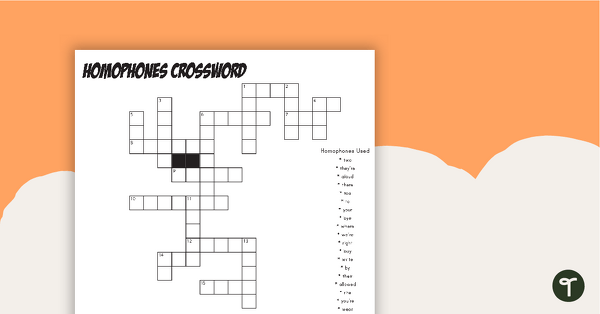
Homophones Crossword Puzzle
Challenge your students to complete this vocabulary crossword puzzle by completing the sentences with the correct homophone.
- Plus Plan
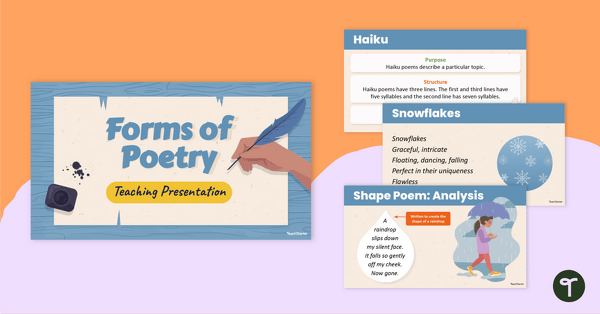
Forms of Poetry Teaching Slides
Explore the different forms of poetry with your students using this comprehensive and age-appropriate slide deck.
- Plus Plan
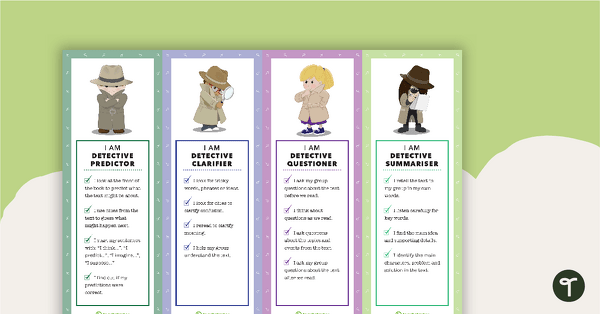
Reading Detectives Bookmarks
8 colourful reading detective bookmarks to use during guided reading sessions in the classroom.
- Plus Plan
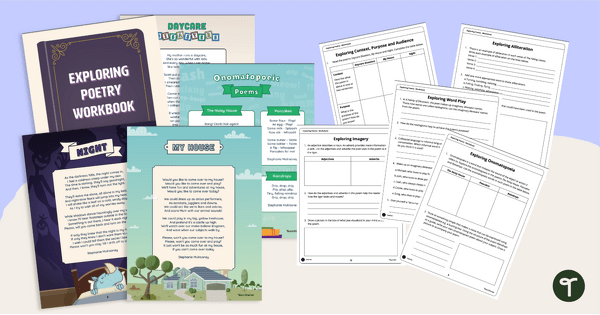
Exploring Poetry Workbook
Teach your students about all things poetry with this jam-packed poetry workbook created especially for primary school students.
- Plus Plan
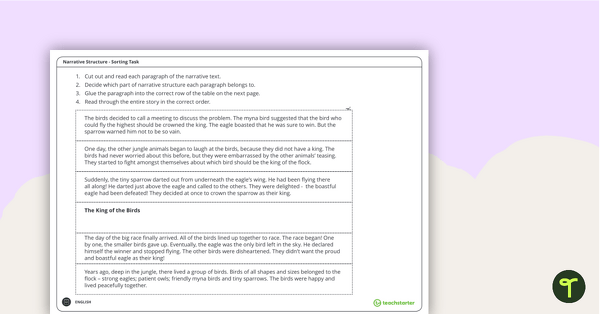
Narrative Structure Sorting Task
A sorting task to help students learn about narrative structure.
- Plus Plan
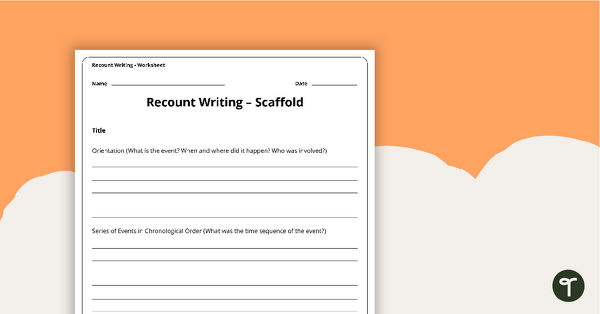
Recount Writing Scaffold
A one page scaffolding sheet which can be used to write a recount.
- Plus Plan
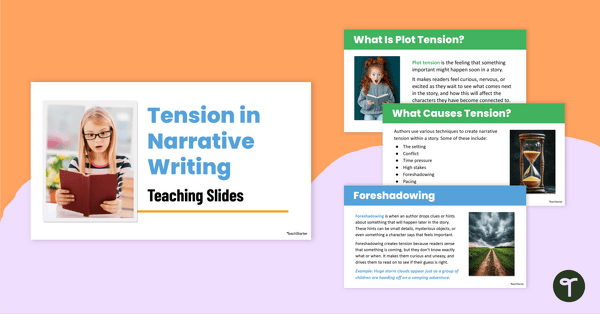
Building Tension in Narrative Writing Teaching Slides
Teach how to build tension in narrative writing with this interactive presentation that explains eight author techniques for creating suspense and excitement in stories.
- Plus Plan
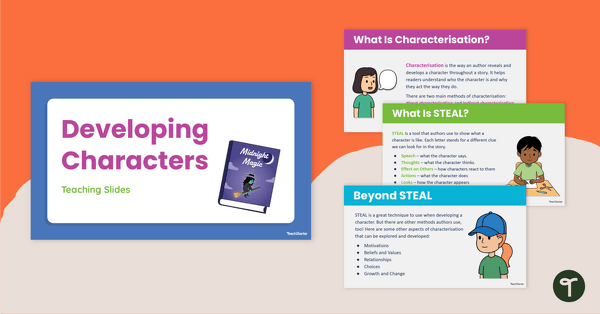
Develop a Character Teaching Slides
Teach your students how to develop a character using the STEAL technique and other characterisation methods with this comprehensive teaching presentation.
- Free Plan
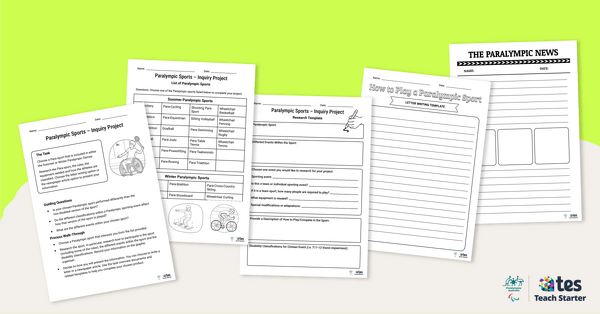
Paralympic Sports – Inquiry-Based Project
Have your students investigate the different types of Paralympic sports with this inquiry-based learning project.
- Plus Plan
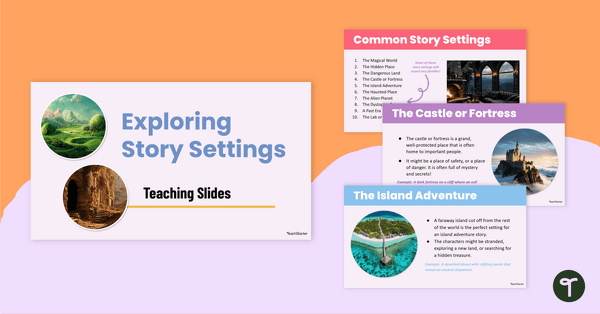
Examples of Story Settings Teaching Slides
Discover engaging examples of story settings with this teaching presentation that introduces students to ten classic settings in children’s literature.
- Plus Plan
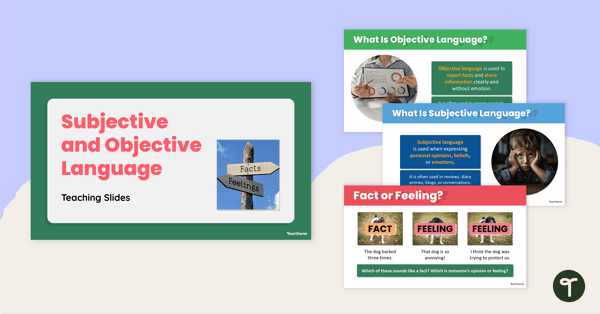
Subjective and Objective Language Teaching Slides
Teach your students how to confidently identify subjective and objective language in texts with this engaging, age-appropriate slide deck.
- Free Plan
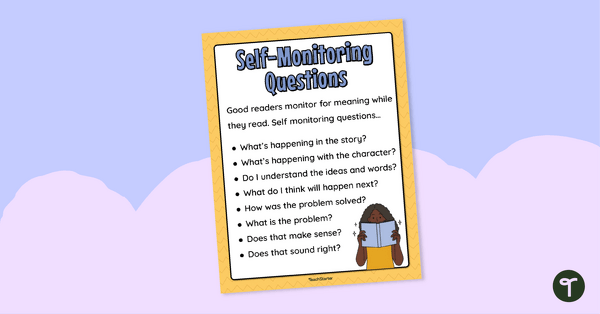
Self Monitoring Reading Strategy Poster
Help students reflect on their reading with this Self Monitoring Reading Strategy Poster.
- Free Plan
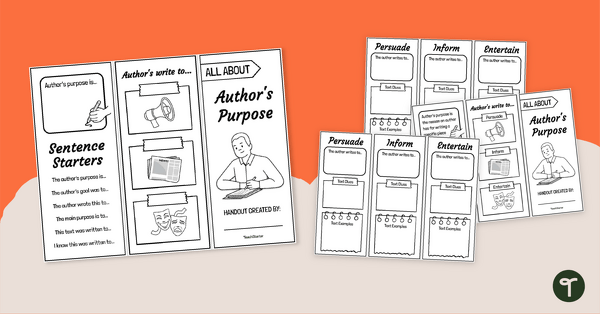
Free Author’s Purpose Handout
Use this Author’s Purpose Handout in the form of a brochure to explore the different reasons authors write.
- Plus Plan
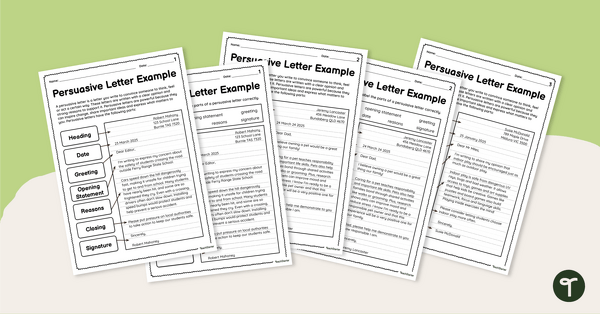
Persuasive Letter Example Pack
Download this persuasive letter example set featuring five model letters with labelled and unlabelled versions, perfect for teaching students the structure of a persuasive letter.
- Free Plan
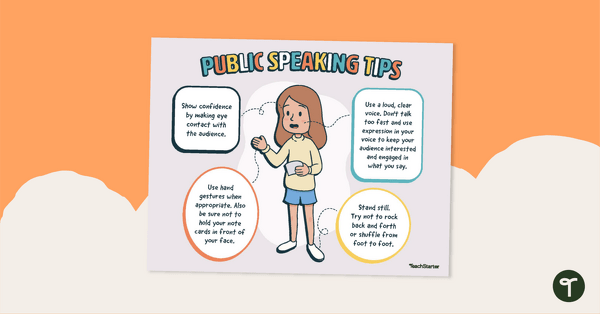
Public Speaking Tips For Students - Poster
Display this Public Speaking Tips for Students poster in your classroom when learning how to speak in front of peers.