Punctuation Teaching Resources
Teach students how to use punctuation marks in their writing this school year with printable worksheets, fun writing games, instructional slide decks and more elementary school teaching resources designed to help extend and help students learn how to punctuate their writing to be more clear and understandable.
Whether you're teaching your 1st grade class the functions of each punctuation mark, explaining the purpose of apostrophes in contractions and possessives to your 3rd graders or exploring colons and semicolons in writing with a 5th grade group, there are teacher resources for you in this extensive collection!
Aligned with both TEKS and the Common Core English curriculum, the ELA collection includes editable worksheets and teaching presentations and more to save you time on lesson planning. Created by expert teachers, each resource in this punctuation collection has been carefully reviewed and curated by our team. That means it's ready to use in the classroom! You'll even find editable resources, plus differentiated options.
New to teaching this part of the ELA curriculum, or just looking for fresh ways to engage your students? Read on for a primer from our teaching team, including some answers to tricky punctuation questions from kids!
What Is Punctuation? A Kid-Friendly Definition
Teaching punctuation may matter now more than ever as texting and other digital forms of communication become ever more common. So let's get started with a definition!
Here's a way to explain what punctuation means to your students in a kid-friendly manner.
Punctuation is a set of marks we use to help make our writing clearer and easier to read.
When we speak, we pause, change our tone of voice or take a breath. Writing is a lot like that, but instead of the quiet that comes when a speaker pauses, punctuation marks are the tools a writer uses to tell readers when to pause.
What Are Punctuation Marks? A Kid-Friendly Definition
The symbols we use for punctuation are called punctuation marks, and there are more than a dozen different ones in English.
Each one of these marks or symbols has its own name and important use in writing, but elementary students only learn about 14 to 16 as they embark on their early writing adventures.
10 Common Punctuation Marks And How to Use Them Correctly
Let's take a look at some examples of common punctuation marks that students can use in their writing, along with some examples of how they can be used!
Period (.)
Sometimes called a full stop, a period looks like a little dot. We use this punctuation mark to end a sentence that is a statement or a command.
- Example: "My favorite food is pizza."
Question Mark (?)
The question mark looks like a period with a squiggly line on top of it. We use a question mark to end a sentence that is a question.
- Example: "What is your favorite color?"

The period with a squiggly line on top of it is the symbol for punctuating a question.
Exclamation Point (!)
The exclamation point looks like a period with a straight line on top of it. We use an exclamation point to show strong emotion or emphasis.
- Example: "Our t-ball team won the game!"

Commas (,)
Commas look like little hooks next to a word in writing. Writers use commas to separate items in a list or to separate clauses in a sentence.
- Examples: "I need to buy apples, bananas and oranges." "After I finish my homework, I will play outside."
Apostrophe (')
An apostrophe looks like a comma suspended in the air. This symbol can be used in writing to show possession or to shorten a word.
- Example: "The cat's toy rolled under the couch."
Quotation Mark (")
Quotation marks look like two commas inverted in the air. This punctuation mark is used to show that someone is speaking or to show the title of a book or movie.
Example: "I'm hungry," the girl said to the boy.
Colon (:)
The punctuation mark symbolized by two dots on top of one another is the colon. Writers can use a colon to introduce a list or an explanation.
- Example: "I need three things for my science experiment: a battery, a wire and a nail."
Semicolon (;)
The semicolon looks like a comma with a dot on top. This symbol is used to separate two closely related independent clauses.
- Example: "I like playing soccer; my brother prefers basketball."
Parentheses ()
We use parentheses to set off additional information within a sentence.
- Example: "My dog (Max) loves to play fetch."
Hyphen (-)
Represented by a short line, writers use a hyphen to connect two words to make a compound word or to separate syllables at the end of a line.
- Example: "short-sleeved shirt"
Confusing Punctuation Rules Explained for Kids
Some punctuation rules are straightforward and relatively easy, but others can get complicated — even for the most attentive students. Here are some of the rules that tend to trip up students!
Does Punctuation Go Inside Parentheses?
This is a tricky one for students because there is no tried and true answer! The rule comes down to context and the punctuation mark used.
Whether punctuation goes inside or outside parentheses depends on the context and the type of punctuation.
- When Punctuation Goes Inside the Parentheses — Commas, periods and other punctuation marks generally go inside when they are part of the sentence within the parentheses.
- When Punctuation Goes Outside the Parentheses — Punctuation marks go outside when they are part of the sentence outside the parentheses. For example, when parentheses are used at the end of a sentence, the period (if there is one) goes outside the parentheses.
Does Punctuation Go Inside Quotation Marks?
Punctuating sentences correctly can be tough for young writers when using quotation marks because — once again — the rules change, depending on the circumstance!
In American English, the general rule is to place most punctuation marks inside the closing quotation marks. Still, there are some exceptions!
Here are some more common rules to go by:
- When Punctuation Goes Inside the Question Mark — Commas, periods and other punctuation marks generally go inside when they are part of the sentence within the parentheses.
- When Punctuation Goes Outside the Question Mark — Punctuation marks go when the writer uses single quotes within double quotes. In that case, single quotes will be used for the quoted material inside the double quotes. Confused? This example may help! She said, "My favorite book is 'Frog and Toad'."
- Free Plan
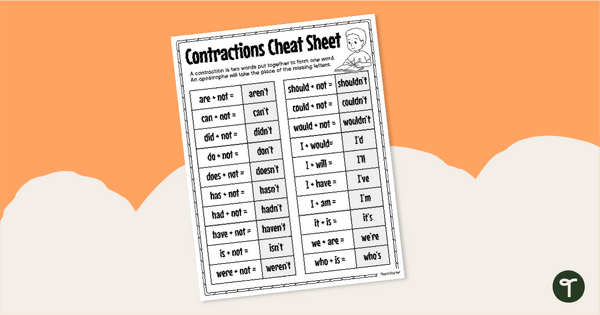
Free Contractions Student Reference Sheet
Help students remember the different contractions with this contraction student reference sheet.
- Plus Plan
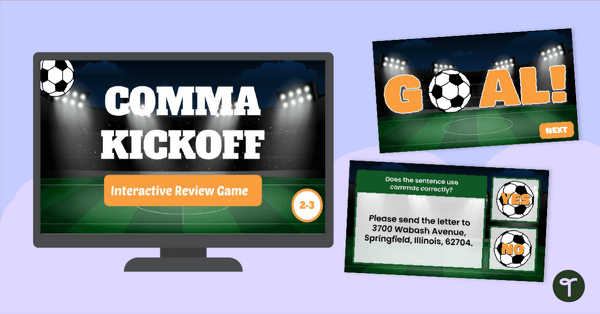
Interactive Comma Review Game (2-3)
Play Comma Football, an engaging comma review game to help your 2nd and 3rd grade students practice using commas in dates, addresses, clauses, and series.
- Plus Plan
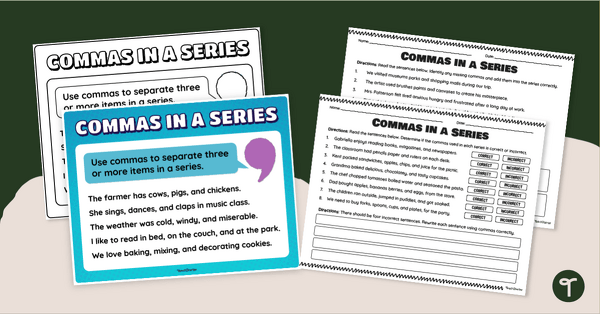
Using Commas in a Series Anchor Chart & Comma Handouts
Use a printable Commas in a Series Anchor chart & Comma Handouts to teach your students correct comma punctuation when listing items in a sentence.
- Free Plan
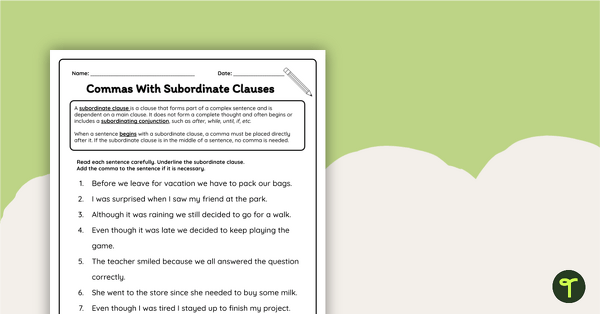
Commas With Subordinate Clauses Worksheet
Use a Commas With Subordinate Clauses Worksheet to help your students practice comma placement in complex sentences.
- Free Plan
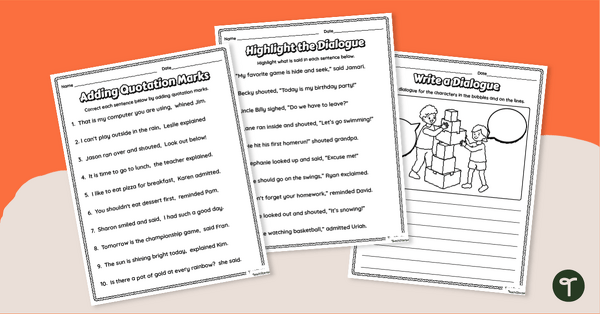
Free Talking Marks Worksheets
Download your free Talking Marks Worksheets and give your students additional practice adding quotations to dialogue.
- Plus Plan
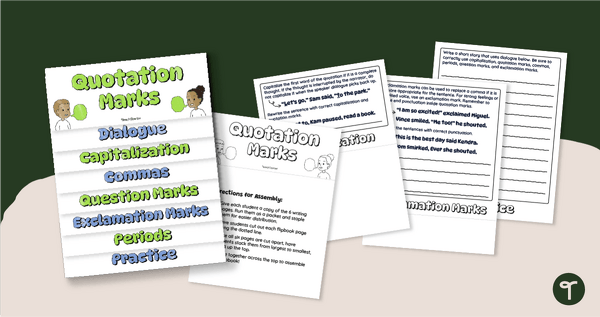
Using Quotation Marks Flipbook
Explore punctuation rules surrounding quotation marks with a printable Quotation Marks Flipbook template.
- Plus Plan
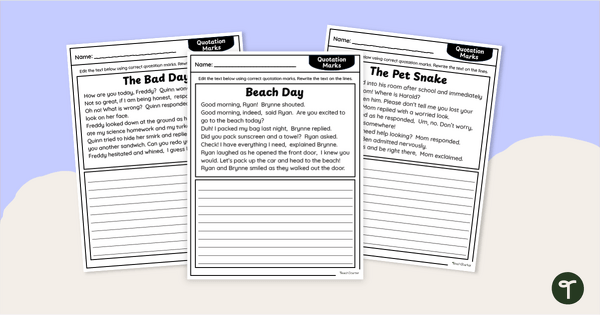
Paragraph Editing - Quotation Marks Worksheets
Practice using quotation marks to signify dialogue in text with a set of printable Paragraph Editing Worksheets.
- Plus Plan
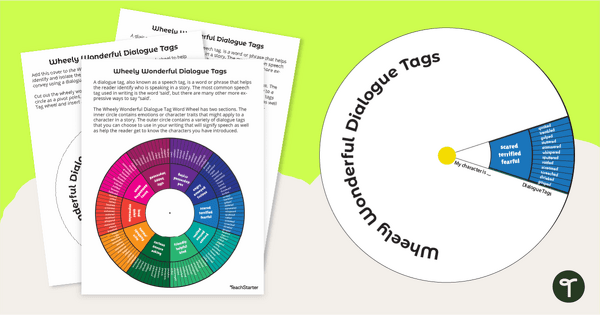
'Wheely' Wonderful Dialogue Tags Spinner
Spice up your students' writings and help them choose better dialogue tags with a ‘Wheely’ Wonderful Dialogue Tag Spinner.
- Free Plan
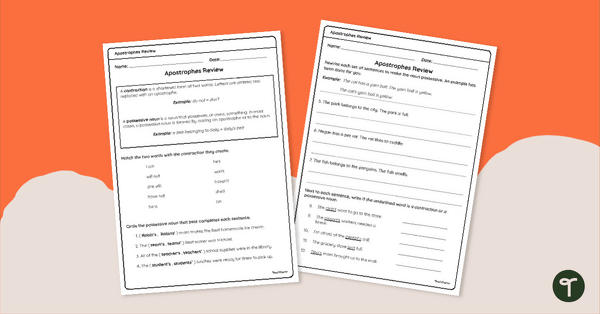
Apostrophe Review Worksheet
Practice using apostrophes with contractions and possessive nouns in this double-sided worksheet.
- Plus Plan
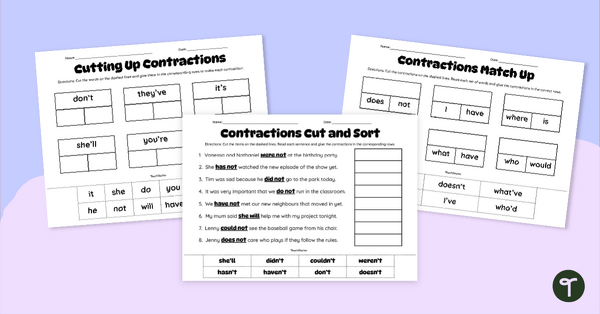
Contractions Cut and Paste Worksheet Pack
Cut up contractions and practice putting contractions together with this set of cut and paste worksheets.
- Plus Plan
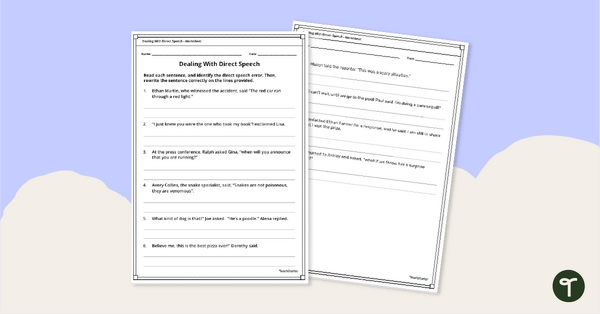
Dealing With Direct Speech - Worksheet
Use this worksheet when teaching students the rules for punctuating direct speech.
- Plus Plan
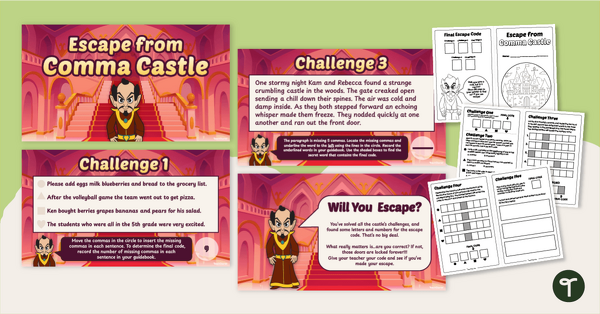
Comma Rules Breakout Game - Google Slides and PPT (5-6)
Escape from Comma Castle with an exciting ELA Breakout Game Google Slides Activity for upper elementary.
- Plus Plan
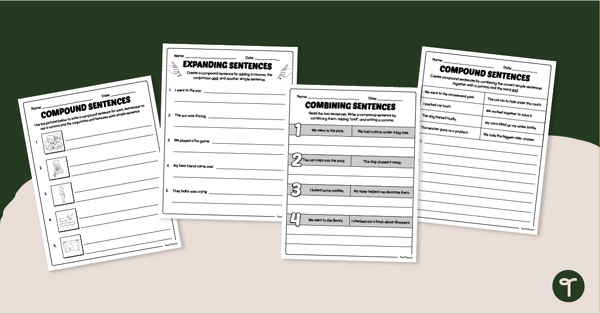
Combining Sentences With "And" Worksheets (2 - 4)
Use these printable Combining Sentences With ‘And’ Worksheets to help your students practice using the conjunction ‘and’ to form compound sentences.
- Plus Plan
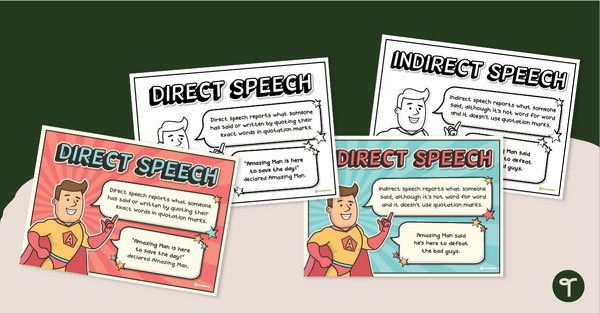
Direct and Indirect Speech Grammar Posters
Helps students learn what both direct and indirect speech entails with our printable Direct and Indirect Speech Grammar Posters.
- Plus Plan
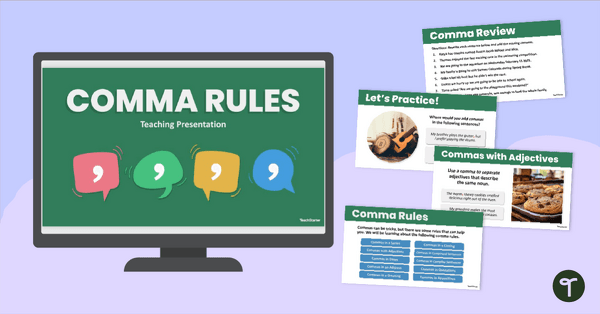
Comma Rules PowerPoint Presentation - Upper Grades
Use our Comma Rules PowerPoint presentation to teach your upper elementary students about the different comma rules.
- Plus Plan
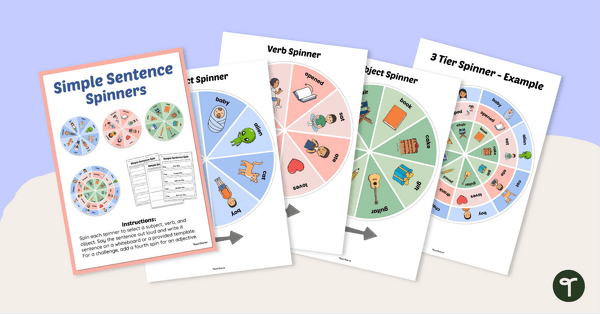
Simple Sentence Activity Spinner Template
Engage young writers with this fun and interactive Simple Sentence Activity - Spinner Template.
- Plus Plan
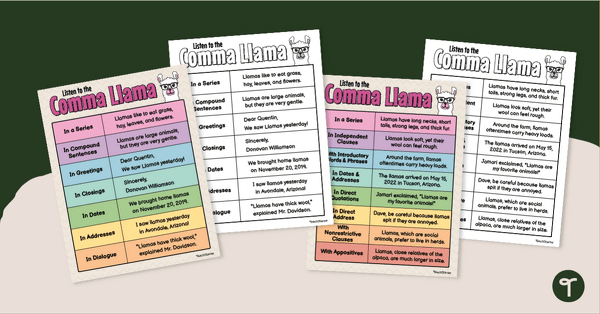
Comma Llama - Comma Rules Anchor Chart
Make learning comma rules engaging and memorable with our Comma Llama - Comma Rules Anchor Chart!
- Free Plan
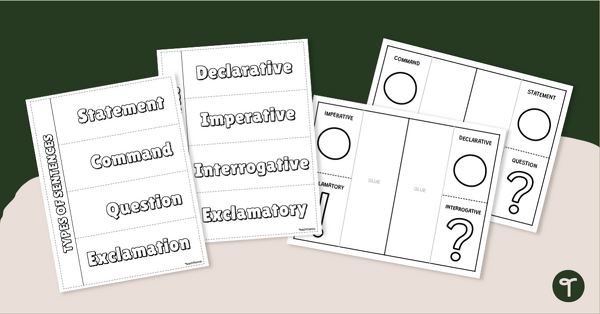
Types of Sentences Flip Book
Create a helpful types of sentences flipbook with our Differentiated 4 Kinds of Sentences foldable graphic organizers.
- Plus Plan
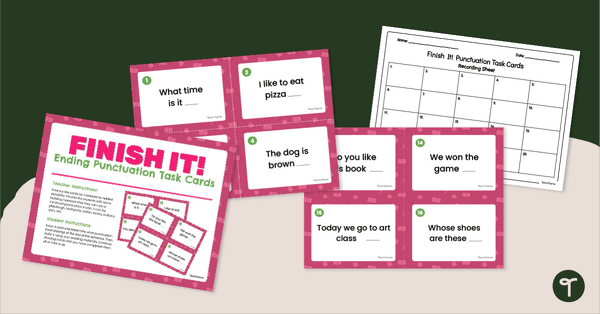
Finish It! - End Punctuation Task Cards (1-2)
Practice adding end marks to sentences with a printable set of Punctuation Task Cards for 1st and 2nd graders.
- Plus Plan
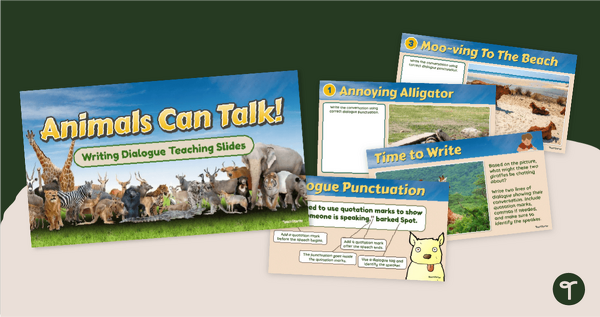
Talking Animals - Writing Dialogue Interactive Slide Deck
Practice writing dialogue and proving that “Animals Can Talk!” with an exciting slide deck and digital learning activity.
- Plus Plan
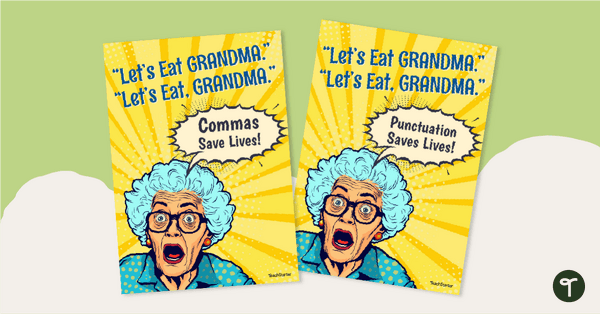
Let’s Eat Grandma, Commas Save Lives Poster Pack
Display a fun ‘Commas Save Lives’ poster to remind your students of the importance of including commas in their writing.
- Plus Plan
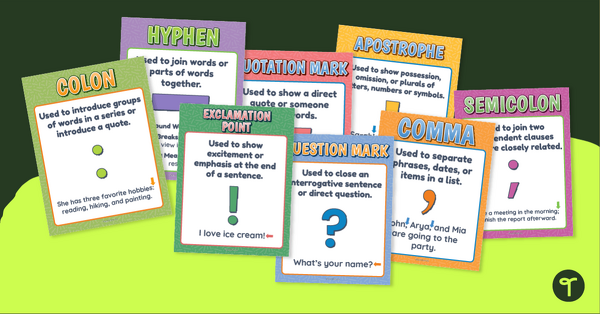
Proper Punctuation Chart Pack - Upper Elementary
Encourage proper punctuation with a printable punctuation chart pack for upper elementary.
- Plus Plan
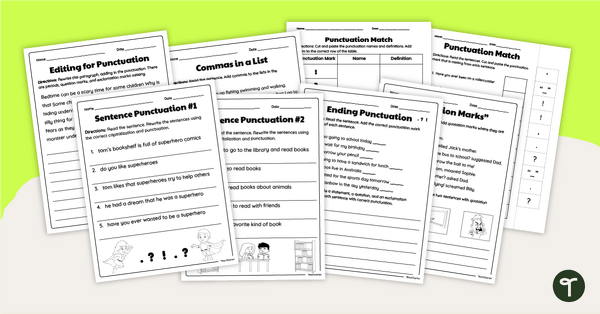
Punctuation Worksheet Pack (1st-3rd)
Download our no-prep punctuation worksheets to help your students practice their skills with using a variety of punctuation marks.
- Plus Plan
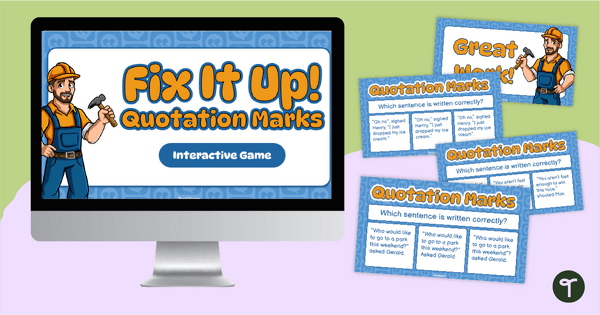
Quotation Punctuation Interactive Game
Make learning about quotation marks more exciting with an Interactive Quotation Marks Punctuation Game!
- Plus Plan
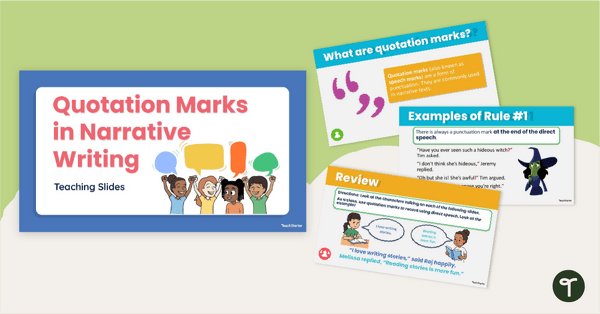
Using Quotation Marks in Narrative Writing PowerPoint
Teach the correct usage of quotation marks in narrative writing with this set of teaching slides.
- Plus Plan
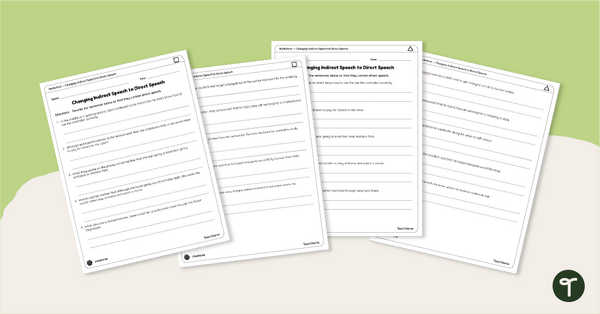
Changing Indirect Speech to Direct Speech Worksheet
Practice converting indirect speech to direct speech with differentiated editing worksheets.
- Plus Plan
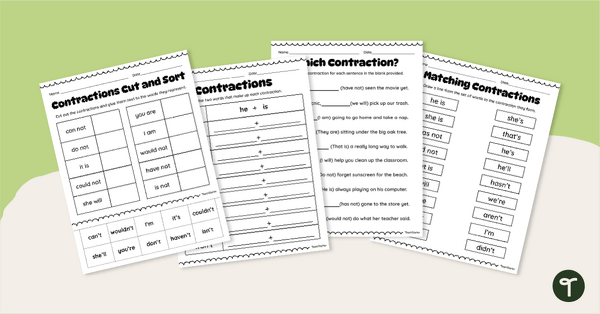
Contraction Worksheets
Help students learn more about contractions with this contraction worksheet pack.
- Plus Plan
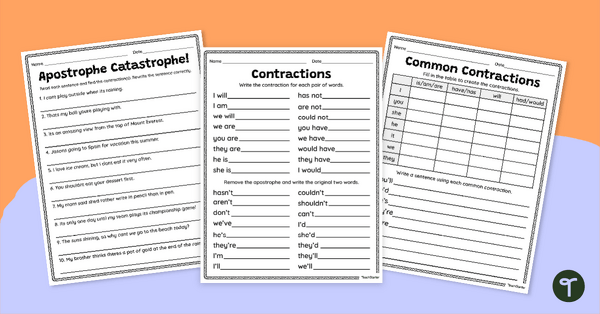
Apostrophe of Contraction Worksheets
Learn about the apostrophe of contractions with this set of worksheets.
- Free Plan
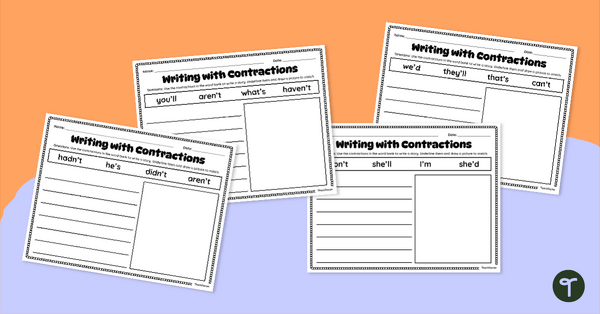
Contractions Writing Activity Pack
Put contractions into sentences to demonstrate an understanding of contractions in context using these writing worksheets.
- Plus Plan
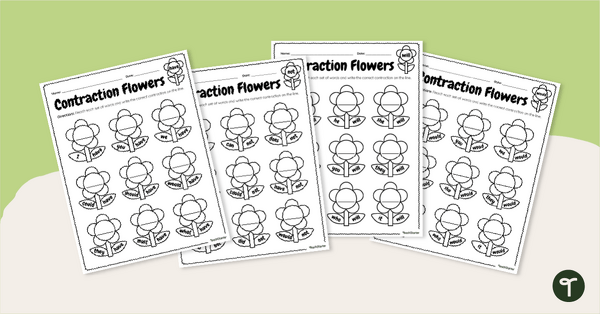
Contraction Flowers Worksheets
Work on contraction knowledge with this set of flower-themed contraction worksheets.
- Plus Plan
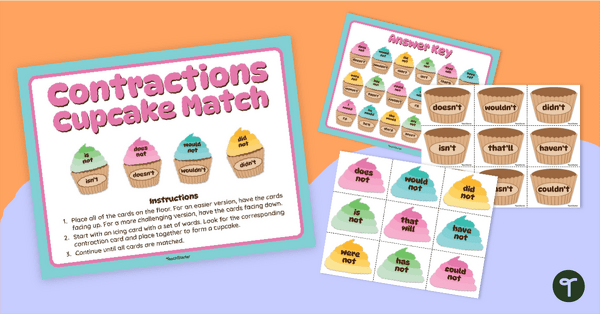
Contractions Cupcake Match
Practice matching contractions with their words using this fun cupcake match-up.
- Free Plan
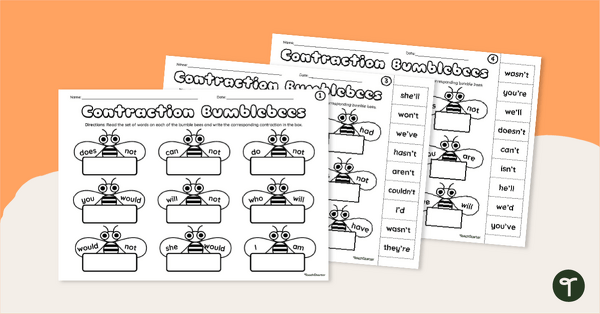
Bumblebee Contraction Worksheets
Practice creating contractions from two words using this set of cute bumblebee worksheets.