Expository Writing Teaching Resources
Whether you call it expository writing, informational writing or writing informative texts in your classroom, it's important for students to learn to write in a manner that shares straightforward information on a certain topic to educate their reader. It's a skill that will serve them well throughout their education and well into adulthood.
Getting your students started with informative writing this school year? The Teach Starter team of teachers has put together everything you need to teach this core writing type to your elementary writers, including printable worksheets, writing prompts, writing templates, and more.
Each resource in this collection has been thoroughly reviewed to ensure it's ready to be used in your classroom, and you'll find editable options so you can make the adjustments you need to meet state-level standards and meet your students where they are.
New to teaching this type of writing or looking for a handy refresher? Read on for a primer from our teacher team, including a definition you can use explain what you mean when you introduce expository or informative writing to your students.
What Is Informative Writing or Expository Writing? A Kid-Friendly Definition
We have always found it is helpful to have a definition handy when we are introducing the different genres of writing to our class. Here's one the ELA teachers on our team use for expository writing:
Expository writing is a type of writing that is created to educate the reader with facts.
This type of writing goes by a number of names, so maybe your district calls it something else. Here's a look at just a few of the names it may be called:
- Expository writing
- Informational writing
- Explanatory writing
- Informative Writing
Informative Writing vs. Persuasive Writing — How to Explain the Difference to Your Students
Informative writing is just one of the many writing styles your students will learn in elementary school, but it's important to establish the clear differences between them.
Take persuasive writing, for example. Like informational writing, it requires becoming educated on the topic a student is writing about, and it involves using facts in writing.
On the other hand, a persuasive writing essay is written to convince the reader of something. In higher grades, it transitions into opinion writing because it takes a side on a topic rather than remaining impartial.
That's not true of an expository writing piece, which takes a "just the facts, Jack" form.
What Are the 5 Elements of Informative Writing?
As you dive into teaching informational writing, there are 5 elements you'll want students to focus on explaining to the reader. They're often called the 5 Ws:
- Who
- What
- When
- Where
- Why
Students may also include a sixth element, which explains "how" something happened.
5 Informative Writing Examples to Share With Your Students
You may want to start your students off on your informational writing unit with examples to help familiarize them with this sort of writing. Fortunately, informational writing is found all around us in daily life.
Students have almost surely read more than a few examples of expository writing along the way, but they may not have known what to call it.
Some examples that students will likely recognize include:
- Procedural or "how to" texts such as instruction manuals or recipes
- School cafeteria menus
- Road signs
- Event flyers
- This description of informative writing!
Consider challenging students to bring an example of informative writing to class as a form of homework!
- Plus Plan
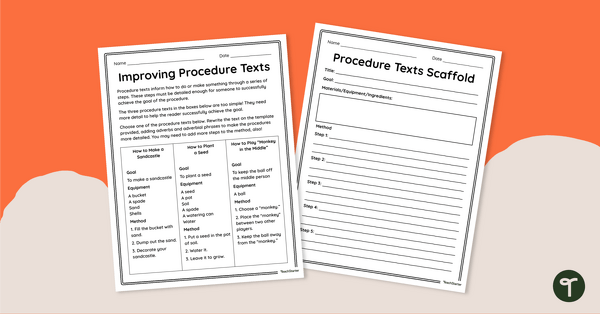
Improving Procedure Texts Worksheets
Download these procedural writing worksheets to get your students bumping-up some simple procedure texts.
- Plus Plan
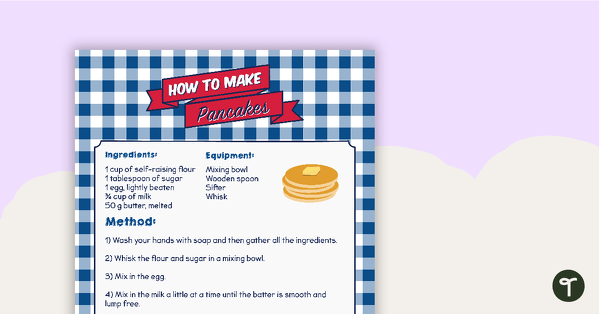
How To Make Pancakes – Procedural Writing Activity
Get your students writing a procedure for their favorite breakfast foods with this example procedure text and writing scaffold.
- Plus Plan
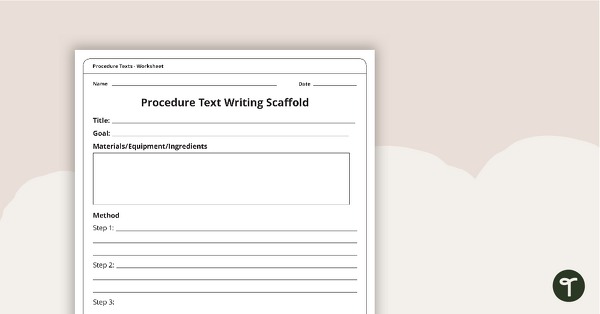
Procedure Texts Writing Scaffolds
Use this procedural writing scaffold to guide your students towards writing high-quality procedure texts.
- Plus Plan
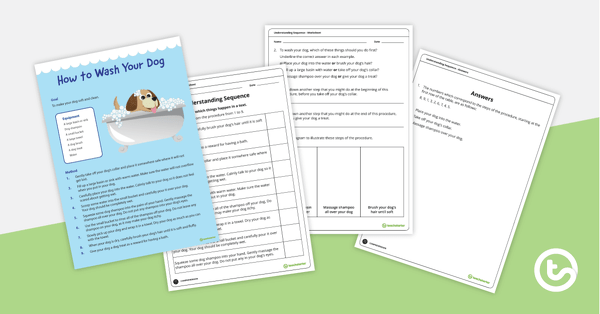
Procedural Writing Sequencing Worksheet – How to Wash Your Dog
Use this procedural writing worksheet to teach your students about the importance of sequence in procedure texts.
- Plus Plan
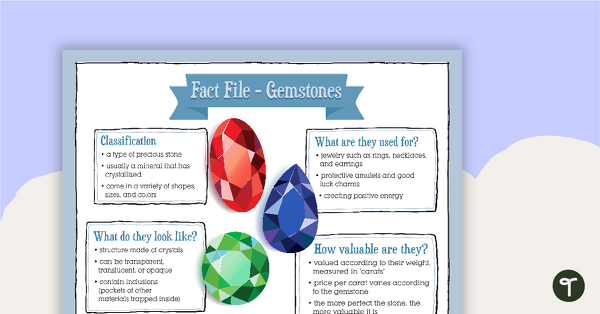
Gemstones Fact File and Report Writing Scaffold
Support your students in writing an expository text about gemstones with this fact file and writing scaffold.
- Plus Plan
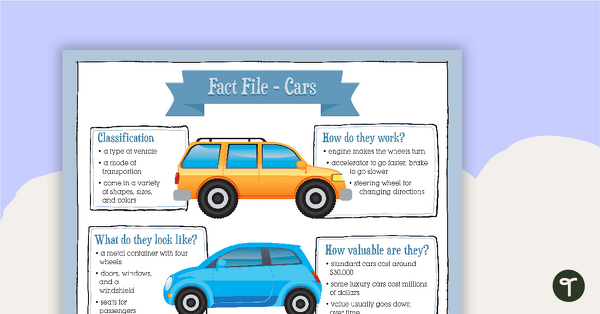
Cars Fact File and Report Writing Scaffold
Support your students in writing an expository text about cars with this fact file and writing scaffold.
- Plus Plan
Writer's Reflection Worksheet
Get your students into the habit of reflecting on their writing with this student reflection worksheet.
- Plus Plan
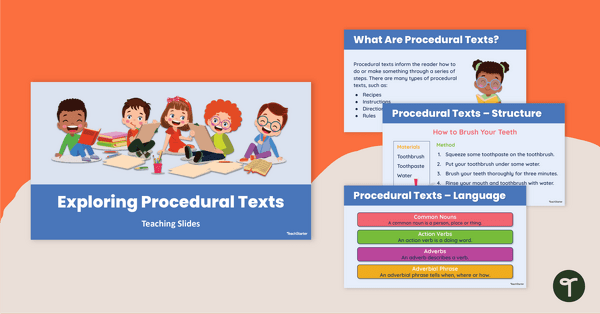
Exploring Procedural Writing Teaching Slides
Teach your students about writing a procedure using this detailed slideshow targeted at 1st- and 2nd-graders.
- Plus Plan
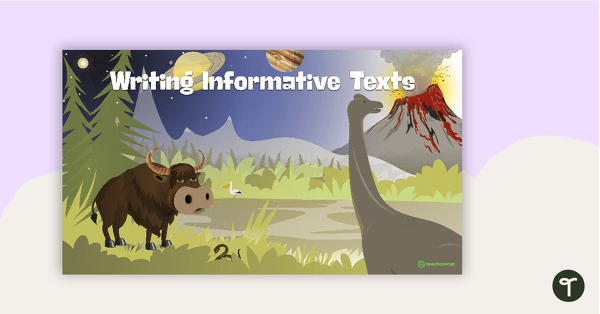
Writing Information Texts Teaching Slides
Teach your students the features of information reports using this detailed slideshow targeted at upper elementary school students.
- Plus Plan
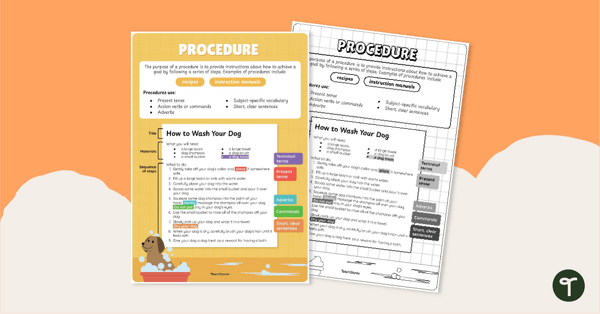
Procedure Text Type Poster With Annotations
Display this procedure text with annotations to help students identify the structure of a narrative.
- Plus Plan
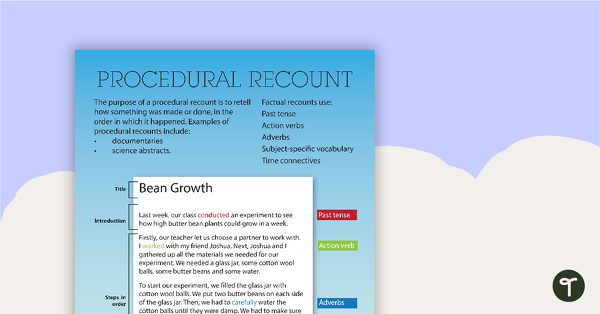
Procedural Recount Text Structure Anchor Chart - With Annotations
A poster about the procedural recount text type, including an annotated example.
- Plus Plan
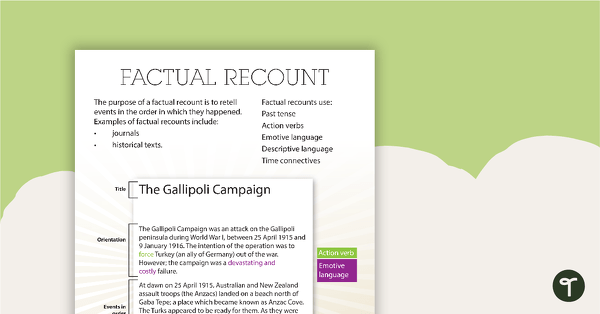
Factual Recount Text Type Poster - With Annotations
A poster about the factual recount text type, including an annotated example.
- Plus Plan
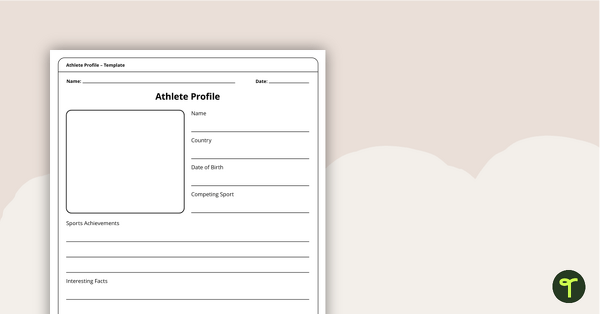
Athlete Profile Template
A worksheet to use in the classroom when writing athlete profiles.
- Plus Plan
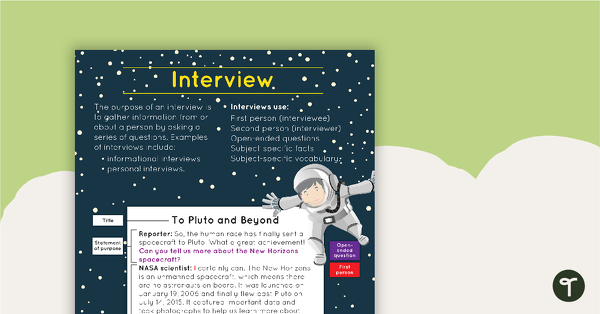
Interview Text Type Poster With Annotations
A poster about interviews, including an annotated example.
- Plus Plan
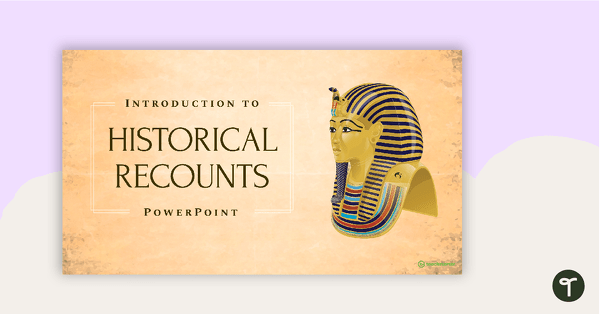
Introduction to Historical Nonfiction Teaching Slides
Use this age-appropriate, visually engaging slide deck to teach your students about the purpose, structure and features of the historical nonfiction genre.
- Plus Plan
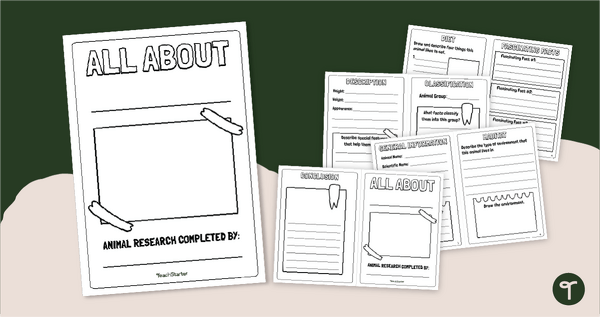
Informative Writing - Animal Research Task
Use a printable animal research organizer booklet for students to record facts about animals when learning to write informative texts.
- Plus Plan
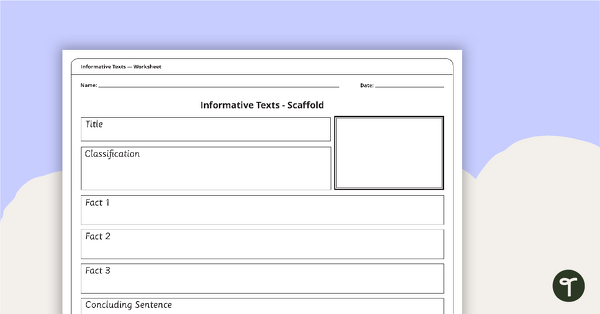
Simple Informative Texts - Writing Scaffold
A simple scaffolding worksheet to use when writing informative texts.
- Plus Plan
Picture Writing Prompts
These picture writing prompts are a great way to help students develop their writing skills. A visual writing prompt can be generated at random or chosen specifically.
- Plus Plan
Informative Texts - Text Structure
A 60 minute lesson in which students will identify and explore the structure of information reports.
- Free Plan
Building a Description Using Facts
A 60-minute lesson in which students will build a description of an animal, person or object using facts.
- Free Plan
Informational Texts - Text Structure
A 60-minute lesson in which students will identify and explore the structure of an informational text.
- Plus Plan
Exploring Procedural Texts Unit Plan
This English Language Arts unit has been designed to introduce procedural texts to younger students. It addresses the purpose, structure and language features of instructions and recipes.
- Plus Plan
Exploring Informative Texts Unit Plan - Year 1 and Year 2
This English unit has been designed to introduce the informative genre to younger students; specifically, the purpose, structure and language features of information reports.
- Plus Plan
Developing Informational Writing Skills Unit Plan - Grades 3 and 4
This writing unit addresses the informative text type; specifically how to write a well-structured informational text.
- Plus Plan
Writing Informative Texts Unit Plan - Year 5 and Year 6
This English unit addresses the informative text type; specifically, how to write a well-structured informative text.
- Plus Plan
Animal Fact Book - Independent Writing
A 60 minute lesson in which students will independently create an informative fact book about an animal.
- Plus Plan
Animal Information Report - Shared Writing
A 60 minute lesson in which students will construct a simple information report about an animal in pairs.
- Plus Plan
Animal Information Report - Modeled Writing
A 60 minute lesson in which students will jointly construct a simple information report about an animal.
- Plus Plan
Using Descriptive and Comparative Language
A 60 minute lesson in which students will understand how descriptive and comparative language is used in informative texts.
- Plus Plan
Informative Texts - Language Features
A 60 minute lesson in which students will identify and explore the language features of informative texts.
- Plus Plan
Just the Facts!
A 60 minute lesson in which students will use facts to describe people, places, animals and objects.
- Plus Plan
Fact or Opinion?
A 60 minute lesson in which students will identify the difference between a fact and an opinion.
- Expository Writing Templates
- Expository Writing Worksheets
- Expository Writing Word Walls
- Expository Writing Posters
- Expository Writing for Kindergarten
- Expository Writing for 1st Grade
- Expository Writing for 2nd Grade
- Expository Writing for 3rd Grade
- Expository Writing for 4th Grade
- Expository Writing for 5th Grade
- Expository Writing for 6th Grade