Narrative Writing Teaching Resources
Teach narrative writing this school year with writing prompts, printable worksheets, storyboards and story maps and more teaching resources created by teachers for elementary teachers like you.
This collection of TEKS and Common Core curriculum-aligned teaching resources has been carefully curated by our expert teacher team. That means not only is every resource teacher-created, but each one has undergone our review process to ensure it's ready for your lesson plan and your students!
Is this your first year teaching students about writing narratives? Or maybe you're just looking for some fresh ideas to tackle the topic? Read on for a primer from our teacher team!
What Is Narrative Writing?
Narrative writing is the act of writing a story, and those stories can be fictional or non-fiction accounts of something the student has experienced or learned about.
This type of writing is often popular with students as it allows them to use their imagination and creativity.
Which Elements Does Strong Narrative Writing Always Contain?
To make their narrative writing engaging and strong, there are certain key elements students need to understand and include, so we've compiled this quick refresher for you.
Plot
The plot of strong narrative writing is crucial — without it, there's no narrative! Keeping the reader interested from the start of a story involves developing the characters well and including conflict.
Structure
Structure of the text is just as important as the plot when writing a strong narrative. Students should be writing texts that include a beginning, middle and end. This can include a clear introduction that sets up the main conflict, a rising action that builds tension and excitement and a resolution that provides closure and ties up loose ends.
Descriptive Language
Teaching students to go beyond overused words like "said" or "nice" and using more descriptive language can help them make their narrative writing stronger. This graphic element of writing works with imagery and figurative language to help readers visualize the story.
Descriptive language helps the reader to visualize the setting and the characters. Sensory details can help kids set the scene in their essay or story.
Point of View
Whether it is written in the first-person, the third-person or flips back and forth, a piece of strong narrative writing has a clear point of view. This helps the reader better understand the narrator or protagonist.
What Is a Hook in Narrative Writing?
One feature of narrative writing you may want to focus on with your students this school year is the art of writing a "hook" to capture the reader's attention and draw them into the story. This is a compelling introduction that will engage the reader and make them want to keep reading!
There is no one kind of hook! It can be anything from an interesting fact or question to a dramatic opening scene or dialogue.
8 Narrative Writing Examples and Assignments to Get Students Writing
Are you looking for some different examples of narrative writing assignments that will engage your students and inspire them to write? Try these ideas from our teacher team!
- A personal narrative about a special day the student will never forget
- A fictional narrative about a group of friends going on an adventure
- A descriptive narrative that uses sensory details and describing words to create a vivid image of riding a rollercoaster
- A historical narrative that tells the story of their favorite president
- A reflective narrative that explores the writer's thoughts and feelings about going to high school one day
- A fantastical narrative that includes magical or imaginary elements, like the arrival of a magic hat in the classroom
- A humorous narrative that uses comedic elements to entertain the reader about a time their gym teacher was replaced by an alien
- A collaborative narrative that involves students writing a chapter book in small groups
- Plus Plan
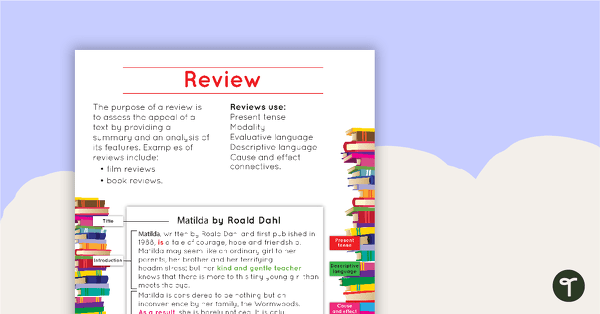
Review Text Type Poster With Annotations
A poster about reviews, including an annotated example.
- Plus Plan
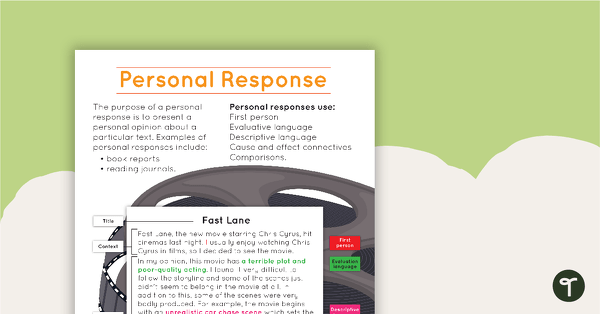
Personal Response Text Type Poster With Annotations
A poster about personal responses, including an annotated example.
- Plus Plan
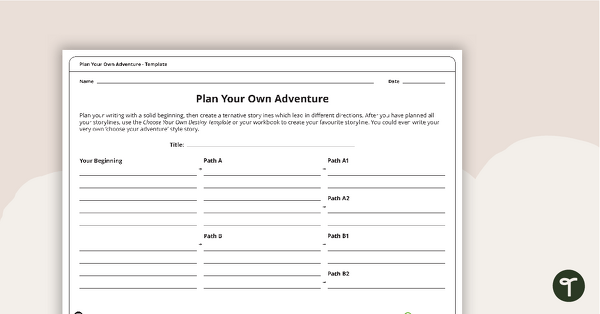
Plan Your Own Adventure - Writing Template
Students use a template to help them plan stories with alternative pathways for their friends to read.
- Plus Plan
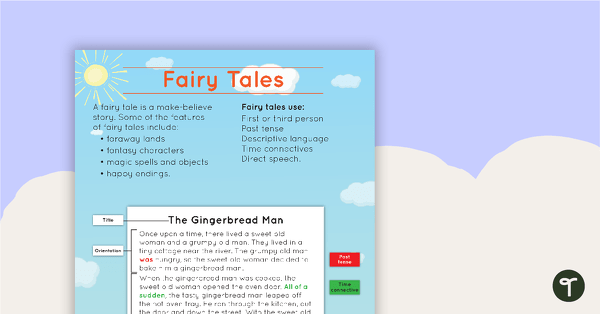
Fairy Tales Text Type Poster With Annotations
A poster about fairy tales, including an annotated example.
- Free Plan
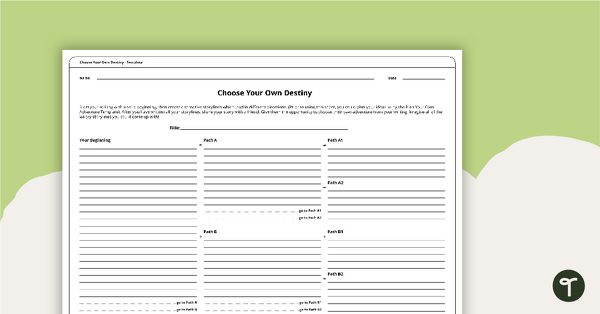
Choose Your Own Destiny - Writing Template
Students use a template to help them write stories with alternative pathways for their friends to read.
- Plus Plan
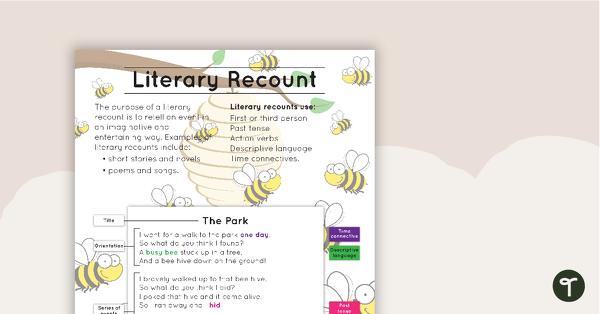
Literary Recount Text Type Poster With Annotations
A poster about literary recounts, including an annotated example.
- Plus Plan
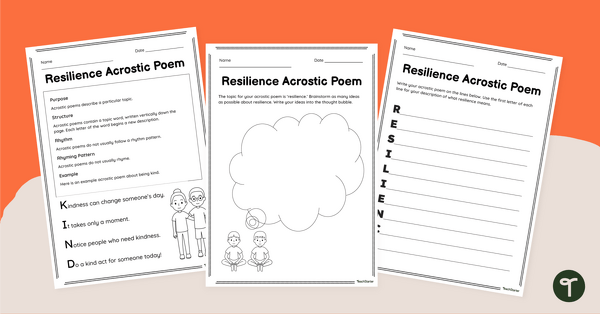
Resilience Acrostic Poem Worksheet
Have students write a resilience poem to help them understand the meaning of this crucial social-emotional skill.
- Plus Plan
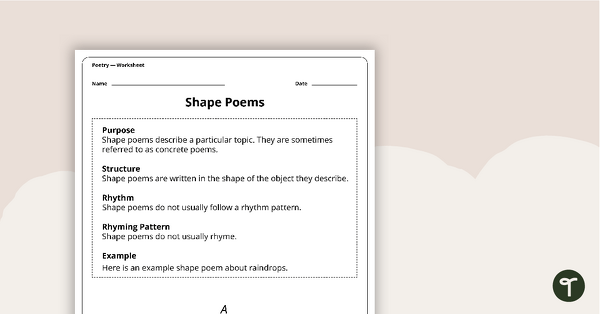
Write a Shape Poem Worksheet
Set your students up for success when writing a concrete poem with this set of scaffolded, easy-to-follow worksheets.
- Plus Plan
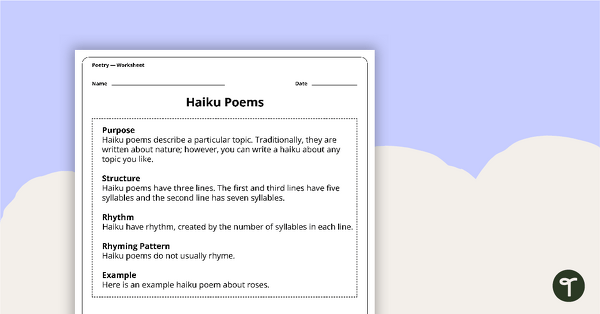
Write a Haiku Poem Worksheet
Set your students up for success when writing a haiku poem with this set of scaffolded, easy-to-follow worksheets.
- Plus Plan
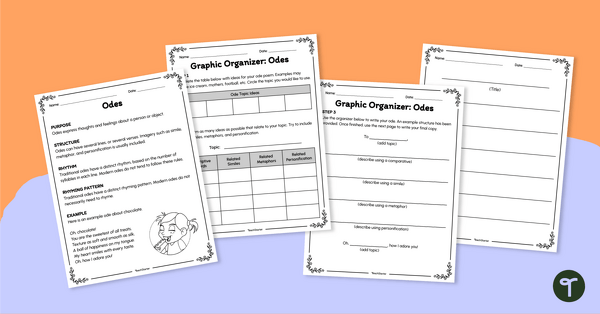
Write an Ode Worksheet
Set your students up for success when writing an ode with this set of scaffolded, easy-to-follow worksheets.
- Plus Plan
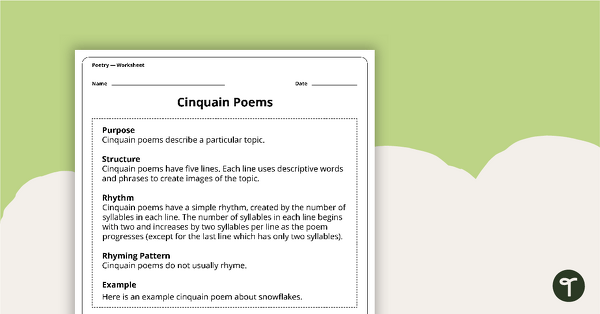
Write a Cinquain Poem Worksheet
Set your students up for success when writing a cinquain poem with this set of scaffolded, easy-to-follow worksheets.
- Plus Plan
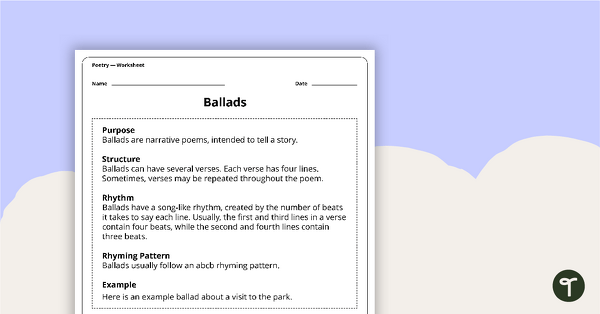
Write a Ballad Worksheet
Set your students up for success when writing a ballad with this set of scaffolded, easy-to-follow worksheets.
- Plus Plan
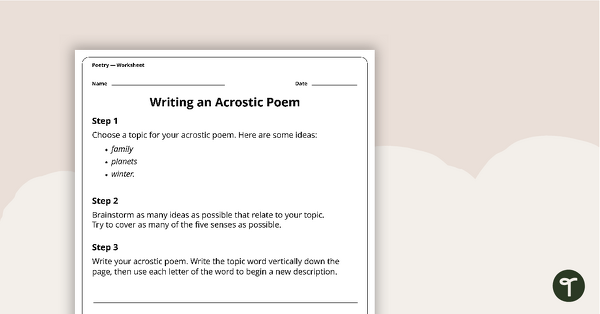
Write an Acrostic Poem Worksheet
Set your students up for success when writing an acrostic poem with this set of scaffolded, easy-to-follow worksheets.
- Plus Plan
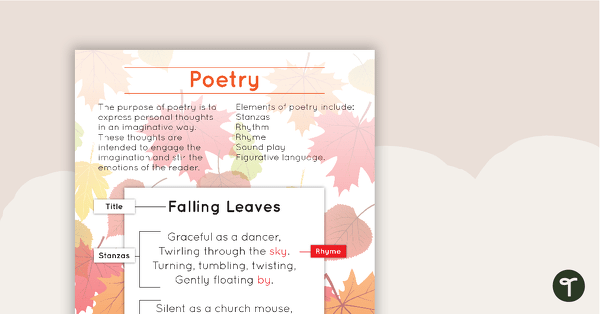
Poetry Anchor Chart With Annotations
Use this poetry anchor chart to introduce your students to the structure and language features of poems through an annotated example.
- Plus Plan
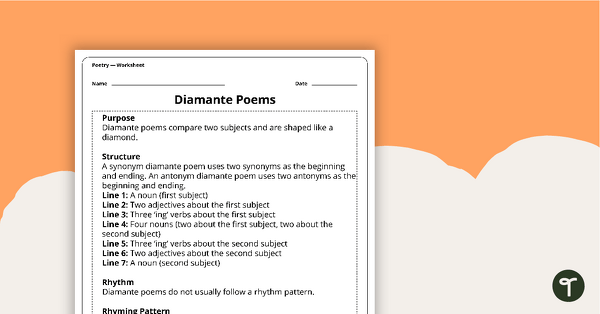
Write a Diamante Poem Worksheet
Set your students up for success when writing a diamante poem with this set of scaffolded, easy-to-follow worksheets.
- Plus Plan
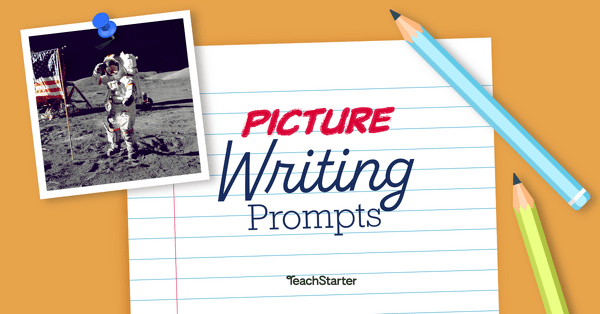
Picture Writing Prompts
These picture writing prompts are a great way to help students develop their writing skills. A visual writing prompt can be generated at random or chosen specifically.
- Plus Plan
Random Story Starter Generator
Use the random writing prompts for kids in our short story generator widget to inspire your students creativity and boost their writing skills.
- Plus Plan
Celebrating Poetry Month in the Primary Grades – Weeks 4 and 5
Celebrate National Poetry Month in the primary classroom with this planning guide and set of resources.
- Plus Plan
Celebrating Poetry Month in the Primary Grades - Week 3
Celebrate National Poetry Month in the primary classroom with this planning guide and set of resources.
- Plus Plan
Celebrating Poetry Month in the Primary Grades - Week 2
Celebrate National Poetry Month in the primary classroom with this planning guide and set of resources.
- Plus Plan
Constructing a Narrative Paragraph
A 60 minute lesson in which students will identify and use the correct paragraph structure for narrative writing.
- Plus Plan
Developing Narrative Writing Skills Unit Plan - Year 3 and Year 4
This English unit addresses the narrative text type, specifically, how to plan and write an engaging story.
- Plus Plan
Tell Me A Story
A 60 minute lesson designed to introduce narratives and the parts of a story using familiar texts.
- Plus Plan
Introducing Simple Narrative Structure
A 60 minute lesson in which students will identify the structure of a narrative text using fairy tales.
- Plus Plan
Writing a Narrative - Sensational Story Starters
A 60 minute lesson in which students will investigate exciting, attention-grabbing methods of starting a story.
- Plus Plan
Sound Play in Poetry - Alliteration
A 60 minute lesson in which students will identify and explore alliteration in poetry.
- Plus Plan
Purpose, Audience and Context
A 60 minute lesson in which students will identify the purpose, intended audience and subject matter of a poem.
- Plus Plan
What is Poetry?
A 60 minute lesson in which students will develop a definition of poetry.
- Plus Plan
Experimenting with Poetry Unit Plan - Grade 5 and Grade 6
This English unit addresses the common elements of poetry and explores how these may be applied to shape poems, limericks, odes and simple ballads.
- Plus Plan
Exploring Narrative Texts Unit Plan - Year 1 and Year 2
This English unit uses fairy tales to introduce the narrative text type to younger students. It addresses the structure, characters and language features of a narrative.
- Plus Plan
Exploring Poetry - Year 3 and Year 4 Unit Plan
This English unit addresses common poetic devices such as sound play, word play and imagery and explores how these may be applied to narrative poetry.
- Plus Plan
Writing Narrative Texts Unit Plan - Year 5 and Year 6
This English unit addresses the narrative text type; specifically, how to write an engaging narrative text.
- Narrative Writing Templates
- Narrative Writing Worksheets
- Narrative Writing Posters
- Narrative Writing Games
- Narrative Writing Word Walls
- Narrative Writing for Kindergarten
- Narrative Writing for 1st Grade
- Narrative Writing for 2nd Grade
- Narrative Writing for 3rd Grade
- Narrative Writing for 4th Grade
- Narrative Writing for 5th Grade
- Narrative Writing for 6th Grade