States of Matter Teaching Resources
Explore the changing states of matter with worksheets, experiments, activities and more — all created by teachers for your lesson plans!
This collection of science resources provides you everything you need to teach students the properties of solids, liquids and gasses and examine how matter changes its state.
New to teaching this section of the science curriculum or just looking for some handy tips and tricks? Read on for a primer from our teacher team, including answers to some of students' frequently asked questions!
How Many States of Matter Are There?
This is a fairly common question from students, so we'll get started right here — there are three main states of matter:
- Liquid
- Solid
- Gas
Your students may have heard that there's a fourth state of matter, and technically they are right! That's why we often refer to the "three main states" of matter, rather than simply saying "three states of matter."
Plasma is a substance that we get when a gas is electrically charged. It's thick and soupy — so it's neither liquid nor solid — and that's why it is often referred to as the "fourth state of matter."
So why do we focus on the other three? Simple — plasma is in abundance in our galaxy, but it's far less prevalent down here on Earth!
What Is a Liquid State of Matter?
Liquid is a state of matter your students are pretty familiar with. After all, their favourite drinks, the water in the swimming pool and the rain falling down from the sky are all liquid states of matter.
But what, exactly, is a liquid?
By definition, a liquid is a state of matter that has a definite volume but no definite shape. The particles in a liquid are close together, but unlike those in a solid, they can move and flow past one another.
Liquids can also take the shape of their container — like milk in a cereal bowl!
What Is a Solid State of Matter?
Solids are all around us, from the chairs we sit on to the walls of the classroom, but how do you explain what a solid state of matter is to your class? Try this definition:
A solid is a state of matter that has a definite shape and volume.
The particles in a solid are tightly packed together and unlike those in other states, they do not move freely.
Solids can be hard — like the top of the desk or a rock. They can also be soft, like a pillow or a ball of playdough.
What Is a Gas State of Matter?
We've got just one main state of matter left — gas. Gas is all around us, but it's not always seen, so students may not realize just how much interaction they have with matter in this state!
Here's how we describe gas to students:
A gas is a state of matter that has no definite shape or volume. The particles in a gas are spread out and they move freely. These particles fill will up any space available.
Gases are often invisible like the air we breathe. Sometimes gas can be seen, however, such as the smoke coming from a campfire.
- Plus Plan
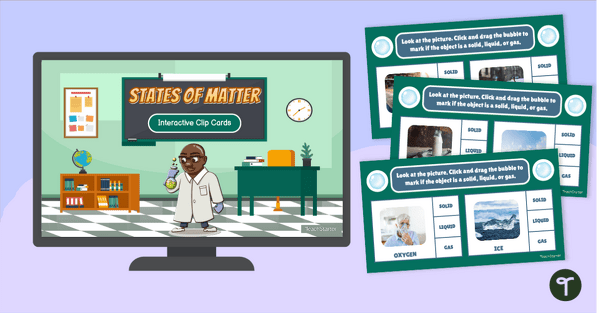
States of Matter Interactive Clip Cards
Drag and drop to identify the three states of matter with a set of interactive clip cards.
- Plus Plan
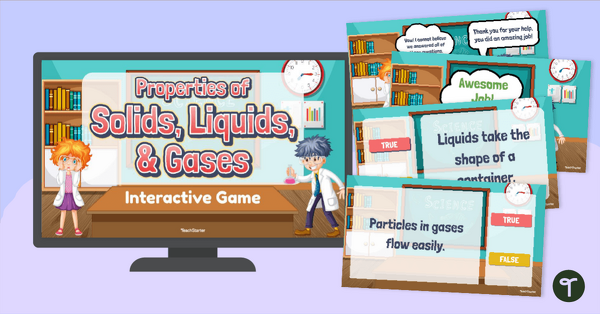
Properties of Solids, Liquids, and Gases Interactive Game
Discover the properties of solids, liquids, and gases with an engaging Properties of Matter Interactive Game.
- Plus Plan
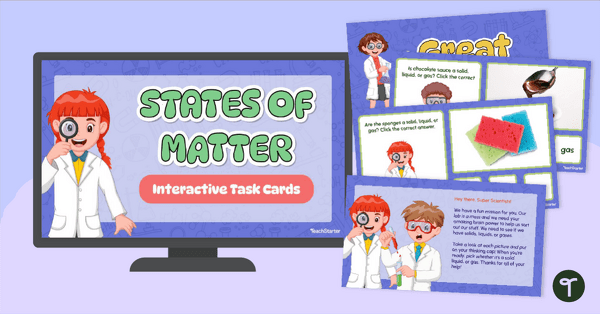
States of Matter Interactive Task Cards
Identify examples of the 3 states of matter with a set of self-checking interactive task cards.
- Plus Plan
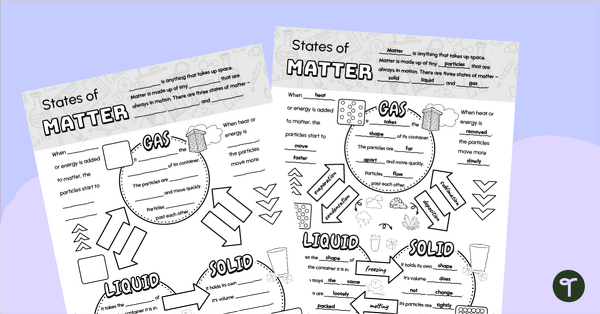
States of Matter Doodle Notes Template
Improve note-taking skills with a printable States of Matter Doodle Notes Template.
- Plus Plan
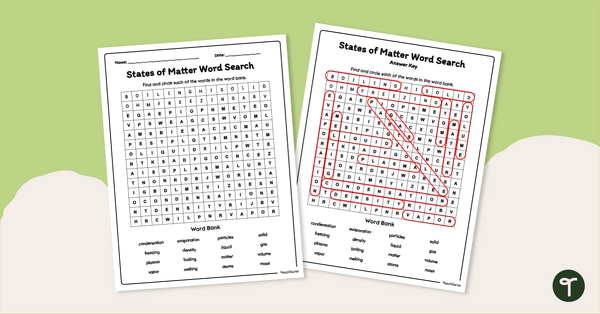
States of Matter Word Find - Upper Grades
Use a States of Matter word search to introduce your upper-grade students to new academic vocabulary.
- Plus Plan
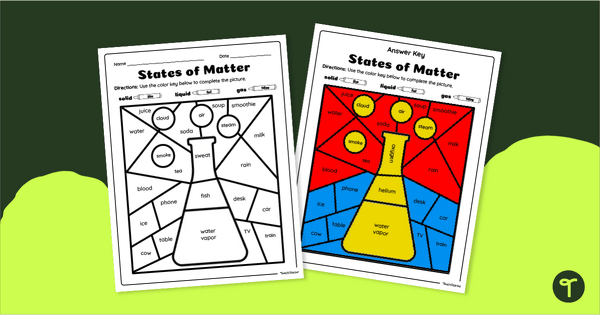
States of Matter - Color by Code Worksheet
Engage your students and have fun identifying the states of matter with a color-by-code worksheet.
- Plus Plan
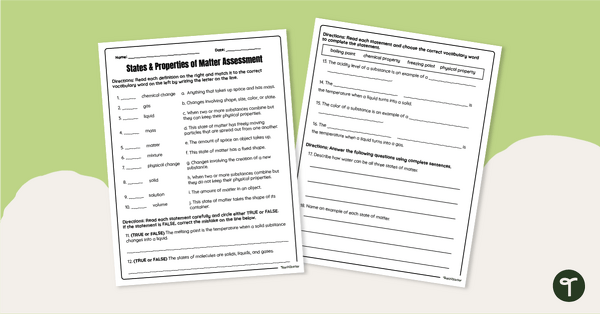
States & Properties of Matter Assessment
Assess your students knowledge of the states and properties of matter with a comprehension Matter Assessment.
- Plus Plan
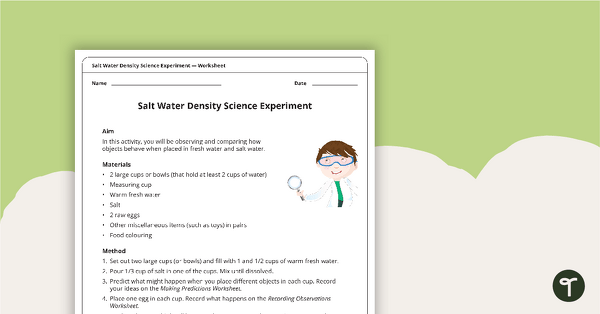
Salt Water Density Experiment
A hands-on science experiment about salt water density.
- Plus Plan

Facts of the Matter
This Properties of Matter unit explores the concept that solids, liquids, and gases have different observable properties and behave in different ways.
- Plus Plan

Understanding States of Matter
An assessment task designed to assess students' knowledge and understanding of: solids, liquids, and gases; their properties; and their behavior.
- Plus Plan

Slime - Solid, Liquid, or Gas?
A 60-minute lesson in which students will recognize that not all substances can be easily classified on the basis of their observable properties.
- Plus Plan

Knowing Matters!
A 60-minute lesson in which students will explore how knowledge of states of matter and their changes can help inform practices and decision making.
- Plus Plan

Going, Going, Gone!
A 60-minute lesson in which students will recognize that substances exist in different states depending on the temperature.
- Plus Plan

Changing States of Matter
A 60-minute lesson in which students will explore the way solids, liquids, and gases change in different situations.
- Plus Plan

Gases
A 60-minute lesson in which students will observe that gases have mass and take up space.
- Plus Plan

Liquids
A 60-minute lesson in which students will identify the observable characteristics of liquids and how they behave in different ways.
- Plus Plan

Solids
A 60-minute lesson in which students will identify the observable characteristics of solids and how they behave in different ways.
- Plus Plan

Matter Matters!
Introduce students to key terms and concepts related to matter and states of matter with this 60 minute lesson.
- Plus Plan

What's the Matter?
A 60-minute lesson designed to activate students' prior knowledge of solids, liquids, and gases.
-
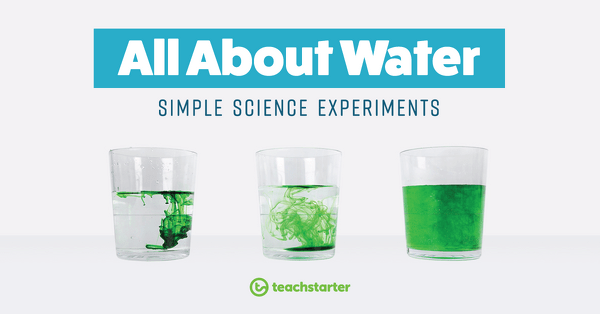
Water Experiments for Kids That Are a Big Hit in the Classroom
Teach kids about density, refraction of light, and more with these fun water experiments for kids that are easy to create in the classroom.