Vocabulary Teaching Resources
Build your students' vocabulary skills with printable worksheets, cloze reading activities, task cards and more elementary school teaching resources designed to help extend and improve your students' vocabularies.
This extensive collection of teaching resources has been created by teachers for teachers like you. The curriculum-aligned collection includes word-of-the-week activities, teaching presentations and more to save elementary teachers time on lesson planning.
Created by expert teachers, each resource in this ELA collection has been carefully reviewed and curated by our team. That means it's ready to use in the classroom! You'll even find editable resources, plus differentiated options.
New to teaching this part of the ELA curriculum, or just looking for fresh ways to engage your students? Read on for a primer from our teaching team!
What Is Vocabulary?
It may seem obvious, but let's start at the beginning.
In an elementary school context, vocabulary can be defined as the set of words that a student is expected to know and understand. It includes not just the words themselves but also their meanings, spellings and how to use them in different contexts.
Teaching vocabulary at this level focuses on developing a strong foundation of language skills, which will serve our students well as they continue to learn and communicate.
Vocabulary Teaching Techniques
Teaching vocabulary at the primary school level involves various techniques to help students learn new words. Some of those include:
- Providing definitions and examples of words
- Using visual aids to help students understand new words
- Encouraging students to use new words in their writing
- Teaching students to use context clues to figure out the meaning of unfamiliar words
- Teaching students strategies to decode new words they encounter, including the introduction of common prefixes, suffixes and root words
Students need both explicit and implicit vocabulary instruction in primary school to learn new words as they will build a strong foundation of words, not just by picking them up while reading and listening to others, but also through direct instruction.
Teaching Vocabulary in Elementary School
Teaching vocabulary for the first time? Here are some topics you can expect to cover, depending on your grade level:
- Basic high-frequency words
- Vocabulary related to specific subjects
- Words with multiple meanings (and how to use them in context)
- Synonyms and antonyms
- Prefixes and suffixes
- Root words
- Words with irregular spellings and pronunciation
Vocabulary Teaching Ideas and Activities
Looking for some ideas to get your students excited about vocabulary? In addition to the teacher-created resources in this collection, here are a few favorite ideas from our teacher team!
Erase a Word Pronunciation Challenge
In this pronunciation game, you can select word lists related to current units or use a high-frequency word list to improve student vocabulary.
Supplies
- 3 whiteboard erasers
- Vocabulary list(s)
How to Play
- Break students into three teams, and have them stand in lines in front of your whiteboard.
- Write three lists of words onto the board — one list in front of each team.
- On the teacher's signal, the first person from each team goes up to the board and reads aloud one of the words on the list.
- If they get the word correct, they erase it and go to the back of their team's line.
- The winner is the first team to erase all the words on their list.
A-Z Vocabulary Relay Race
This is a fun, physical vocabulary game that is great to play outside or in a large multi-purpose area. Students play in teams, racing to complete a list of words (one for every letter of the alphabet) around a familiar topic or theme.
Supplies
- pens or pencils
- paper
- tape
How to Play
- Divide students into mixed-ability teams of 4 to 5 students.
- Students stand in a line on one side of the space. On the other side of the space, place a pen or pencil and tape to the ground a sheet of paper with the letters A-Z listed down the side.
- Choose a topic that the students are familiar with. This will be the theme for all the words the students write on their A-Z list. Alternatively, you can choose a unit you're currently studying as your topic.
- The race begins with the leader running to the paper and writing a word beginning with the letter A that is related to the theme. Once they've written the word — spelled correctly — they run back to their team.
- The next team member runs up to the paper and writes a word beginning with B, before running back to their team so a teammate can go up to write a word starting with C, and so on.
- If a student cannot come up with a word, they can call a friend to help. If they still can't come up with a word, they can call the teacher for help.
- Teams continue this word relay until they have written a word for every letter. The first team to complete their word list (and have it verified by the teacher!) are the winners.
Snake Words
In this game, students work in teams (similar to the A-Z relay detailed above) to create a word snake on the board. Students have a limited time (e.g. 10 seconds) to write their word or their team risks being eliminated.
Supplies
- 4 -5 different colored whiteboard markers or chalk
- a timer or stopwatch
How to Play
- Split students into 4 to 5 mixed-ability teams of equal numbers.
- Have each team select a leader and send them to the classroom whiteboard.
- Team leaders should take a colored marker and stand in a line.
- The teacher begins the game by writing a letter of the alphabet on the board and starting the timer.
- The first team leader writes a word beginning with that letter and must complete the word within the time limit. For example, if the teacher wrote the letter G, they might write galaxy. Then they hand their marker to the next person on their team.
- The second team leader uses the previous word's last letter as the next word's first letter, also within the time limit. Using the example word above, the next student may write 'yogurt.' Then they hand their marker to the next person from their team. Note: Students write the words without spaces, in essence creating a word snake. E.g. galaxyogurt
- If a student cannot come up with a word within the time limit, they can pass it to the next team member, but you should set a limit to the number of passes each team can have. After this, the team is eliminated.
- The last team standing is the winner!
- Free Plan
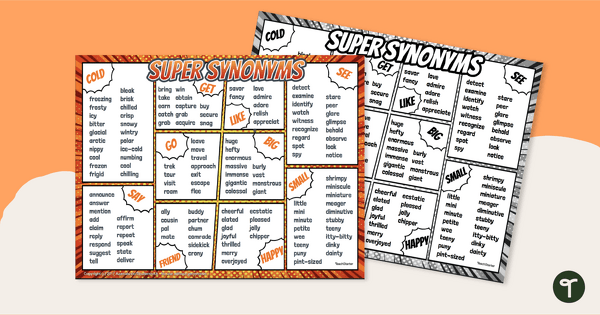
Super Synonyms List
Boost your students’ vocabularies with a synonyms list to reference in their daily writing lessons.
- Plus Plan

Daily Vocabulary Dive - Antonyms Worksheet
Give your students a daily dose of vocabulary practice with a five-day Antonym Review Worksheet.
- Plus Plan
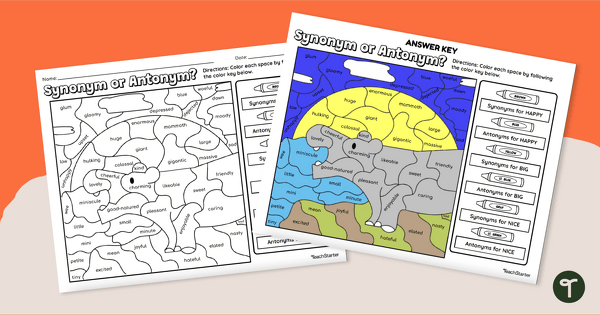
Color By Code Worksheet - Synonyms and Antonyms
Reveal the hidden picture and practice using synonyms and antonyms with a vocabulary color-by-code worksheet.
- Free Plan
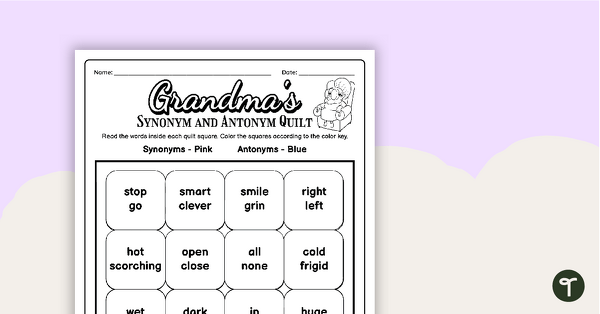
Color the Synonyms and Antonyms Worksheet
Explore vocabulary with this synonyms and antonyms worksheet for 3rd and 4th grade students.
- Plus Plan

Synonyms and Antonyms - Printable Puzzles
Turn your language learners into vocabulary superstars with a fun synonym and antonym puzzle activity.
- Free Plan
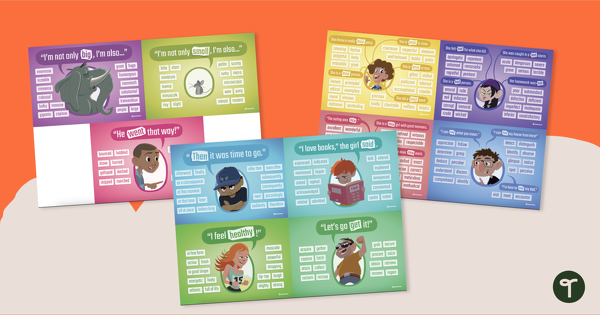
Synonyms- Printable Flashcards
Build vocabulary skills with individual Synonym anchor chart flash cards.
- Plus Plan
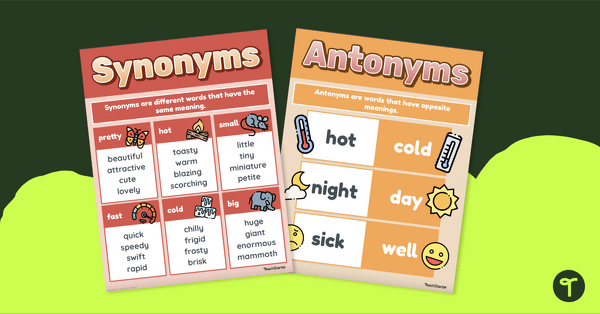
Synonym and Antonym Posters
Print a pair of handy synonym and antonym anchor charts for your students to reference during writing lessons.
- Plus Plan

Four In A Row - Synonyms Game
Practice identifying and using synonyms with our similar word matching activity.
- Plus Plan

Synonym Dominoes
Match up similar words with this set of 28 synonym dominoes.
- Plus Plan

Building Words with Prefixes Sorting Activity
Build words by matching the root word to prefixes, recording the new words on the answer sheet.
- Plus Plan
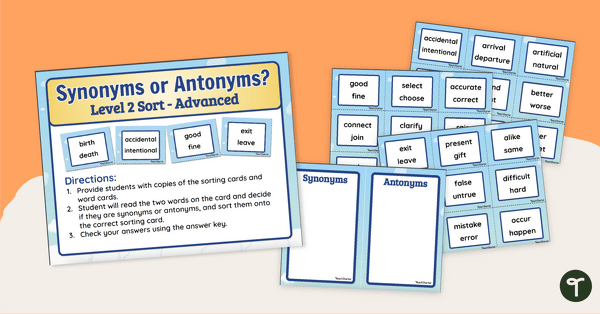
Antonyms and Synonyms Sorting Activity
Teach antonyms and synonyms with this hands‑on sorting activity that helps students confidently identify word relationships through meaningful, active learning.
- Plus Plan
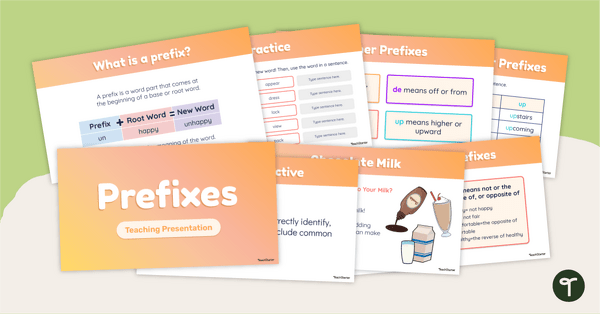
Prefixes PowerPoint
Use this Prefix PowerPoint to help students understand what prefixes are and confidently use common prefixes related to opposites, time, place and position, numbers and size.
- Plus Plan

Prefixes List for Students
Download this list of prefixes to help your students build vocabulary, improve decoding skills, and confidently understand how prefixes change the meaning of words.
- Free Plan

Last One Standing Active Game
An active game that allows students to build their vocabulary knowledge.
- Plus Plan
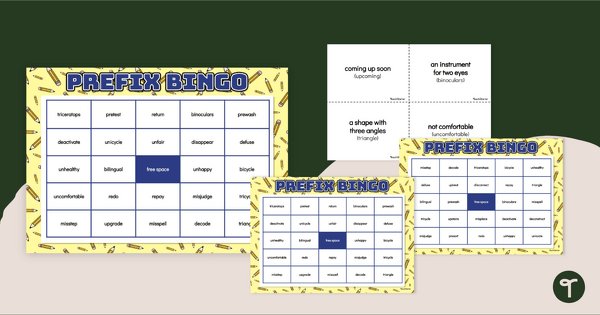
Prefix Bingo
Match prefix words to their definition by identifying the meaning of the prefix and the root word with a fun game of BINGO.
- Plus Plan
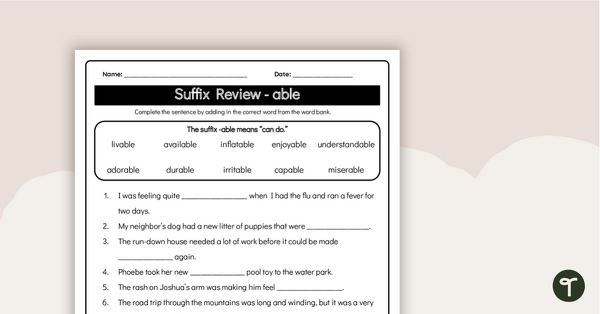
Suffixes List for Students
Download this suffixes list to help your students build vocabulary, improve decoding skills, and confidently understand how suffixes change the meaning of words.
- Plus Plan
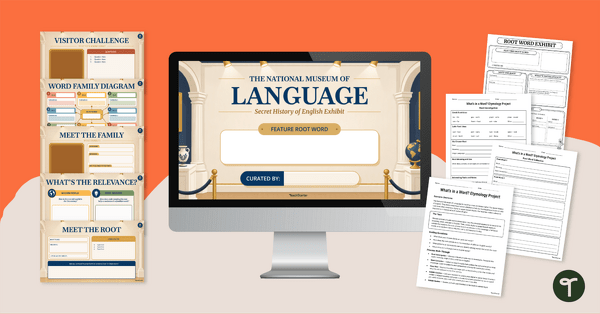
Word Origins Inquiry Project
Download this word origins project where students will investigate a Greek or Latin root word and use their research to create an engaging museum-style exhibit.
- Plus Plan
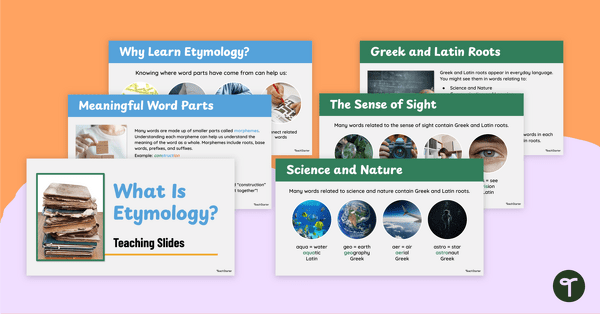
What Is Etymology? Teaching Slides
Explore word origins with this teaching presentation that helps students unlock the meaning of unfamiliar vocabulary by learning how Greek and Latin roots shape thousands of words in English.
- Plus Plan
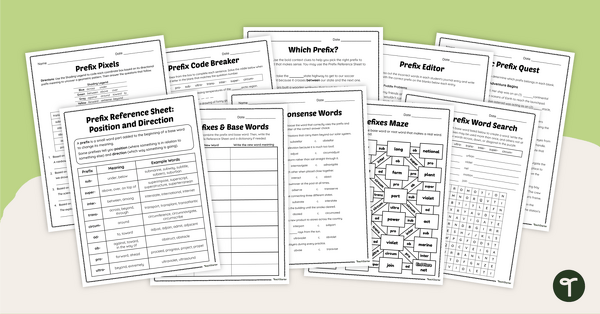
Direction and Position Prefixes Worksheet Pack
Help your students master direction and position prefixes with this comprehensive worksheet pack that explores how these prefixes change word meanings.
- Plus Plan
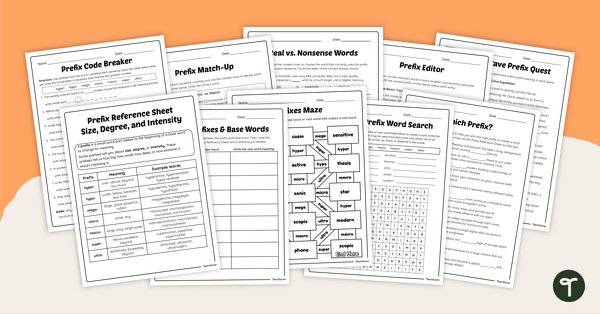
Size Prefixes Worksheet Pack
Teach size prefixes with this comprehensive worksheet pack that helps students understand how prefixes change the meaning of words through a collection of engaging activities.
- Plus Plan
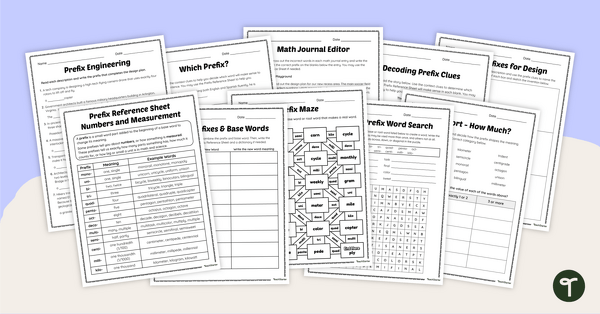
Number and Measurement Prefixes Worksheet Pack
Help your students master number and measurement prefixes with this comprehensive worksheet pack, which uses a collection of engaging activities to show how prefixes change word meaning.
- Plus Plan
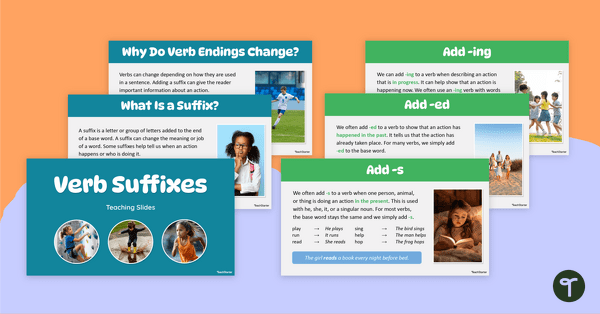
Verb Suffixes Teaching Slides (s, ed, ing)
Teach verb suffixes to your class with ease using this engaging slide deck that helps students understand when to apply the suffixes -s, -ed and -ing to change verb tense.
- Plus Plan
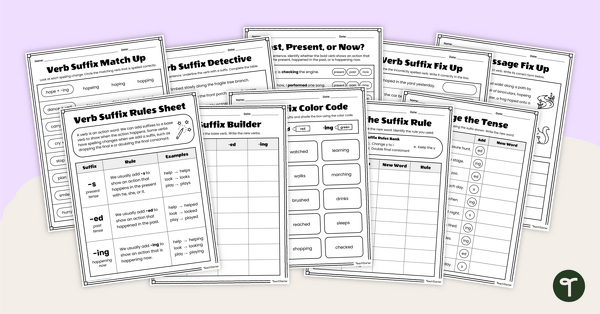
Verb Suffixes Worksheets (s, ed, ing)
Download these suffix worksheets to help students confidently identify and apply the verb tense suffixes -s, -ed and -ing.
- Plus Plan

Suffixes Interactive Activity
Explore suffixes with this fun and engaging suffix digital activity ready to use in the classroom.
- Plus Plan

Prefixes Interactive Activity
Use this Prefix digital activity in your classroom to support your students as they explore how prefixes change word meaning.
- Plus Plan

Shades of Meaning in Nouns Worksheet Pack
Elevate student vocabulary with a noun worksheet pack that helps learners explore shades of meaning and choose more precise words in their writing.
- Plus Plan

Shades of Meaning in Adverbs Worksheet Pack
Use this adverbs worksheet pack to help students explore the subtle shades of meaning in words and confidently choose precise language in their writing.
- Plus Plan

Shades of Meaning in Adjectives Worksheet Pack
Enhance your students’ vocabulary choices with this adjectives worksheet pack, designed to help your students explore the subtle differences in words.
- Plus Plan

Shades of Meaning in Antonyms Worksheet Pack
Use this antonyms worksheet pack to teach your students about three different types of antonyms: binary, gradable and relational.
- Plus Plan
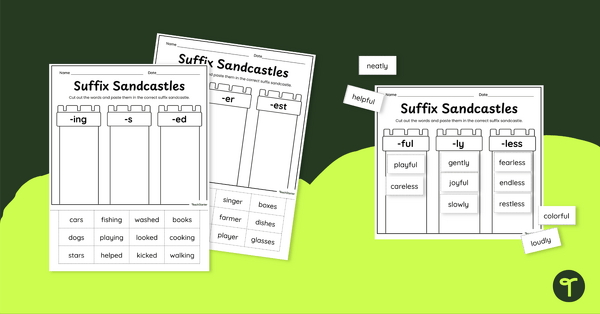
Suffix Cut and Paste Worksheets
Build strong word‑building skills with Suffix Sandcastles, a collection of six engaging cut‑and‑paste worksheets designed to help students master common suffix endings.
- Plus Plan
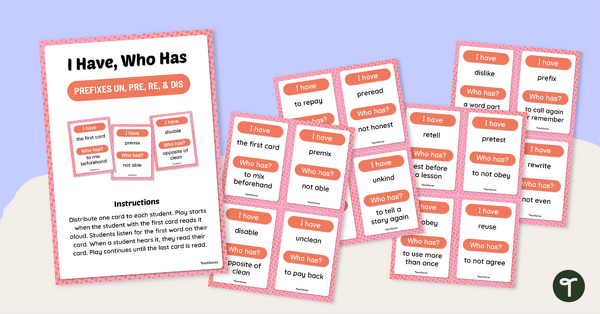
I Have, Who Has Prefix Game
Play an exciting prefix game to help your students identify and define words with the prefixes - pre, re, un, and dis.
- Plus Plan
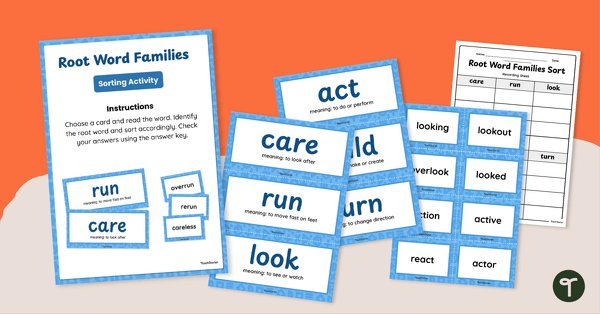
Base Word Sorting Activity
Use this Base Word Sorting activity to help students sort words based on their root words.