A one page scaffolding sheet which can be used to write a recount.
Use this generic scaffolding sheet to provide some structure for students when they are learning to write a recount.
Updated: 20 Jul 2019
A one page scaffolding sheet which can be used to write a recount.
Non-Editable: PDF
Pages: 1 Page
Grades: 3 - 6
Write routinely over extended time frames (time for research, reflection, and revision) and shorter time frames (a single sitting or a day or two) for a range of discipline-specific tasks, purposes, and audiences.
Write routinely over extended time frames (time for research, reflection, and revision) and shorter time frames (a single sitting or a day or two) for a range of discipline-specific tasks, purposes, and audiences.
Write routinely over extended time frames (time for research, reflection, and revision) and shorter time frames (a single sitting or a day or two) for a range of discipline-specific tasks, purposes, and audiences.
Write routinely over extended time frames (time for research, reflection, and revision) and shorter time frames (a single sitting or a day or two) for a range of discipline-specific tasks, purposes, and audiences.
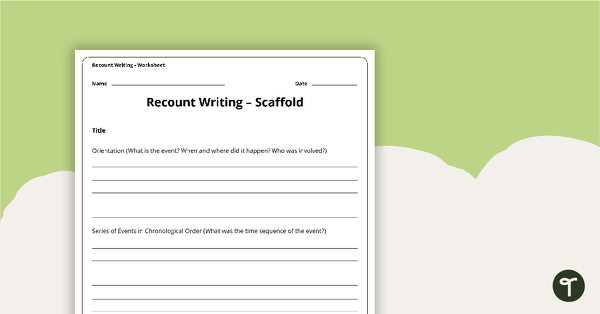
A one page scaffolding sheet which can be used to write a recount.
Use this generic scaffolding sheet to provide some structure for students when they are learning to write a recount.
Write routinely over extended time frames (time for research, reflection, and revision) and shorter time frames (a single sitting or a day or two) for a range of discipline-specific tasks, purposes, and audiences.
Write routinely over extended time frames (time for research, reflection, and revision) and shorter time frames (a single sitting or a day or two) for a range of discipline-specific tasks, purposes, and audiences.
Write routinely over extended time frames (time for research, reflection, and revision) and shorter time frames (a single sitting or a day or two) for a range of discipline-specific tasks, purposes, and audiences.
Write routinely over extended time frames (time for research, reflection, and revision) and shorter time frames (a single sitting or a day or two) for a range of discipline-specific tasks, purposes, and audiences.

We create premium quality, downloadable teaching resources for primary/elementary school teachers that make classrooms buzz!
Would you like something changed or customised on this resource? While our team makes every effort to complete change suggestions, we can't guarantee that every change will be completed.
Did you spot an error on this resource? Please let us know and we will fix it shortly.
Are you having trouble downloading or viewing this resource? Please try the following steps:
If you are still having difficulty, please visit the Teach Starter Help Desk or contact us .
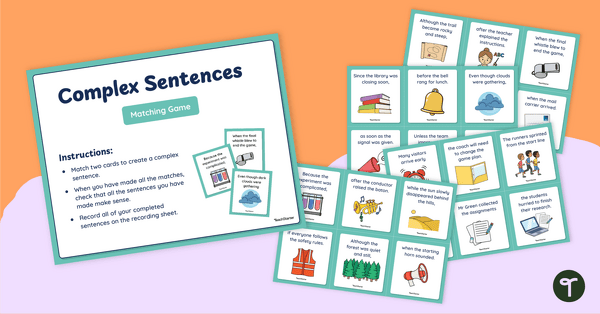
Download this complex sentence matching game to help your students comprehend and build complex sentences.
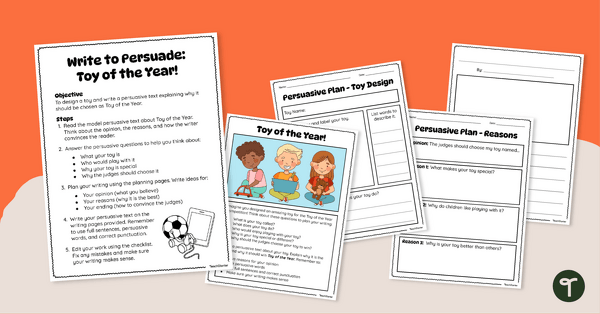
Use this task to guide Grade 1 students through the complete persuasive writing process as they create a simple persuasive text about the best toy (including a criteria sheet).
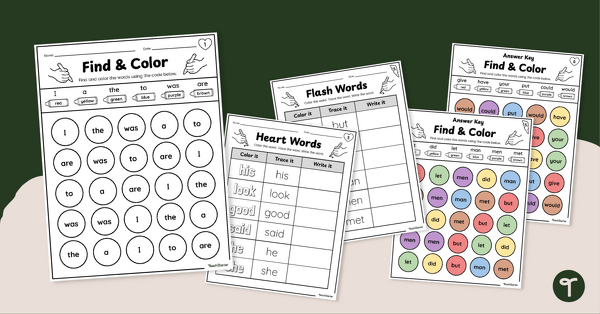
Support your Kinder students as they build their early understanding of high‑frequency words with this fun and purposeful worksheet pack.
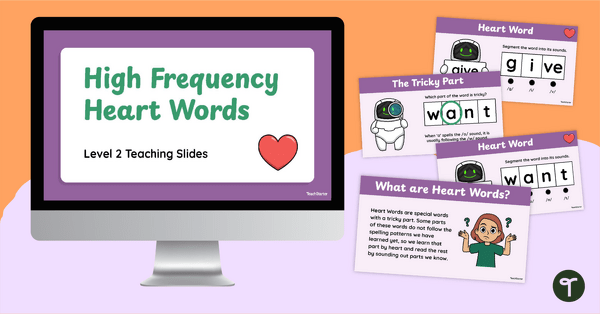
Give your 1st Grade students the structured support they need to read and spell high‑frequency words with unusual or unexpected spelling patterns.
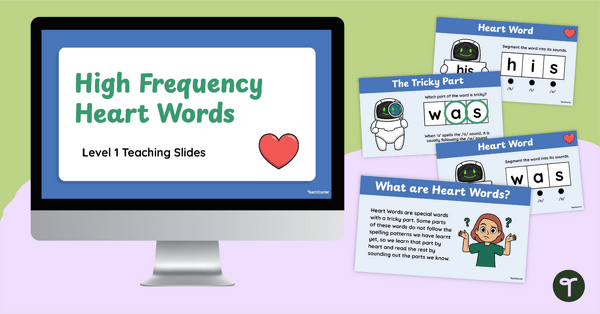
Use these explicit, ready-to-teach slides that help students segment sounds, identify the “tricky” part, and learn it by heart, aligned with structured literacy
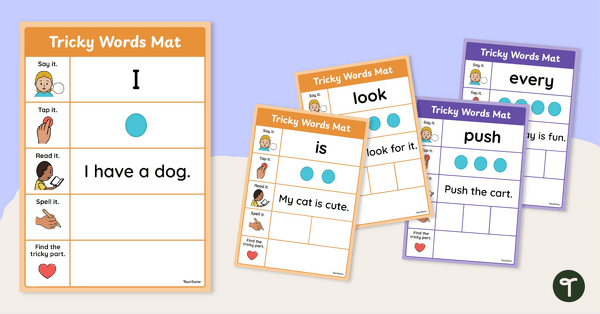
Use these printable tricky word mats as a hands-on activity when introducing high frequency words that have an irregular spelling pattern or one your early readers haven’t learnt yet.
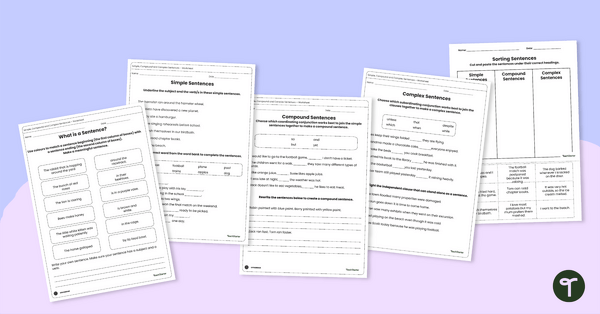
Use this set of five grammar worksheets to teach about the structures of simple, compound and complex sentences.

Use this high frequency mini book to track the heart words and flash words your students have mastered.
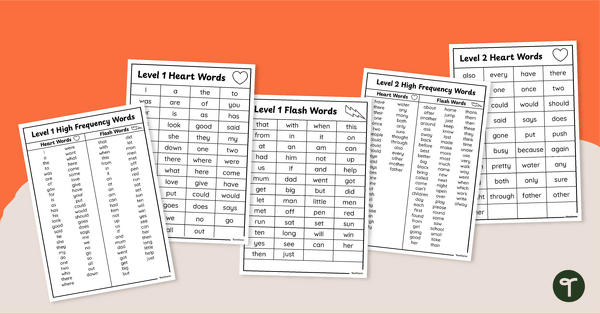
Use this set of leveled high frequency word lists which are a collection of the most commonly used words divided into heart words and flash words for teaching purposes.
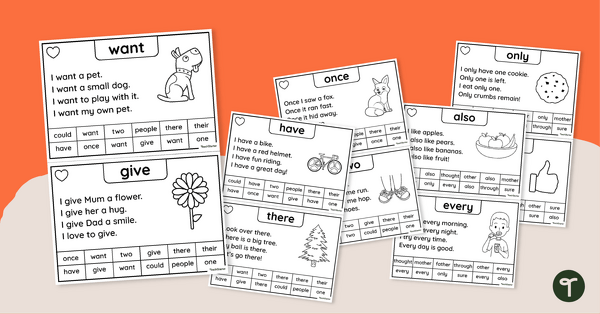
Use these High Frequency words reading mats to help students identify and read high frequency words.
0 Comments
Write a review to help other teachers and parents like yourself. If you'd like to request a change to this resource, or report an error, select the corresponding tab above.