Year 4
The science inquiry skills and science as a human endeavour strands are described across a two-year band. In their planning, schools and teachers refer to the expectations outlined in the achievement standard and also to the content of the science understanding strand for the relevant year level to ensure that these two strands are addressed over the two-year period. The three strands of the curriculum are interrelated and their content is taught in an integrated way. The order and detail in which the content descriptions are organised into teaching and learning programs are decisions to be made by the teacher.
Incorporating the key ideas of science
Over Years 3 to 6, students develop their understanding of a range of systems operating at different time and geographic scales.
In Year 4, students broaden their understanding of classification and form and function through an exploration of the properties of natural and processed materials. They learn that forces include non-contact forces and begin to appreciate that some interactions result from phenomena that can't be seen with the naked eye. They begin to appreciate that current systems, such as Earth's surface, have characteristics that have resulted from past changes and that living things form part of systems. They understand that some systems change in predictable ways, such as through cycles. They apply their knowledge to make predictions based on interactions within systems, including those involving the actions of humans.
(source: www.australiancurriculum.edu.au)
Achievement Standard
By the end of Year 4, students apply the observable properties of materials to explain how objects and materials can be used. They describe how contact and non-contact forces affect interactions between objects. They discuss how natural processes and human activity cause changes to Earth’s surface. They describe relationships that assist the survival of living things and sequence key stages in the life cycle of a plant or animal. They identify when science is used to understand the effect of their actions.
Students follow instructions to identify investigable questions about familiar contexts and make predictions based on prior knowledge. They describe ways to conduct investigations and safely use equipment to make and record observations with accuracy. They use provided tables and column graphs to organise data and identify patterns. Students suggest explanations for observations and compare their findings with their predictions. They suggest reasons why a test was fair or not. They use formal and informal ways to communicate their observations and findings.
(source: www.australiancurriculum.edu.au)
- Plus Plan
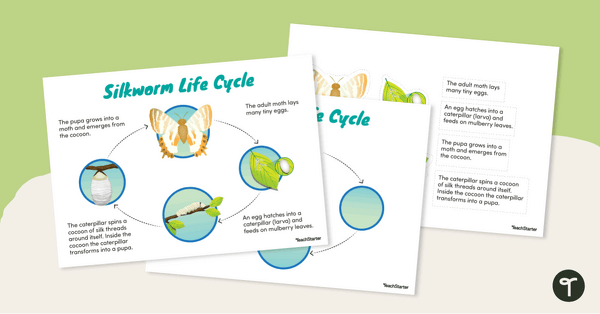
Silkworm Life Cycle - Cut and Paste Worksheet
Help your students concrete their understanding of silkworm life cycles with this interactive game.
- Plus Plan
Survival Tips Inquiry Task
An inquiry-based assessment task for students to demonstrate their understanding of how vegetation is used across Australia by Aboriginal and Torres Strait Islander peoples in a variety of different ways.
- Free Plan
Flood Vocabulary Task
A vocabulary task for students to use when demonstrating their understanding of the impact of floods in Australia.
- Plus Plan
Air Resistance Force Investigation
Use this engaging air resistance force experiment when teaching your students about air friction and the effect it has on the effectiveness of a parachute.
- Plus Plan
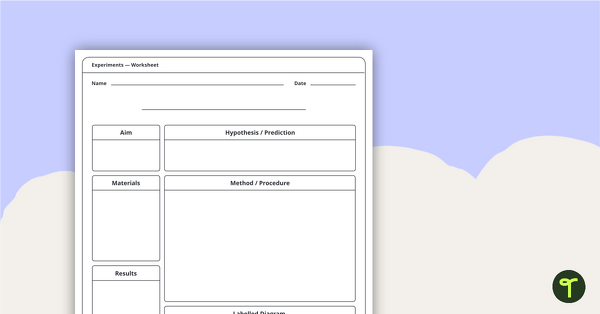
Science Experiment Recording Sheet
A recording sheet to use when completing a Science experiment.
- Free Plan
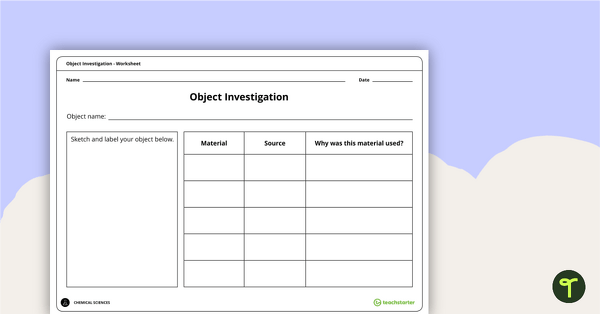
Object Material Investigation Worksheet
A worksheet for investigating the materials certain objects are made from.
- Plus Plan
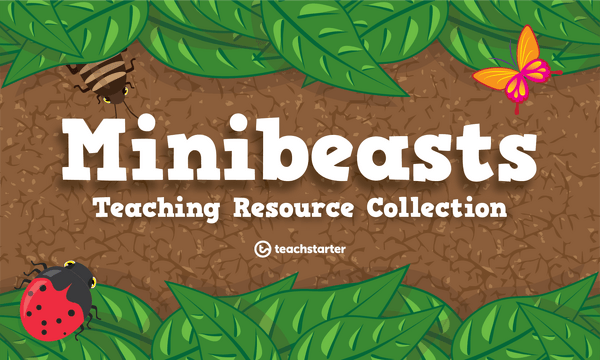
Minibeasts Weekly Lesson Pack
This extensive minibeast weekly lesson pack includes educational posters, classroom decorations, word wall templates, page templates and worksheets for you to mix and match with your class.
- Plus Plan
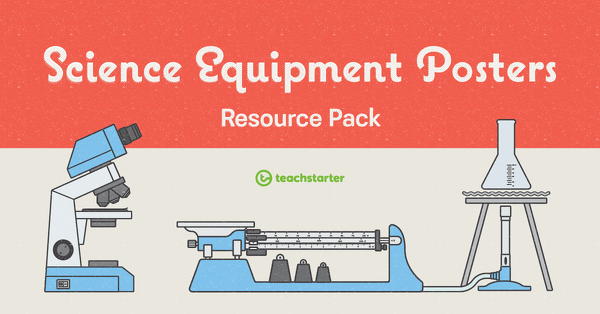
Science Equipment Poster Bundle for the Classroom
A poster resource pack containing a diagrams with labels showing the key parts of various pieces of scientific apparatus.
- Plus Plan
And Further On - Research Into the Environmental Impact of Certain Materials
A 60 minute lesson in which students will be introduced to a research task for them to undertake about a material of their choosing.
- Plus Plan
Now I Understand - Building a Solid Conclusion for an Experiment
A 60 minute lesson in which students will learn how to build solid scientific conclusions for experiments.
- Plus Plan
Science Experiment - Suck It Up!
A 60 minute lesson in which students will investigate materials and their absorptive properties through a scientific investigation.
- Plus Plan
What's the Use? - Developing a Hypothesis to Investigate
A 60 minute lesson in which students will learn how to develop an effective hypothesis for scientific investigations.
- Plus Plan
Freedom of Choice - Developing Scientific Lines of Questioning
A 60 minute lesson in which students will learn how to develop scientific lines of questioning to initiate a scientific investigation.
- Plus Plan
Fake Plastic Trees - A Demonstration Comparing Properties of Natural and Processed Materials
A 60 minute lesson in which students will compare the properties of natural and processed materials through a demonstration.
- Plus Plan
Plastic and Concrete - How Do People Use Processed Materials?
A 60 minute lesson in which students will investigate the ways humans produce and use processed materials.
- Plus Plan
Natural Science - How Do People Use Natural Materials?
A 60 minute lesson in which students will investigate the use of natural materials by humans throughout history.
- Plus Plan
Living in the Material World - Examining Natural and Processed Materials
A 60 minute lesson in which students will examine and understand the differences between natural and processed materials and their uses.
- Plus Plan
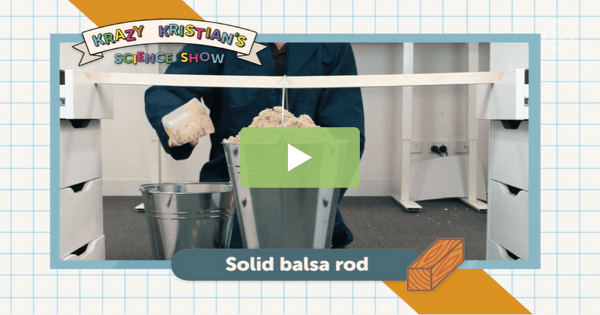
Natural and Processed Materials Video – Solid Wood vs Laminate
Explore natural and processed materials with this science experiment video perfect for your Year 4 science unit!
- Plus Plan
Material World Unit Plan
This Chemical Sciences unit investigates natural and processed materials. Demonstrations and experimental procedures are explored with particular attention given to the scientific method.
- Plus Plan
Vital Vegetation
A 60 minute lesson in which students will investigate the different ways that vegetation can be beneficial.
- Plus Plan
Exploring Plants
A 60 minute lesson in which students will investigate the importance of natural vegetation to animals and people.
- Plus Plan
Working Scientifically Knowledge Check
An assessment task in which students will demonstrate their knowledge and understanding of how to work scientifically.
- Plus Plan

What is a Fair Test? (Middle Years)
- Plus Plan
Electrostatic Force Video – Flying Spiders
Explore electrostatic forces with your students using this science demonstration video perfect for your Year 4 science unit!