Science
Science provides an empirical way of answering interesting and important questions about the biological, physical and technological world. The knowledge it produces has proved to be a reliable basis for action in our personal, social and economic lives. Science is a dynamic, collaborative and creative human endeavour arising from our desire to make sense of our world through exploring the unknown, investigating universal mysteries, making predictions and solving problems. Science aims to understand a large number of observations in terms of a much smaller number of broad principles. Science knowledge is contestable and is revised, refined and extended as new evidence arises.
The Australian Curriculum: Science provides opportunities for students to develop an understanding of important science concepts and processes, the practices used to develop scientific knowledge, of science’s contribution to our culture and society, and its applications in our lives. The curriculum supports students to develop the scientific knowledge, understandings and skills to make informed decisions about local, national and global issues and to participate, if they so wish, in science-related careers.
In addition to its practical applications, learning science is a valuable pursuit in its own right. Students can experience the joy of scientific discovery and nurture their natural curiosity about the world around them. In doing this, they develop critical and creative thinking skills and challenge themselves to identify questions and draw evidence-based conclusions using scientific methods. The wider benefits of this ‘scientific literacy’ are well established, including giving students the capability to investigate the natural world and changes made to it through human activity.
The ability to think and act in scientific ways helps build the broader suite of capabilities in students as confident, self-motivated and active members of our society.
- Plus Plan
Creating Oxygen Experiment
A 60 minute lesson in which students will investigate how plants make oxygen.
- Plus Plan
Living or Non-Living?
A 60 minute lesson in which students will identify the features of living and non-living things.
- Plus Plan
Are You Getting Hot or Cold?
A 60-minute lesson designed to summarise the physical changes that occur when things stretch, bend, twist, heat and cool.
- Plus Plan
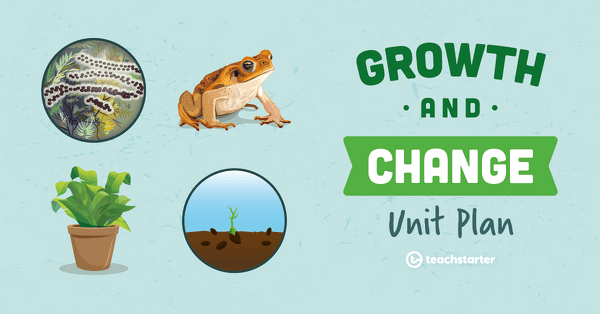
Changes, Changes Everywhere!
An assessment task in which students will demonstrate their knowledge and understanding of how living things grow and change.
- Plus Plan
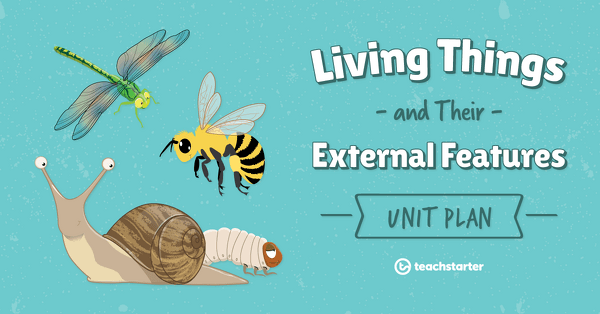
What is the Same and What is Different?
A 60 minute lesson in which students will compare the external features of small animals.
- Plus Plan
Science Experiment - Suck It Up!
A 60 minute lesson in which students will investigate materials and their absorptive properties through a scientific investigation.
- Plus Plan
Give Me Some Shade
A 60 minute lesson in which students investigate materials to determine how much shade they provide.
- Plus Plan
Observing Matter Changes
A 60-minute lesson in which students will investigate what happens when heat is added or removed from a substance.
- Plus Plan
Adding Heat
A 60-minute lesson in which students will investigate what happens when heat is applied to a range of solids.
- Plus Plan
Changing States
A 60-minute lesson in which students will observe how a change of state between solid and liquid can be caused by adding or removing heat.
- Plus Plan
What State?
A 60-minute lesson in which students will establish that matter can be classified as solid, liquid or gas.
- Plus Plan
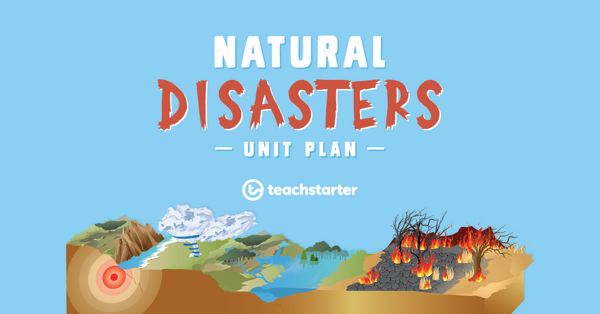
Natural Disasters Inquiry Task - Presenting
- Plus Plan
Natural Disasters Inquiry Task - Researching
- Plus Plan
Natural Disasters Inquiry Task - Introduction
- Plus Plan
Habitat Diorama - Assessment Task
An inquiry-based assessment task in which students will demonstrate an understanding of the four basic needs for living things.
- Plus Plan
Shelter Building Experiment
A 60 minute lesson in which students will investigate how a shelter can protect a living thing.
- Plus Plan
Living Things Need Shelter
A 60 minute lesson in which students will identify why living things need shelter.
- Plus Plan
Making a Mini Water Cycle Experiment
A 60 minute lesson in which students will investigate how the water cycle works.
- Plus Plan
Living Things Need Water
A 60 minute lesson in which students will investigate why living things need water.
- Plus Plan
Living Things Need Food
A 60 minute lesson in which students will investigate how plants and animals get energy to survive.
- Plus Plan
Geological Natural Disasters
A 60 minute lesson in which the students will investigate the causes and effects of geological natural disasters.
- Plus Plan
The Layers of the Earth
A 60 minute lesson in which students will identify the characteristics of the earth's internal layers.
- Plus Plan
Living Things Need Oxygen
A 60 minute lesson in which students will identify why living things need oxygen.
- Plus Plan
What Do Living Things Need?
A 60 minute lesson in which students will identify the four basic needs of living things.
- Plus Plan
Introduction to Adaptations
- Plus Plan
Terrific Twisting
A 60-minute lesson designed to explain how certain materials can be twisted.
- Plus Plan
Stretch, Bend and Twist – I Think You've Got the Gist
A 60-minute lesson designed for students to use their knowledge of materials to predict and identify whether materials stretch, bend or twist.
- Plus Plan
What is Light?
A 60 minute lesson in which students will research the concept of light and generate a list of statements that can be tested.
- Plus Plan
Assessment: Chemical Science – Clever Changes
A 30-minute assessment designed to assess students' ability to describe physical changes in materials.
- Plus Plan
The Daytime Sky
- Plus Plan
Sounds of Change
A 60 minute lesson in which students will investigate if the pitch and volume of sounds can be changed.
- Plus Plan
Interpreting the Night Sky