Types of Graphs Teaching Resources
Teach your students the different types of graphs with printable graphing activities, worksheets, games and more data activities created by teachers for teachers like you!
Designed to align with the Australian maths curriculum, the printables and digital activities in this collection can help you not just introduce each type of graph but also give your students practise using each one to represent and analyse data on a variety of graph types.
Whether it's your first year covering the various types of graphs in your math classes, or you're just looking for some handy tips and tricks, the Teach Starter teacher team has you covered. Read on for a primer that covers some of the main graph types plus a handy way to explain what a graph is to your students.
What Is a Graph? A Kid-Friendly Definition
Before you can start talking about the various graph types, it helps to explain what a graph is. That's where our definition could come in handy!
A graph is a visual way to show data. Graphs help make information easier to understand and analyze.
What Are the Different Types of Graphs?
There is a long list of different types of graphs that mathematicians use to represent numbers and other forms of data. So which graph types do your students need to know about right now?
Let's take a look at the more common graphing types we use in primary school maths classes:
1. Bar Graphs or Column Graphs
A bar graph or a column graph is a type of graph that uses rectangular shapes called bars or columns to represent quantities or values of data. Bars on a bar graph will be different heights or different lengths to represent the quantity or value.
This makes it easy to compare the values.
2. Line Graphs
A line graph uses points that are connected by lines to show the relationship between two sets of data.
Line graphs are helpful when we want to see changes in data sets over a period of time.

3. Pictographs
The picto in pictographs refers to pictures, which are used in this graph type to represent data.
4. Pie Charts
Did you know that a graph is a kind of chart? Although pie charts may not be called 'pie graphs,' these circles divided by lines to resemble slices of pie are most definitely a type of graph.
Pie charts can be used to represent parts of a whole or categories of a whole, and they help us understand the proportion or percentage of each category.
- Plus Plan
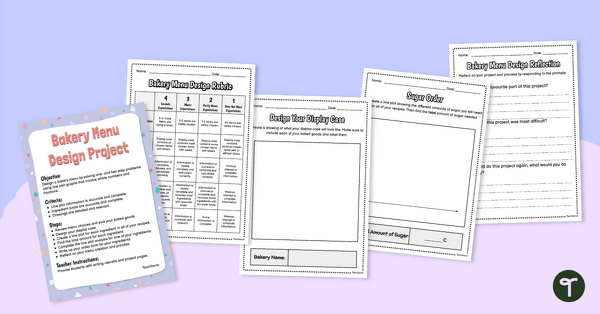
Line Plot Project: Bakery Menu Design
Make learning about maths as sweet as your students' favourite treats with this project based learning line plots exercise!
- Plus Plan
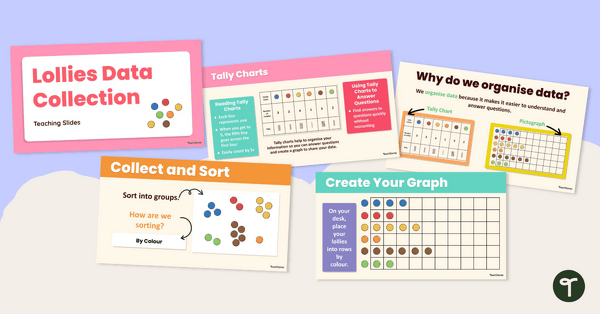
Lollies Data Collection Instructional Slide Deck
Explore this sweet-themed data collection teaching presentation to teach students the basics of recording data and creating a pictograph.
- Plus Plan
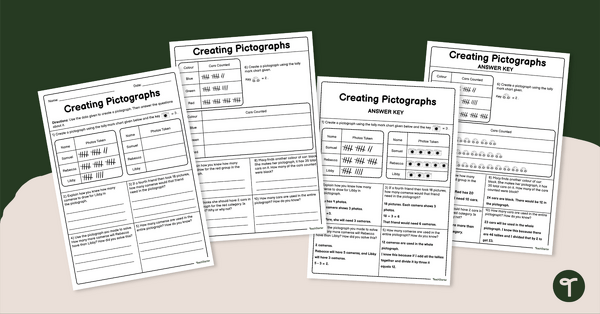
Creating Pictographs Worksheet
Use this engaging worksheet to practice creating and reading pictographs.
- Plus Plan
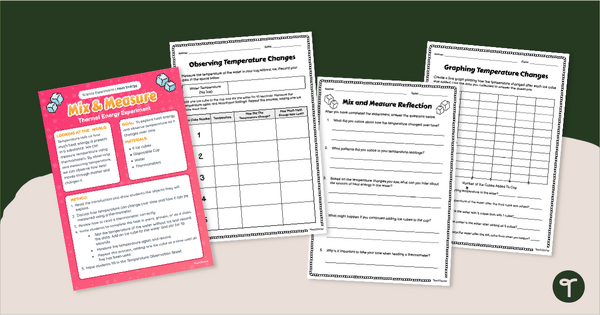
Mix & Measure Temperature Experiment
Explore temperature changes and practise reading a thermometer with our Mix and Measure Temperature Experiment.
- Plus Plan
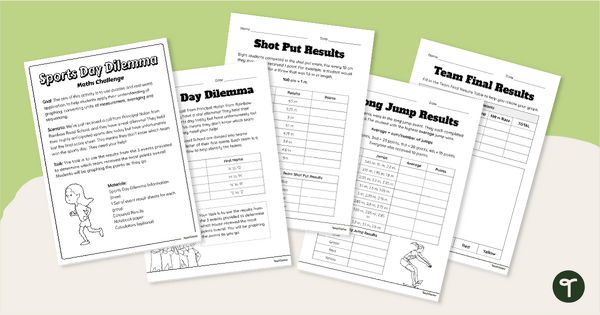
Sports Day Dilemma - Metric Conversions Maths Task
Engage students with a real-world application of measurement conversions with Sports Day Dilemma, a metric conversion maths task!
- Plus Plan
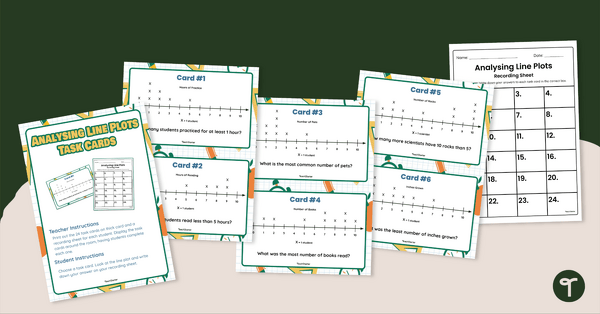
Analysing Dot Plots Task Cards
Strengthen data analysis skills by interpreting dot plots with this set of 24 task cards.
- Plus Plan
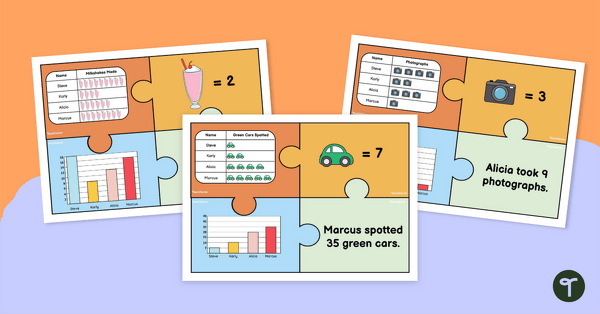
Pictograph Puzzles
Practise reading and interpreting pictographs with these fun puzzles which require students to match pictographs with other data displays with matching data.
- Plus Plan
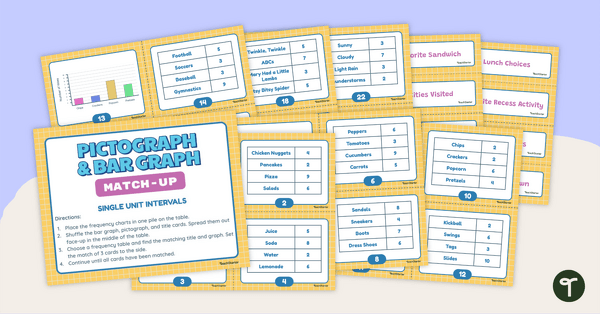
Pictograph and Bar Graph Match-Up (Single-Unit Intervals)
Use data analysis skills to match frequency tables with a corresponding bar graph or pictograph.
- Plus Plan
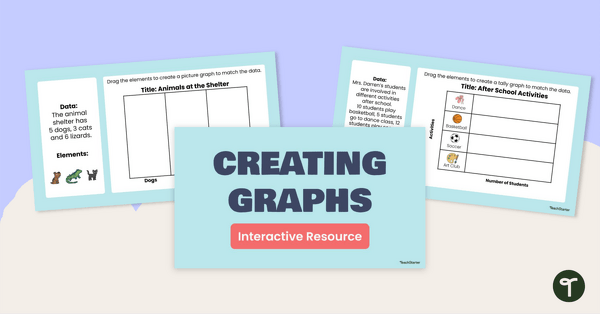
Creating Graphs Interactive Activity
Share this interactive activity with your students to help them practise using digital tools to create graphs from raw data.
- Plus Plan
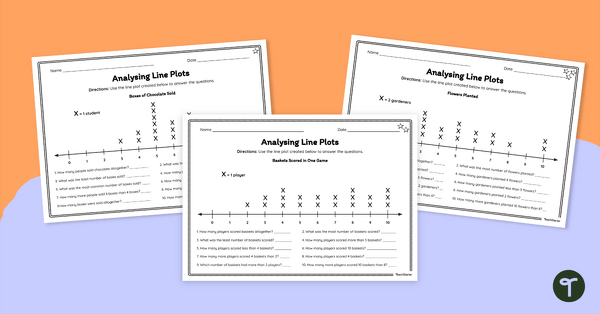
Analysing Line Plots – Differentiated Worksheets
Empower your students to become proficient data interpreters with this set of differentiated line plot worksheets.
- Plus Plan
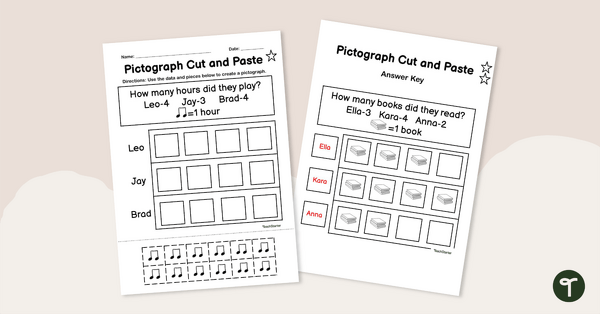
Pictograph Cut and Paste Worksheet
Use this fun cut-and-paste worksheet to consolidate student understanding of pictographs, and encourage them to practise their fine motor skills.
- Plus Plan
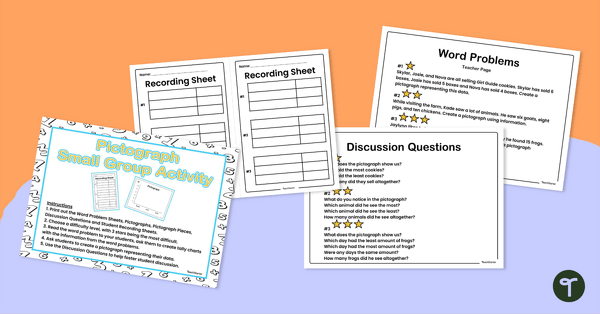
Create a Pictograph - Small Group Activity
Introduce the concept of a pictograph, and teach students how to create simple pictographs based on data from in a word problems.
- Plus Plan
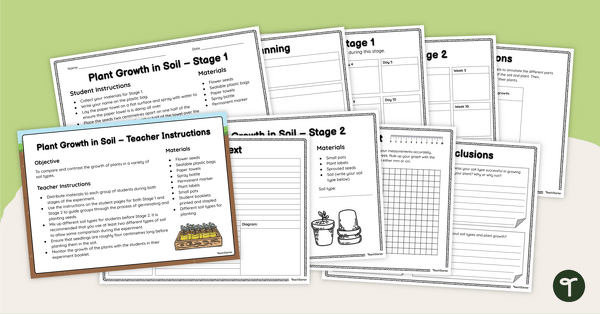
Plant Growth in Soils – Science Experiment
Explore how plants grow in different types of soil with this science experiment perfect for primary school science lessons.
- Plus Plan
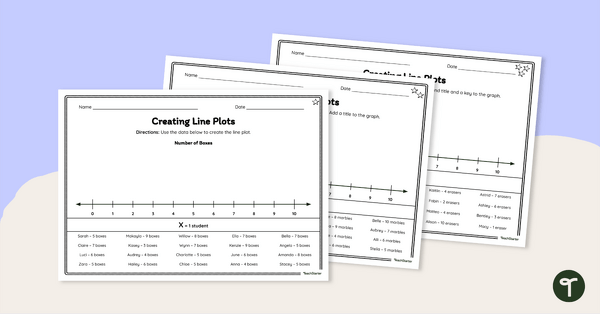
Differentiated Line Plot Worksheet
Guide your students to represent data with this differentiated line plot worksheet.
- Plus Plan
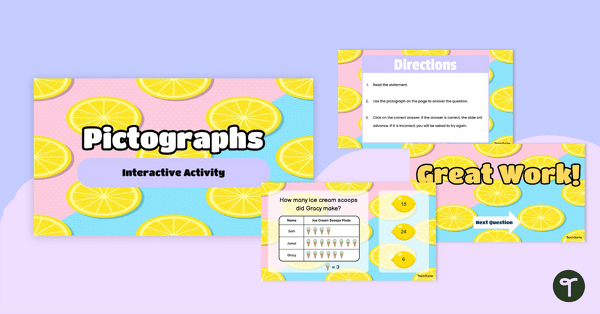
Pictographs - Interactive Activity
Use this fun and engaging interactive activity to aid students. in practicing their pictograph interpretation skills.
- Plus Plan
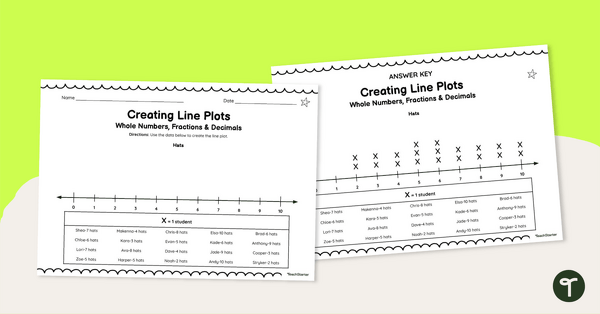
Creating Line Plots (With Whole Numbers, Fractions and Decimals) Worksheets
Help your students master data representation with this series of leveled worksheets for creating line plots.
- Plus Plan
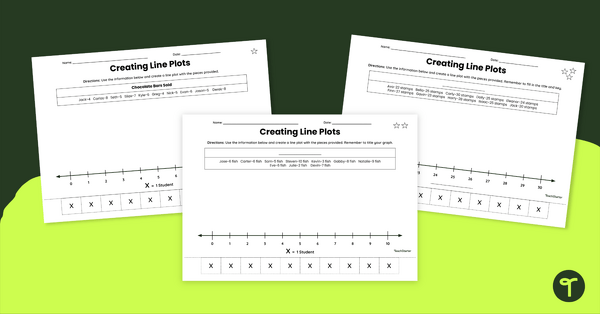
Creating Line Plots Differentiated Cut and Paste Worksheet
Guide students to create line plots with this differentiated cut and paste worksheet.
- Plus Plan
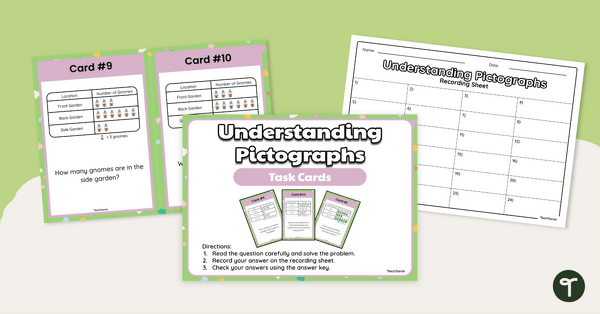
Understanding Pictographs - Task Cards
Use this set of task cards to practise reading and interpreting pictographs and bar graphs