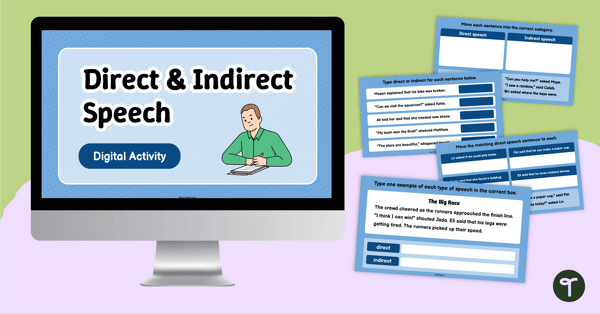
Teach direct and indirect speech with this interactive drag-and-drop activity that helps students identify, sort and convert dialogue and reported speech.
Use a Digital Activity to Teach Direct and Indirect Speech
Developing a solid understanding of direct and indirect speech helps students improve their reading comprehension, writing accuracy and understanding of author choices. It also supports students as they move towards more sophisticated narrative and informational writing. However, many students struggle to explain the difference, mix up punctuation or accidentally change the meaning when converting between the two. That’s why repeated exposure is so important!
This direct and indirect speech activity is an entirely digital resource featuring 11 different interactive slides that make practice engaging and accessible for young learners. It provides meaningful instruction while also encouraging student participation.
Here’s a snapshot of some of the exercises you’ll find within this digital direct and indirect speech activity:
- Sort the direct and indirect speech examples.
- Use the paint tool to colour-code the direct and indirect speech examples.
- Identify whether a sentence is direct or indirect speech.
- Match the direct speech to its indirect equivalent (and vice versa)
- Find and type examples of direct and indirect speech
- And more!
This digital resource for teaching direct and indirect speech downloads as a Microsoft PowerPoint or Google Slides file. Answers can be downloaded as a separate PDF file.
Creative Ways to Use This Direct Speech and Indirect Speech Resource
This resource can be adapted in simple ways to increase movement, discussion and participation to ensure all students stay involved and engaged. Here are a few simple ideas you might like to consider:
- Talk Before You Drag! – Before dragging or typing the answers to each activity, have the students discuss possible answers with a partner. Make sure they also identify the clues that helped them come to their decision.
- Class Vote – Ask students to vote on where each example belongs before dragging it into place. This often sparks useful conversations when students disagree and need to explain their thinking.
- Student as the Teacher – Have students take turns ‘driving’ the activity. This keeps interest levels high, particularly if teachers choose students who are demonstrating high engagement to be the ‘drivers’!
Direct Speech vs Indirect Speech: Download and Get Started Today!
Use the Download button to access your preferred version of this resource. If you select the Google Slides file, you will be prompted to make a copy before accessing it.
This resource is quick to download and easy to implement, making it ideal for busy teachers who need high-quality literacy activities without extensive preparation.
Please note that this resource functions in Edit mode only, not in Presentation mode.
This resource was created by Lindsey Phillips, a teacher and a Teach Starter collaborator.
More Resources for Teaching Reported and Direct Speech
Don’t navigate away just yet! Click below to explore more teacher-created, curriculum-aligned resources to use when teaching your students about reported and direct speech.
teaching resource
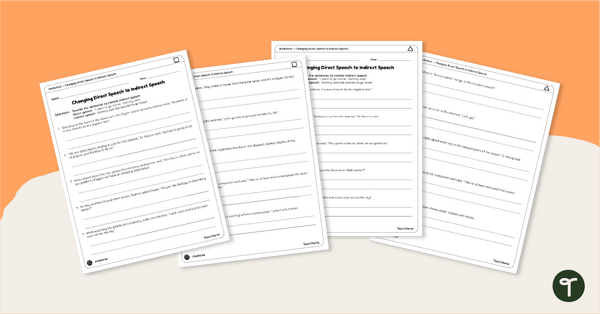
Direct and Indirect Speech Worksheets
Use these direct and indirect speech worksheets to help students confidently identify, convert and apply reported and spoken speech.
teaching resource
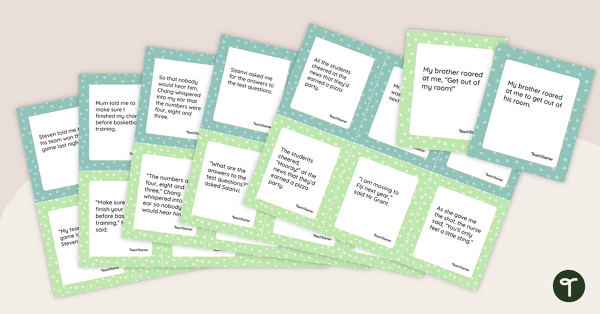
Direct and Indirect Speech Matching Game
Investigate the differences between direct and indirect speech with this match-up activity.
teaching resource
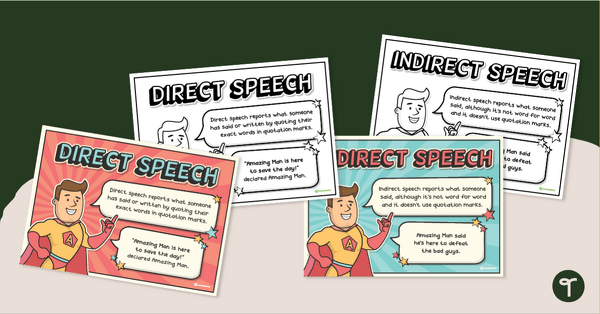
Direct and Indirect Speech Grammar Posters
Help students to learn what both direct and indirect speech entails as well as providing examples on how they can use it themselves with our direct and indirect speech posters.



0 Comments
Write a review to help other teachers and parents like yourself. If you'd like to request a change to this resource, or report an error, select the corresponding tab above.