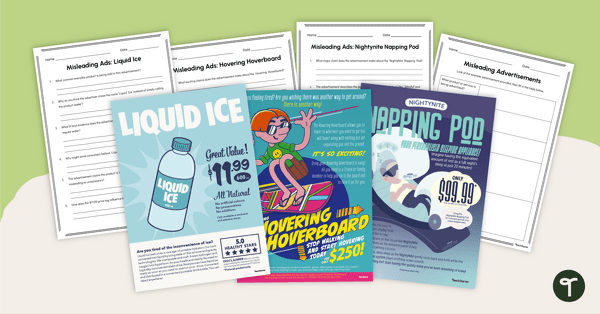
Explore misleading advertising through three engaging fake advertisements with accompanying worksheets that help students identify deceptive techniques, analyse persuasive language, and become more informed consumers.
Misleading Advertising: Teaching Students to Think Critically About Marketing Messages
How many times have you seen warnings or disclaimers in advertisements like “Additional fees apply”, “Results may vary” or “Actual product may differ from the image shown”? Most adults have learned to be vary when presented with these statements in advertising, but children may not yet have the critical reading skills to understand what these disclaimers really mean. Learning about misleading advertising is an important step in teaching children to become more critical thinkers by questioning exaggerated claims, identifying persuasive techniques, and evaluating information before accepting it as true.
This resource has been created by our team to help your students practise this key skill. It features three professionally designed fake advertisements, each created to showcase different examples of misleading marketing techniques. Accompanying worksheets guide students through the process of analysing the advertisements, identifying deceptive elements, and discussing how advertisers influence consumer choices.
The three misleading advertisements featured in this resource are:
- Liquid Ice
- The Hovering Hoverboard
- The Nightynite Napping Pod
This resource downloads in a variety of file formats for your convenience:
- Advertisements PDF – Colour
- Advertisements PDF – Black and White
- Worksheets PDF – Black and White
- Worksheets Google Slides – Black and White
Please select your preferred files from the dropdown menu when downloading.
Using Deceptive Advertising to Build Critical Reading Skills
In today’s content-saturated society, critical reading skills are more important than ever. These deceptive advertising examples provide students with authentic opportunities to examine texts that contain misleading claims and hidden information, prompting them to look beyond the surface of a text and think carefully about the messages being communicated.
By engaging with this resource, your students will:
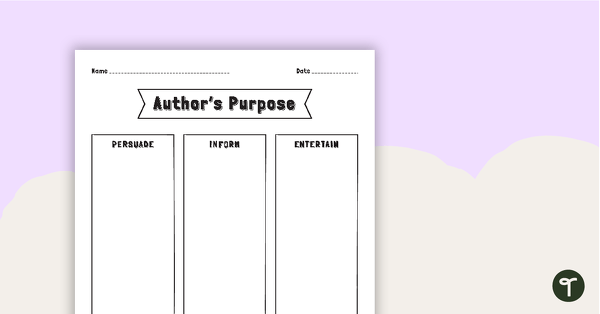
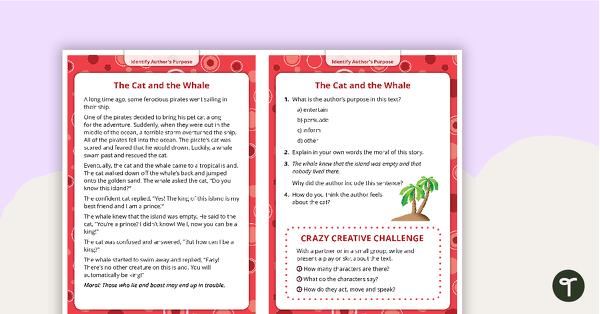
- Identify the author’s purpose by considering what the advertiser wants the audience to believe, feel or do.
- Evaluate evidence and claims by questioning whether the advertisement provides sufficient proof to support its promises.
- Recognise persuasive techniques such as exaggeration, emotional appeals, catchy slogans and selective information.
- Make informed judgements about whether information is trustworthy, reliable or potentially misleading.
- Develop consumer literacy skills that help them make thoughtful decisions when encountering advertising in everyday life.
Your students will enjoy ‘playing detective’ as they uncover the tricks used in each advertisement!
Instantly Download These Misleading Advertisements with Accompanying Worksheets
These misleading advertisements are designed to save teachers valuable preparation time while delivering meaningful learning experiences. Simply download your preferred version of the resource, print the advertisements and worksheets, and incorporate them into your lessons. (Please note that you will be required to make a copy of the Google Slides file on your personal drive before accessing it.)
With clear instructions, engaging examples and structured analysis activities, this resource makes it easy to support students as they learn to recognise misleading advertising techniques and become more thoughtful, informed consumers.
As this resource contains answer pages, we recommend printing one copy of the entire file, then selecting and removing the pages you wish to photocopy for the students.
This resource was created by Kaylyn Chupp, a teacher and Teach Starter collaborator.
Complement This Misleading Ads Pack with Even More Resources
Click below to browse and download more teacher-created, curriculum-aligned resources to use when teaching your students about the persuasive techniques used in advertising.
teaching resource
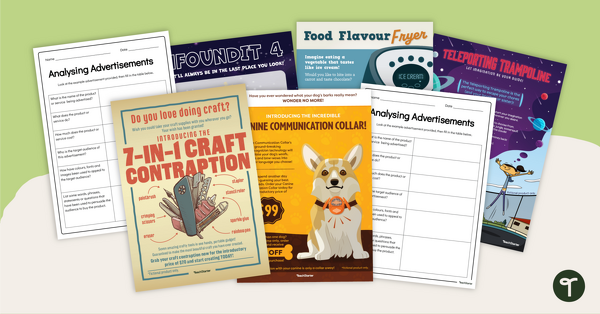
Advertisement Examples and Analysis Worksheets
Use these advertisement examples with accompanying analysis worksheets to teach your students about the purpose, structure and language features of product advertisements.
teaching resource
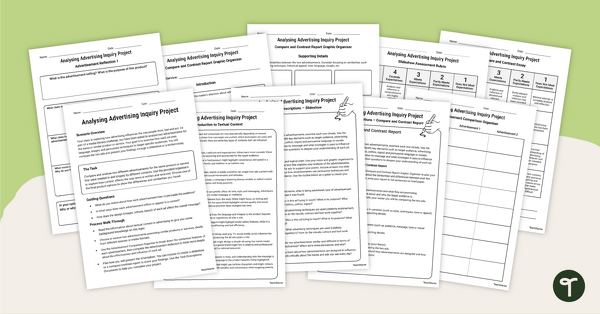
Analysing Advertisements Inquiry Project
Unlock critical thinking skills by analysing advertisements in different contexts with this engaging inquiry-based project designed to deepen students’ media literacy.

teaching resource
Critical Literacy Reading Task – To Buy or Not to Buy?
Teach critical reading skills with this engaging reading comprehension project that helps students evaluate texts and make evidence-based decisions.


0 Comments
Write a review to help other teachers and parents like yourself. If you'd like to request a change to this resource, or report an error, select the corresponding tab above.