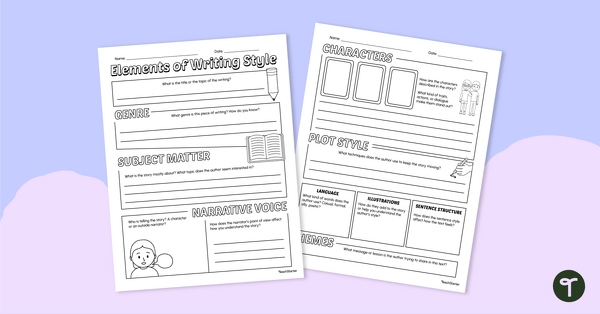
Get your class exploring writing style with this two-page graphic organiser, which enables students to track an author’s choices throughout a text.
Easily Identify an Author’s Writing Style
An author’s writing style is the unique way they communicate ideas, shaped by choices in language, sentence structure, narrative voice and literary techniques. The ability to identify an author’s style can deepen students’ reading comprehension by allowing them to notice patterns, interpret meaning more deeply and understand how those choices influence the reader’s experience.
This two-page graphic organiser has been designed by our team to help students explore writing style while reading. It contains clearly structured spaces and guiding prompts, allowing students to consider how the author’s stylistic choices are reflected in a text’s setting, characters, storyline and themes.
Some of the prompts on this writing style graphic organiser include:
- What genre is this piece of writing?
- How are the characters described in the story?
- What techniques does the author use to keep the story moving?
- What kind of words does the author use?
- How does the sentence style affect how the text feels?
By recording their observations while engaging with a text, students can begin to see patterns in how authors build meaning and atmosphere. This not only strengthens reading comprehension but also inspires students to reflect on how they might apply these techniques in their own writing.
Analyse Style of Writing Through Multiple Reading Experiences
This two-page graphic organiser can be used to promote considered, in-depth discussions about how the style of writing shapes literary texts. Here are some ideas for using this resource in your English lessons:
- Whole-Class Reading – Use the graphic organiser to discuss and analyse the writing style of a novel or other text that has been read as a class. Project the graphic organiser onto your screen, then work as a class to complete each section.
- Small Group Reading – During guided reading sessions, have students fill out the graphic organiser while reading a selected text or passage. Once completed, bring the groups together to compare responses and highlight different perspectives.
- Independent Reading – Encourage students to track the writing style in a novel or picture book they’re reading on their own. Students could then use the information gathered to share insights about the author’s style with the class.
Download to Explore Different Writing Styles
This writing styles graphic organiser downloads as an easy-print PDF or an editable Google Slides file. Use the dropdown arrow on the Download button to choose your preferred version. Please note that you will be prompted to make a personal copy of the Google Slides file.
For sustainability purposes, please consider printing this two-page resource double-sided.
This resource was created by Brittany Collins, a teacher and a Teach Starter collaborator.
More Resources for Exploring Literature
Click below to browse more teacher-created, curriculum-aligned resources to use when delving into literature with your students.
teaching resource
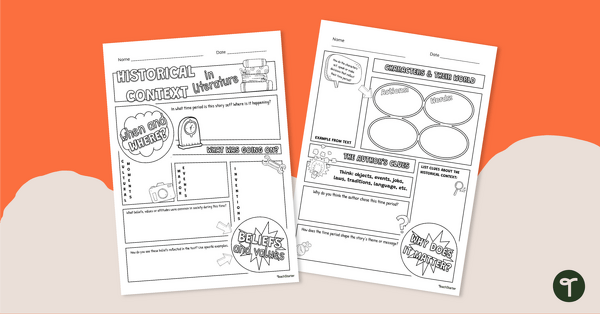
Historical Context in Literature Graphic Organiser
Support students to explore historical context in literature with this two-page graphic organiser that helps them record key historical details from a piece of literature.
teaching resource
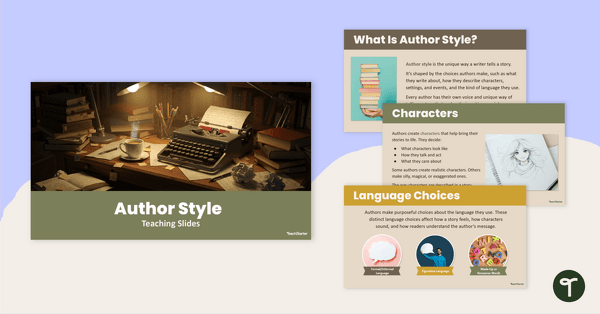
Author Style Teaching Slides
Teach your students about author style with this engaging slide deck that helps students understand the different elements that make up an author’s unique voice.
teaching resource
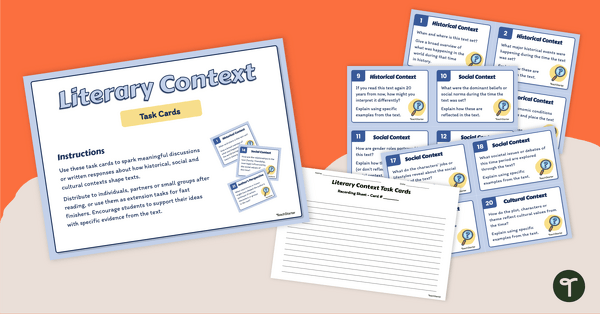
Literary Context Task Cards
Explore literary context using this set of 36 engaging task cards designed to help students analyse the historical, social and cultural influences behind the texts they read.



0 Comments
Write a review to help other teachers and parents like yourself. If you'd like to request a change to this resource, or report an error, select the corresponding tab above.