VC2MFN03
quantify and compare collections to at least 20 using counting and explain or demonstrate reasoning
- establishing the language and process of counting, and understanding that each object must be counted only once, that the arrangement of objects does not affect how many there are and that the last number counted answers the question of ‘How many?’; for example, saying numbers in sequence while playing and performing actions
- using counting to compare the size of 2 or more collections of like items to justify which collection contains more or fewer items
- using counting and one-to-one correspondence to quantify the number of items required for a purpose; for example, when asked to collect enough scissors for each member of their group to have a pair, counting each member and using the total count to know how many to collect
- discussing how different cultures may have alternative ways of representing the count; for example, discussing how some people of the Asia region use an abacus or Chinese hand gestures
- using body-tallying that involves body parts and one-to-one correspondence from counting systems of Aboriginal and/or Torres Strait Islander Peoples to count to 20
- Plus Plan
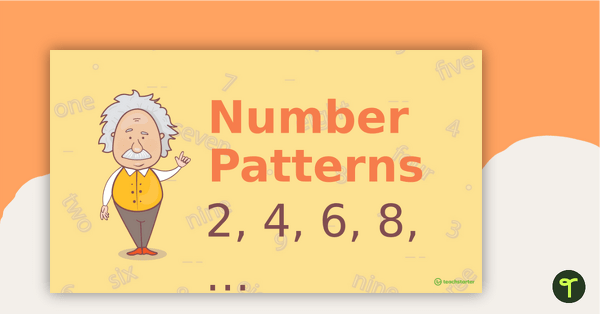
Number Patterns PowerPoint
A 12 page editable PowerPoint presentation to use as part of a numeracy lesson when teaching place value and number patterns to younger students.
- Plus Plan
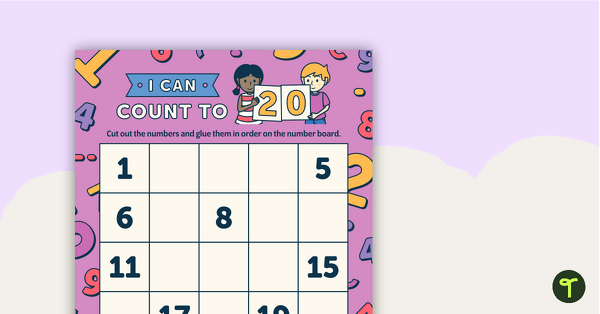
Counting to 20 Activity
Use this number activity to consolidate your students’ knowledge of numbers 1-20.
- Plus Plan
Maths Resource Pack for Parents - Place Value
A comprehensive resource pack for parents and carers to help Foundation to Year 2 children with place value.
- Plus Plan
Identifying Numbers
A 60 minute lesson in which students will identify the numbers from 0 to 10.
- Plus Plan
Exploring Numbers Unit Plan
This Mathematics unit addresses a range of number concepts involving identifying, sequencing and representing.
- Plus Plan
Representing Numbers - Assessment
Use these resources and more to asses your students' progress in this unit.
- Plus Plan
Number Stories and Rhymes
A 60 minute lesson in which students will understand how number stories and rhymes can help with counting.
- Plus Plan
Number Patterns
A 60 minute lesson in which students will identify number patterns to 20.
- Plus Plan
Identifying Missing Numbers
A 60 minute lesson in which students will sequence the numbers from 1 to 20 and identify missing numbers.
- Plus Plan
Sequencing Numbers
A 60 minute lesson in which students will sequence the numbers from 1 to 10.
- Plus Plan
Surrounded by Numbers
A 45 minute lesson in which students will identify numbers in their environment.