VC2S2I01
experiences can be used as a basis for posing questions to explore observed patterns and relationships, and to make predictions
- asking questions about everyday objects and the materials these are made from, such as ‘What can shoes be made from?’ and exploring materials that can be used to make shoes (e.g. leather, wood, fur, plastic) and materials that cannot be used to make shoes (e.g. glass)
- asking questions that can be explored, such as how animals meet their needs in particular places: ‘Where does it shelter? Where does it get water from?’
- posing questions to explore patterns and relationships about the appearance or position of celestial objects in space across time, such as ‘I wonder if the Moon will look the same tomorrow or next week as it does today?’
- making predictions before fieldwork, such as about which plants and animals might be observed in the school grounds
- making predictions about explorations, such as ‘I think a plant will die if it doesn’t get enough water’
- making predictions based on experience, such as about what might occur when tissue paper is pulled with different amounts of force
- Plus Plan
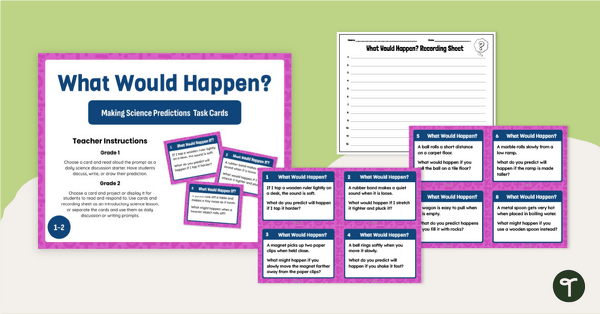
What Would Happen? Making Science Predictions Activity Cards
Read, think, and make scientific predictions in the classroom with a set of printable Science Prediction Task Cards for early and middle-primary students.
- Plus Plan
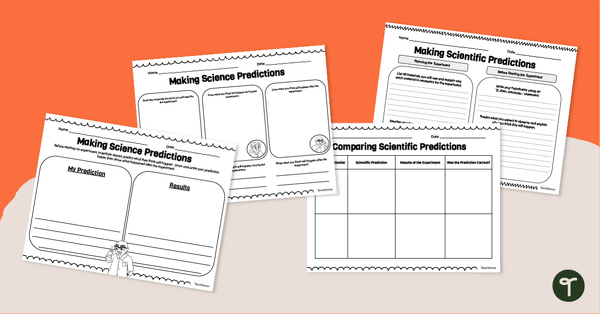
Making Predictions in Science - Worksheets (Differentiated)
Introduce your students to making predictions in science with a set of differentiated Scientific Prediction Worksheets.
- Plus Plan
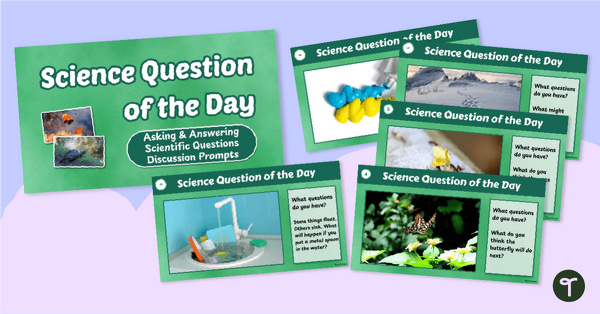
Science Question of the Day Discussion Prompts
Teach your students to ask questions, observe the world, and make scientific predictions with our Science Question of the Day Discussion Prompt Slide Deck.
- Plus Plan
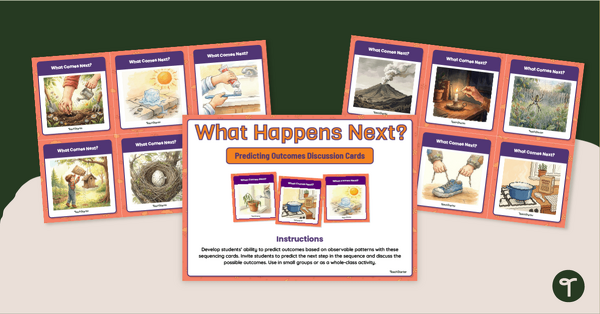
What Happens Next? Predicting Outcomes Activity Cards
Introduce your students to scientific thinking and predicting steps in a sequence with printable Predicting Outcomes Activity Cards.
- Plus Plan
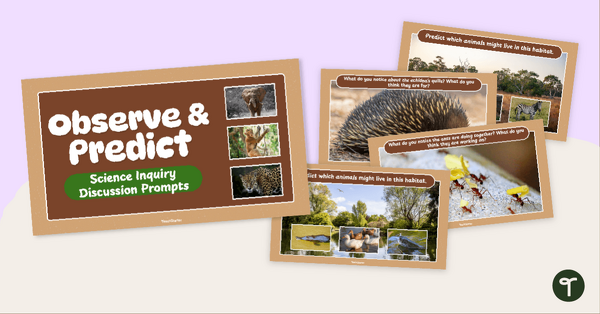
Science Inquiry Discussion Prompts - The Natural World
Practise making observations and scientific predictions about the natural world with engaging Science Inquiry Discussion Prompts.
- Plus Plan
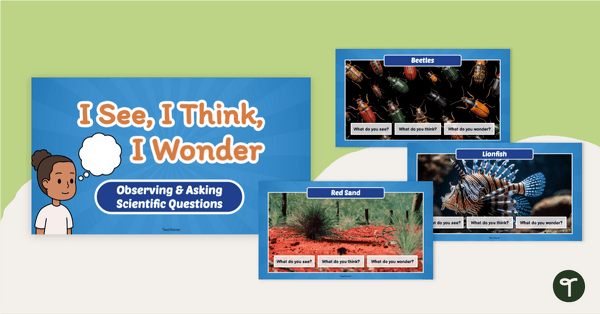
I See, I Think, I Wonder - Science Inquiry PowerPoint
Teach students to ask scientific questions, make observations, and inspire discussions with an engaging ‘I See, I Think, I Wonder’ Science Inquiry Slide Deck.
- Plus Plan
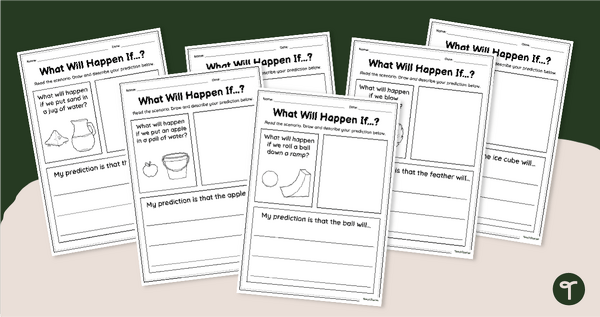
'What Will Happen?' Science Prediction Worksheet Pack
Practise making scientific predictions with your little learners using a set of printable Science Prediction Worksheets.
- Plus Plan
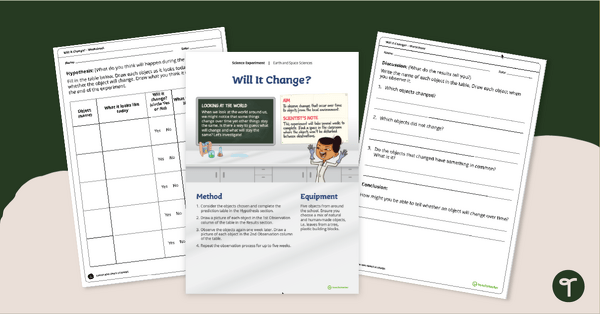
Science Experiment - Will It Change?
A science investigation in which the students observe changes that occur to various objects over time.
- Plus Plan
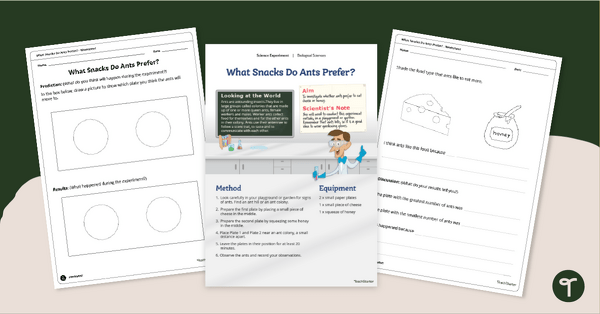
Science Experiment - What Snacks Do Ants Prefer?
Teach your early years students how to make scientific predictions and observations with an engaging hands-on science experiment.
- Plus Plan
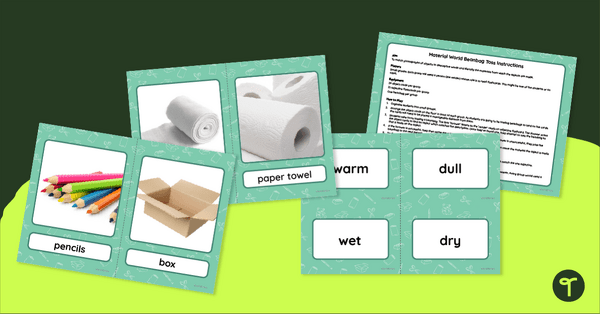
Describing Properties of Materials Beanbag Toss Game
Learn about the properties of materials and how to describe them with an exciting beanbag toss game.
- Plus Plan
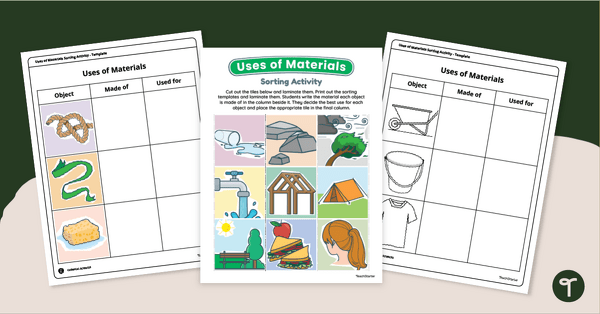
Uses of Materials Sorting Activity
Explore the materials objects are made of with a fun sorting activity for students.
- Plus Plan
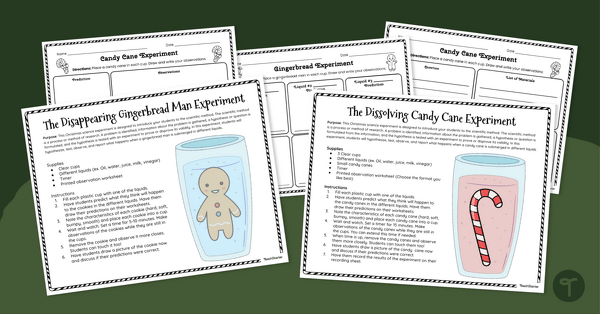
Christmas Science Experiments
Perform Christmas Science Experiments and teach your students about the scientific method with a set of two printable Christmas Science activities.
- Free Plan
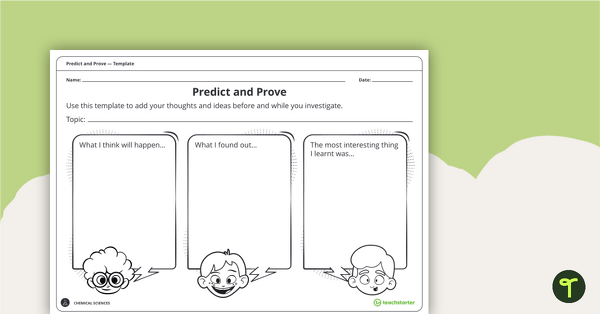
Predict and Prove – Template
A template to help introduce making a hypothesis before starting an investigation.
- Plus Plan
Properties of Materials Unit Plan
This Chemical Sciences unit investigates the observable properties of materials. Descriptive vocabulary is explored as well as the suitability of materials for different purposes.
- Plus Plan
Identifying Types of Materials
A 60 minute lesson in which students identify the material objects are made of and sort them in various ways.
- Plus Plan
Properties of Materials
A 60 minute lesson in which students develop an understanding of the properties of materials that make them useful for specific purposes.
- Plus Plan
Living Things and Their Needs Unit Plan
This Science unit covers a range of concepts relating to the basic needs of living things.
- Plus Plan
A Mixture of Materials
A 60 minute lesson in which students analyse objects made of different materials and explain why those materials were used based on their properties.
- Plus Plan
Choosing Materials That Work!
A 60 minute lesson in which students understand that some materials are more appropriate to use for certain objects or products than others based on the properties they possess.
- Plus Plan
Sorting Scientists
A 60 minute lesson in which students investigate and sort materials based on their properties.
- Plus Plan
Describing Materials
A 60 minute lesson in which students explore the properties of materials and develop vocabulary to describe them.
- Plus Plan

Shelter Building Experiment
A 60 minute lesson in which students will investigate how a shelter can protect a living thing.