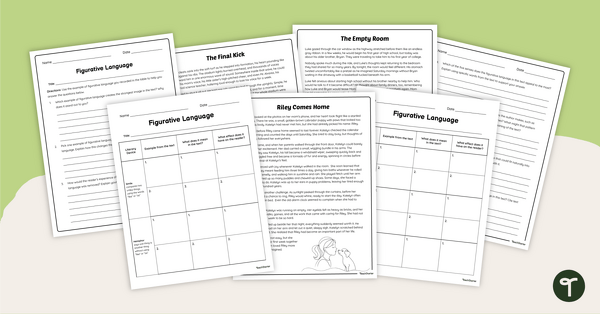
Explore figurative language in literature with engaging reading passages and targeted worksheets that help students identify, analyze and explain how authors use figurative devices to create meaning and impact.
What Is Figurative Language in Literature?
Understanding figurative language (and why authors use it!) is an important step in helping students move beyond literal comprehension. Figurative language allows writers to paint vivid pictures, create strong emotions and communicate ideas in memorable ways. When students learn to recognize and interpret these language features, they become more confident readers who can engage with texts on a deeper level.
This resource has been created by our team to provide your students with multiple opportunities to identify examples of figurative language and analyze their purpose in authentic text passages. It features:
- Three age-appropriate texts containing various examples of figurative language that have been used deliberately to achieve specific purposes
- A table where students can record examples of simile, metaphor, personification, hyperbole and idiom used in the focus text
- Two pages of analysis questions that focus on how the figurative language is used and how it affects the experience of the reader
- A handy reference list of all the figurative language examples used in each of the three passages
Students can work through all three texts over a series of lessons. Because of their generic nature, the recording table and analysis questions can also be applied to any text that contains figurative language.
The Benefits of Exploring Figurative Language in Literature
Developing an understanding of figurative language in literature helps students build a range of transferable literacy skills that extend well beyond the study of figurative devices. As students engage with the passages and analyze how authors use language to create meaning, they strengthen their ability to interpret texts thoughtfully and communicate more effectively in their own writing.
By engaging with this resource, your students will fine-tune key literacy skills, such as:
- Reading beyond the literal meaning of a text and making deeper interpretations.
- Supporting and justifying their ideas with evidence from a text.
- Analyzing how authors use language choices to influence readers.
- Explaining how specific words and phrases contribute to meaning and mood.
- Recognizing effective writing techniques that can be applied in their own work.
Download to Explore Examples of Figurative Language
If you’re looking for a practical way to strengthen your students’ understanding of figurative language in literature, this resource is ready to download and use immediately!
Use the Download button above to access your preferred version of this worksheet pack. (Note: You will be prompted to make a copy of the Google Slides template on your personal drive before accessing it.)
For sustainability purposes, please consider printing this worksheet pack double-sided.
This resource was created by Tanya Bailey, a teacher in South Carolina and a Teach Starter collaborator.
More Resources for Teaching Types of Figurative Language
If you’re keen to explore more teacher-created, curriculum-aligned resources for teaching figurative language, then Teach Starter has you covered. Click below to access more time-saving activities for your ELA lessons!
teaching resource
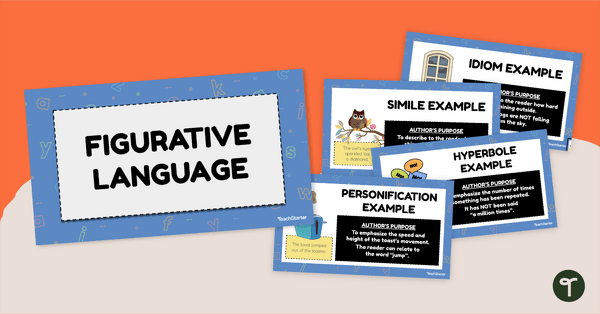
Figurative Language PowerPoint
Download this figurative language PowerPoint to teach your students how authors use figurative language to create meaning and engage readers.
teaching resource
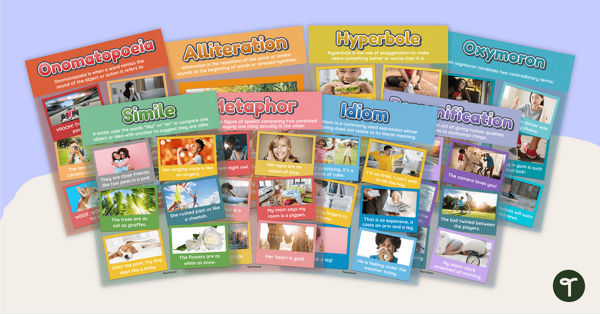
Figurative Language Anchor Charts
Display the types of figurative language with a set of printable figurative language anchor chars.
teaching resource
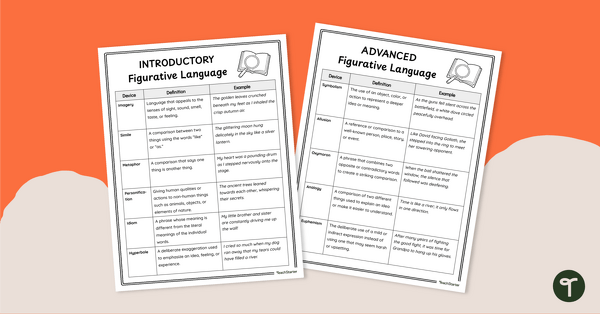
List of Figurative Language
Download this list of figurative language to help your students recognize, interpret and use figurative language when reading and writing.

0 Comments
Write a review to help other teachers and parents like yourself. If you'd like to request a change to this resource, or report an error, select the corresponding tab above.