ELAR 6.9(D)
describe how the author's use of figurative language such as metaphor and personification achieves specific purposes;
- Plus Plan
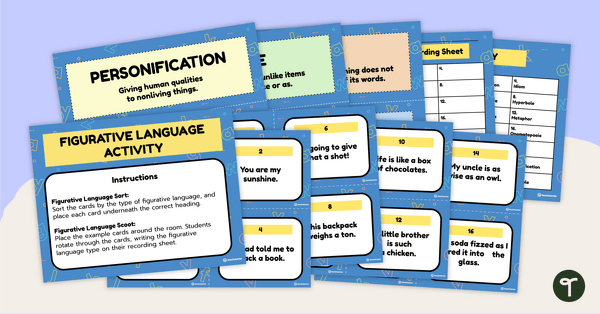
Figurative Language Sorting Activity
Explore figurative language in context with this set of 28 sorting cards.
- Plus Plan
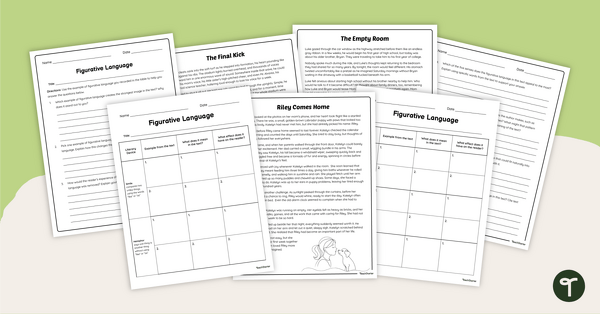
Analyzing Figurative Language in Literature Worksheets
Explore figurative language in literature with engaging reading passages and targeted worksheets that help students identify, analyze and explain how authors use figurative devices to create meaning and impact.
- Plus Plan
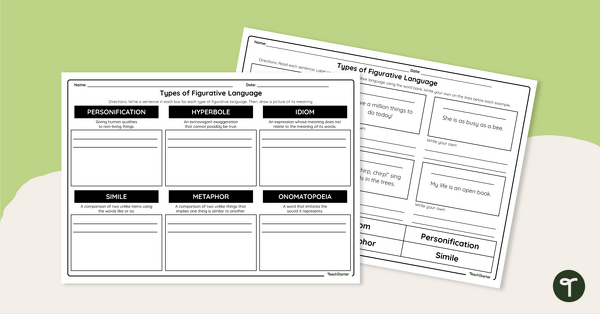
Types of Figurative Language - Worksheet
Practice identifying and creating examples of figurative language with this printable worksheet.
- Plus Plan
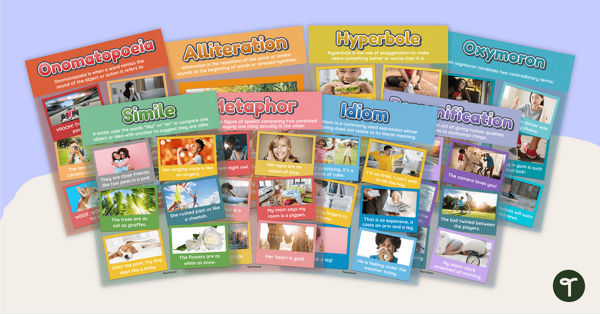
Figurative Language Anchor Charts
Display the types of figurative language with a set of printable figurative language anchor chars.
- Plus Plan
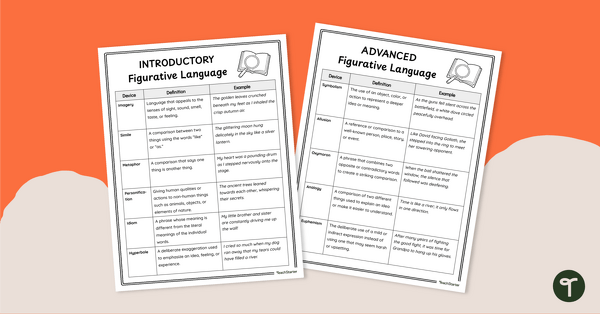
List of Figurative Language
Download this list of figurative language to help your students recognize, interpret and use figurative language when reading and writing.
- Free Plan
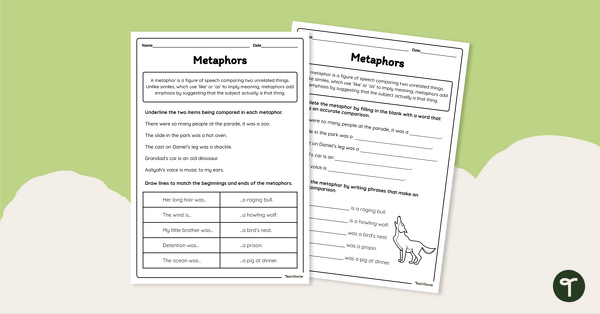
Metaphors Worksheet
Practice identifying and using metaphors with this differentiated metaphors worksheet.
- Plus Plan
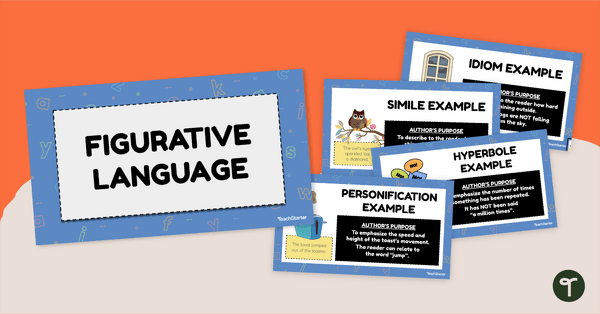
Figurative Language PowerPoint
Download this figurative language PowerPoint to teach your students how authors use figurative language to create meaning and engage readers.
- Plus Plan
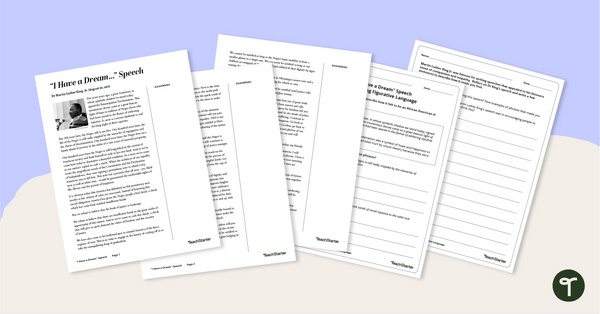
I Have a Dream - Speech Analysis Activity
Review MLK's "I Have a Dream" speech text and explore the metaphors he used to convey his message through the accompanying questions.
- Plus Plan
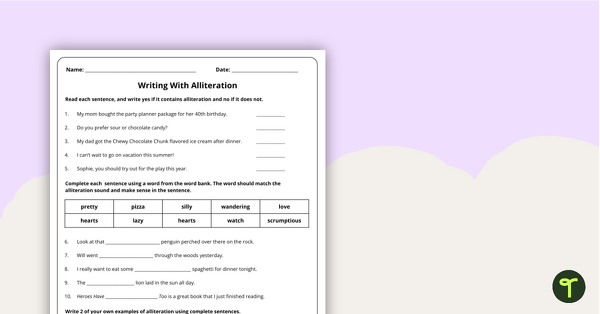
Writing With Alliteration Worksheet
Identify and create alliteration patterns in texts.
- Plus Plan
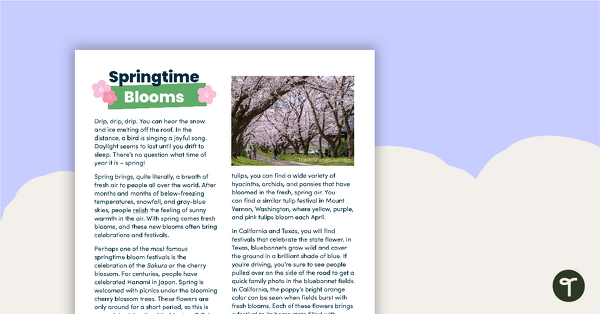
Springtime Blooms – Comprehension Task
An article about springtime blooms and festivals paired with a comprehension task.
- Plus Plan
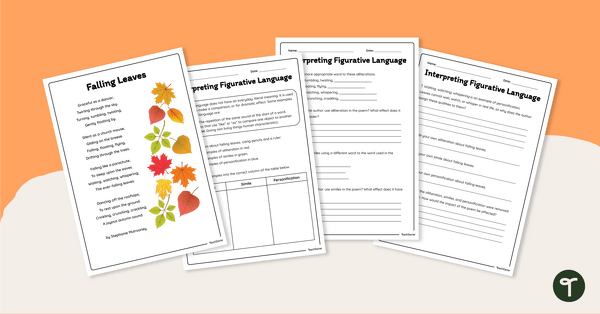
Interpreting Figurative Language - Worksheets
Explore figurative language in poetry with this age-appropriate poem and accompanying vocabulary questions.
- Plus Plan
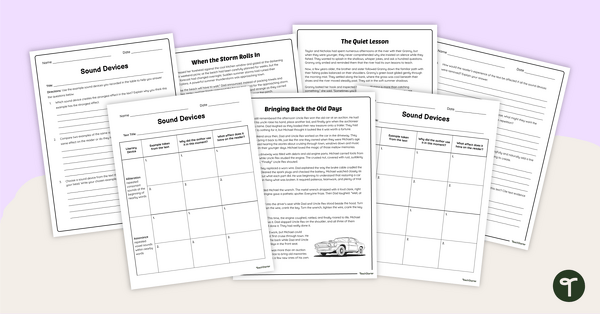
Analyzing Sound Devices in Literature Worksheets
Teach sound devices in literature with three engaging passages and accompanying worksheets that help students identify, analyze and explain the effect of key sound devices in meaningful reading contexts.
- Plus Plan

Style of an Author Inquiry Project
Explore the style of an author with this engaging classroom project that helps students analyse, understand and present what makes an author’s writing unique.
- Plus Plan
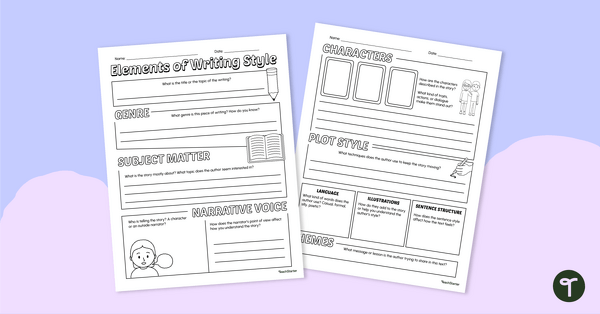
Elements of Writing Style Graphic Organizer
Get your class exploring elements of writing style with this two-page graphic organizer, which enables students to track an author’s choices throughout a text.
- Plus Plan
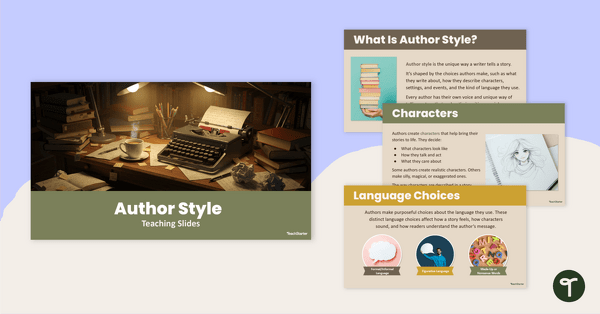
Author's Writing Style Teaching Slides
Teach your students about an author’s writing style with this engaging slide deck that helps students understand the elements that make up an author’s unique voice.
- Plus Plan
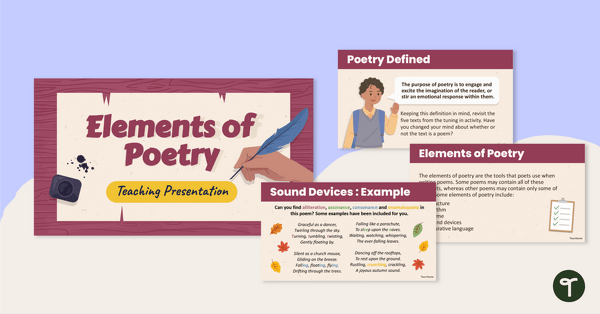
Elements of Poetry Teaching Slides
Explore the key elements of poetry with your students using this comprehensive and age-appropriate slide deck perfect for your poetry writing unit.
- Free Plan
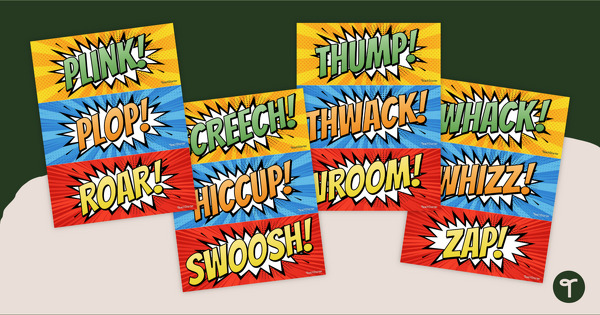
Onomatopoeia Words - Vocabulary Display
Display a fun onomatopoeia word wall in your classroom with printable cards containing onomatopoeia examples.
- Plus Plan
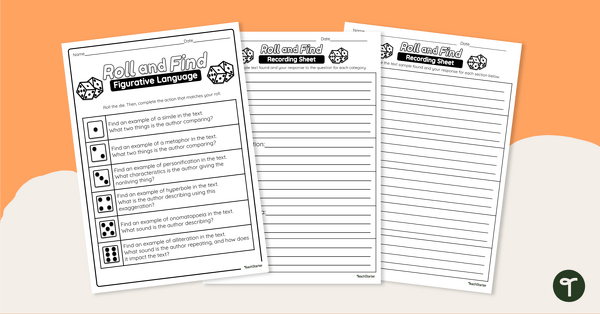
Roll and Find – Figurative Language Worksheet
Explore, identify and interpret figurative language with this engaging roll and find activity.
- Plus Plan
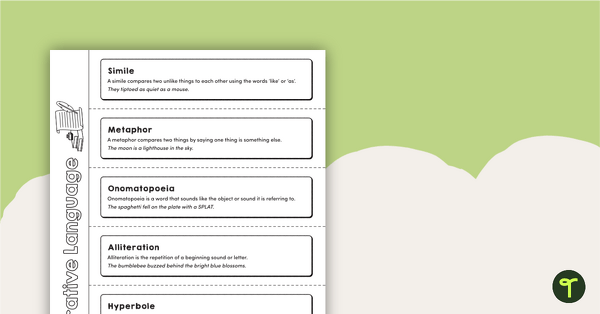
Figurative Language Flip Book
Practice identify examples of figurative language with this flip book template for kids.
- Plus Plan
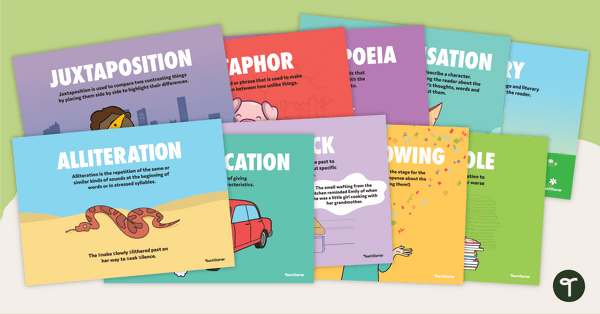
Literary Devices Posters
Explore the various literary devices used by authors with the set of colorful classroom posters.
- Plus Plan
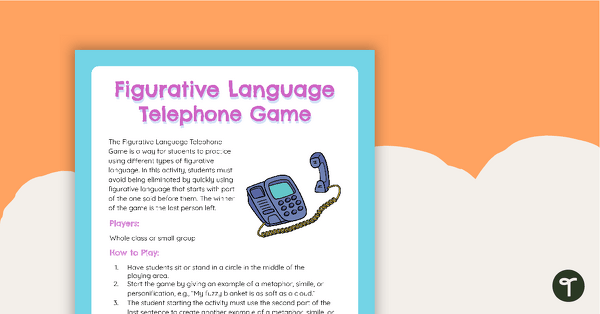
Figurative Language Telephone Game
Play this figurative language game with a group to practice recognizing and inventing metaphors, similes, and personification.
- Plus Plan
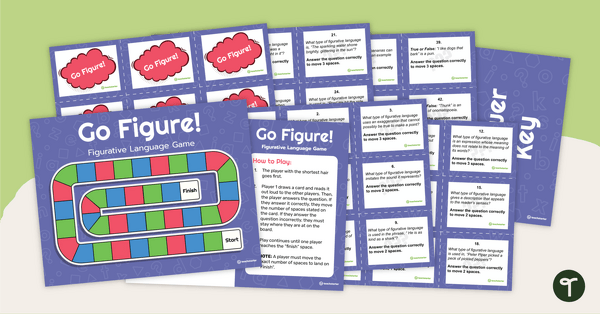
Go Figure! - Figurative Language Game
Practice working with different types of figurative language with this hands-on board game.
- Plus Plan
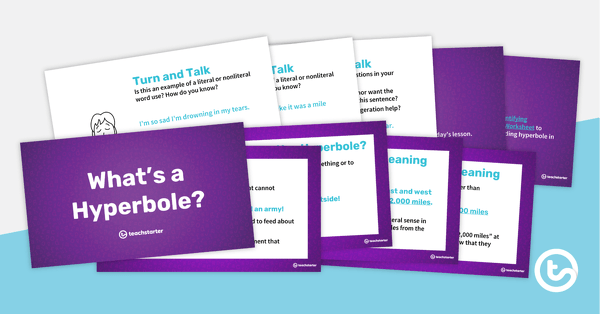
What's a Hyperbole? PowerPoint
An editable 20-slide PowerPoint to use when teaching your students about hyperbole.
- Plus Plan
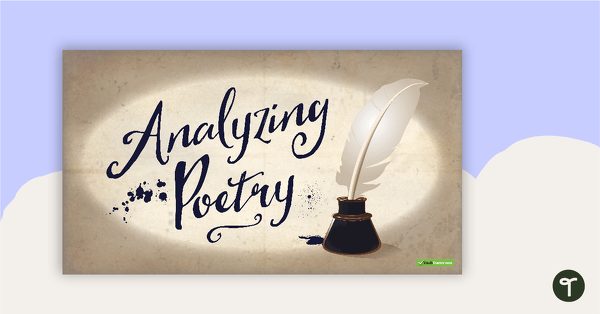
Analyzing Poetry Teaching Slides
Teach your students how to analyze poetry using the SMILE technique with this comprehensive and age-appropriate slide deck.