ACELY1690
Identify characteristic features used in imaginative, informative and persuasive texts to meet the purpose of the text
Elaborations
- describing the language which authors use to create imaginary worlds; how textual features such as headings, subheadings, bold type and graphic organisers are used to order and present information, and how visual codes are used, for example those used in advertising to represent children and families so that viewers identify with them (Skills: Literacy, Critical and Creative Thinking)
- Free Plan
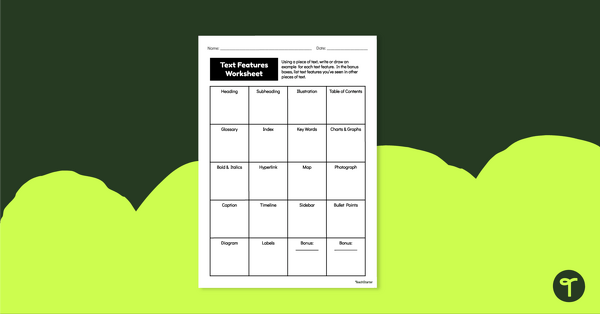
Nonfiction Text Features Worksheet
Download this nonfiction text features worksheet so students can practice locating different types of text features found in an information text.
- Plus Plan
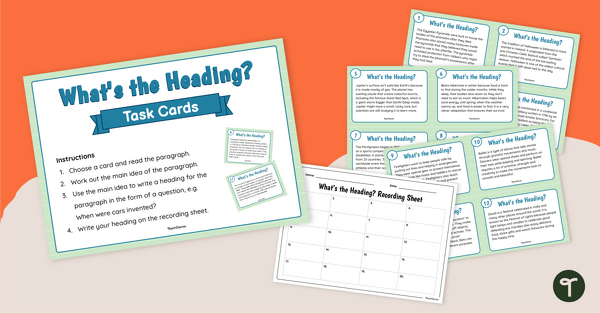
What’s the Heading? Task Cards
Explore the heading text feature with this set of task cards perfect for literacy groups.
- Plus Plan
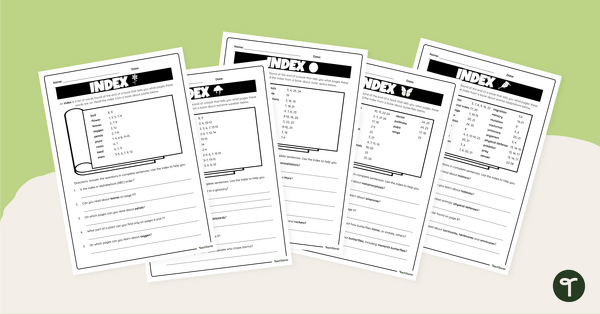
Using Indexes Worksheets
Teach students about the index text feature with this set of worksheets perfect for primary students.
- Plus Plan
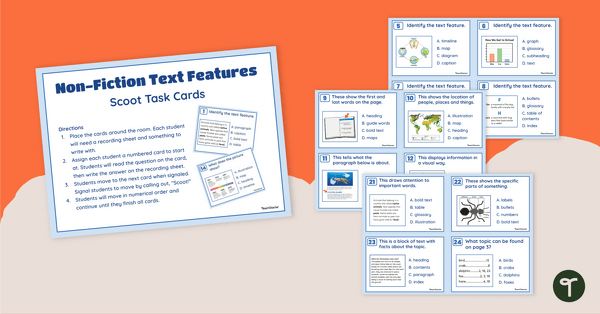
Non-Fiction Text Features Task Cards
Get students exploring text feature examples with this set of tack cards perfect for literacy groups.
- Plus Plan
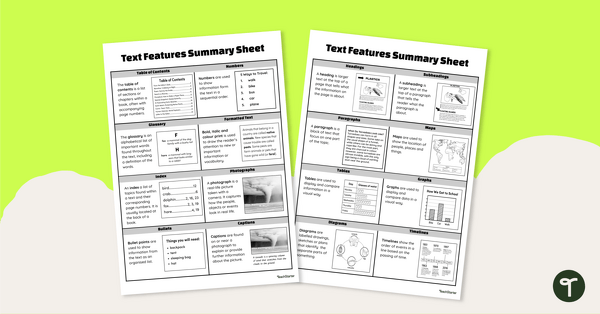
Informational Text Features Cheat Sheet
Download this list of text feature examples to teach your students about the purpose of these important textual elements.
- Plus Plan
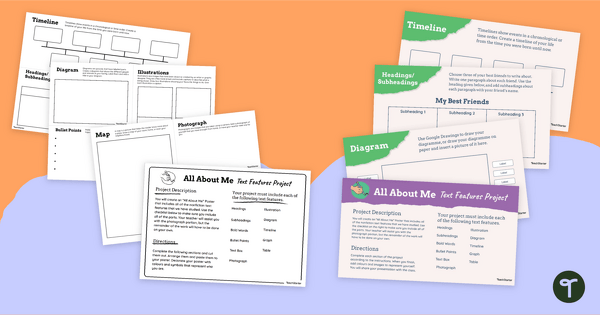
Nonfiction Text Features – All About Me Project
Implement a text features project with an “All About Me” theme to explore informational text features with your students.
- Plus Plan
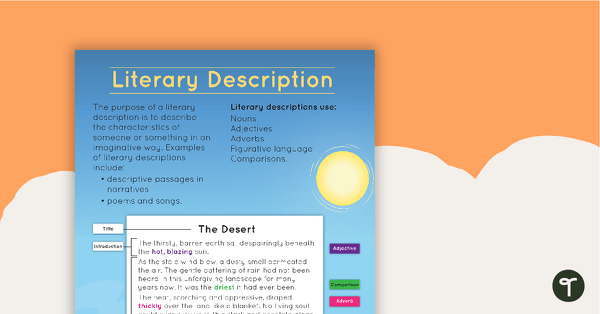
Literary Description Text Type Poster With Annotations
A poster about literary descriptions, including an annotated example.
- Plus Plan
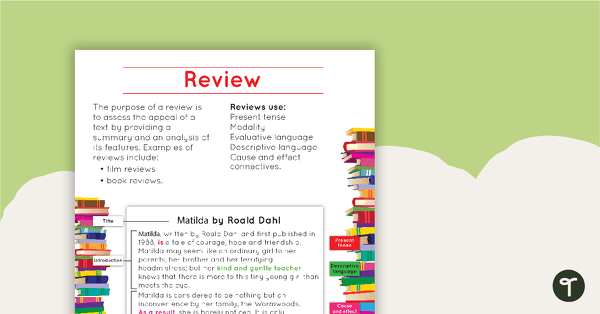
Review Text Type Poster With Annotations
A poster about reviews, including an annotated example.
- Plus Plan
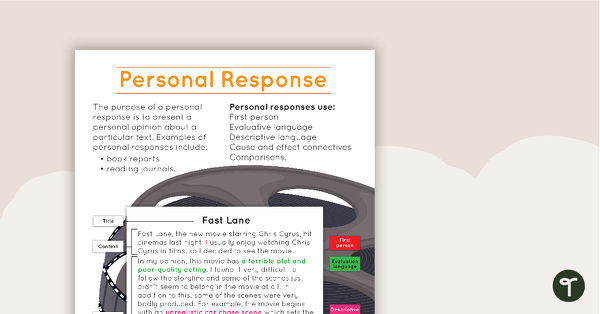
Personal Response Text Type Poster With Annotations
A poster about personal responses, including an annotated example.
- Plus Plan
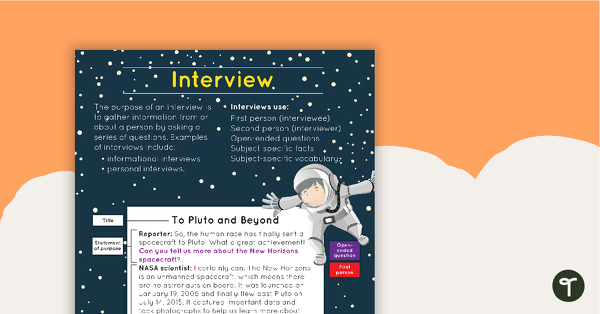
Interview Text Type Poster With Annotations
A poster about interviews, including an annotated example.
- Plus Plan
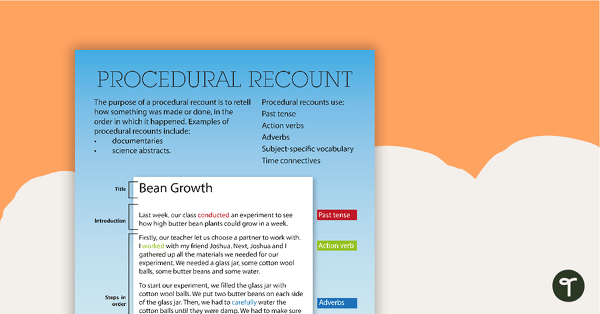
Procedural Recount Text Type Poster With Annotations
A poster about the procedural recount text type, including an annotated example.
- Plus Plan
Developing Persuasive Writing Skills Unit Plan - Year 3 and Year 4
This English unit addresses the genre of persuasion; specifically, how to write a well-structured persuasive text.
- Plus Plan
Developing Narrative Writing Skills Unit Plan - Year 3 and Year 4
This English unit addresses the narrative text type, specifically how to plan and write an engaging story.
- Plus Plan
Exploring Poetry - Year 3 and Year 4 Unit Plan
This English unit addresses common poetic devices such as sound play, word play and imagery and explores how these may be applied to narrative poetry.
- Plus Plan
Developing Informative Writing Skills Unit Plan - Year 3 and Year 4
This English unit addresses the informative text type; specifically, how to write a well-structured informative text.
- Plus Plan
Developing Procedural Writing Skills Unit Plan - Year 3 and Year 4
This English unit addresses the purpose, structure and language features of the procedure text type.
- Free Plan
Informative Texts - Text Structure
A 60 minute lesson in which students will identify and explore the structure of informative texts.
- Free Plan
Informative Texts - Language Features
A 60 minute lesson in which students will identify and explore the language features of informative texts.
- Plus Plan
What Is Poetry?
A 60 minute lesson in which students will develop a definition of poetry.
- Plus Plan
Building an Opinion Using Persuasive Devices
A 60 minute lesson in which students will use persuasive devices to build a convincing opinion about an issue.
- Plus Plan

Developing Informative Writing Skills Unit Plan - Year 3 and Year 4
This English unit addresses the informative text type; specifically, how to write a well-structured informative text.
- Plus Plan
Tell Me A Story
A 60 minute lesson designed to introduce the narrative text type using familiar stories.
- Plus Plan
Narrative Texts - Text Structure
A 60 minute lesson in which students will identify and explore the structure of narrative texts.
- Plus Plan
Narrative Texts - Language Features
A 60 minute lesson in which students will identify and explore the language features of narrative texts.
- Plus Plan
Exploring Poetic Devices
A 60 minute lesson in which students will explore the common literary devices found in poetry.
- Plus Plan
Procedure Texts - Text Structure
A 60 minute lesson in which students will identify and explore the structure of procedure texts.
- Free Plan
Building a Description Using Facts
A 60 minute lesson in which students will build a description of an animal, person or object using facts.
- Plus Plan
Sound Play in Poetry - Onomatopoeia
A 60 minute lesson in which students will identify and explore onomatopoeia in poetry.
- Plus Plan
Introducing Persuasive Devices
A 60 minute lesson in which students will explore how persuasive devices can be used to strengthen a point of view.
- Free Plan
Face the Facts!
A 60 minute lesson designed to introduce the purpose and types of informative texts.
- Plus Plan
Imagery in Poetry
A 60 minute lesson in which students will identify and explore imagery in poetry.
- Plus Plan
Sound Play in Poetry - Alliteration
A 60 minute lesson in which students will identify and explore alliteration in poetry.