Language for interacting with others
- Plus Plan
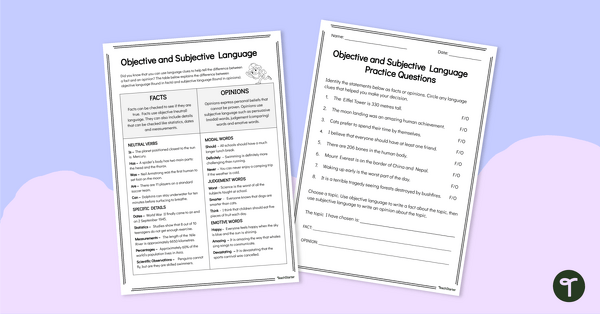
Objective and Subjective Language Worksheet
Use this objective and subjective language worksheet to help students distinguish between facts and opinions.
- Plus Plan
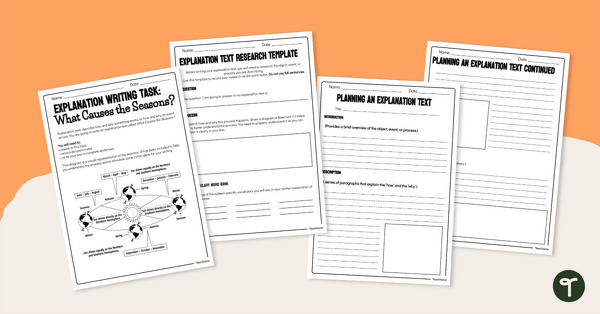
Explanation Writing Project – Earth and Space Phenomena
Get your students producing high-quality explanation writing with this fully scaffolded writing project, where students research, organise and publish an explanation text about an Earth and Space phenomenon.
- Plus Plan
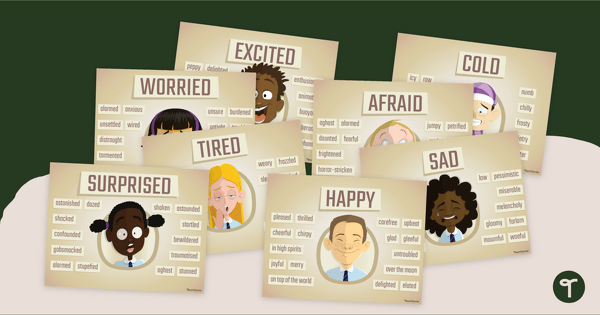
Synonym Poster Pack - Emotions Chart Display
Blend social-emotional learning and vocabulary building activities with a set of 15 emotional synonyms anchor charts.
- Plus Plan
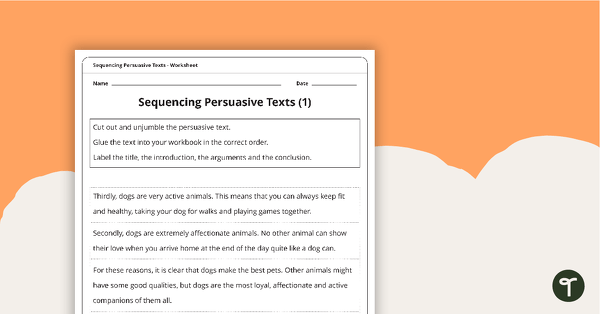
Persuasive Essay Structure Sorting Worksheet
Teach your students about persuasive essay structure with this cut-and-paste sequencing worksheet.
- Plus Plan
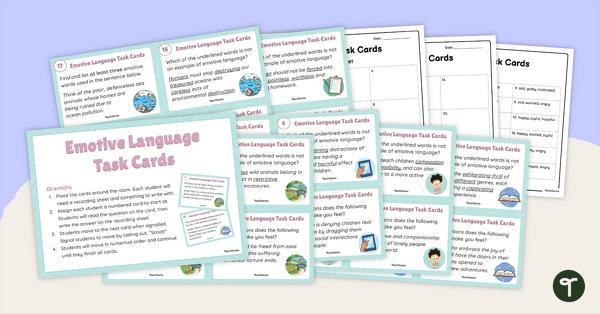
Emotive Language Task Cards
Get students exploring emotive language examples with this set of task cards perfect for your persuasive writing unit.
- Plus Plan
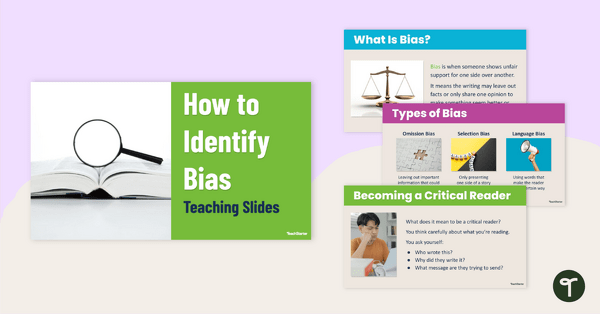
How to Identify Bias Teaching Slides
Teach your students how to identify bias in writing with this engaging slide deck, designed to help upper primary students develop critical reading skills.
- Plus Plan
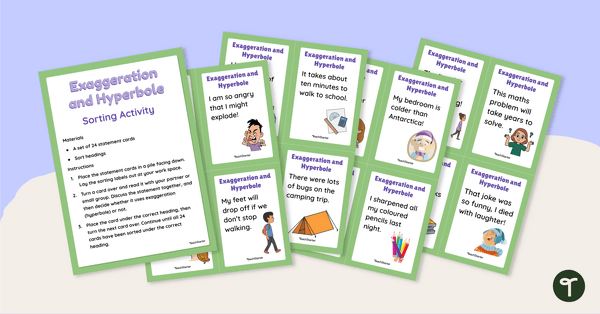
Exaggeration and Hyperbole Sorting Activity
Explore examples of hyperbole with your students using this set of 24 sorting cards perfect for your collaborative group work.
- Plus Plan
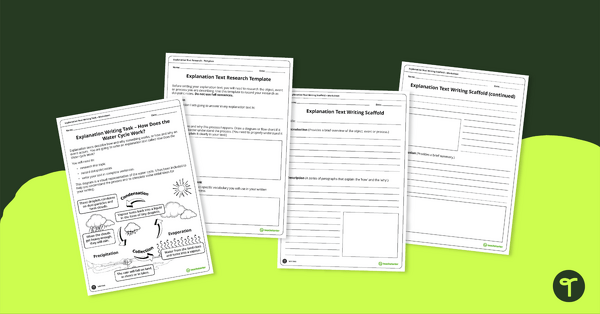
Explanation Writing Project – Natural Processes
Get your students producing high-quality explanation writing with this fully scaffolded writing project, where students research, organise and publish an explanation text about a natural process.
- Free Plan
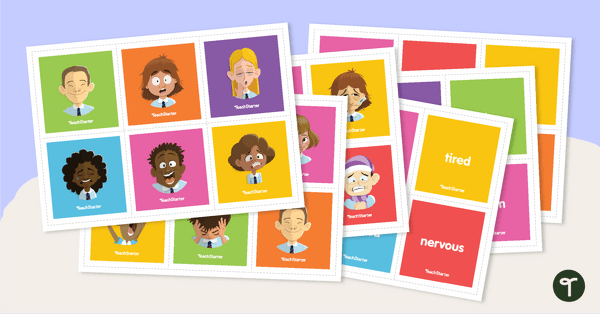
Feelings and Emotions Match-Up Activity
Help students to recognise and identify their feelings and emotions with this interactive match-up activity.
- Plus Plan
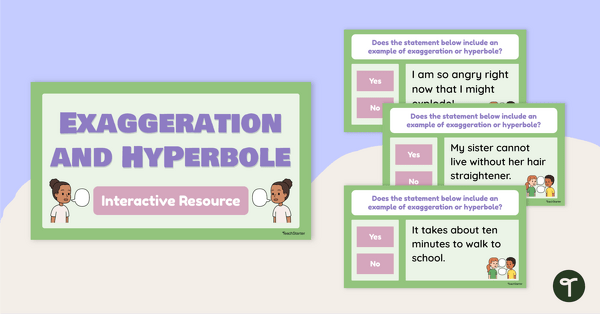
Exaggeration and Hyperbole Interactive Activity
Explore hyperbole examples with your students using this digital game perfect for lesson warm-ups or lesson wrap-ups.
- Plus Plan
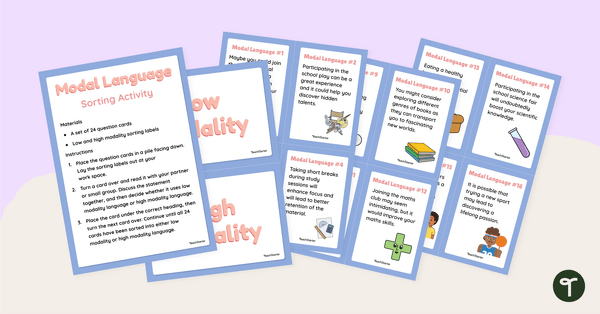
Modal Language Sorting Activity
Explore examples of modal language with your students using this set of 24 sorting cards perfect for your persuasive writing unit.
- Plus Plan
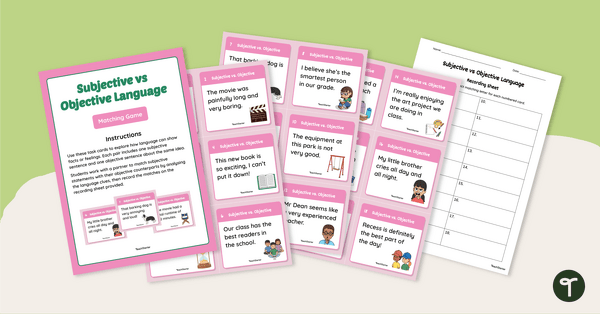
Subjective vs Objective Language Matching Game
Teach subjective vs objective language with this hands-on matching game designed to help students identify facts and feelings in sentences.
- Plus Plan
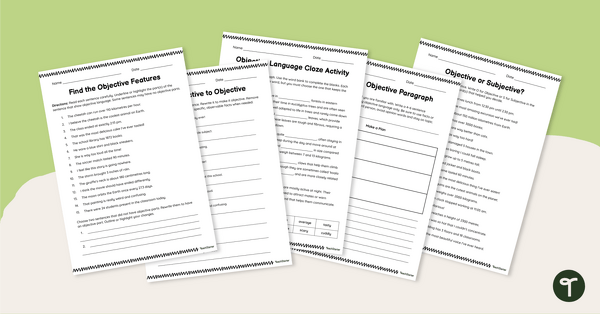
Objective Language Worksheet Pack
Use these objective language worksheets to teach your students about the specific language features found in neutral, factual writing.
- Plus Plan
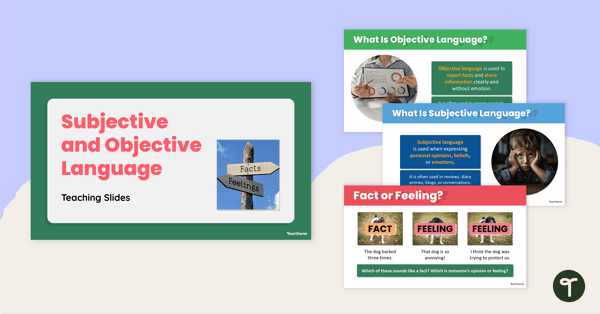
Subjective and Objective Language Teaching Slides
Teach your students how to confidently identify subjective and objective language in texts with this engaging, age-appropriate slide deck.
- Plus Plan
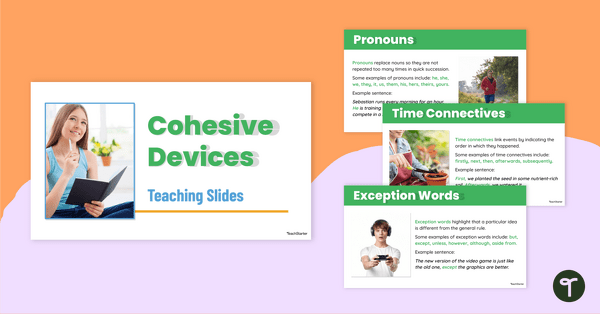
Cohesive Devices Teaching Slides
Explore cohesive devices with this engaging teaching slide deck designed to help primary students understand and use them confidently in their writing.
- Plus Plan
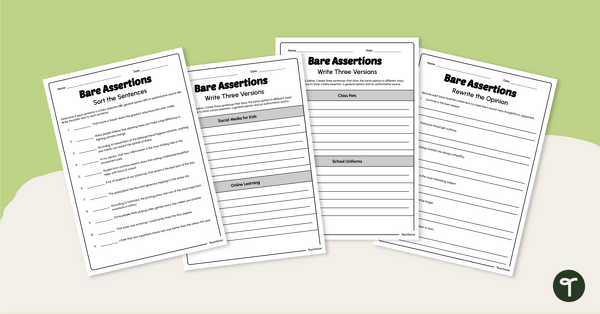
Bare Assertions Worksheet Pack
Strengthen student writing by helping them turn bare assertions into well-supported opinions using these engaging and practical worksheets.
- Plus Plan
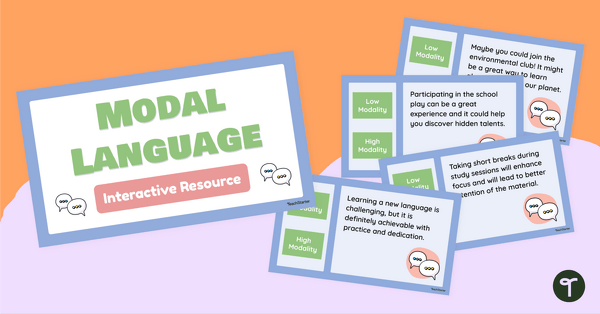
Modal Language Interactive Activity
Explore the language of modality with your students using this digital game perfect for your persuasive writing lessons.
- Plus Plan
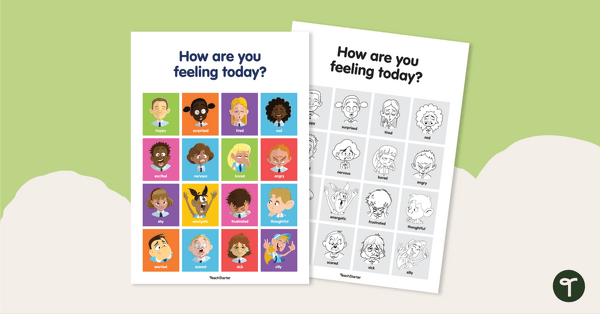
How Are You Feeling Today? Poster
Help students to recognise and identify their feelings and emotions with this colourful classroom display poster.
- Plus Plan

Advertisement Worksheet – Milton Mentor
A comprehension worksheet for a persuasive magazine advertisement about a digital personal assistant.
- Plus Plan
Write a Biography PowerPoint
Use this age-appropriate biography PowerPoint to teach your students about the purpose, structure and features of biographical texts.
- Plus Plan
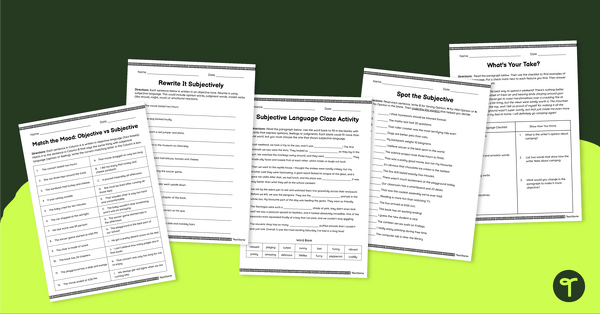
Subjective Language Worksheet Pack
Teach subjective language with these five engaging worksheets designed to help students recognise and explore how personal opinions and emotions shape writing.
- Plus Plan
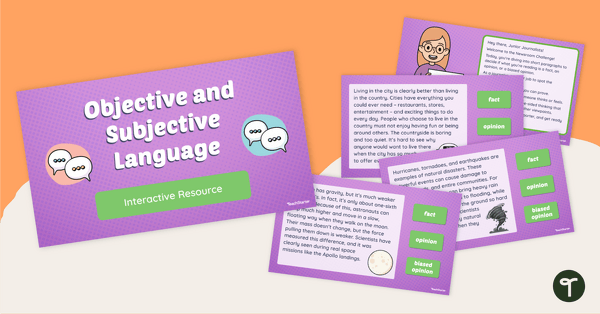
Objective and Subjective Language Digital Quiz
Spark deeper thinking about objective and subjective language with this interactive digital quiz that helps students distinguish between fact, opinion and biased opinion in real-world texts.
- Plus Plan
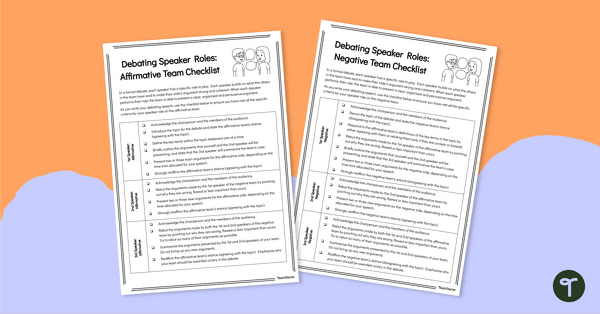
Debate Team Roles Checklists
Support students to understand debate team roles with this clear speech-writing checklist designed to guide each speaker through their responsibilities.
- Plus Plan
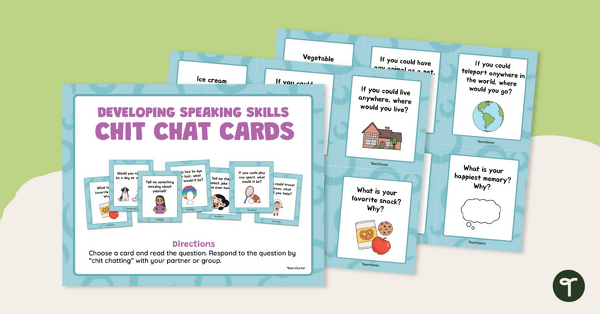
Chit Chat Cards - Developing Speaking Skills
Encourage your students to improve their speaking skills with these printable chit chat cards perfect for the early years.
- Plus Plan
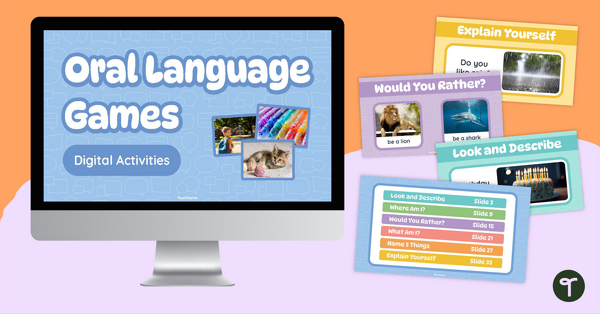
Oral Language Games - Digital Activity
Boost your students' oral language skills with this fun and engaging oral language game interactive.
- Plus Plan
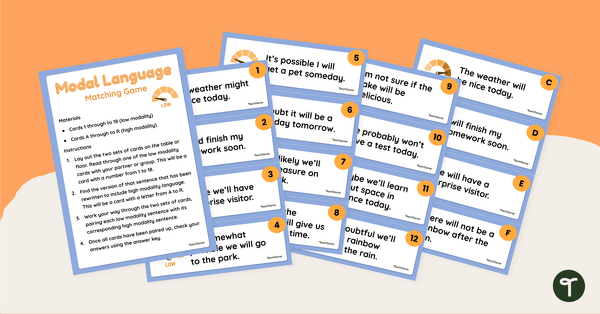
Modal Language Matching Activity
Have students explore high modality and low modality language with this matching game to use during your persuasive writing unit.
- Plus Plan
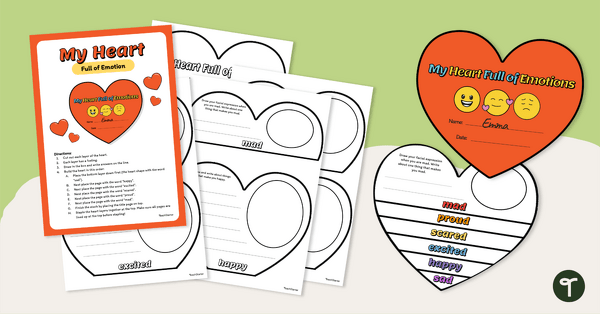
My Heart Full of Emotions Activity
Promote mindfulness and self reflection by writing out descriptions of different emotions.
- Free Plan
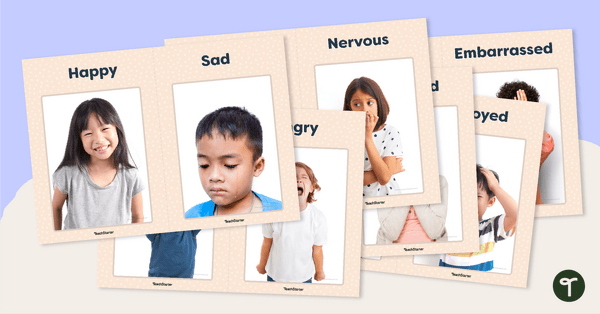
Recognising Feelings Flashcards
Improve your students' emotional literacy with this set of feelings flashcards.
- Plus Plan
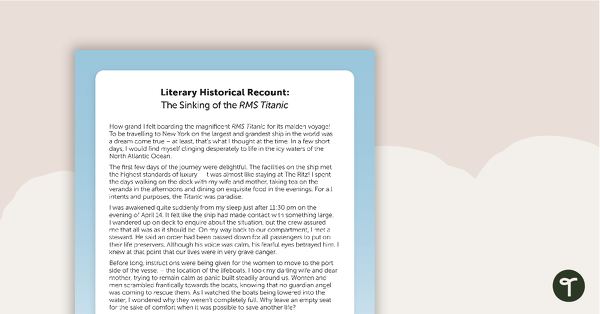
Historical Recounts Examples – Comparison Task
Explore historical recounts examples through a detailed comparison of two accounts of the RMS Titanic disaster, helping students analyse how historical events can be represented in different ways in texts.
- Plus Plan
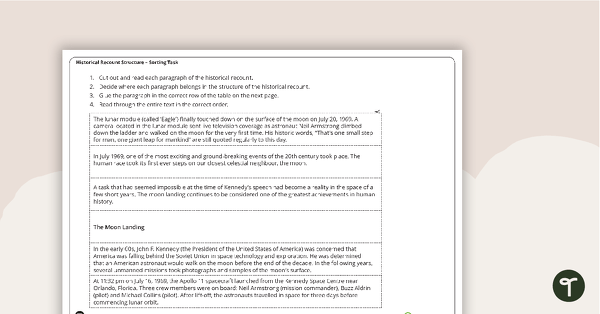
Historical Recount Structure Sorting Task – The Moon Landing
Teach your students about historical recount structure with this cut-and-paste sequencing worksheet.
- Free Plan
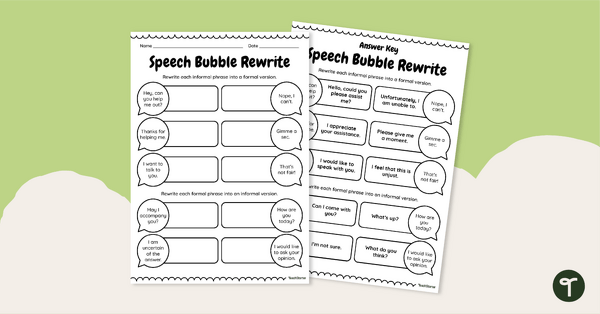
Speech Bubble Rewrite - Formal and Informal Worksheet
Build confident communicators with this engaging Speech Bubble Rewrite Informal vs Formal Worksheet.
- Free Plan
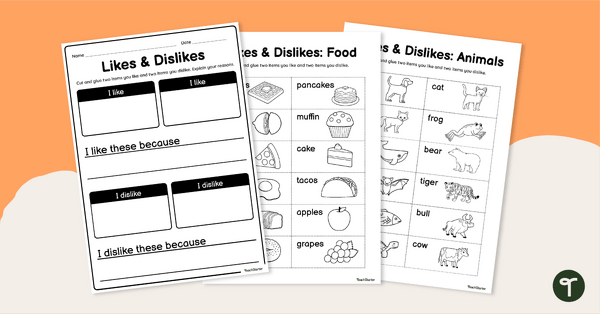
Likes and Dislikes Worksheets
Support students to express preferences, share opinions and give simple reasons all through engaging cut‑and‑paste activities.