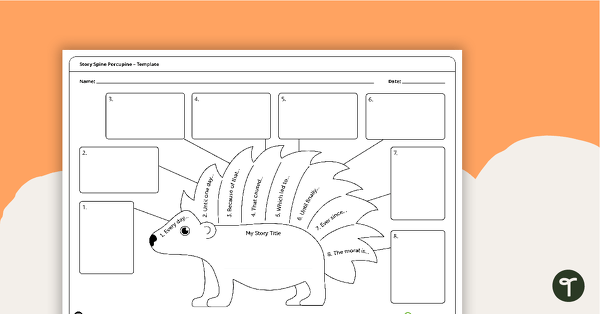
Help your students with the technical side of writing with our Story Spine Porcupine Narrative Writing Template.
Teach How to Write a Narrative with a Story Spine Porcupine Template
When it comes to writing a story, there’s usually no limit to the content that a child’s wonderful imagination can come up with. How you structure this content, however, is another matter!
While there are many great ways to structure a narrative, there are usually a few things they all have in common. A sequence of events which outlines an orientation, complication and resolution, combined with some fun characters and an interesting setting – this is the recipe for a great story!
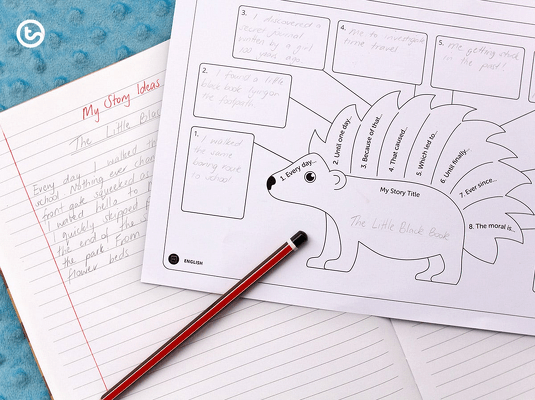
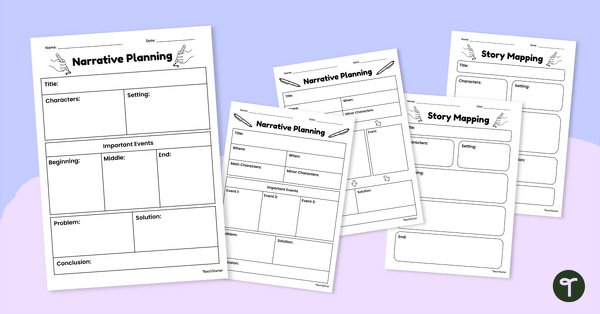
With this Story Spine Porcupine Template, your students will be scaffolded to outline their sequence of events from start to finish, leaving more brainpower for their imaginations. Your students can use the optional sentence starters or come up with some of their own!
How to Use Our Narrative Writing Scaffold for Kids
- Start by Exploring Stories Together.
Begin by helping students understand how stories are structured. Use familiar storybooks and break them down into key parts, showing how the template can represent a full narrative. This helps students see how ideas are organised into a beginning, middle and end. (Note: you don’t need to use every sentence starter. Choose the ones that best match the length and complexity of the story you are exploring.) - Plan a Story Using the Template.
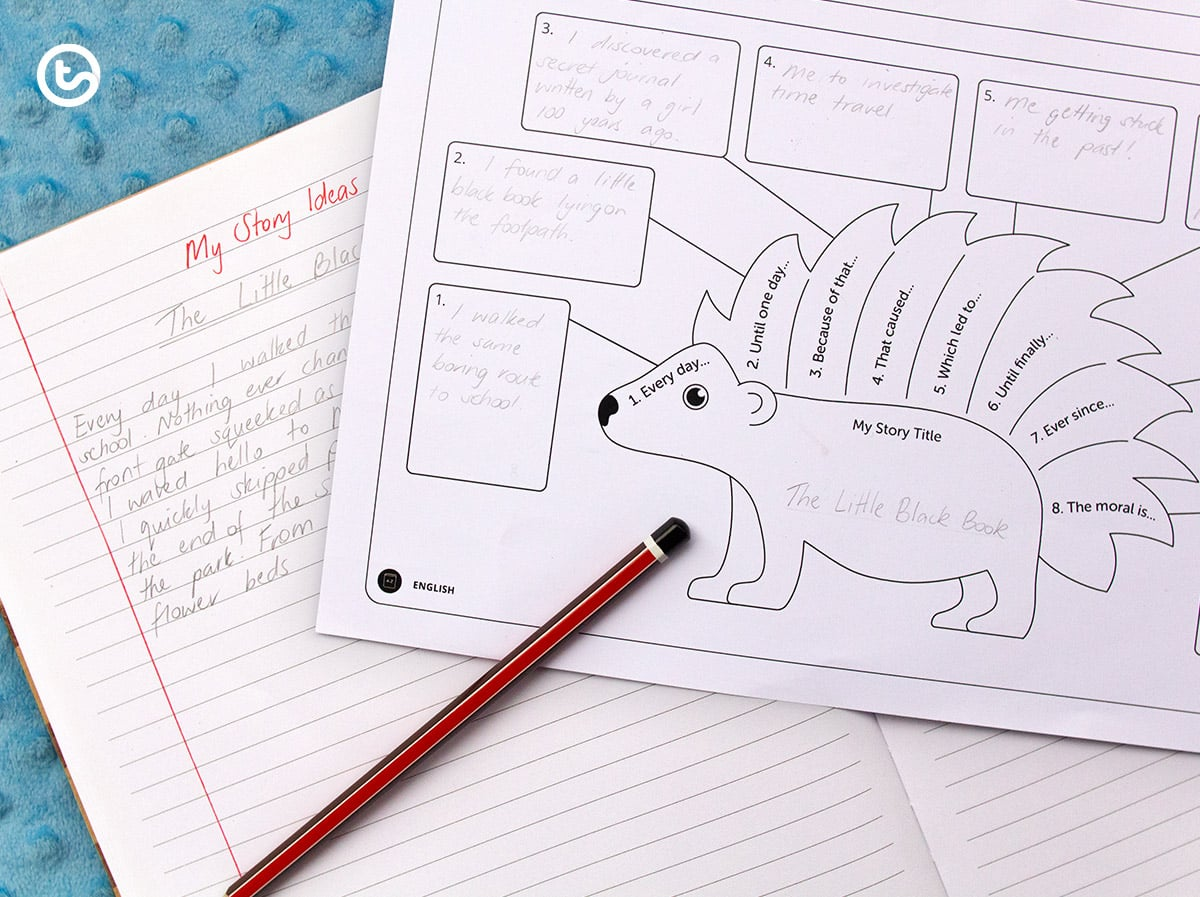
Next, guide students to use the Story Spine Porcupine template to plan their own narrative. The scaffold includes eight steps with simple sentence starters that help students build their ideas gradually. Unlike a basic orientation–complication–resolution structure, the porcupine prompts students to think more deeply about the sequence of events, how their story develops, and even reflect on a possible moral or lesson. By the end of this stage, students will have a clear and complete plan for their story. - Turn Ideas into Writing.
Once planning is complete, support students in transforming their scaffold into full sentences and paragraphs. Go through the template together and identify which parts introduce the setting and characters (orientation), and which parts build the problem and move the story forward (complication). You might highlight these sections to make the structure more visible.From here, students are ready to begin writing. Early years students can copy their scaffold directly, seeing how each idea connects to form a complete piece of writing. Older students can expand on each sentence by adding detail, description, and dialogue, using the scaffold as a strong foundation to develop a more sophisticated narrative.
Download in Just One Click
Our easy-to-use Narrative Writing template comes in two formats: easy-to-print PDF and editable Google Slides. Use the drop-down arrow located on the Download button to choose the version that works best for you. Then print, and you are ready to go!

0 Comments
Write a review to help other teachers and parents like yourself. If you'd like to request a change to this resource, or report an error, select the corresponding tab above.