Science Experiments Teaching Resources
Unlock science experiments for kids and a love of experimentation in your classroom with ready-made experiments created for your primary students by science teachers just like you!
This extensive collection of Australian science curriculum-aligned experiments was created to save you time on your lesson plans and help you help your students learn to discover brand-new knowledge about the workings of the world around us!
New to teaching students to conduct experiments or just looking for some handy tips? Read on for a primer from our teacher team, including a way to explain what an experiment is, plus some handy terminology!
What Is a Science Experiment? A Kid-Friendly Definition
If it's your first time introducing experiments, a definition may come in handy. Here's how we explain the meaning of this concept to students:
A science experiment is a way to test a hypothesis or investigate a question in a systematic and controlled manner. Experiments allow us to ask questions, form hypotheses and discover new information.
What Is a Fair Test?
In order to set the stage for successful experimentation, students need to understand how to set up fair tests — also known as controlled experiments.
A fair test is an experiment in which all variables — except for the independent variable — are kept constant and controlled. The goal of conducting a fair test is to ensure that any observed changes or outcomes can be confidently attributed to the independent variable being tested.
Here's what students should know about fair tests:
- Controlling variables means keeping them the same or at the same level across all groups or conditions in the experiment.
- Without controlling variables in a fair test, it becomes difficult to determine the true cause-and-effect relationship between the independent variable and the observed changes.
- A fair test should be an experiment that can be replicated. That means that other scientists should be able to repeat the experiment and achieve similar results by following the same procedures and controlling the same variables.

Creating a rain cloud in a jar is a fun science experiment for kids that allows students to see the actions of water vapour and condensation in action in the classroom.
What Is an Independent Variable in a Science Experiment?
You know that your students will need an independent variable to ensure the success of their science experiments, but do you need a handy definition to explain what these are? We've got you covered!
Here's how to explain these core components of any good experiment to your young scientists:
An independent variable is a factor in an experiment that a scientist deliberately changes or manipulates to test their hypothesis. Changing the independent variable can help you determine if it has an impact on the outcome or on the dependent variable — which should not be changed or manipulated.
As noted earlier, in order to have a true fair test, students need to control or keep constant all other variables except for the independent variable.
Independent Variable Example
For example, let's say a student wanted to run an experiment to determine if plants grow better in conditions where classical music is played than in conditions where there's no sound or rock music is played.
In this type of experiment, the sound introduced to the plant would be the independent variable. It would change, while other variables — such as the amount of sunlight and water the plant received — must remain the same.
What Is a Control in an Experiment?
The independent variable will change in a student's experiment, but the control will do the exact opposite!
The control in a science experiment refers to any variables or conditions kept constant or unchanged throughout the experiment. It's just as important to the fair test that these stay constant as it is that the independent variable is changed.
Control Example
For example, in the plant and sound experiment described above, the amount of water and sunlight would be controls as neither would change.
- Plus Plan
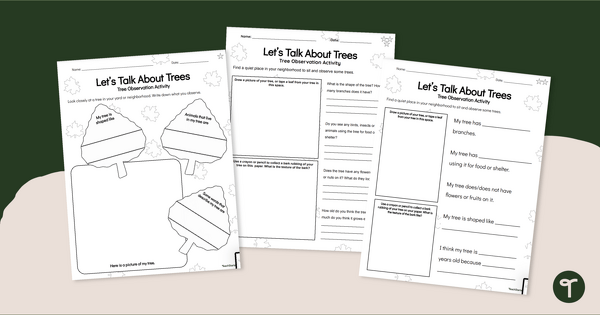
Tree Observation Worksheets
Record observations of trees in the local environment with a printable graphic organiser.
- Plus Plan
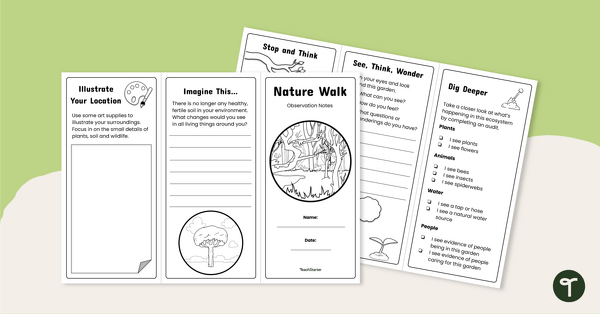
Nature Walk Brochure Template
Have your students explore their natural surroundings with this nature walk brochure template.
- Plus Plan
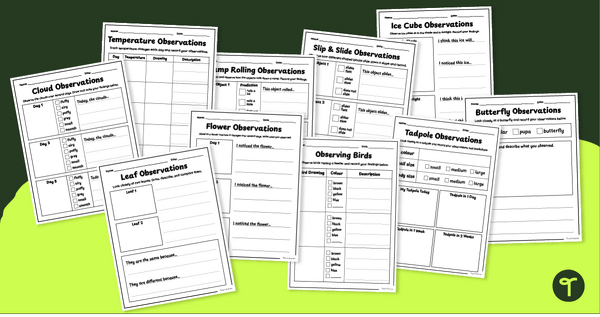
Scientific Prediction & Observation Templates
Introduce your early learners to scientific inquiry skills with a set of printable Scientific Observation templates.
- Plus Plan
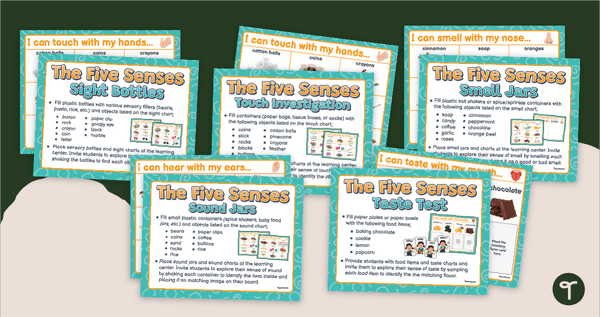
Five Senses Science Stations
Show your students the power of their five senses with a pack of printable 5 Senses Science Stations!
- Plus Plan
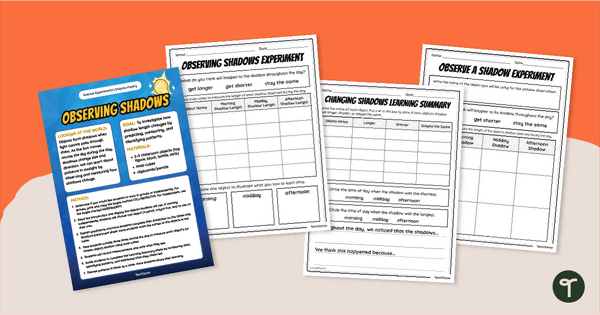
Observing Shadows Science Investigation (1-2)
Explore the world of light, shadow, and scientific inquiry with an engaging, outdoor Shadow Observation experiment.
- Plus Plan
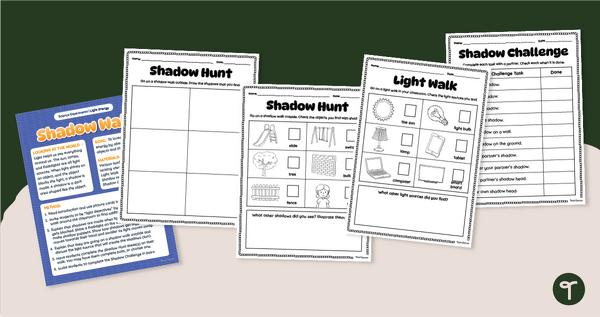
Shadow Walk Activity Pack (F-1)
Explore light and shadow while building science observation skills with a printable early years Shadow Walk Activity Pack.
- Free Plan
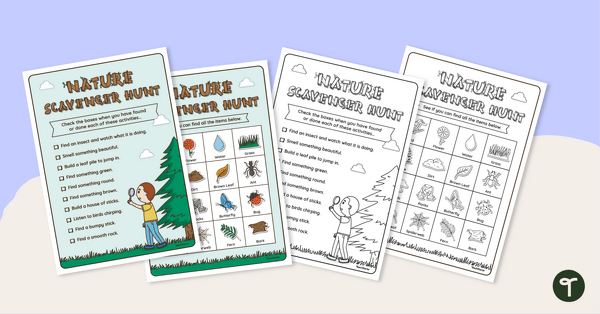
Nature Scavenger Hunt Printable
Make outdoor play a learning opportunity with exciting nature treasure hunts..
- Plus Plan
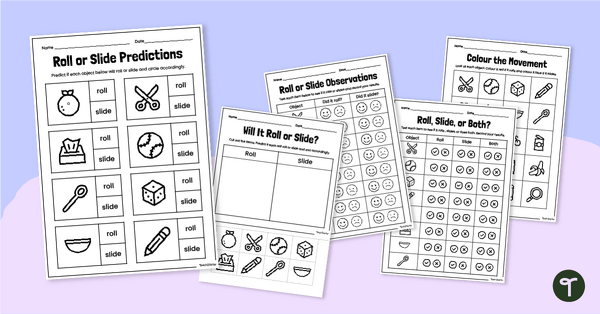
Roll or Slide Worksheets (F-1)
Explore motion and boost science inquiry skills with Roll and Slide Worksheets for Foundation and Year 1 students.
- Plus Plan
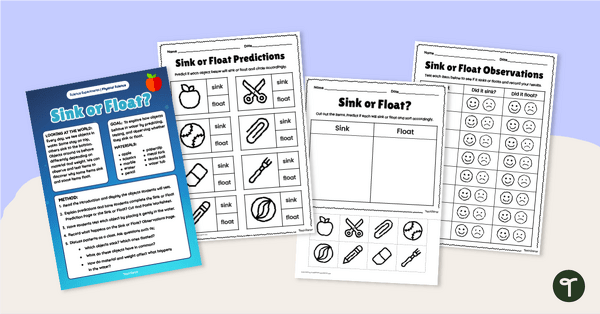
Sink or Float Experiment Pack (F-1)
Explore properties of matter and boost science inquiry skills with a Sink or Float Science Experiment.
- Plus Plan
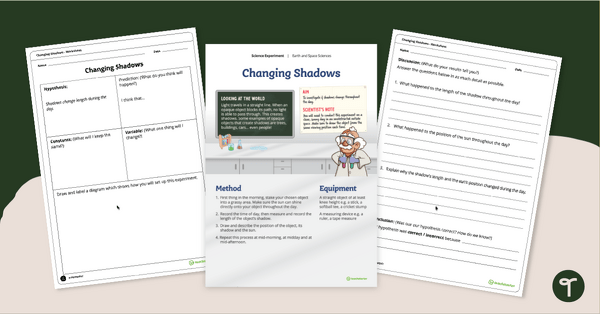
Science Experiment - Changing Shadows
Explore how shadows change throughout the day with this hands-on science experiment.
- Plus Plan
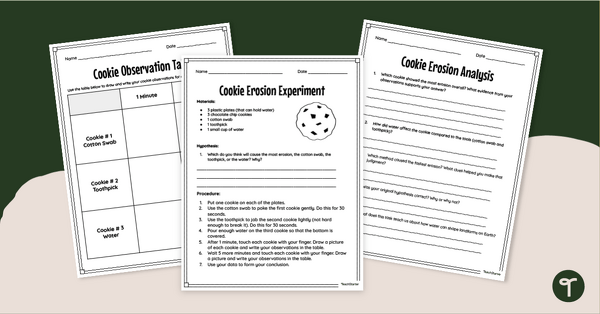
Cookie Erosion Experiment
Discover the effects of water erosion with a printable Cookie Erosion Experiment for kids!
- Plus Plan
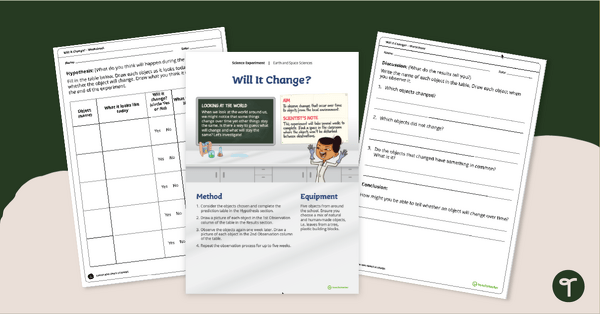
Science Experiment - Will It Change?
A science investigation in which the students observe changes that occur to various objects over time.
- Free Plan
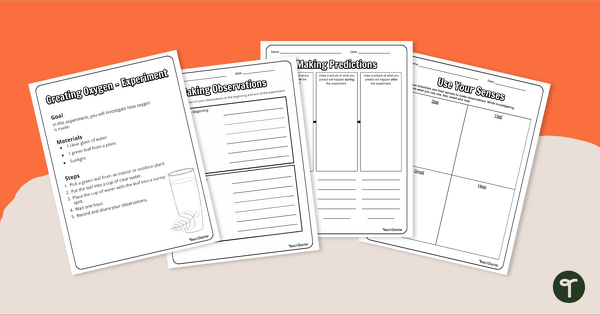
Observing Photosynthesis Experiment (F-2)
Investigate how oxygen is made with a hands on photosynthesis experiment.
- Plus Plan
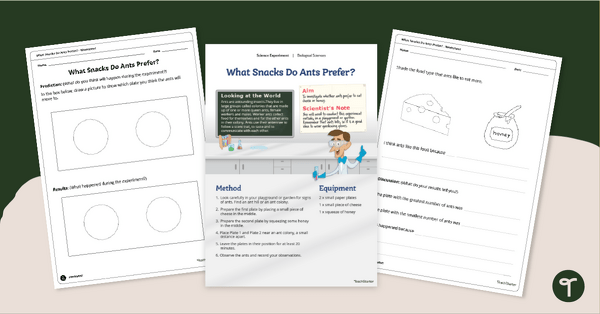
Science Experiment - What Snacks Do Ants Prefer?
Teach your early years students how to make scientific predictions and observations with an engaging hands-on science experiment.
- Plus Plan
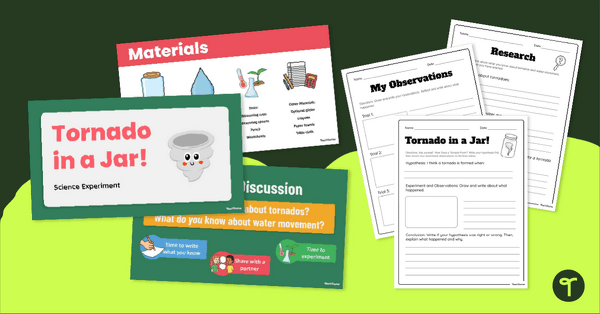
Tornado in a Jar Experiment
Create a Tornado in a Jar with an interactive science experiment slide deck and Tornado in a Jar Experiment Worksheet.
- Plus Plan
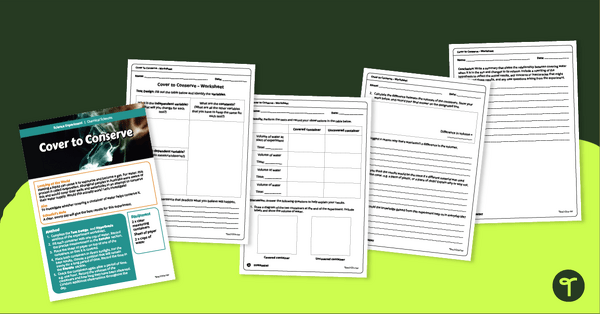
Evaporation Experiment - Cover to Conserve
Investigate if evaporation can be reduced by covering a body of water with a hands on Evaporation Experiment.
- Plus Plan
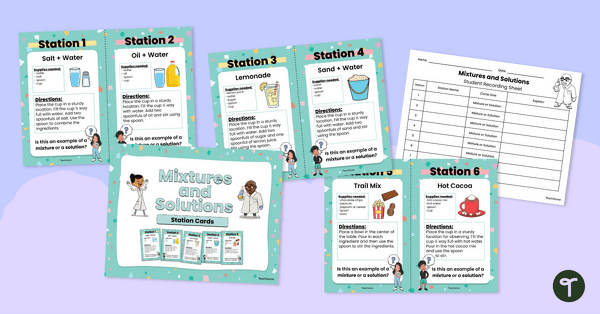
Mixtures and Solutions Investigation Station Cards
Determine if a combination of ingredients makes a mixture or solution during your science centers with this set of station cards.
- Plus Plan
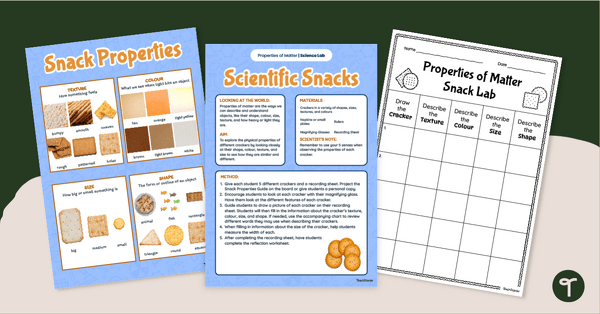
Observing Matter – Edible Science Experiment
Discover the observable properties of matter with an exciting edible science experiment!
- Plus Plan
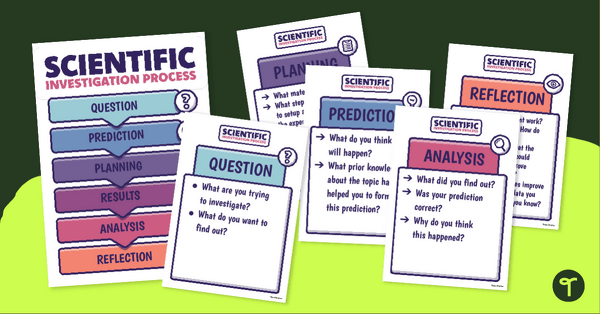
Scientific Investigation Process – Posters
Remind your students of the steps to the scientific investigation process with this set of 7 scientific method posters.
- Plus Plan
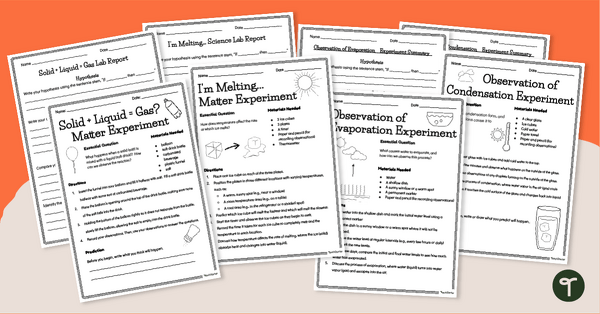
Matter States and Changes Science Lab Activity Pack
Discover the states and changes of matter with a printable pack of Science Lab Activities for Kids!
- Plus Plan
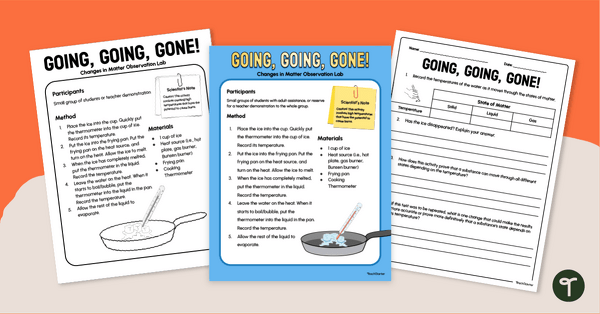
Going, Going, Gone! - Changing States of Matter Experiment
Explore the changing states of matter due to temperature with an engaging science lab activity.
- Plus Plan
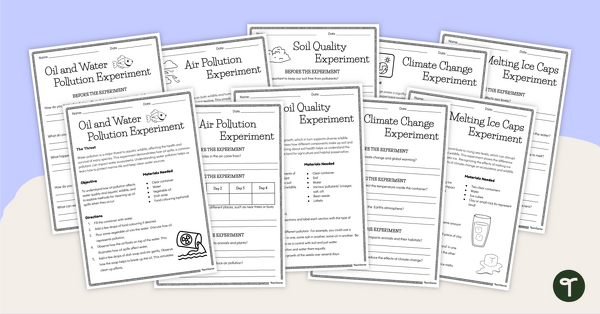
Environmental Impact Science Experiments
Use these simple science experiments to teach your students about environmental issues such as oil and water pollution, soil quality and climate change.
- Plus Plan
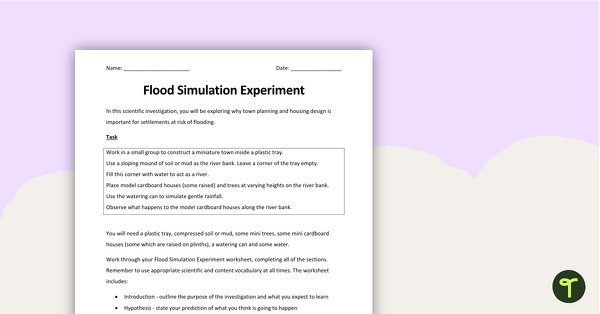
Natural Disasters - Flood Simulation Experiment
A hands-on experiment to use when exploring natural disasters.
- Plus Plan
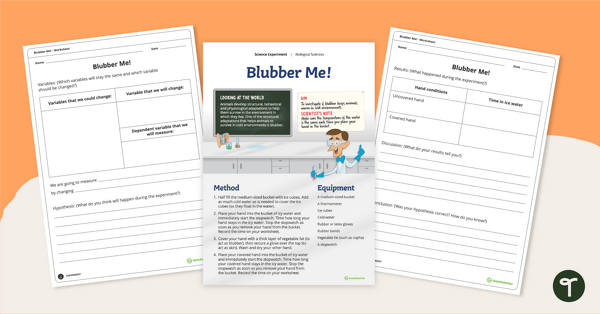
Arctic Animal Adaptations- Blubber Experiment
Explore the structural adaptation of blubber with an Arctic Animal Adaptation experiment.
- Plus Plan
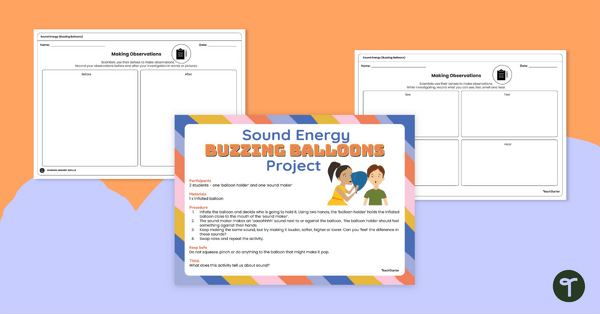
Sound Energy Project (Buzzing Balloons)
Engage your class with this sound energy exploration! This simple experiment will show students how sound is produced by a source and can be sensed.
- Plus Plan
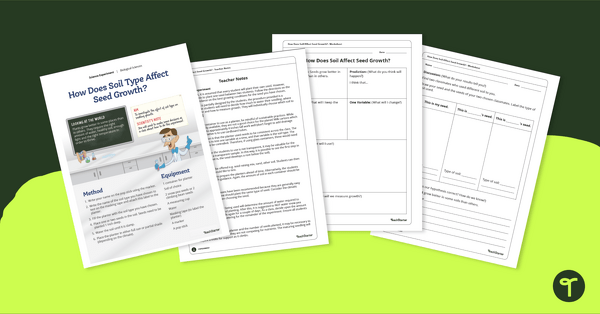
Science Experiment - How Does Soil Affect Seed Growth?
Explore the effect of soil type on growth and change of a seedling with a hands-on science experiment.
- Plus Plan
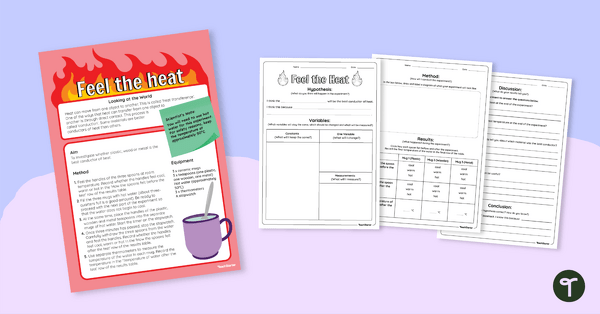
Heat Conductors Science Experiment (Feel the Heat)
Investigate heat conductors with your students using this engaging Conducting Heat experiment.
- Plus Plan
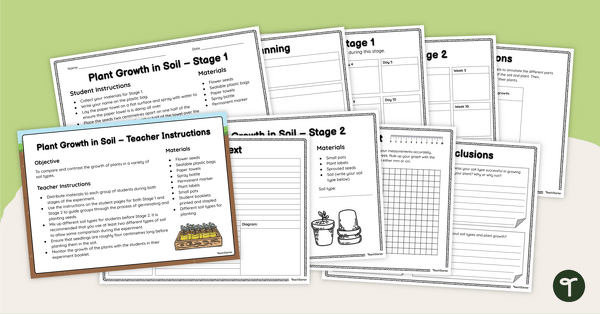
Plant Growth in Soils – Science Experiment
Explore how plants grow in different types of soil with this science experiment perfect for primary school science lessons.
- Plus Plan
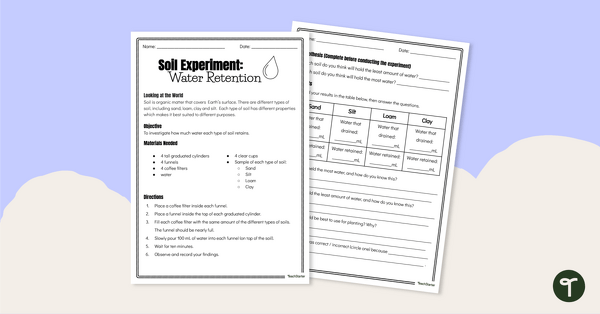
Water Retention in Soil Experiment
Explore the water retention capabilities of sand, silt, loam and clay with this soil experiment for kids.
- Plus Plan
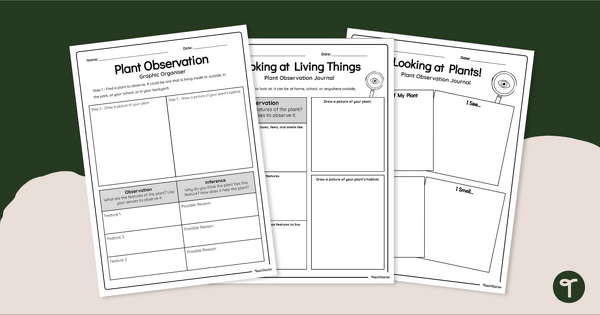
Plant Journal Observation Worksheets
Observe and record information about plants with a printable plant journal worksheet.
- Plus Plan
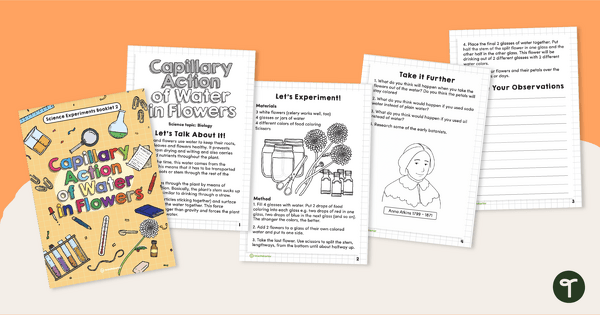
Capillary Action in Plants - Science Experiment Booklet
Observe and record learning about the Capillary Action of Plants with a printable science experiment guidebook.
- Plus Plan
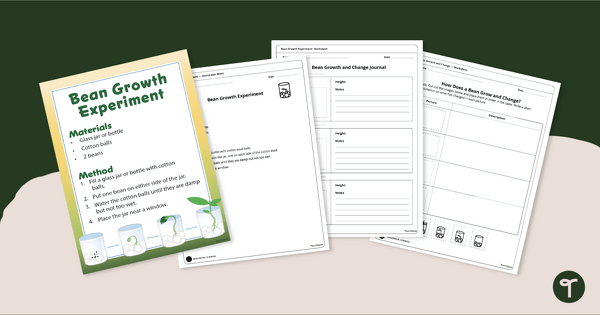
Lima Bean Experiment
“Grow” your students’ knowledge of plant life cycles with a plant growth experiment.