Sentence Structure Teaching Resources
Teach students the elements of sentence structure this school year with printable worksheets, sentence-building activities, sorting games and more primary school teaching resources designed to help extend your students' understanding of how to write clear and concise sentences that follow the rules of English grammar.
This extensive collection of teaching resources has been created by teachers for teachers like you. Aligned to the National curriculum, the English collection includes editable worksheets and teaching presentations and more to save primary teachers time on lesson planning.
Created by expert teachers, each resource in this sentence collection has been carefully reviewed and curated by our team. That means it's ready to use in the classroom! You'll even find editable resources, plus differentiated options.
New to teaching about sentence structure, or just looking for fresh ways to engage your students? Read on for a primer from our teaching team!
English Sentence Structure Explained
From subjects to predicates, objects to clauses, the English language is packed with rules specific to sentence structure that students need to learn on the way to becoming proficient writers.
Ready to break down how to build a sentence in English and look at some examples? Let's go!
Subject
The subject of a sentence is the noun or pronoun that performs the action or is described in the sentence.
For example, in the sentence 'Jaquan did his homework,' Jaquan is the subject.
Predicate
The predicate of a sentence expresses the action or state of being in a sentence.
Let's go back to the sentence 'Jaquan did his homework.' In this case, did is the predicate.
Object
The object of a sentence is a noun or pronoun that receives the action of the verb.
For example, 'homework' would be the object in 'Jaquan did his homework.'
Complement
The complement of a sentence is a word or phrase that completes the meaning of a sentence.
The complement can be a direct object, indirect object or subject complement.
For example: 'a doctor' in 'She became a doctor.'
Modifier
A modifier in a sentence provides additional information about a word or phrase in the sentence. It can be an adjective or an adverb. Example: 'kind' in 'She was a kind teacher.'
What Are Clauses?
Clauses are groups of words containing a subject and a verb. They're important to understand when learning sentence structure. After all, one kind of clause is a sentence!
There are two main types of clauses:
- Independent Clause — An independent clause can stand alone as a complete sentence because it expresses a complete thought. For example: 'I did all of my homework.'
- Dependent Clause — A dependent clause cannot stand alone as a sentence because it does not express a complete thought. It relies on an independent clause to make sense. Example: 'When I went to the store,' (Dependent clause) 'I bought an apple.' (Independent clause). Dependent clauses can be paired with independent clauses to build sentences.
- Plus Plan
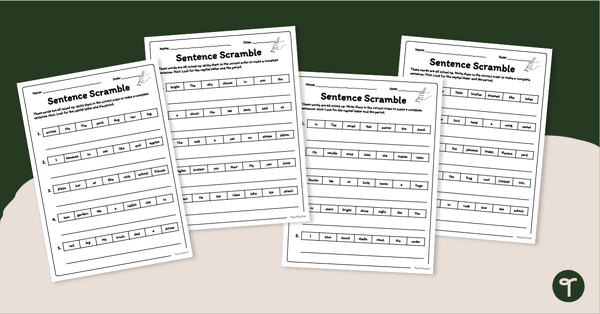
Scrambled Sentences Worksheets
Unscramble sentences and practise writing complete statements with a set of printable Scrambled Sentences Worksheets.
- Plus Plan
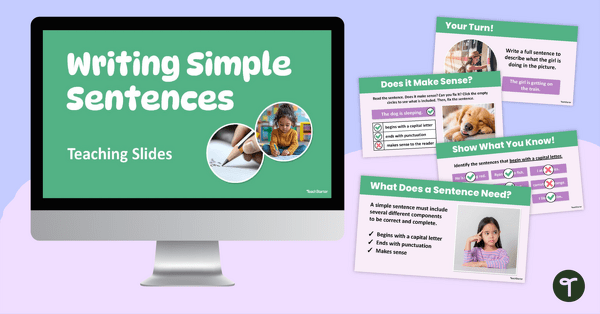
Introduction to Writing Simple Sentences PowerPoint
Teach students how to write simple sentences with these Writing Simple Sentences Teaching Slides.
- Plus Plan
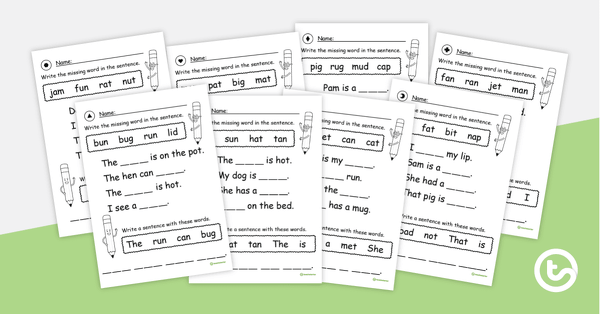
Complete the Sentences – Worksheets for Beginning Writers
A set of 10 worksheets for students to practise completing simple sentences.
- Plus Plan
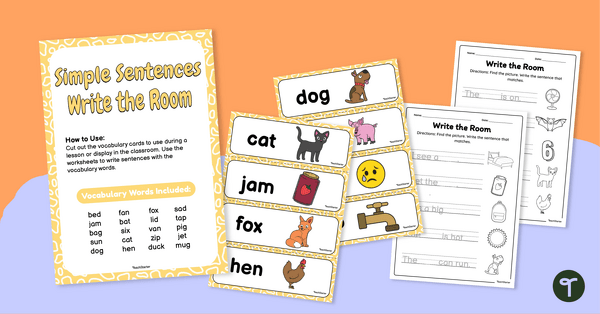
Writing Simple Sentences - Write the Room Activity
Use this simple sentence writing activity to learn how to write simple sentences with words around the room
- Plus Plan
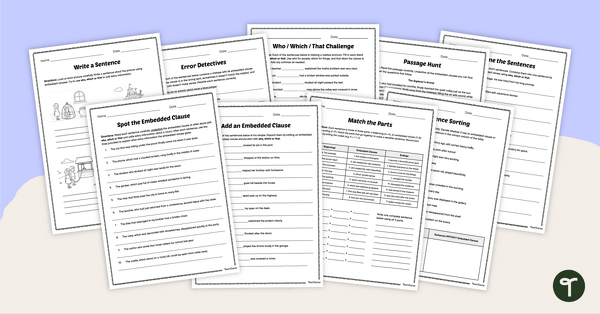
Embedded Clause Worksheets
Teach the embedded clause with these engaging and easy-to-use worksheets designed to build understanding through clear examples and guided practice.
- Plus Plan
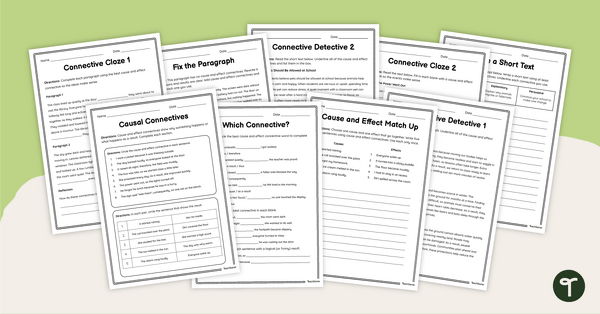
Causal Connectives Worksheet Pack
Teach causal connectives effectively with this comprehensive pack of 9 progressive worksheets designed to help your students master cause and effect relationships in writing.
- Plus Plan
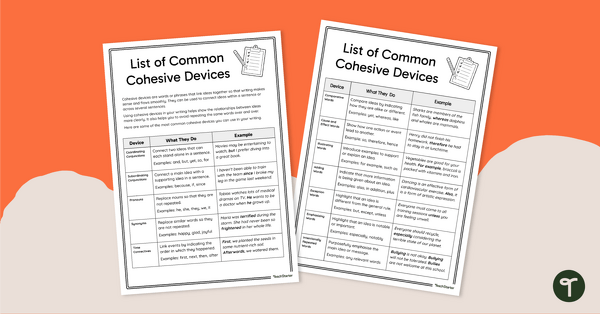
Cohesive Devices List
Download this cohesive devices list for your students to refer to when writing a variety of text types.
- Plus Plan
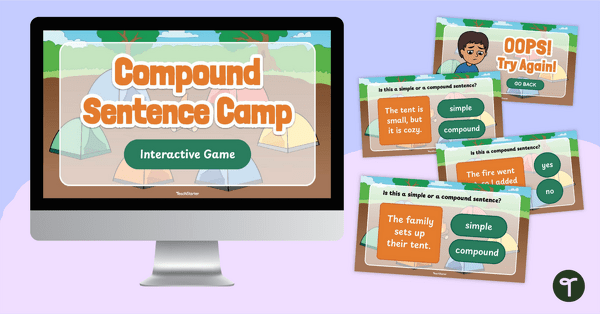
Compound Sentences Interactive Game
Use this camp-themed simple and compound sentences interactive game to help students practise identifying simple and compound sentences.
- Plus Plan
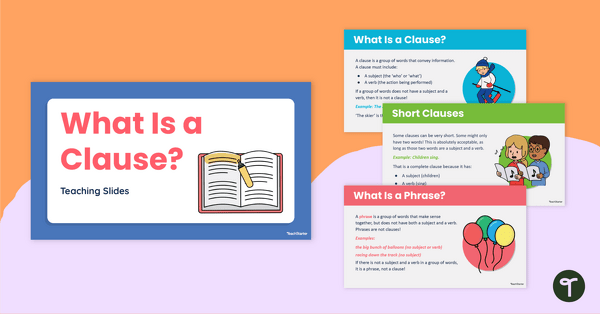
What Is a Clause? Teaching Slides
Explain what is a clause to help students confidently identify subjects and verbs and build stronger, more accurate sentences across their writing.
- Plus Plan
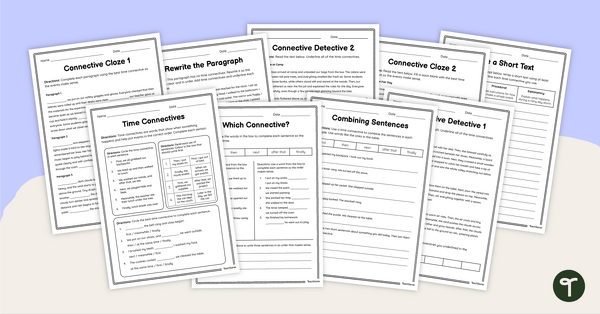
Time Connectives Worksheet Pack
Enhance your students' writing with this time connectives worksheet pack featuring 9 scaffolded activities that help young writers master sequencing events and ideas.
- Plus Plan
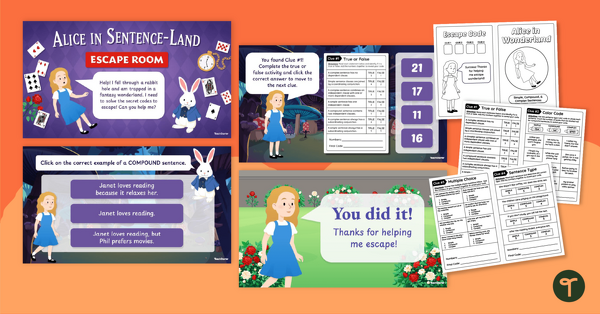
Alice in Wonderland Escape Room – Simple, Compound and Complex Sentences
Help Alice escape Sentence Land in this Alice in Wonderland Escape Room Game covering simple, compound and complex sentences.
- Plus Plan
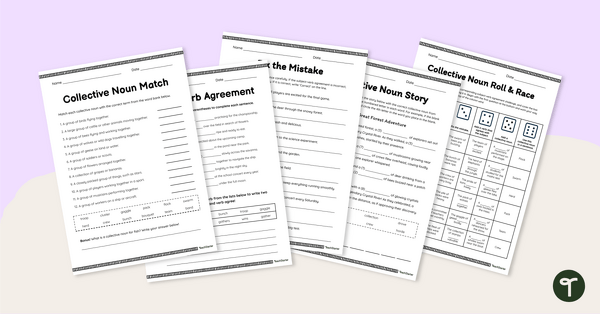
Subject Verb Agreement Collective Nouns Worksheet Pack
Download this subject-verb agreement collective nouns worksheet pack to help your students master tricky singular and plural verb choices when using collective nouns.
- Plus Plan
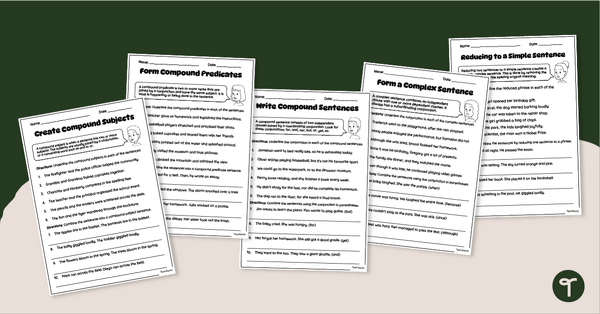
Combining Sentences Worksheet Pack
Download and use our combining sentences worksheet pack to help your students learn to combine sentences in various ways.
- Plus Plan
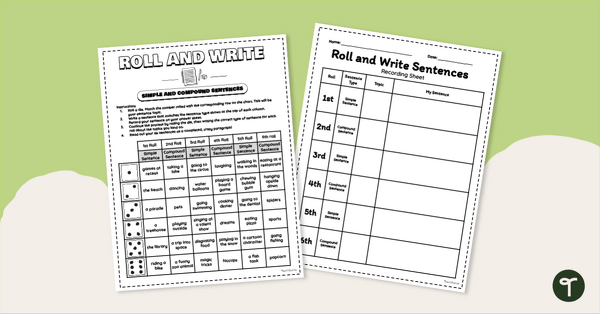
Simple and Compound - Roll a Sentence Dice Game
Play a ‘Roll-a-Sentence’ dice game to help your students practise writing simple and compound sentences.
- Plus Plan
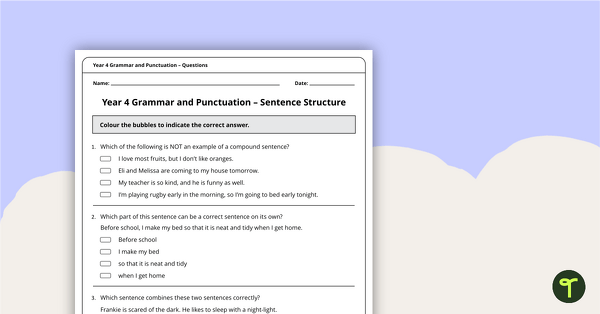
Grammar and Punctuation Assessment Tool – Year 4
A set of 5 grammar and punctuation assessment tools suited to Year 4 students.
- Plus Plan
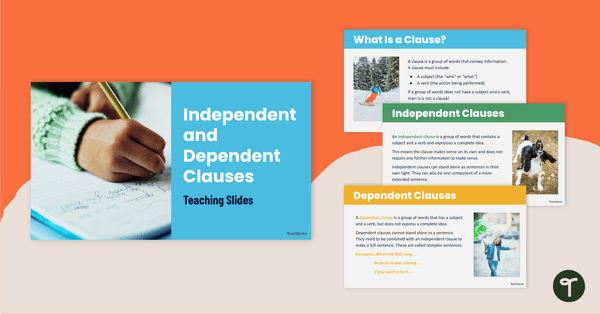
Independent and Dependent Clauses Teaching Slides
Support students to understand independent and dependent clauses through explicit instruction using this clear and engaging slide deck for Year 4 students.
- Plus Plan
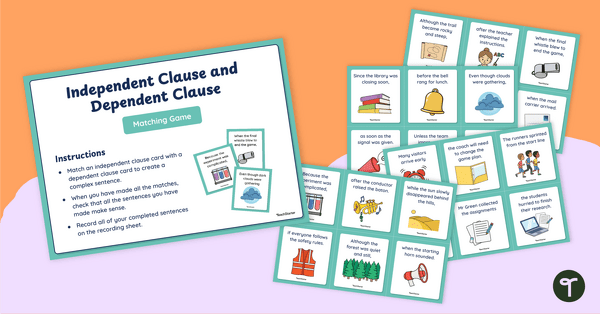
Independent Clauses and Dependent Clauses Matching Game
Download this independent clause and dependent clause matching game to help your students comprehend and build complex sentences.
- Plus Plan
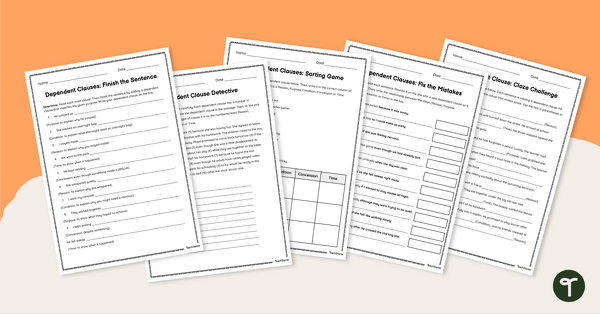
Dependent Clause Worksheets
Explore how a dependent clause can show purpose, time, reason, concession and condition with this engaging set of worksheets for Year 5 students.
- Plus Plan
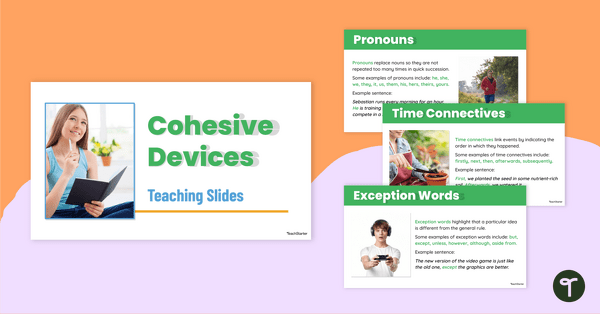
Cohesive Devices Teaching Slides
Explore cohesive devices with this engaging teaching slide deck designed to help primary students understand and use them confidently in their writing.
- Plus Plan
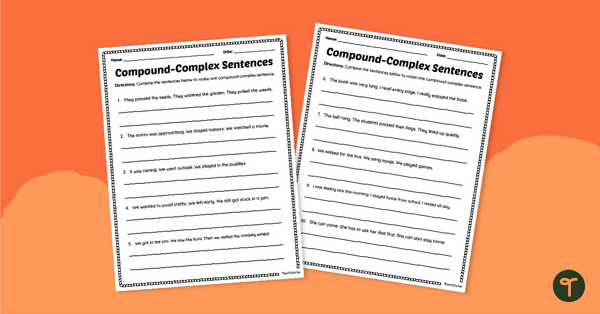
Writing Compound-Complex Sentences Worksheet
Use a Compound-Complex Sentences Worksheet to help your upper primary students learn to use advanced sentence structures in their writing.
- Plus Plan
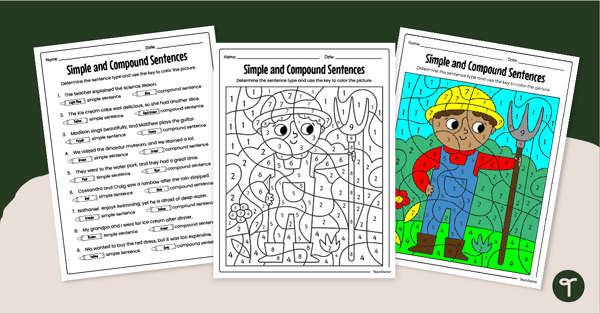
Colour By Code - Simple or Compound Sentence Worksheet
Use a Colour By Code Simple or Compound Sentence worksheet to help your students practise identifying simple and compound sentence types.
- Plus Plan
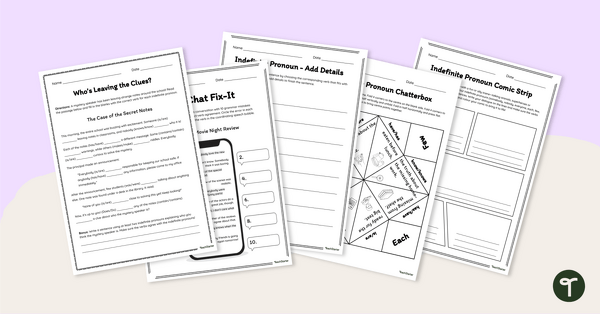
Indefinite Pronouns Subject Verb Agreement Worksheets
Support your students’ understanding of indefinite pronouns subject-verb agreement with this set of five worksheets featuring a variety of fun grammar activities.
- Plus Plan
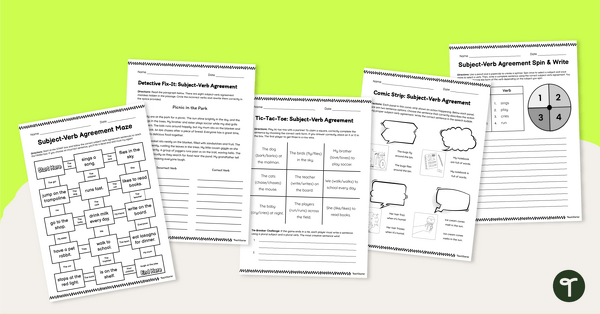
Subject Verb Agreement Singular and Plural Worksheet Pack
Enhance student understanding of subject-verb agreement (singular and plural) with this set of five engaging worksheets perfect for primary school grammar lessons.
- Plus Plan
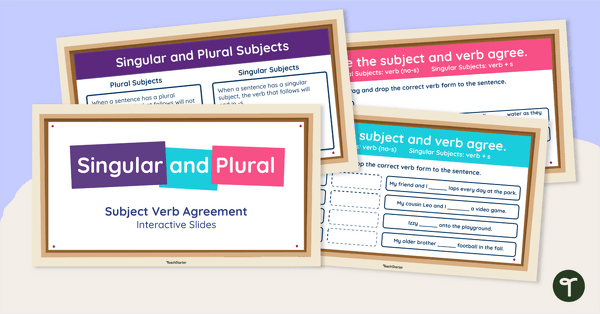
Singular and Plural Subject Verb Agreement – Interactive Activity
Teach singular and plural subject-verb agreement with this interactive drag-and-drop resource, designed to help students master correct verb usage in a fun and engaging way.
- Plus Plan
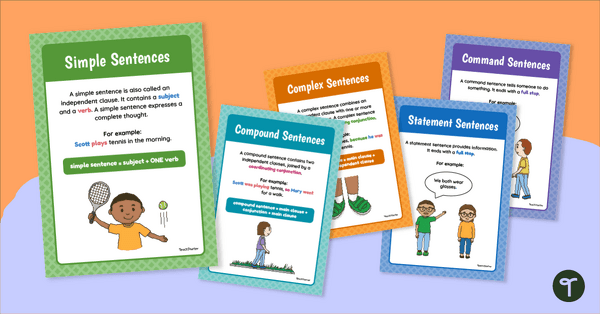
Types of Sentences Posters
Display a set of types of sentences posters to help your students discover various types of sentences.
- Plus Plan
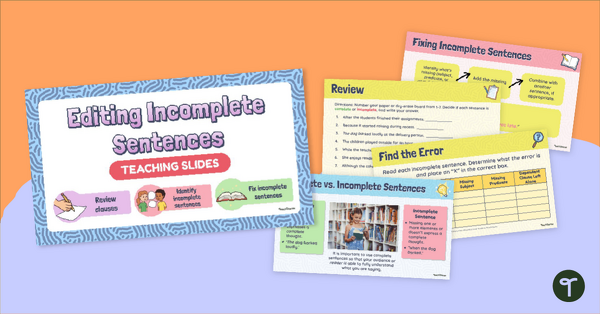
Editing Incomplete Sentences Teaching Slides
Teach your students how to correct incomplete sentences with a comprehensive Editing Incomplete Sentences Grammar PowerPoint.
- Plus Plan
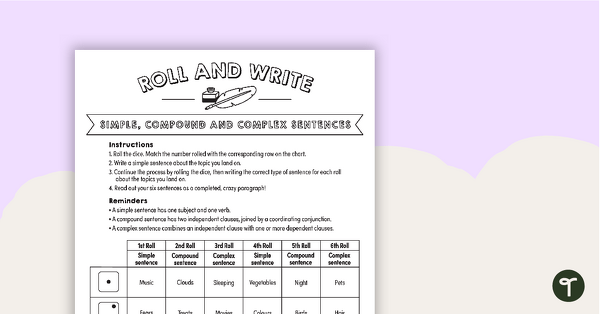
Roll and Write – Simple, Compound and Complex Sentences
An interactive activity to help students practise writing simple, compound and complex sentences.
- Plus Plan
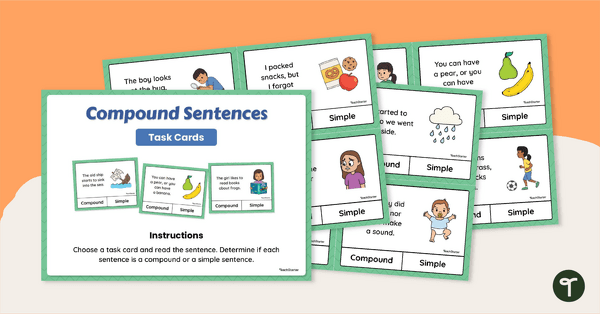
Compound and Simple Sentences Task Cards
Use these compound and simple sentence task cards to help your students identify the difference between these types of sentences.
- Plus Plan
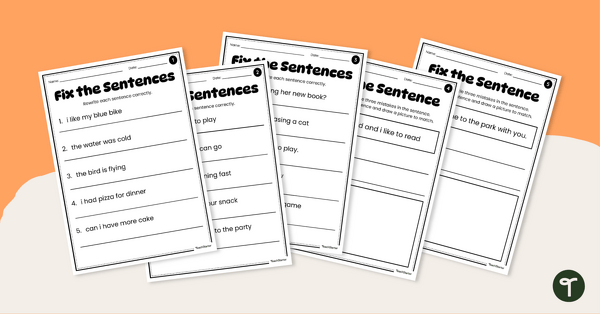
Fix the Sentences Worksheets
Use these Fix the Sentences Worksheets to help your students become confident writers.
- Plus Plan
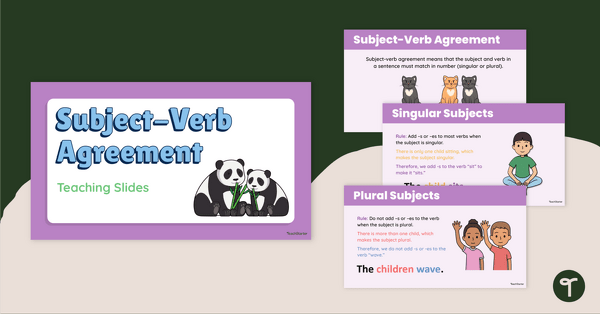
Subject Verb Agreement PowerPoint
Use this subject-verb agreement PowerPoint to teach your students about singular and plural subject-verb agreement in a clear and engaging way.
- Plus Plan
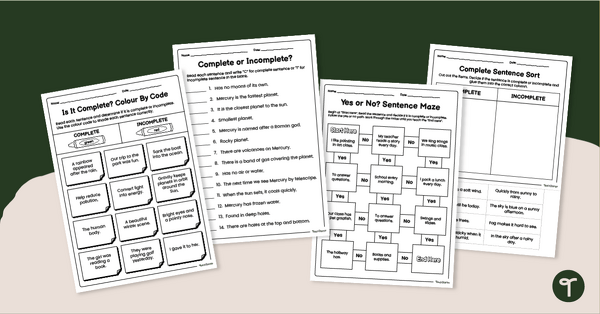
Complete or Incomplete Sentences Worksheet
Download our printable Complete or Incomplete Sentences Worksheet Pack to help your students practise identifying examples of complete and incomplete sentences.
- Plus Plan
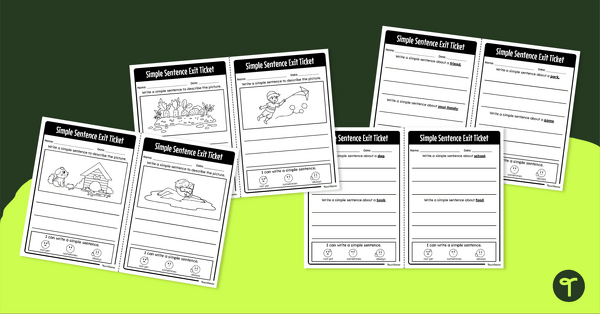
Simple Sentence Exit Tickets
Check your students' knowledge of simple sentences with this set of simple sentence exit tickets perfect for kindergarten.
- Sentence Structure Worksheets
- Sentence Structure Games
- Sentence Structure Teaching Presentations
- Sentence Structure Posters
- Sentence Structure for Foundation Year
- Sentence Structure for Year 1
- Sentence Structure for Year 2
- Sentence Structure for Year 3
- Sentence Structure for Year 4
- Sentence Structure for Year 5
- Sentence Structure for Year 6