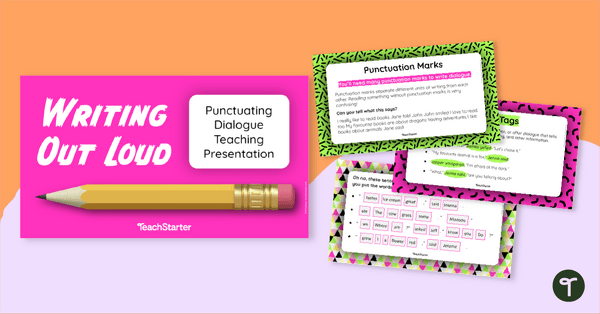
Teach how to write dialogue with confidence using this engaging slide deck that helps students correctly punctuate, structure and edit dialogue in their own writing.
Confidently Teach How to Write Dialogue
Many students tend to add dialogue to their narratives. After all, conversation is a mode of communication they are familiar with! However, applying the correct dialogue punctuation conventions is something many students struggle with. Teachers commonly see missing quotation marks, misplaced commas, incorrect capitalisation or dialogue tags that don’t quite fit the sentence.
This 19-slide teaching presentation has been created by our team to help you teach your students how to write dialogue by breaking the process down into clear, manageable steps. The teaching slides explicitly explain the key components of a dialogue sentence, including:
- Spoken words
- Quotation marks
- Dialogue tags
- Commas
- End punctuation
Students are also introduced to the three possible positions of a dialogue tag: before the spoken words, in the middle of the spoken words, and at the end of the spoken words. The slide deck also includes examples, review opportunities, common dialogue-writing mistakes to avoid, and a practical checklist that students can use to self-monitor their work.
This slide deck for teaching how to write dialogue downloads as a Google Slides file or a Microsoft PowerPoint file. Whether you’re introducing dialogue for the first time or revisiting it during a narrative writing unit, this resource provides a structured and engaging way to reinforce essential writing conventions.
Mastering Dialogue Punctuation Through Explicit Teaching
Mastering dialogue punctuation takes time! It’s important that students are exposed to direct instruction, guided modelling and repeated practice opportunities.
This resource supports the explicit teaching of dialogue punctuation, making it an essential addition to any teacher’s toolkit. Here’s how it helps students:
- Clearly identifies and explains the purpose of each component of a dialogue sentence, including quotation marks, dialogue tags, commas and end punctuation.
- Teaches how punctuation affects meaning and readability, allowing readers to clearly distinguish between spoken words and narrative text.
- Models correct dialogue sentence structures through multiple age-appropriate examples and guided explanations.
- Highlights common errors, such as missing quotation marks, incorrect comma placement or misused dialogue tags.
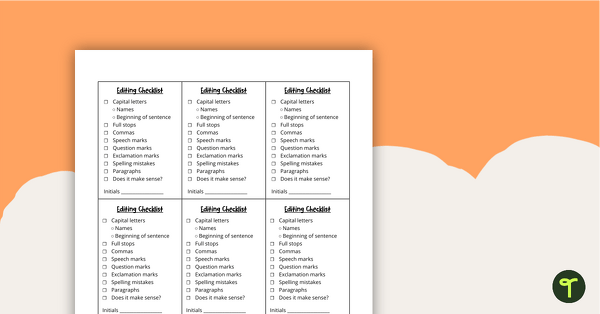
- Builds confidence by providing a practical checklist students can use when applying the skill independently.
Download This Dialogue PowerPoint Today!
Ready to use this Dialogue PowerPoint in your grammar lessons? Use the dropdown menu on the Download button to access either the Microsoft PowerPoint or Google Slides version of this slide deck. (Note: You will be prompted to make a copy of the Google Slides presentation before accessing it.)
Designed for immediate use, this resource is perfect for busy teachers who need reliable, high‑quality punctuation lessons without the extra prep!
This resource was created by Lindsey Phillips, a teacher and Teach Starter collaborator.
More Resources for Teaching Dialogue Punctuation
Are you looking for more age-appropriate resources for teaching dialogue punctuation to your primary school students? Click below to explore more curriculum-aligned worksheets and activities created by our experienced and passionate team.
[resource:5096205] [resource:5104638] [resource:5110892]

0 Comments
Write a review to help other teachers and parents like yourself. If you'd like to request a change to this resource, or report an error, select the corresponding tab above.