ELAR 3.10
Author's purpose and craft: listening, speaking, reading, writing, and thinking using multiple texts. The student uses critical inquiry to analyze the authors' choices and how they influence and communicate meaning within a variety of texts. The student analyzes and applies author's craft purposefully in order to develop his or her own products and performances. The student is expected to:
- (1) explain the author's purpose and message within a
text;
- (A) explain how the use of text structure contributes to the author's purpose;
- (B) explain the author's use of print and graphic features to achieve specific purposes;
- (C) describe how the author's use of imagery, literal and figurative language such as simile, and sound devices such as onomatopoeia achieves specific purposes;
- (D) identify the use of literary devices, including first- or third-person point of view;
- (E) discuss how the author's use of language contributes to voice; and
- (F) identify and explain the use of hyperbole.
- Free Plan
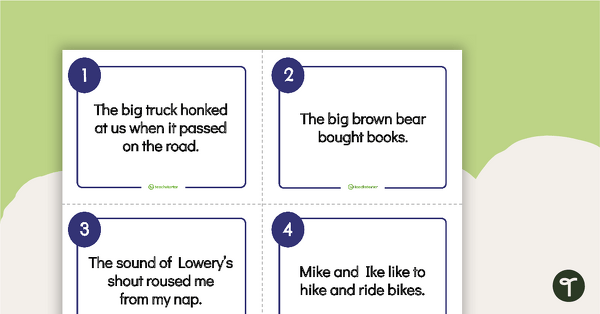
Sound Devices Sorting Activity
Reinforce sound devices used in text by sorting 16 poetic device cards into their appropriate category.
- Free Plan
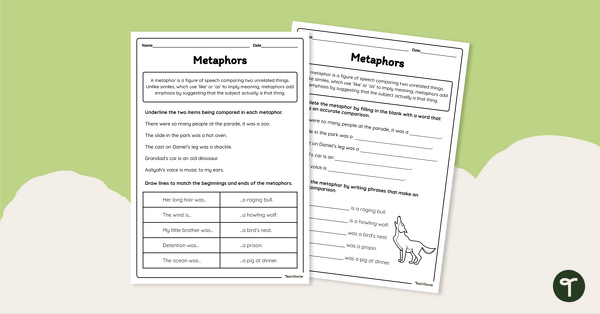
Metaphors Worksheet
Practice identifying and using metaphors with this differentiated metaphors worksheet.
- Free Plan
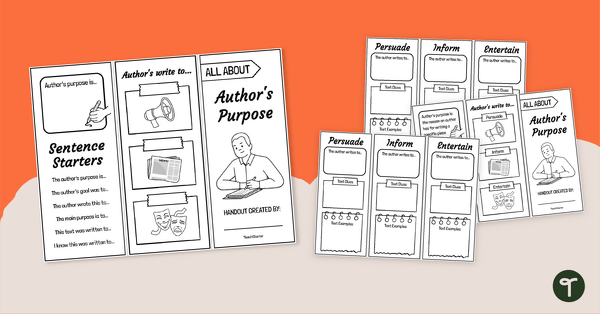
Free Author’s Purpose Handout
Use this Author’s Purpose Handout in the form of a brochure to explore the different reasons authors write.
- Plus Plan
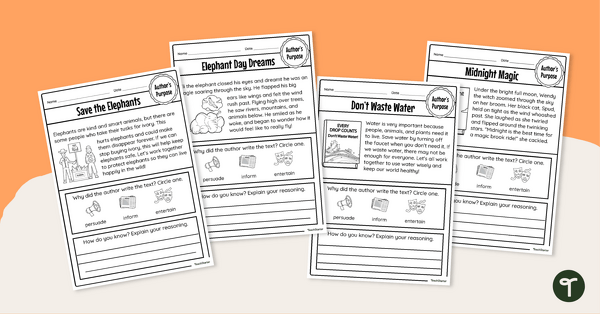
Author’s Purpose Reading Passages Worksheet Set
Explore the Author's Purpose in these reading passages with this set of Author's Purpose worksheets.
- Free Plan
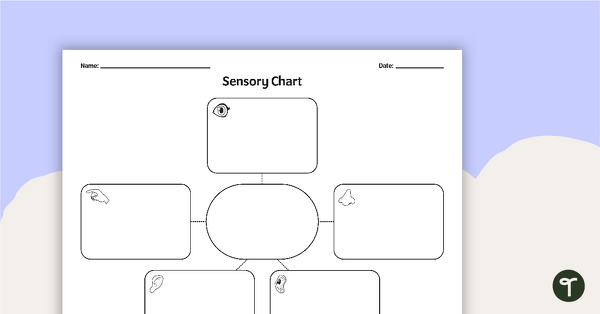
Sensory Chart Graphic Organizer
A graphic organizer for students to use when categorizing sensory details.
- Plus Plan
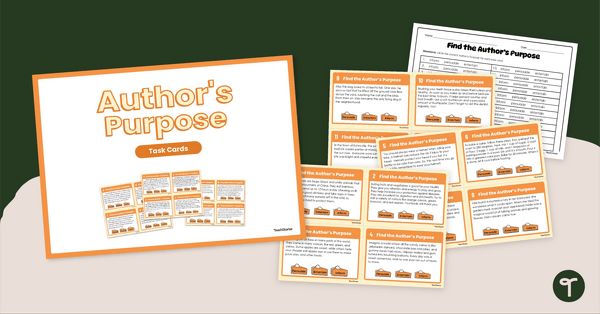
Author's Purpose Task Cards
Help your students master the skill of identifying the author’s purpose with this set of engaging Author’s Purpose task cards.
- Plus Plan
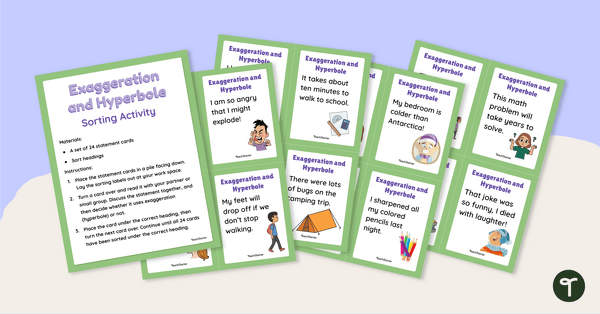
Exaggeration and Hyperbole Sorting Activity
Explore examples of hyperbole with your students using this set of 24 sorting cards perfect for your reading centers.
- Plus Plan
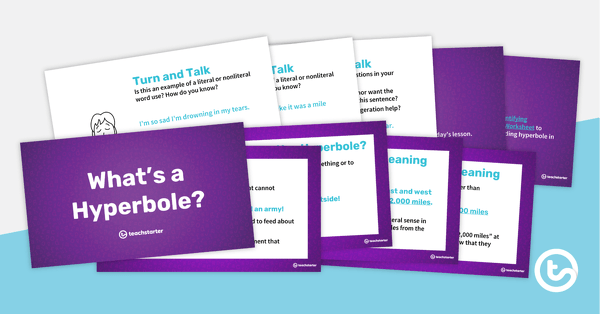
What's a Hyperbole? PowerPoint
An editable 20-slide PowerPoint to use when teaching your students about hyperbole.
- Plus Plan
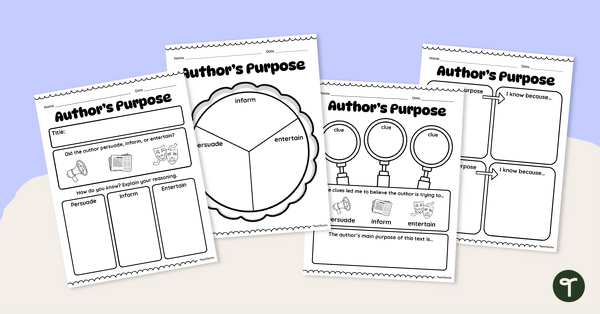
Author’s Purpose Graphic Organizer Pack
Explore the purpose of an author's writing with these Author's Purpose Graphic Organizers.
- Plus Plan
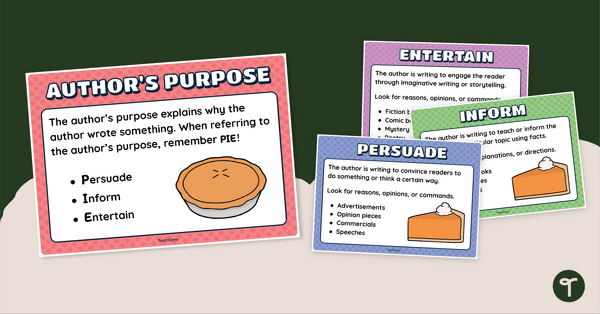
Author's Purpose Anchor Chart Set
Display this set of Author’s Purpose Pie posters to help students remember the various reasons authors write.
- Plus Plan
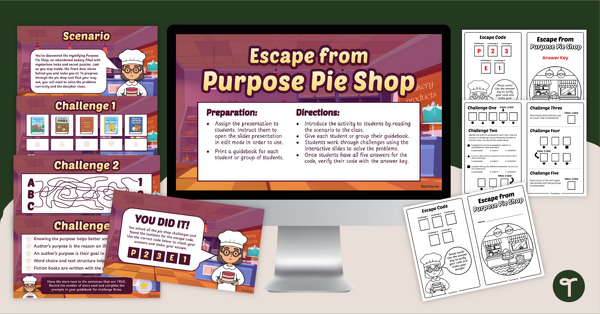
What is the Author's Purpose? Escape Room
Get your students excited to practice understanding what is the author’s purpose with this engaging escape room activity.
- Plus Plan
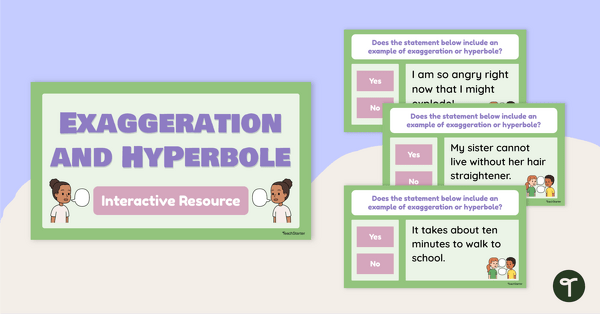
Exaggeration and Hyperbole Interactive Activity
Explore hyperbole examples with your students using this digital game perfect for lesson warm-ups or lesson wrap-ups.
- Free Plan
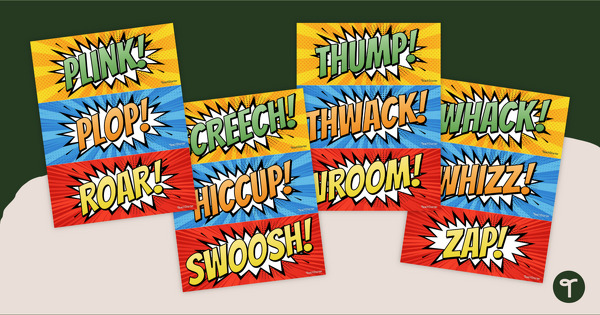
Onomatopoeia Words - Vocabulary Display
Display a fun onomatopoeia word wall in your classroom with printable cards containing onomatopoeia examples.
- Plus Plan
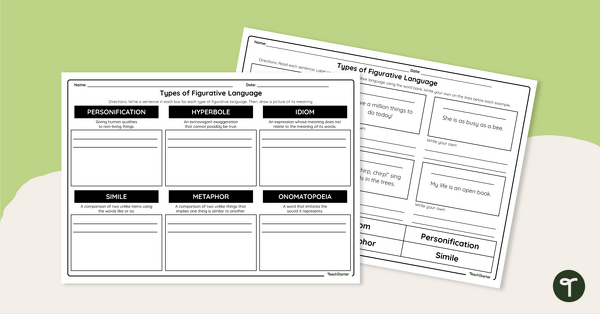
Types of Figurative Language - Worksheet
Practice identifying and creating examples of figurative language with this printable worksheet.
- Plus Plan
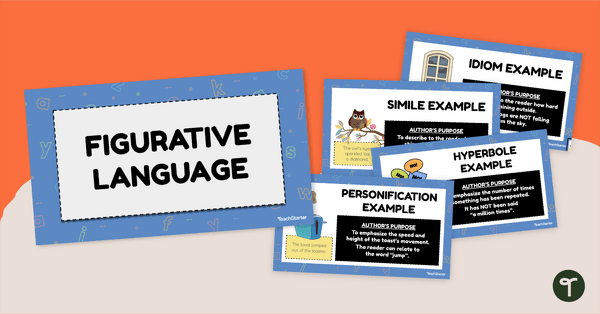
Figurative Languages Lesson - Slide Deck
Teach figurative language using our comprehensive instructional slide deck and accompanying activities.
- Plus Plan
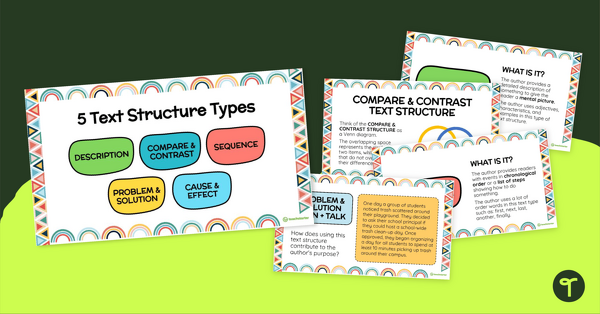
Text Structures Slide Deck
An editable text structure instructional slide deck to use when teaching text structures to your students.
- Plus Plan
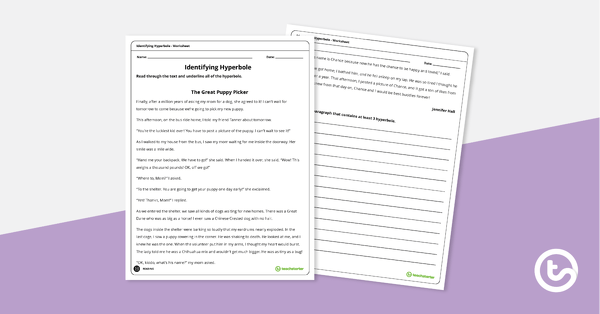
Identifying Hyperbole - Worksheet
A worksheet to practice identifying hyperbole in a piece of text.
- Plus Plan
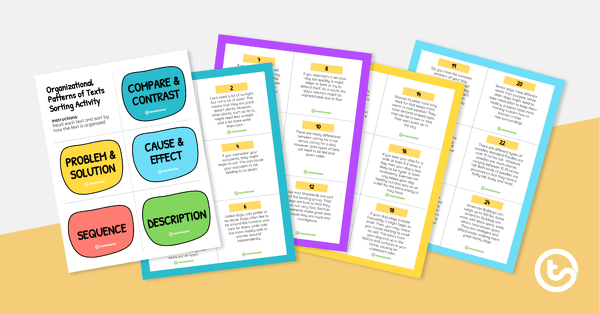
Text Structures Sorting Activity
A set of 24 text structure cards to use in a sorting or scoot activity.
- Plus Plan
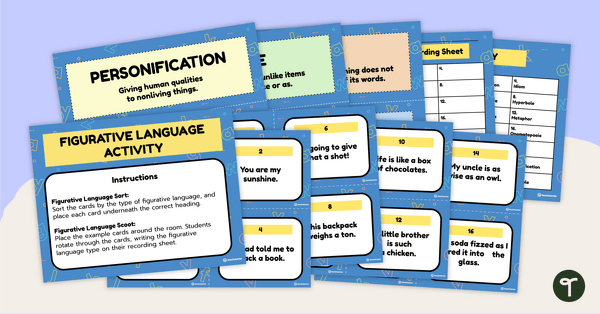
Figurative Language Sorting Activity
Explore figurative language in context with this set of 28 sorting cards.
- Plus Plan
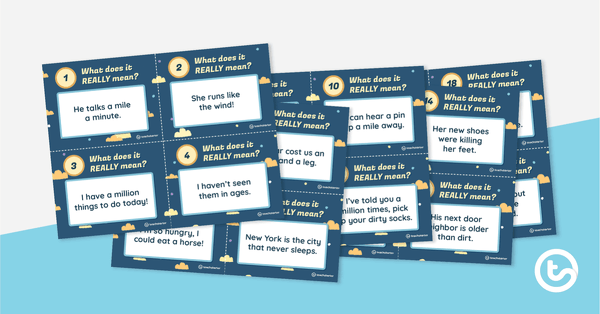
What Does It Really Mean? - Hyperbole Task Cards
Identify and interpret hyperboles used in sentences.
- Plus Plan
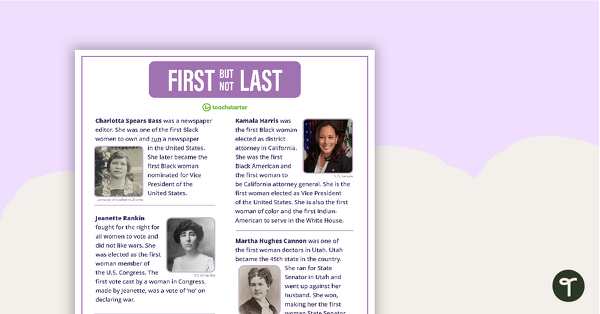
First But Not Last – Comprehension Task
An article about historic women paired with a comprehension task.
- Plus Plan
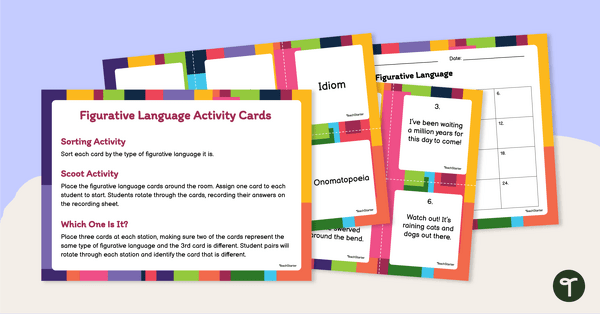
Figurative Language - SCOOT! Task Cards
Explore figurative language in multiple ways with the set of 24 task cards.
- Plus Plan

Sequence Persuasive Text Examples – Cut and Paste Worksheets
Use this example persuasive text pack to teach your students about sequencing arguments in a logical order.
- Free Plan
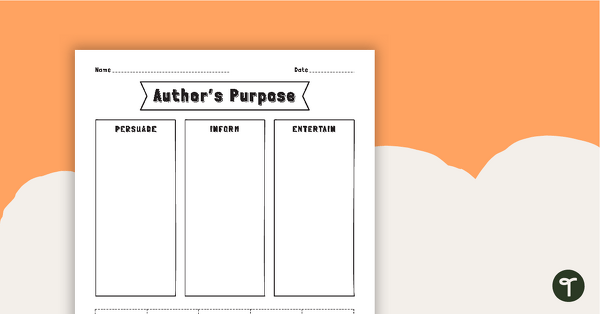
Author's Purpose - Sorting Worksheet
A teaching resource to help teach your students about author's purpose.
- Plus Plan
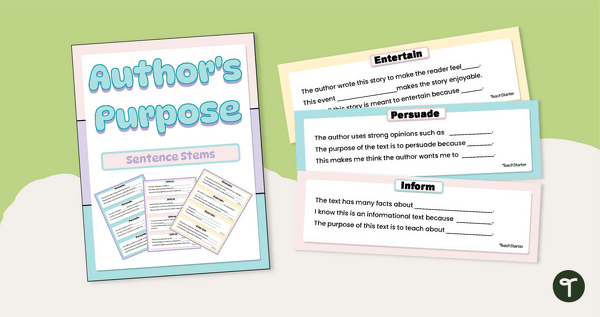
Author's Purpose Sentence Stem Flashcards
Assist students in identifying the author’s purpose with this set of Author’s Purpose Sentence Stem flashcards.
- Plus Plan
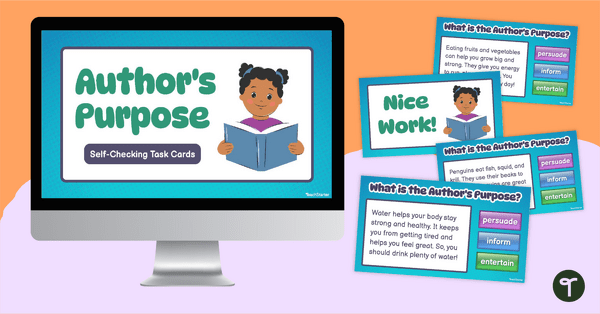
Author's Purpose Quiz – Self-Checking Task Cards
Engage students with their learning on author's purpose with this Author's Purpose Quiz.
- Plus Plan
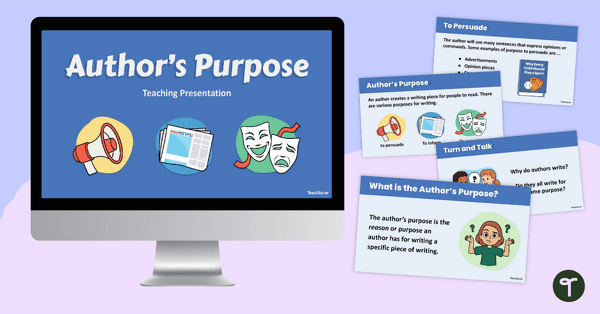
Author's Purpose PowerPoint
Use this Author's Purpose PowerPoint to teach your students how to identify the author’s purpose in a text.
- Plus Plan
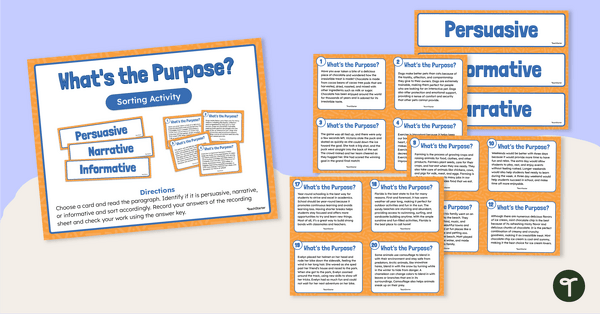
Author’s Purpose Sorting Activity
Use this author’s purpose sorting activity to teach your students the difference between persuasive, informative and narrative writing.
- Plus Plan
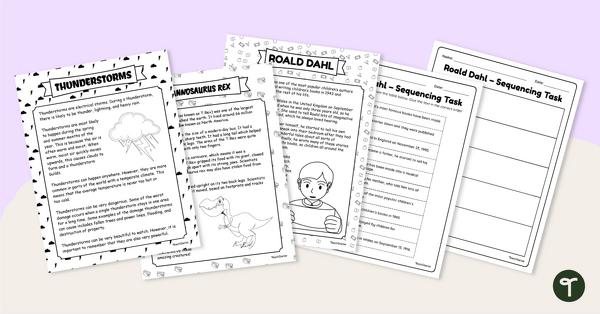
Sequence an Information Text – Cut and Paste Worksheets
Use these informational text examples to teach your students about sequencing facts in a logical order.
- Plus Plan
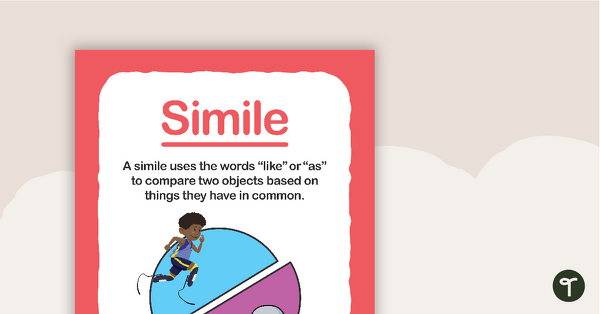
Simile Poster (Primary)
Show your students an example of a simile using this colorful classroom display poster.
- Plus Plan
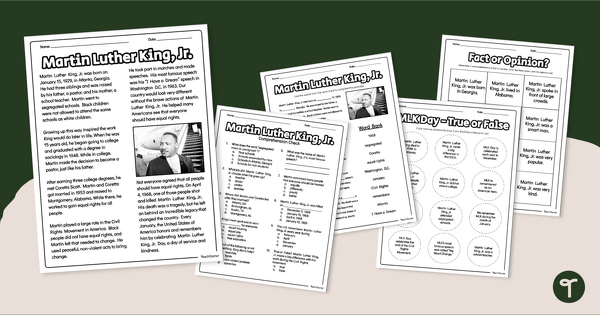
Martin Luther King, Jr. Reading Activity Pack
Apply a range of reading comprehension strategies to learn about Martin Luther King, Jr.
- Plus Plan
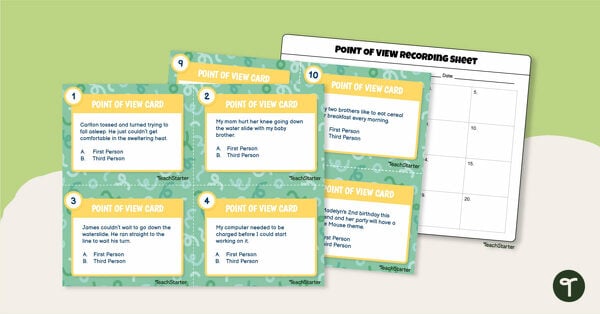
Point of View Task Cards - Beginner Set
Use these colorful, fun task cards to help your beginning reader identify first, and third-person point of view (POV)