ELAR 4.10
Author's purpose and craft: listening, speaking, reading, writing, and thinking using multiple texts. The student uses critical inquiry to analyze the authors' choices and how they influence and communicate meaning within a variety of texts. The student analyzes and applies author's craft purposefully in order to develop his or her own products and performances. The student is expected to:
- (1) explain the author's purpose and message within a
text;
- (A) explain how the use of text structure contributes to the author's purpose;
- (B) analyze the author's use of print and graphic features to achieve specific purposes;
- (C) describe how the author's use of imagery, literal and figurative language such as simile and metaphor, and sound devices such as alliteration and assonance achieves specific purposes;
- (D) identify and understand the use of literary devices, including first- or third-person point of view;
- (E) discuss how the author's use of language contributes to voice; and
- (F) identify and explain the use of anecdote.
- Plus Plan
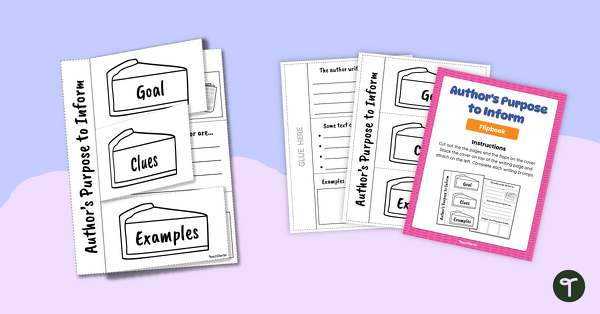
Author’s Purpose to Inform Flipbook
Help students explore the Author’s Purpose to Inform with this engaging and interactive flipbook!
- Plus Plan
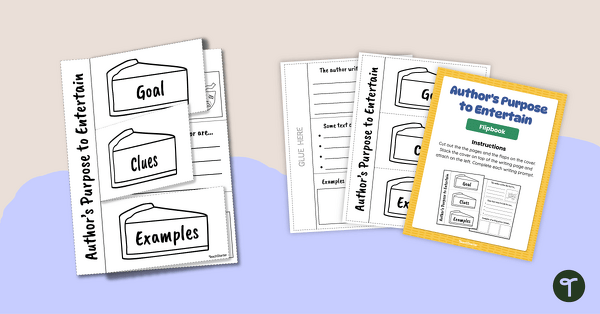
Author’s Purpose to Entertain Flipbook Template
Help students explore the Author’s Purpose to Entertain with this engaging and interactive flipbook.
- Plus Plan
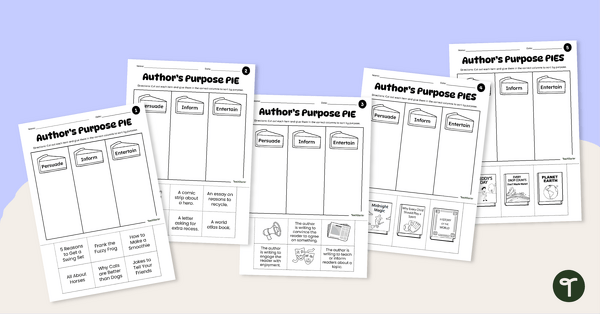
Author’s Purpose Pie Worksheet Set
Practice Author’s Purpose knowledge with this set of Author’s Purpose Worksheets.
- Plus Plan
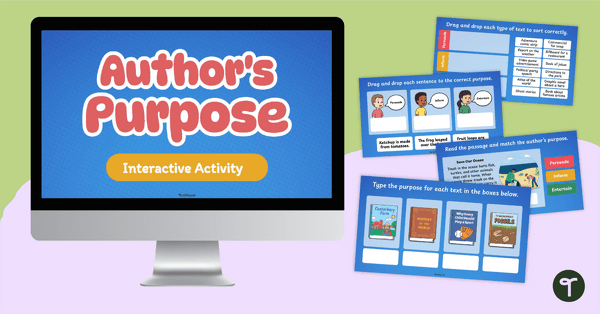
Author’s Purpose Activity - Digital Task Cards
Explore Author’s Purpose with this set of engaging and interactive Author’s Purpose Activity digital task cards.
- Plus Plan
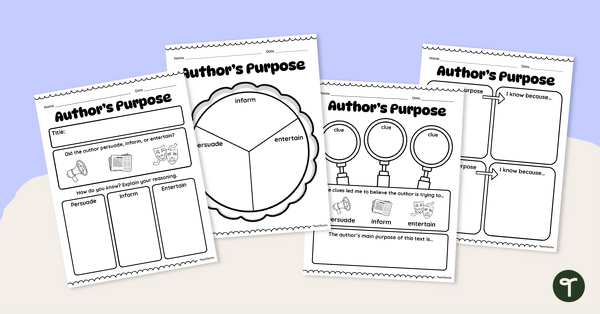
Author’s Purpose Graphic Organizer Pack
Explore the purpose of an author's writing with these Author's Purpose Graphic Organizers.
- Plus Plan
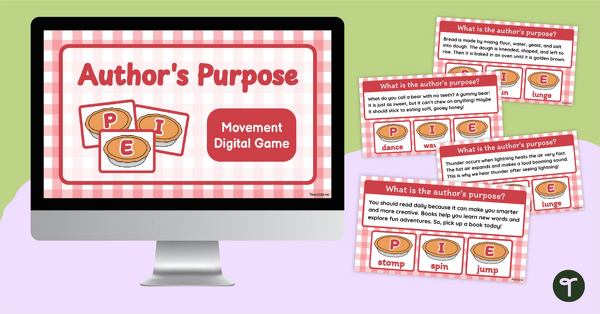
Author’s Purpose Game - Movement Activity
Explore Author’s Purpose in texts through movement using this fun and engaging Author’s Purpose Game.
- Plus Plan
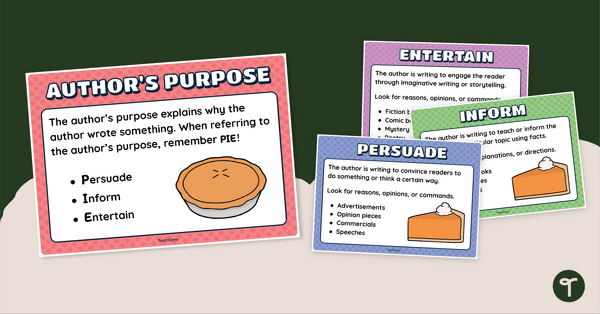
Author's Purpose Anchor Chart Set
Display this set of Author’s Purpose Pie posters to help students remember the various reasons authors write.
- Plus Plan
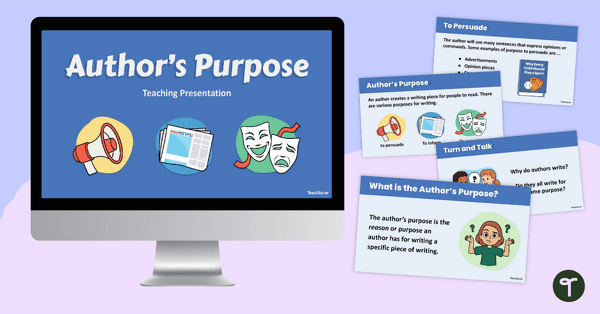
Author's Purpose PowerPoint
Use this Author's Purpose PowerPoint to teach your students how to identify the author’s purpose in a text.
- Plus Plan
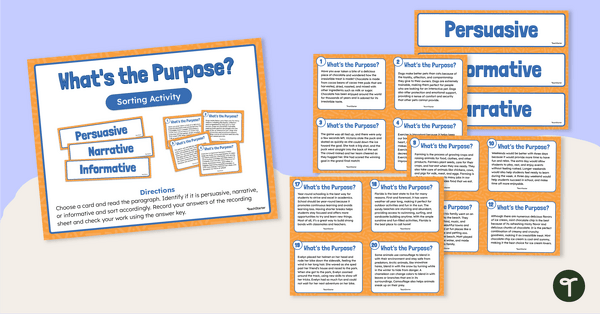
Author’s Purpose Sorting Activity
Use this author’s purpose sorting activity to teach your students the difference between persuasive, informative and narrative writing.
- Free Plan
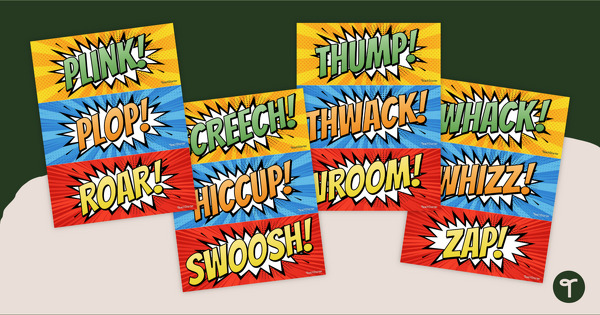
Onomatopoeia Words - Vocabulary Display
Display a fun onomatopoeia word wall in your classroom with printable cards containing onomatopoeia examples.
- Plus Plan
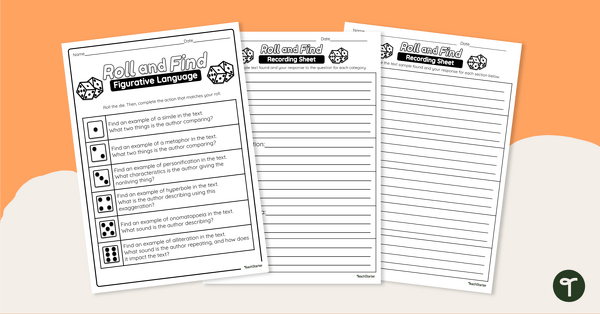
Roll and Find – Figurative Language Worksheet
Explore, identify and interpret figurative language with this engaging roll and find activity.
- Plus Plan
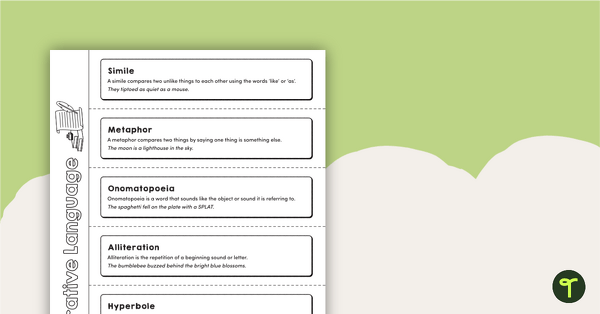
Figurative Language Flip Book
Practice identify examples of figurative language with this flip book template for kids.
- Plus Plan
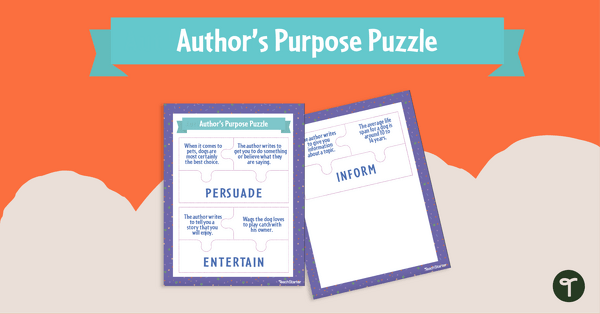
Author's Purpose - Puzzle Activity
A teaching resource to help teach your students about author’s purpose.
- Plus Plan
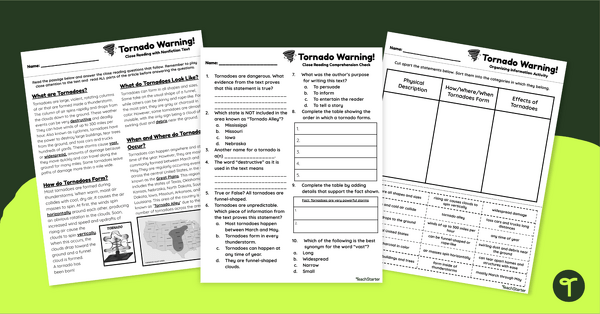
4th Grade Writing Worksheets: Tornado Text-Based Writing
Enhance your students' comprehension, vocabulary, and writing skills using 4th Grade writing worksheets and a high-interest reading passage about Tornadoes.
- Plus Plan
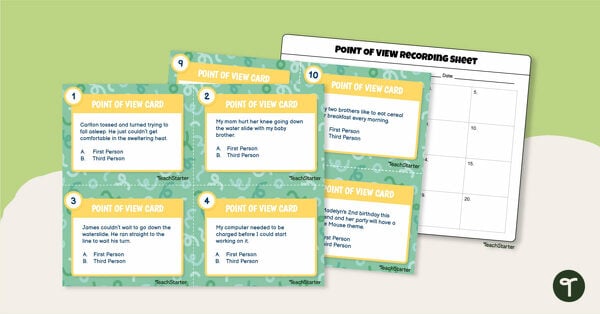
Point of View Task Cards - Beginner Set
Use these colorful, fun task cards to help your beginning reader identify first, and third-person point of view (POV)
- Plus Plan
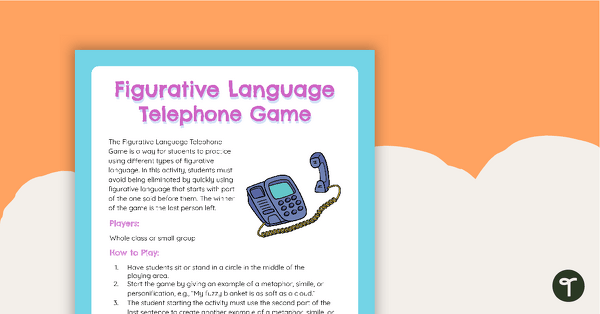
Figurative Language Telephone Game
Play this figurative language game with a group to practice recognizing and inventing metaphors, similes, and personification.
- Plus Plan
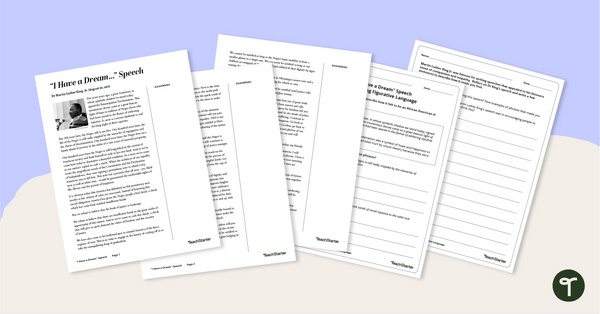
I Have a Dream - Speech Analysis Activity
Review MLK's "I Have a Dream" speech text and explore the metaphors he used to convey his message through the accompanying questions.
- Plus Plan
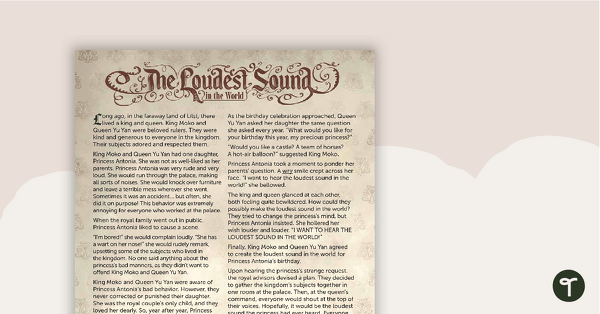
Write a Short Story – The Tale of Transformation
Get your students analyzing and writing a story with a lesson with this engaging and fully scaffolded writing project booklet.
- Plus Plan
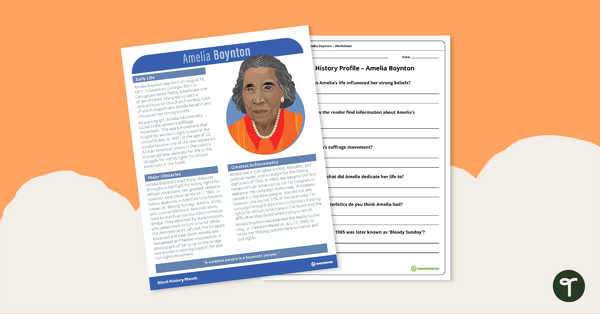
Black History Profile: Amelia Boynton - Comprehension Worksheet
Review our profile on civil rights activist Amelia Boynton and answer questions to reinforce understanding.
- Plus Plan
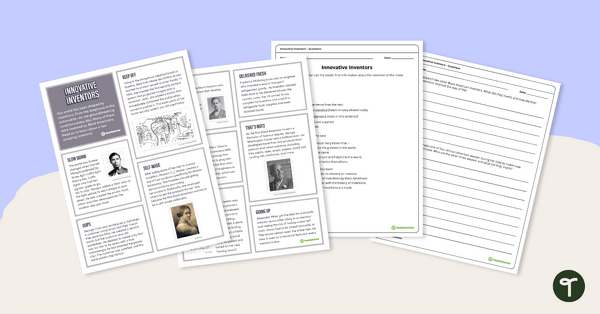
Innovative Inventors - Comprehension Worksheet
Meet famous Black History Month figures with this informational text and comprehension questions activity.
- Plus Plan
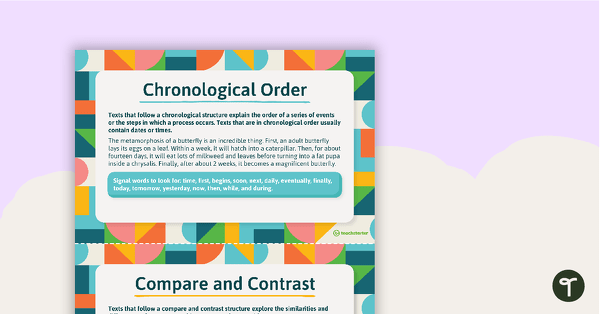
Organizational Patterns – Sorting Activity
A set of flashcards and paragraphs to use as a sorting activity.
- Plus Plan
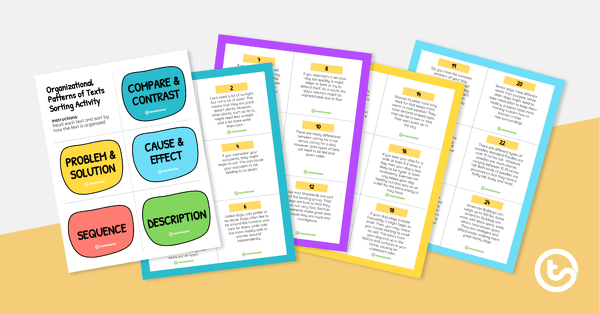
Text Structures Sorting Activity
A set of 24 text structure cards to use in a sorting or scoot activity.
- Plus Plan
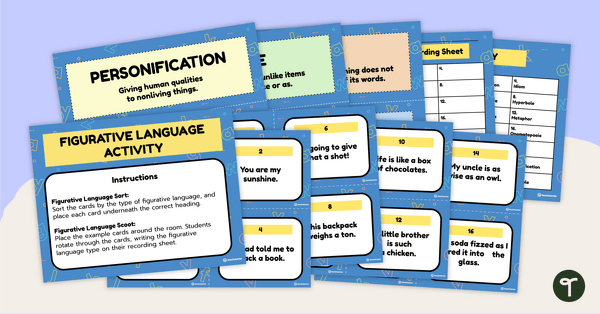
Figurative Language Sorting Activity
Explore figurative language in context with this set of 28 sorting cards.
- Plus Plan
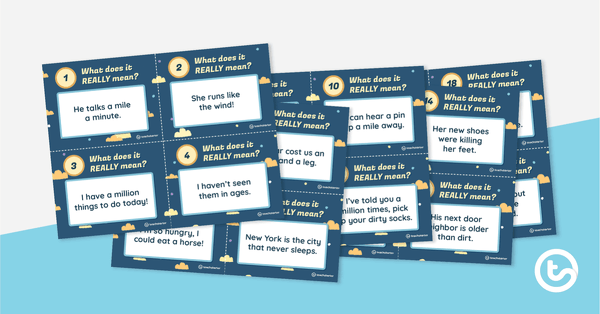
What Does It Really Mean? - Hyperbole Task Cards
Identify and interpret hyperboles used in sentences.
- Plus Plan
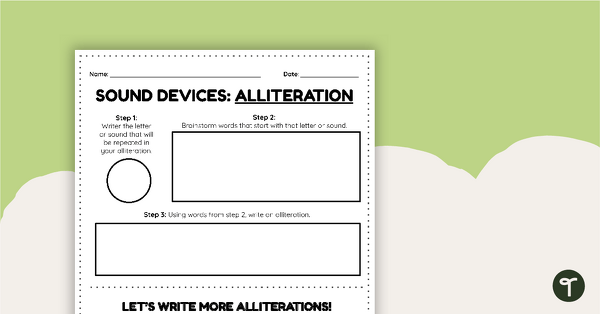
Alliteration Brainstorming Template
Use this brainstorming template to practice using the sound device alliteration.
- Plus Plan
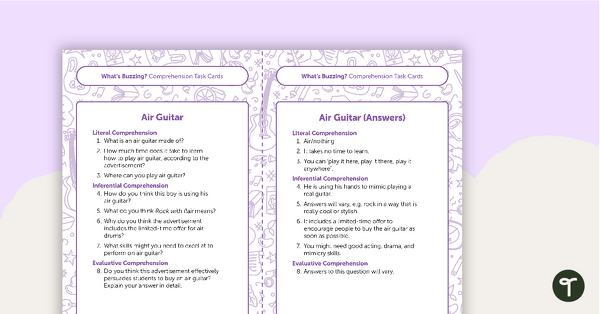
Grade 4 Magazine - "What's Buzzing?" (Issue 1) Task Cards
A set of five literacy rotation task cards to be used in conjunction with issue 1 of Teach Starter's Grade 4 "What's Buzzing?" magazine.
- Plus Plan
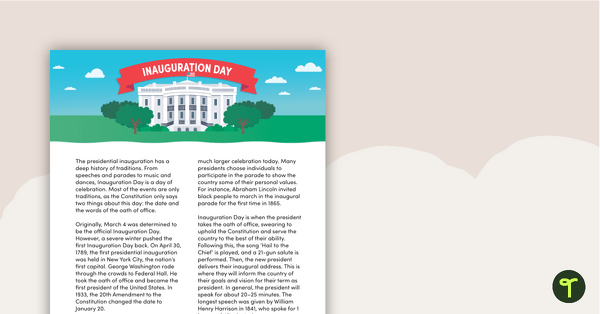
Inauguration Day – Comprehension Task
A comprehension task paired with a text about Inauguration Day.
- Plus Plan
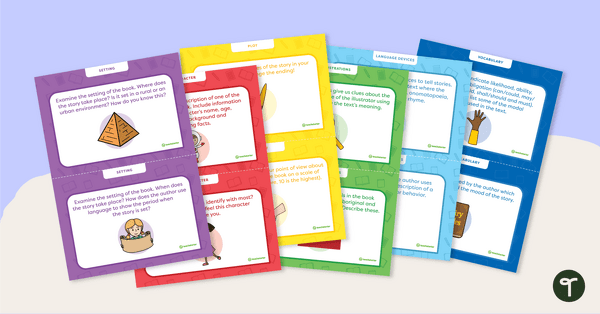
Literary Element Task Cards - Upper Elementary
Explore the wonders of children's literature with this set of 14 literature study task cards for upper elementary students.
- Plus Plan
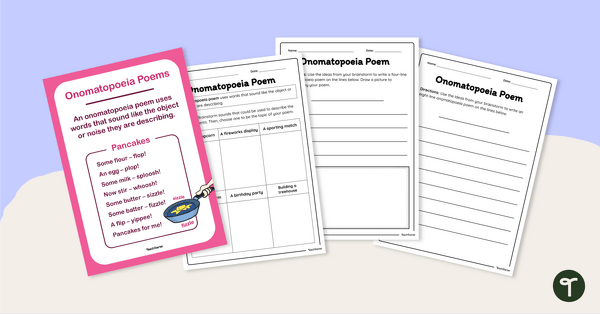
Onomatopoeia Poems Poster and Templates
Use this onomatopoeia poem poster and accompanying template to teach your students how to write an onomatopoeia poem.
- Plus Plan
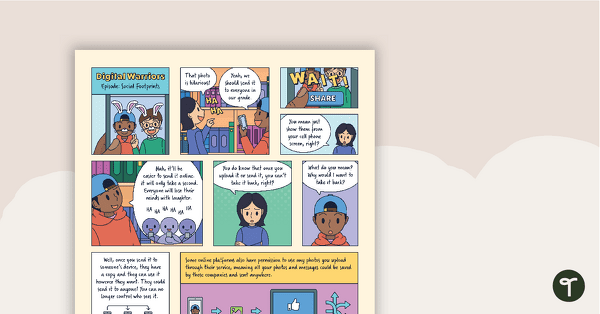
Digital Warriors: Social Footprints – Comprehension Worksheet
A comprehension worksheet paired with a comic about being safe when sharing photos on digital platforms.
- Plus Plan
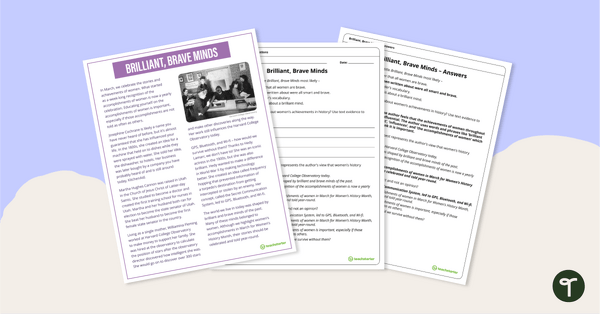
Brilliant, Brave Minds – Comprehension Task
An article and comprehension task celebrating women and Women's History Month.
- Plus Plan
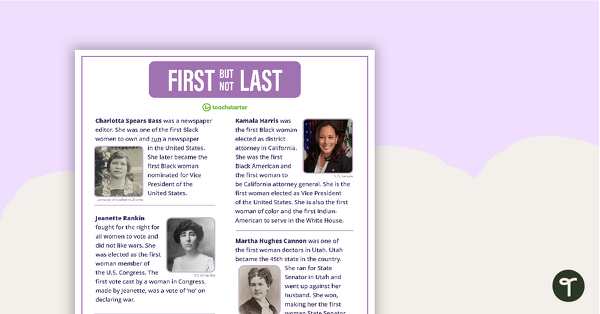
First But Not Last – Comprehension Task
An article about historic women paired with a comprehension task.