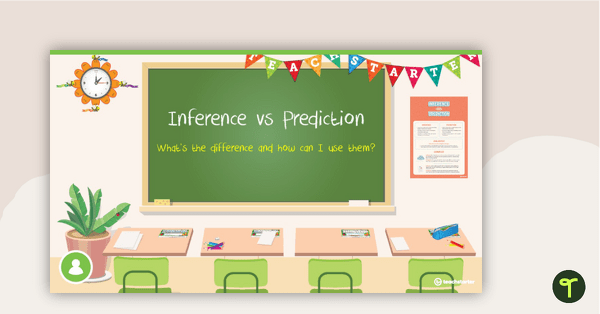
Use this prediction vs inference teaching presentation to help your students tell the difference between these two essential reading comprehension strategies.
Prediction vs Inference: Two Essential Comprehension Skills
Understanding prediction vs inference is a key milestone in developing strong readers. While students often think these skills are the same, this is certainly not the case. Although they are similar, there are subtle differences between the two.
This 20-slide teaching presentation has been created by our team to clearly break down the similarities and differences between inferences and predictions in a way that is accessible, engaging and practical for elementary school classrooms. The slides break down the topic into manageable chunks by answering the following key questions:
- What is an inference?
- How do we make inferences?
- What is a prediction?
- How do we make predictions?
- What are the similarities between predictions and inferences?
- What are the differences between predictions and inferences?
This resource supports teachers in explicitly modeling the thinking process behind both skills, helping students move beyond guessing to purposeful reasoning. The presentation also includes several review activities to help you assess whether or not students are grasping the concepts presented.
Predicting and Inferring: More Activities for Your Classroom
Once you have explicitly taught the difference between inferring and predicting, you’ll be looking for opportunities for your students to apply their new skills in context. Here are some ideas for easy-to-implement yet meaningful follow-up activities:
- Real-Life Scenarios – Relate the students’ learning about inferences and predictions to relatable classroom situations. Real-life examples resonate with students and reinforce the real-world applications of inferences and predictions.
- Shared Reading – During shared reading sessions, pause at key moments. Ask students to write or discuss one inference about what is happening, and one prediction about what might happen next.
- Picture Detectives – Provide students with an image (e.g. a messy bedroom or a playground scene). Ask them to infer what is happening and predict what might happen next. Encourage them to justify their thinking with evidence.
Download This Prediction and Inference Presentation
This prediction and inference teaching presentation is designed with busy teachers in mind. Simply download, open and teach: no extra prep required!
Use the dropdown menu on the Download button to access either the Microsoft PowerPoint or Google Slides version of this slide deck. (Note: You will be prompted to make a copy of the Google Slides presentation before accessing it.)
With resources like these, you can spend less time planning and more time focusing on what matters most… engaging your students and supporting their learning.
Lindsey Phillips, a teacher in Michigan and a Teach Starter collaborator, contributed to this resource.
More Predicting and Inferencing Resources for Your Students
Are you looking for more age-appropriate resources to use when teaching predicting and inferencing to your students? Click below to explore more curriculum-aligned worksheets and activities created by our experienced and passionate team.
teaching resource
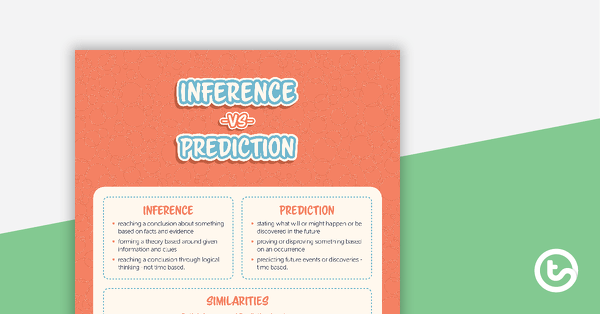
Inference vs Prediction Poster
Teach inference vs prediction with this engaging one-page poster that helps students understand how to use clues and prior knowledge to think more deeply about texts.
teaching resource
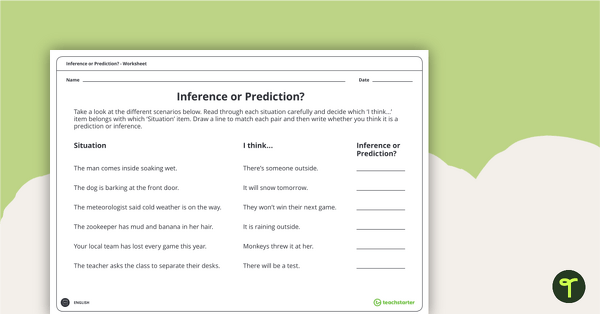
Inference and Prediction Worksheet Pack
Download this inference and prediction worksheet pack to teach your students how to confidently distinguish between these two strategies through a range of activities.
teaching resource
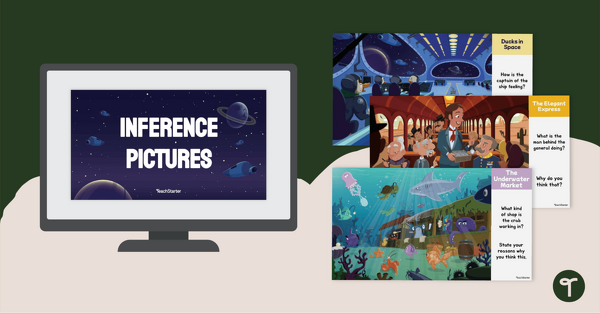
Inference Pictures Digital Activity
Download this set of captivating pictures and thought-provoking questions designed to challenge students’ inference-making abilities.

0 Comments
Write a review to help other teachers and parents like yourself. If you'd like to request a change to this resource, or report an error, select the corresponding tab above.